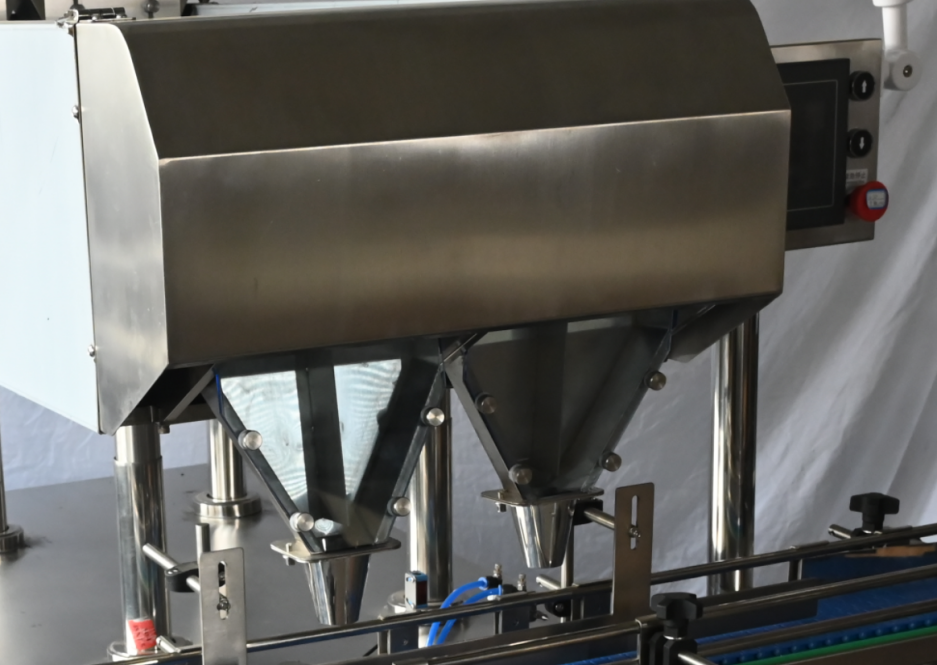
Tablet Counting and Filling Machine
Tablet counting and filling machine is a critical piece of automated equipment used primarily in the pharmaceutical, nutraceutical, and food industries (e.g., candies). Its primary function is to accurately count and dispense a predetermined quantity of solid dosage forms—such as tablets, capsules, caplets, and softgels—into containers like bottles, blisters, or pouches.
View Our Best-Selling Tablet Counting and Filling Machines
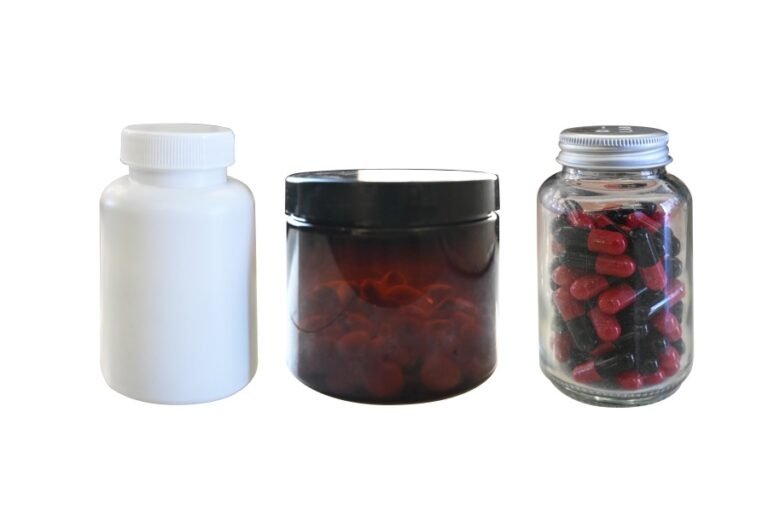
Our tablet counting and filling machine can be integrated into a packaging line and available fill different solid dosage forms, such as: tablet, capsule and soft capsules.
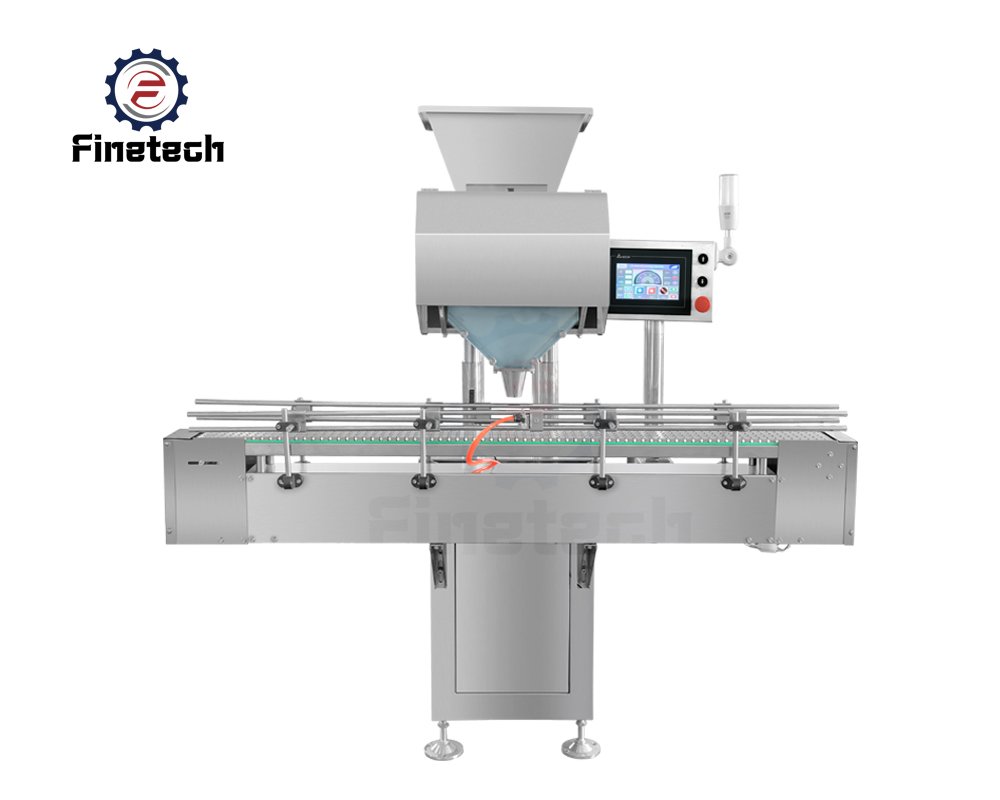
Tablet Counting and Filling Machine (8-Channel)
This machine requires manual placement of the bottle at the filling ports. And then, the tablet counter machine will automatically perform counting and filling.
Switching between different medications and adjusting filling parameters can be easily done through simple settings on the touchscreen, making it quick for new users to learn.
This equipment is primarily used for counting and filling solid dosage forms such as tablets (including shaped tablets), capsules, softgels, and pills, or solid particles like candies, nuts, and preserved fruits.
Filling speed: 10–30 bottles per minute, with a tablet filling range adjustable from 2 to 9999 units.
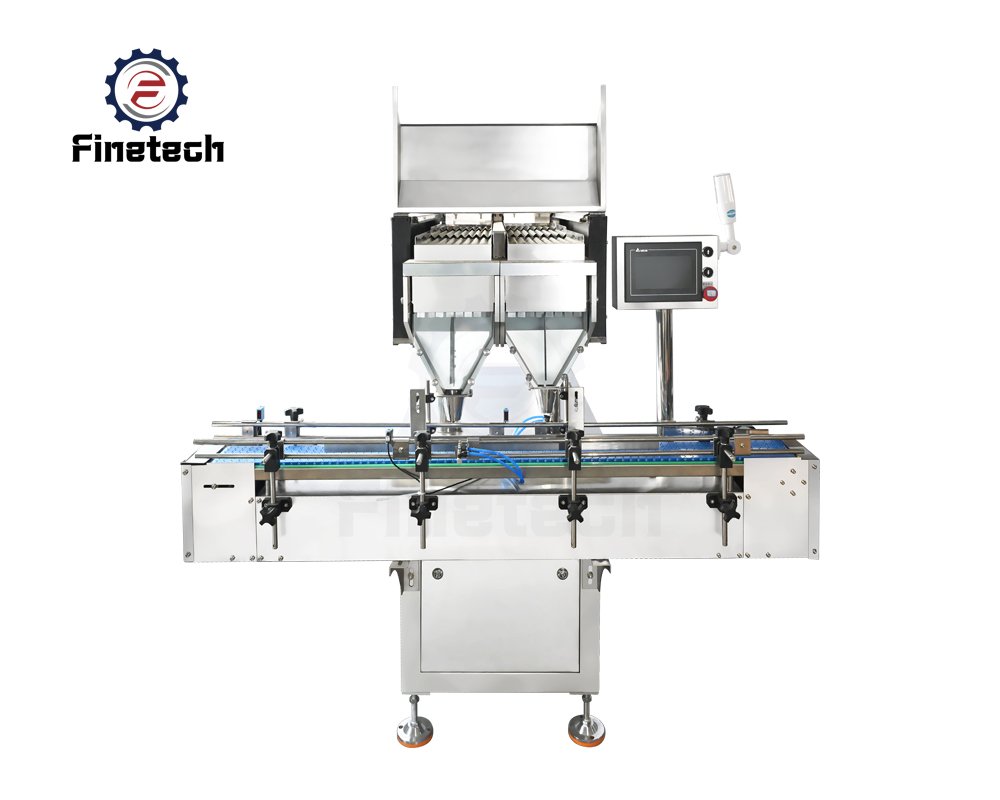
Tablet Counting and Filling Machine (16-Channel)
This machine provides an efficient solution for counting and filling tablets and capsules. With 16 counting channels and a precision-engineered design, it delivers exceptional production capacity. An advanced detection system ensures 100% accurate counting and filling for tablets of various shapes and sizes.
The robust stainless-steel frame of the 16-Channel Tablet Counting and Filling Machine ensures durability and full compliance with industry standards. It is widely used in the nutraceutical, pharmaceutical, and food & beverage industries.
The machine accurately counts and packages a wide range of solid forms—including tablets, capsules, and pills with widths from 3 mm to 25 mm (customizable up to 50 mm)—into bottles, bags, or boxes, achieving an accuracy rate exceeding 99.97%.
Manufactured in accordance with GMP standards, it features high‑speed PLC control, dynamic scanning for counting, automatic bottle conveying, system self‑check, fault alarms, and automatic shutdown for safe and reliable operation.
Filling speed: 20-50 bottles per minute.
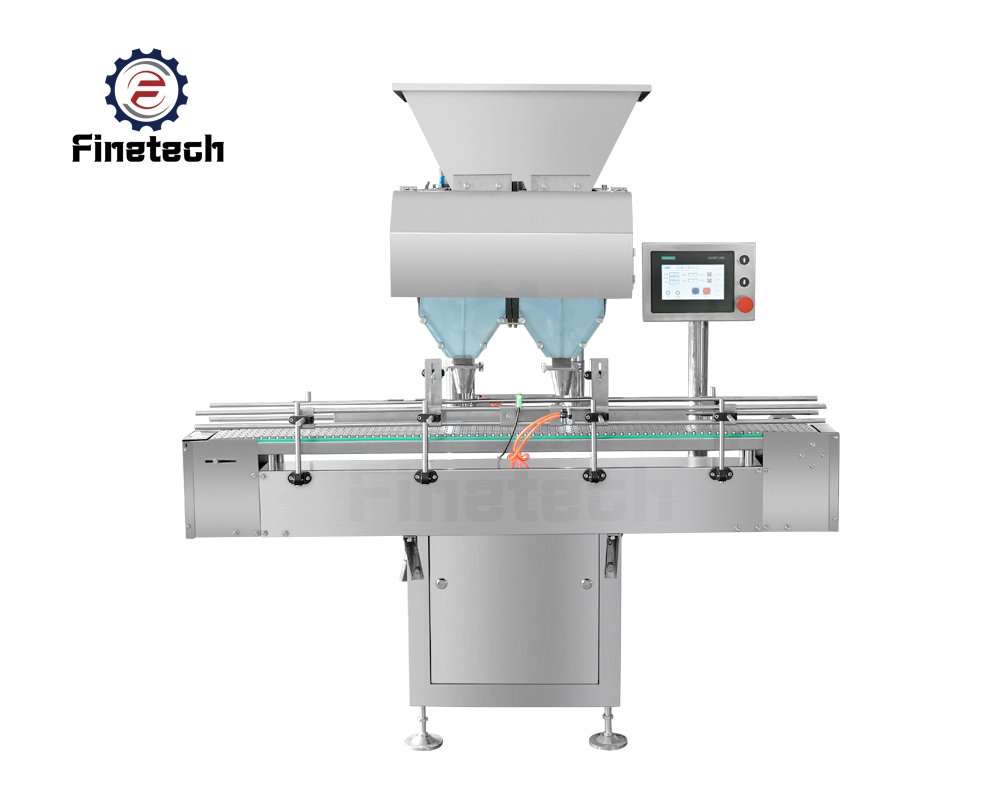
Tablet Counting and Filling Machine (24-Channel)
This 24-channel counting and filling machine is widely used for accurately counting and filling solid products across various industries, including pharmaceuticals, nutraceuticals, food, agrochemicals, and chemicals. It handles a variety of items such as tablets, soft and hard capsules, candies, and shaped tablets. Designed for versatility, it can be operated as a standalone unit or seamlessly integrated with other bottling equipment to form a complete packaging line.
Key Features:
High-Dust Resistance: Equipped with our proprietary dust-resistant photoelectric sensor technology, ensuring stable and reliable operation even in high-dust environments.
Gentle and Accurate Filling: Ensures damage-free handling of materials, guaranteeing defect-free finished products and precise tablet counts in every bottle.
Easy-to-Clean Construction: Features surfaces made of stainless steel and non-toxic, chemically stable, food-grade non-metallic materials for quick and thorough cleaning.
GMP Compliance: Manufactured in strict accordance with Good Manufacturing Practice (GMP) standards.
Comprehensive Documentation: Comes with detailed Standard Operating Procedure (SOP) manuals covering equipment structure, working principles, operation, maintenance, troubleshooting, and upgrades, ensuring reliable long-term performance.
High-Speed Operation: Offers a fast filling speed of 50–90 bottles per minute.
Interested?
Looking for a customized pill counting solution for your medications?
Tablet Counting and Filling Machine Specifications
| Machine Models: | 8-channel | 16-channel | 24-channel |
| Scope of application: | Pills with a diameter of less than 20mm are compatible with 000#-5# capsules, soft capsules, plain tablets with a diameter of 5.5mm-22mm, special-shaped tablets, and sugar-coated tablets | ||
| Speed: | 10-40 bottles per minute | 10-80 bottles per minute | 50-90 bottles per minute |
| Bottle specifications: | Φ0-100mm, bottle height 0-160mm | ||
| Hopper capacity: | 35L | 50L | 70L |
| Power: | 220V/50HZ/0.6KW | 220V/50HZ/1.5KW | 220V/50HZ/0.6KW |
| Air consumption: | 0.4-0.6Mpa/3.5L/min | 0.6Mpa/3.8L/min | 0.6Mpa |
| Machine dimensions: | 1360*1530*1700mm | 1560*1530*1700mm | 1800×1400×1560mm |
| Weight: | 320KG | 480KG | 500kg |
Tablet Counting and Filling Machine Applications
The applications of Tablet Counting and Filling Machines are vast and critical to the packaging of solid dosage forms across multiple industries. They are fundamental machines in any production line where precise quantities of tablets, capsules, pills, or similar solid items must be packaged.
More details about Machine
Key Parts of Tablet Counting and Filling Machine
Gently moves product from the hopper to the counting mechanism. The vibration amplitude and frequency are adjustable to control feed rate based on product characteristics.
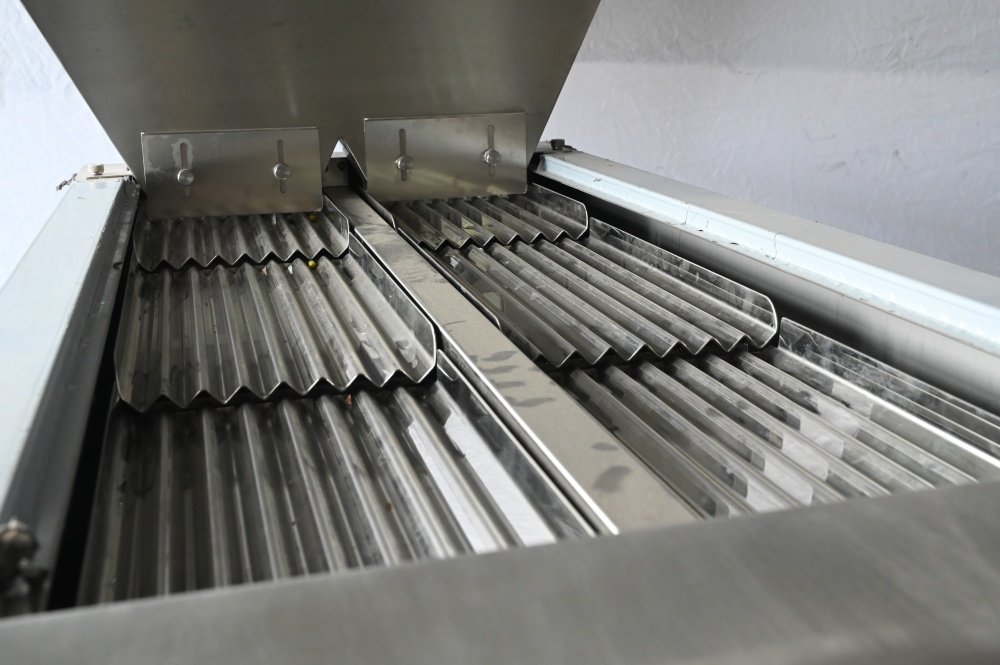
Vibratory Feeder / Elevator Conveyor
The precision-engineered pathways (often transparent for visual inspection) where tablets are singulated (lined up single-file) for counting.
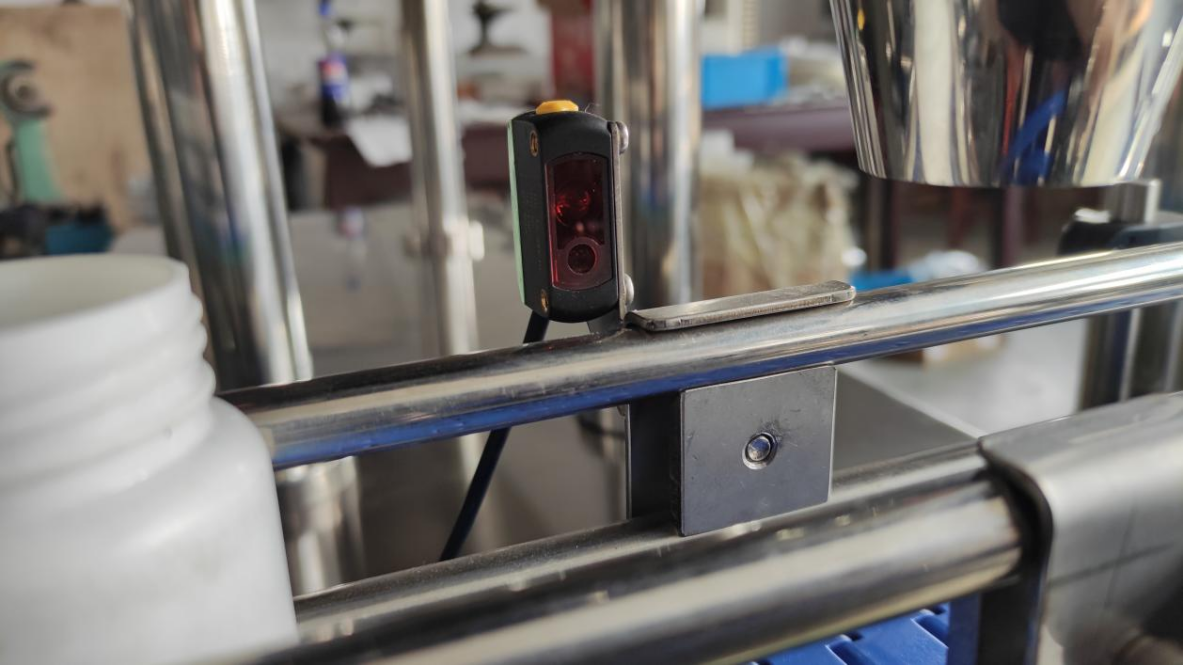
Smart Counting Channels/Chutes
The most common type. A light beam (often infrared) across the chute is broken by each passing tablet, sending a pulse to the controller. Advanced systems use anti-dust optics to ignore powder interference.
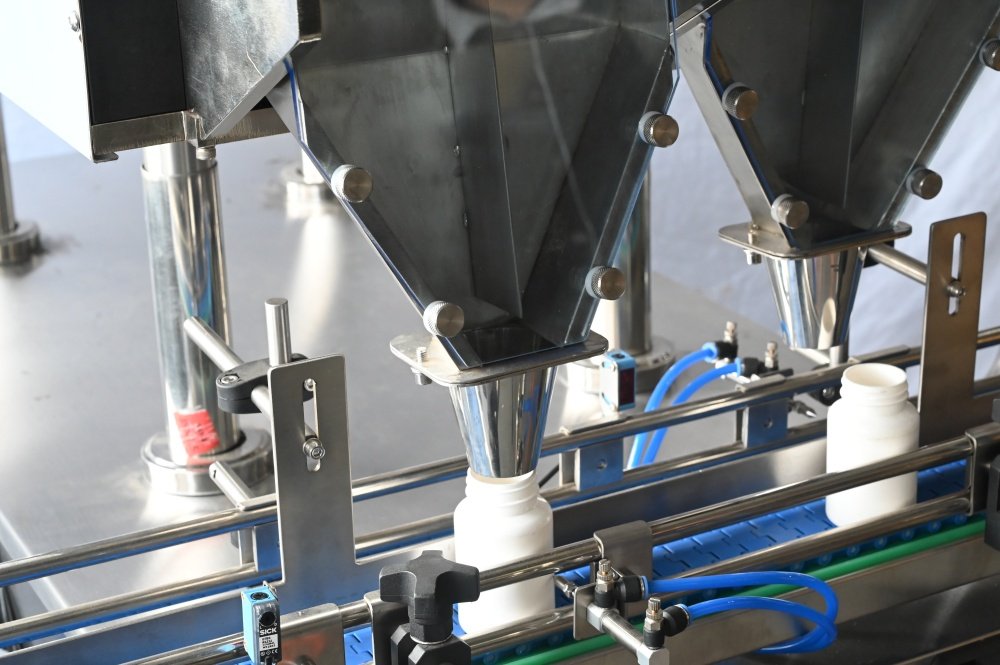
Photoelectric Sensors
The outlet through which the batch is discharged into the waiting container (bottle, blister pocket, or bag). Nozzles are often lined with soft material to prevent tablet damage and minimize dust.
Filling Nozzle
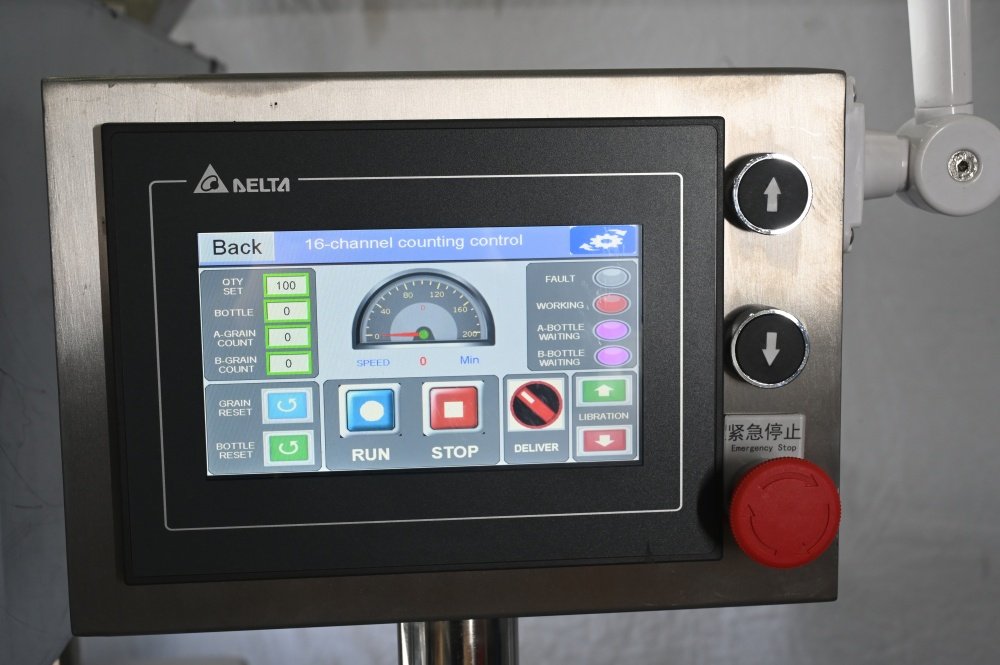
The touchscreen panel where operators set parameters (count quantity, speed), view production data (total count, batches), monitor status, and diagnose alarms.
Human-Machine Interface (HMI)Tablet Counting and Filling Machine Working Principle
Here’s a straightforward breakdown of how a tablet counting and filling machine works, step by step.
- Step 1, Loading: Bulk tablets are poured into the hopper at the top.
- Step 2, Feeding & Singulating: Tablets flow from the hopper onto a vibrating tray or feeding channel. Vibration spreads tablets evenly and moves them forward in a single layer toward the counting disc.
- Step 3, Counting: The counting disc (with precisely sized holes) rotates under the stream of tablets.
- Step 4, Verification: An optical sensor or laser checks that each cavity is filled before dropping. If a cavity is empty, the system can reject that bottle later or alert the operator.
- Step5, Discharge & Filling: When the filled cavities reach the discharge position, tablets drop by gravity (sometimes aided by a small air puff) through a funnel or chute. The counted batch of tablets falls directly into a bottle positioned exactly below on the conveyor.
- Step 6, Bottle Movement: The conveyor indexes forward, moving the filled bottle out and bringing an empty one into position. The cycle repeats continuously.
FAQ
It’s an automated machine that accurately counts a predetermined number of tablets, capsules, or similar solid items and dispenses them into bottles, blister packs, or pouches. It replaces slow, error-prone manual counting.
Primarily pharmaceuticals, nutraceuticals, vitamins, herbal supplements, consumer healthcare (lozenges, mints), and industrial products (cleaning tabs, water treatment tablets).
Speed, accuracy, and hygiene. Machines can count hundreds of bottles per minute with near-perfect accuracy (±1 in 10,000 tablets) and reduce human touchpoints, ensuring cleanliness.
Most machines use a mechanical counting disc with precision holes (cavities). Each cavity holds one tablet. A disc with 30 cavities portions 30 tablets per rotation. Electronic sensors verify each cavity is filled before dispensing.
Advanced machines have optical sensors or checkweighers right after filling. If a cavity is empty (a “miss”) or a tablet is broken, the system can reject that specific bottle automatically.
Yes, but you must change the counting disc or parts to match the new tablet’s size and shape. Quick-change kits are available for frequent product switches.
Mechanical (Rotary Disc): Uses physical cavities. Best for standard-shaped tablets/capsules at high speeds.
Electronic (Photoelectric/Vision): Uses sensors/cameras to count each item. Best for tiny, fragile, or irregular shapes (like gummies, mini-tablets).
Yes, but gentle handling is key to avoid damage. Special softgel-specific feeders and low-drop-height chutes are often used.
| Inaccurate count | Worn disc, wrong disc size, tablet sticking | Clean/replace disc, adjust vibration |
| Tablets breaking | Too much drop height, harsh handling | Lower discharge height, check cushioning in chute |
| Jams in feeder | Too many tablets, humidity causing clumping | Reduce feed rate, use dehumidifier if needed |
| Bottle misfeed | Misaligned conveyor, bottle guide issues | Adjust guides, check sensor alignment |
Yes, seamlessly. Common connections:
Upstream: Bottle unscrambler
Downstream: Cotton inserter, capper, induction sealer, labeler, checkweigher
Via conveyor or PLC communication
Through a multi-layer check system:
Cavity fill sensor before discharge.
Checkweigher after filling to detect under/overweight bottles (which indicate miscounts).
Rejection system (puffer or arm) to remove faulty bottles.
Yes, modern machines with PLC controls can:
Record count data, rejects, and production totals
Generate batch reports
Interface with printers and MES (Manufacturing Execution Systems) for full traceability (required in pharma).
cGMP (current Good Manufacturing Practice) design
CE (Europe), UL/CSA (North America) for electrical safety
FDA 21 CFR Part 11 compliance for electronic records (if applicable)
ISO 9001 (quality management) for the manufacturer
The primary stainless steel container where bulk tablets/capsules are loaded. It often includes a slow-moving agitator to prevent bridging and ensure consistent flow.
Main Hopper