English
  Russian
  Turkish
  Spanish
  French
  German
  Japanese
In the pharmaceutical sector, multiple fine grinding techniques are used to prepare medicines before they reach consumers. One such technique is called milling, i.e., the mechanical process used to reduce the size of solid particles to amplify their impact. But since one size doesn’t fit all medicines, different drugs require different types of mills used in pharmaceutical industry.
Each mill has its own way of processing drugs. Some use impact, while others work by applying shear compression to break down the granules. Read on to learn about multiple types of mills in the sector and how they work!
Why Milling Matters in the Pharmaceutical Industry
Before we explore the types of mills used in pharmaceutical industry, it’s essential to understand why this mechanism matters in the first place. Basically, it’s a technique used to ensure drugs work the way they should, altering their morphology to aid the process. Here’s why it matters so much, particularly in the pharma sector:
Improved Dissolution & Bioavailability
According to research, milled drugs attain physical properties that enhance their dissolution rate. When medicines are broken down into smaller particles, it naturally increases their surface area (APIs). This is especially true when drugs are reduced to micro or even nano sizes. Due to improved bioavailability, these tiny particles quickly get absorbed into the bloodstream.
Uniform/Homogeneous Mixing
Making powders uniform during their granulation is a critical step in ensuring the medicine mixes well. With step-by-step milling, pharmacies ensure the tablet (or powder) performs the same way every time and delivers the right dose. This, in turn, reduces the chances of uneven drug distribution through the body.
Easier Medicine Processing
In addition to uniform mixing, milling makes the processing of medicines much simpler. With consistent sizes, medicines easily move through machines like tablet presses or capsule fillers. Hence, the production batch runs smoothly. The overall particle size distribution (PSD) also affects how easily it can be compressed into solid forms.
Targeted Drug Delivery
One of the best parts about milling drugs to the nano scale is that they allow medicines to target specific areas in the body. As such, the particles become so tiny that they can be directed to specific cells or tissues in the bloodstream. This is an incredible perk in modern medicine, letting pharmaceuticals deliver personalized treatment to patients.
Types of Mills Used in Pharmaceutical Industry
Now, there are multiple types of mills used in pharmaceutical industry, each working on its specific mechanism. Broadly, milling methods are classified into two categories: wet milling and dry milling. As the name implies, wet mills rely on liquids to process medicine, while dry mills work with gas or air.
Here’s a typical breakdown of the most common mills in the medicine sector:
Ball Mill
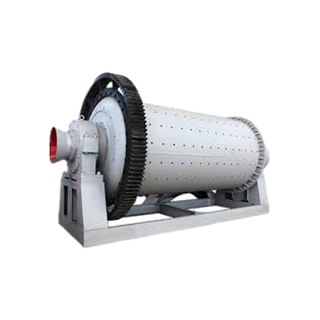
The most typical form of mill, a ball mill, is used to grind different drug ingredients into fine, uniform powders. Essentially, it works as a large, hollow cylinder that slowly spins around its axis. Inside the cylinder, there are small balls which act as grinding tools, mixing the drug contents evenly. They can handle tough, abrasive, and even wet materials.
How it Works
The drug that needs milling is added to the rotating cylinder using a pipe. As the cylinder turns, the balls tumble around and get in contact with the material fed inside. Using compression milling, the repeated impact and friction between the balls break down the material into fine particles.
Hammer Mill
As the name implies, a hammer mill uses high-velocity hammers (or blades) to crush and grind materials in the pharmaceutical industry. The blades are attached to a fast-spinning rotor inside a solid steel drum. While these types of mills create particles of various sizes, they’re usually less uniform compared to compression-based mills. Moreover, they’re GMP-compliant to ensure safety.

How it Works
When the material is fed into the hammer mill’s feeding hopper, it ultimately enters the crushing chamber. Here, the rotating hammers swing at ultra-high speed and strike the particles repeatedly, crushing them into smaller granules. The size of the final product depends on the intensity of hammer strikes and the size of the hopper’s screen.
Fluid Energy Mill
A fluid energy mill, or a jet mill, is a type of grinder that works on the principle of impact and attrition. It’s especially designed for medicines or chemicals that need to be turned into extremely fine particles, i.e., 1-20 microns. Unlike traditional mills, this one relies on high-speed streams of gas, where the particles grind themselves down mid-air.
How it Works
First, the pharmaceutical material is fed into the mill, where powerful jets of air or gas are injected into the mill’s chamber via nozzles. These ultra-high velocity jets collide with each other, causing the material to circulate in an elliptical path within the pipe. The repeated impact of these violent collisions results in ultra-fine particles.
Roller Mill
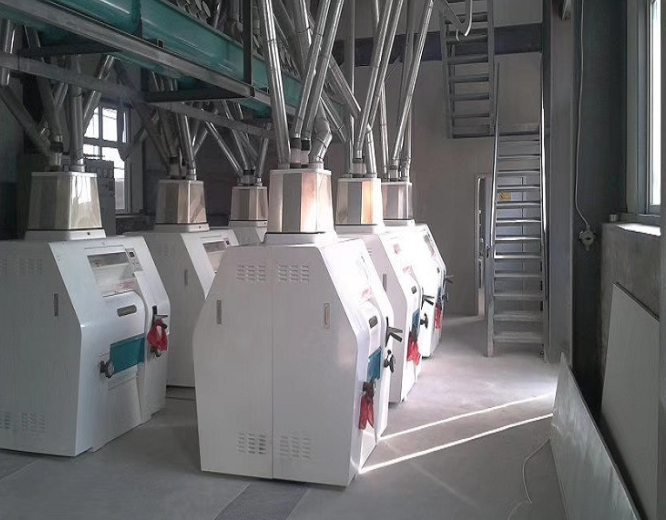
Best for the gentle processing of pharmaceutical materials, roller mills use counter-rotating cylinders to grind drug particles. They’re best-suited for the preparation of ointments, creams, and other semi-solid medicines. Typically, this mill works on the principle of compression by applying stress. Better yet, it’s great for heat-sensitive materials.
How it Works
Powders or viscous materials are directed into a narrow gap between the rollers on the mill. Since it works through compression, the material gets to the narrowest part of the plant, where it gets intense pressure. The oppositely spinning rollers apply high shear force and compression to break down the particles.
Cutter Mill
While it’s quite similar to a hammer mill, it uses sharp knives instead of hammers to cut material into smaller pieces. Simply put, cutter mills are like food processors that slice materials instead of crushing them altogether. This makes these mills ideal for tablet production, helping pharmacies reduce the size of tough, fibrous materials easily.
How it Works
To begin milling, the material is loaded into the hopper and pushed towards the chamber due to gravity. The central shaft spins, with sharp rotating blades passing by it. This powerful shear cuts the material into smaller slices. Finally, the cut particles are passed through a screen, with the larger particles remaining in the milling zone till they’re cut to the right size.
Oscillating/Rotary Granulator
Particularly used for wet and dry granulations, the oscillating granulator is designed with a bar that moves back and forth against a wire mesh screen. How well this mill works depends on the movement, type of motion, and size of the screen holes. Moreover, this mill is ideal for heat-sensitive or waxy materials, primarily because it generates very little heat.
How it Works
The powder or material is loaded onto the mill through an infeed hopper. Once inside, it comes into contact with bars that move in an oscillatory or rotatory motion. These bars then cut the material and force it through the mesh screen. This results in small, uniformly sized granules, best for pharmaceuticals.
Here’s a tabular representation of the types of mills used in pharmaceutical industry to understand them better:
| Type of Mills Used in Pharmaceutical Industry |
Wet or Dry |
Best for | Working Mechanism |
| Ball Mill | Wet | Fine grinding, tough & abrasive material | Impact and Attrition/compression milling |
| Hammer Mill | Dry | Size reduction of bulk materials, breaking down hard materials | High-speed impact milling |
| Fluid Energy Mill | Dry | Micron-level drugs, heat-sensitive material | High-velocity air/gas collisions |
| Roller Mill | Dry | high-viscosity materials like creams, ointments, or wax | Compression and shearing forces |
| Cutter Mill | Dry | Processing tough, fibrous, elastic raw material | Sheer and cutting action/ rotating knives |
| Oscillating/Rotary Granulator Mill | Wet | Breaking wet mass into granules, tablet manufacturing | Rotatory-oscillatory motion for particle breakdown |
Conclusion
While understanding milling might be daunting, it’s important to note that pharmaceutical companies heavily rely on this mechanism for drug production. Once you know the types of mills used in pharmaceutical industry, it becomes easy to ensure ideal drug performance and compliance.
For top-tier milling solutions, check out Finetech today. We’re committed to making your life easier with advanced technology that still retains the old-school touch!