English
  Russian
  Turkish
  Spanish
  French
  German
  Japanese
Biologics, including vaccines, monoclonal antibodies, and protein therapeutics, offer remarkable therapeutic benefits. However, their production demands specialized equipment to maintain stability, safety, and quality.
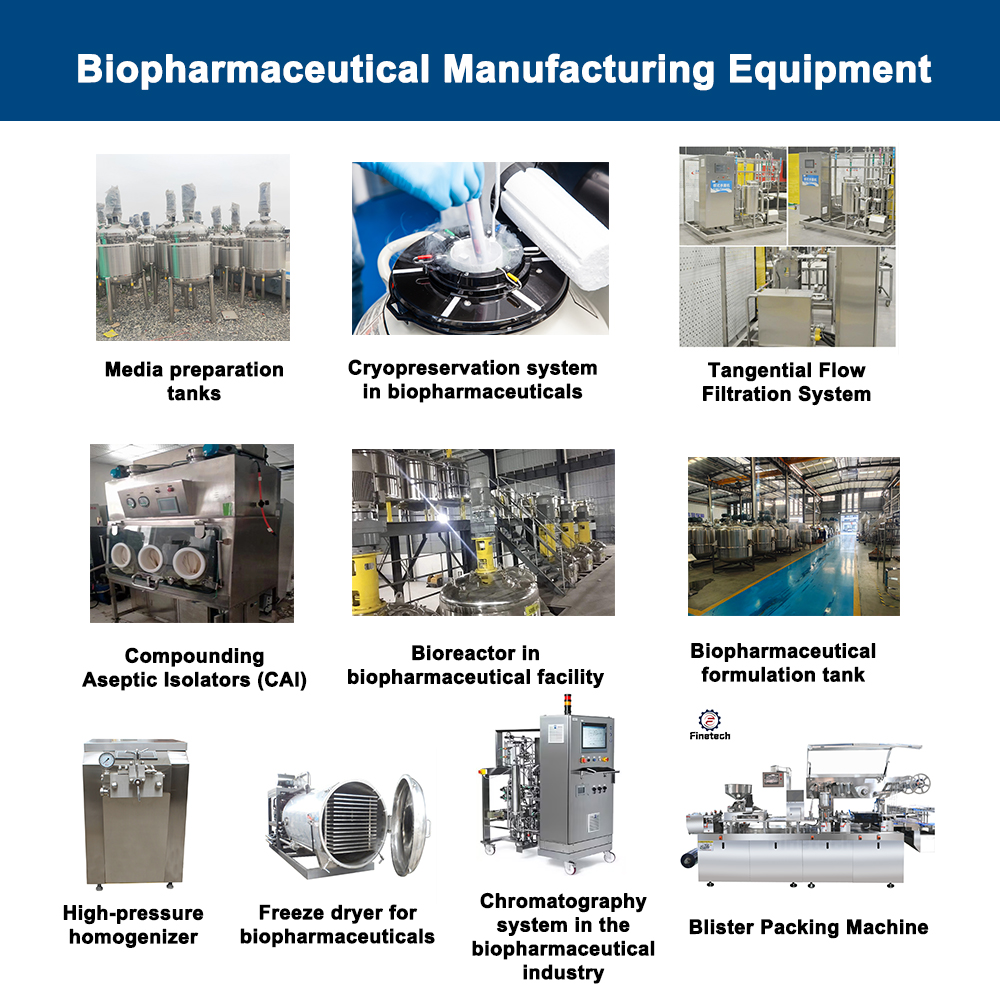
Modern biopharmaceutical facilities rely on advanced systems such as bioreactors, lyophilizers, cryogenic freezers, and aseptic filling units. These machines manage critical processes like cell cultivation, harvesting, and biologic purification, which ensures a high-performing manufacturing workflow that complies with industry standards.
This guide covers ten essential biopharmaceutical manufacturing equipment. You’ll learn what each machine does and how it supports the controlled workflow.
Key Features of Biopharmaceutical Manufacturing Equipment
- Bioreactor: These vessels create controlled environments for cell growth. They maintain the temperature, pH, and distribution of oxygen and nutrients.
- Liquid Nitrogen Freezer: This equipment stores sensitive biopharmaceutical products at ultra-low temperatures. The primary function is to keep the samples safe for long periods.
- High-Pressure Homogenizer: High pressure forces the product through narrow valves, resulting in its breakdown.
- Lyophilizers/Freeze Dryers: Lyophilizers remove moisture from sensitive products to extend their shelf life without damaging their integrity.
Important Biopharmaceutical Manufacturing Equipment
As demand for quality and regulatory compliance increases, the market for biopharmaceutical manufacturing equipment is also growing. In fact, industry statistics predict an 8.84% CAGR from 2024 to 2031. Here are ten key machines that are necessary for biopharmaceutical manufacturing.
1. Bioreactor
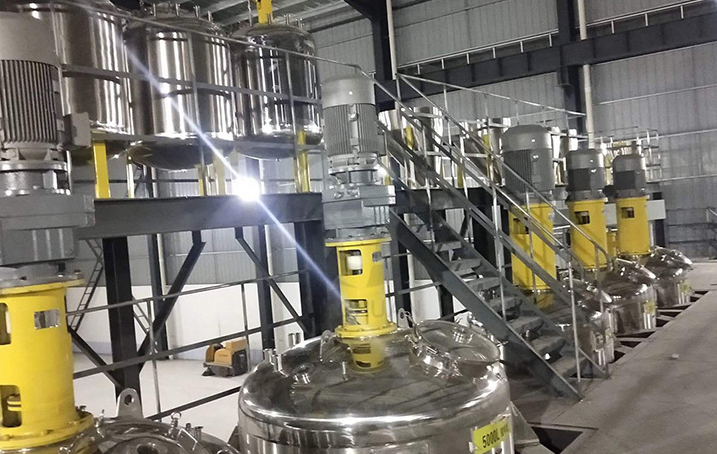
Bioreactors are a crucial part of a biopharmaceutical facility. These are vessels where biologics are processed under controlled conditions.
The four most common types of bioreactors are stirred-tank, airlift, fluidized-bed, and wave bioreactors. They support proper mixing and distribution of oxygen and nutrients, and maintain the temperature and pH for ideal growing conditions.
To protect sensitive cell cultures, bioreactors minimize shear stress and prevent contamination. They use sterile connectors and filters and require strict sterilization protocols to maintain sterility.
Most facilities use either stainless-steel systems or single-use bioreactors. Single-use designs reduce cleaning time, lower contamination risks, and decrease operational costs.
2. Cryopreservation System/ Liquid Nitrogen Freezer
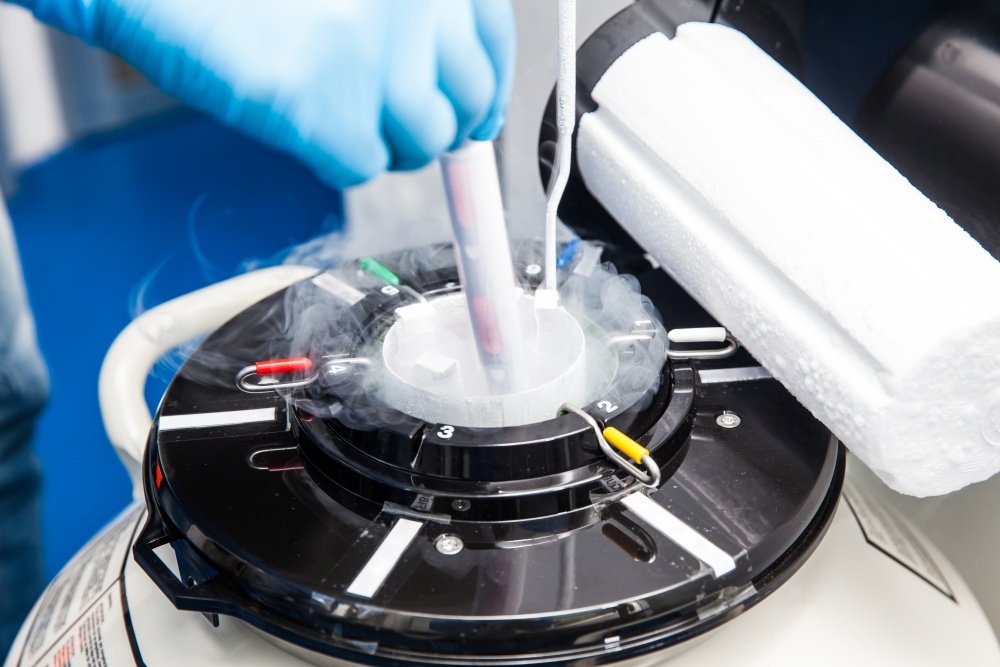
Biopharmaceutical facilities require freezers to store cells, tissues, DNA, antibodies, and other sensitive materials for long periods. Cryopreservation systems provide the controlled conditions needed for this preservation.
These systems protect biological samples by freezing them at ultra-low temperatures (typically −80 °C or −196 °C using liquid nitrogen).
One of the biggest advantages is that they do not rely on high-maintenance compressors. Their advanced temperature-control panels offer precise, consistent regulation of storage conditions. They also keep materials safe during power outages, supported by redundant cooling mechanisms and a reliable 7-day battery backup.
3. Media Preparation Tank
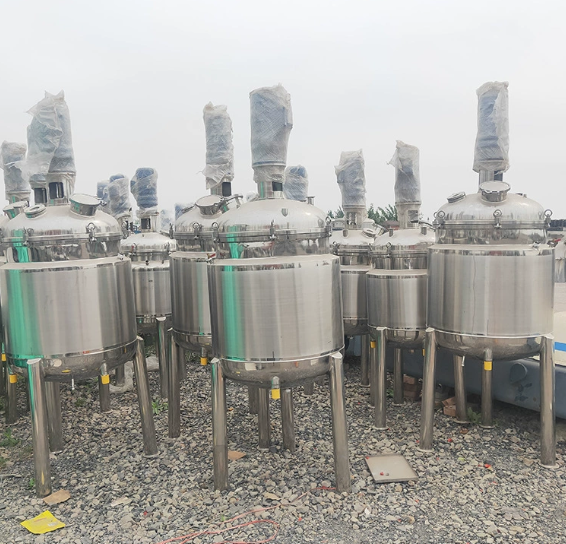
Proper formulation and storage of growth media are critical for healthy cell culture, as inadequate media can directly compromise both the yield and quality of biologics. To ensure optimal conditions, nutrient-rich media are first prepared in dedicated media preparation tanks before being transferred to bioreactors.
Aseptic media preparation requires sterile, GMP-compliant tanks that provide CIP/SIP compatibility, precise thermal control, and uniform mixing to meet the stringent demands of bioprocessing.
Depending on production requirements, these stainless-steel tanks can accommodate capacities of up to 50,000 liters, supporting large-scale biologics manufacturing.
4. Tangential Flow Filtration System
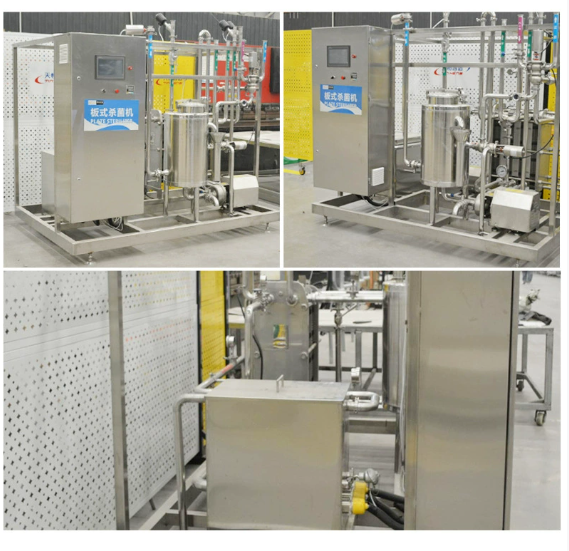
Tangential flow filtration separates and purifies the components in liquid mixtures without clogging the filter. As a result, the yield of the biopharmaceutical product increases while processing times are reduced. It helps with cell harvesting, lysate clarification, product fractionation, concentration, and diafiltration.
The type of membrane or filter used in the filtration system depends on the product’s shear sensitivity. Hollow fiber filters are usually used in the separation of blood plasma and the processing of shear-sensitive lentivirus.
On the other hand, cassette filters work best for vaccine purification, monoclonal antibody production, and processing of less sensitive non-enveloped viruses.
5. High-Pressure Homogenizer
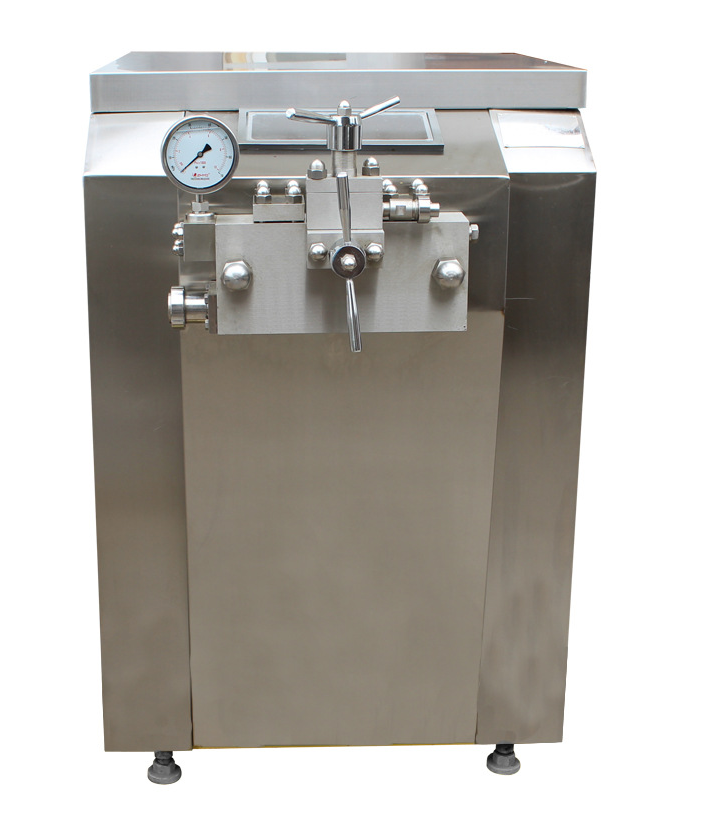
A high-pressure homogenizer is used to break open cells, enabling the extraction of intracellular enzymes and proteins from microorganisms. The nanoparticles produced by this process play a vital role in the manufacturing of biopharmaceutical products.
As the name implies, the homogenizer applies extremely high pressure, ranging from 550 to 2,750 bars, to force the product through narrow valves. It operates on three key principles: shear, turbulence, and cavitation, which together disrupt cell structures and reduce particle sizes to as small as 100 nm.
6. Chromatography System
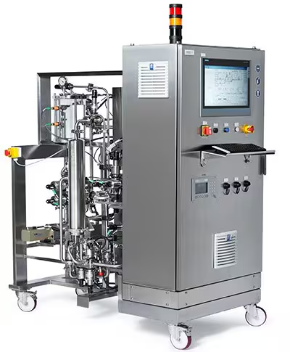
Chromatography separates the desired product from impurities, unwanted proteins, and endotoxins. It allows analysis and identification of components. Common chromatography techniques include ion exchange, size-exclusion, hydrophobic interaction, and reversed-phase liquid chromatography.
The growing importance of chromatography is reflected in market projections, with the biopharma chromatography sector expected to reach $5.7 billion by 2030.
In recent years, single-use chromatography systems have gained traction in the biopharmaceutical industry. These systems integrate automation software, pre-packed columns, and pumps to move the mobile phase through the process.
7. Formulation Tank/ Jacketed Mixing Tank
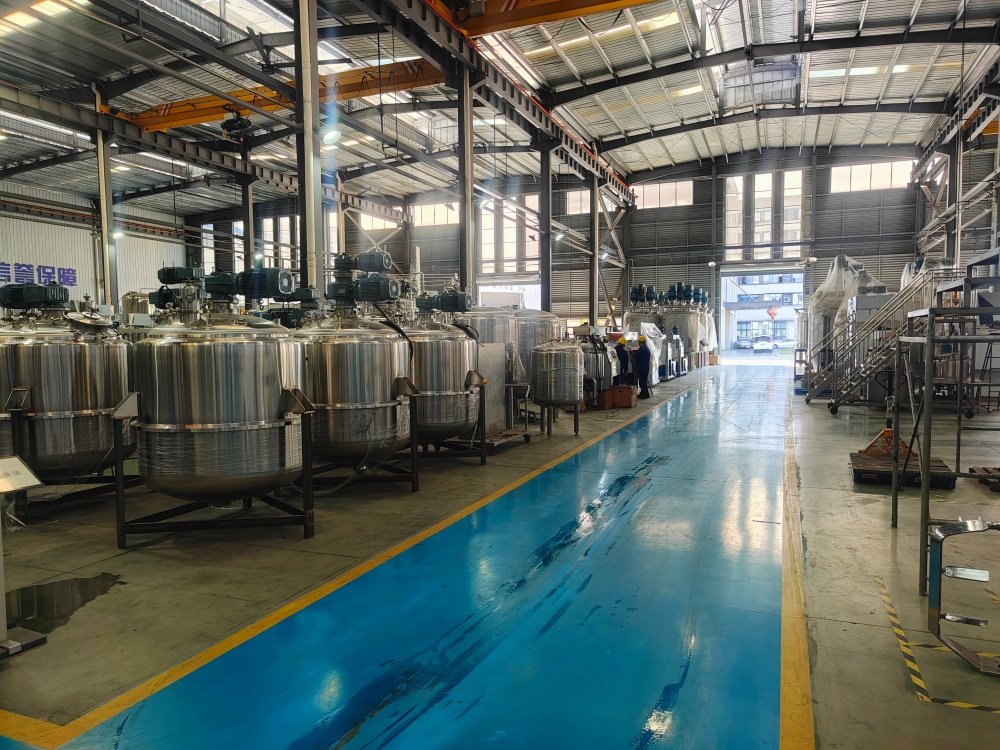
Biopharmaceutical formulations, including vaccines, injectable drugs, and monoclonal antibodies, demand homogeneity. Hence, their formulation occurs in dedicated formulation tanks under controlled conditions. The tank sizes range from 50 to 2,500 liters, depending on production requirements.
They come with a characteristic magnetic stirrer or vibriomixer, used explicitly for suspensions. The control panel, with a pH probe, cooling systems, a controller, and dosage systems, enables strict environmental control. For rapid, contamination-free transfer, the tanks can be connected to filling stations via an isolated loop system, maintaining sterility throughout the process.
8. Freeze Dryer/ Lyophilizer
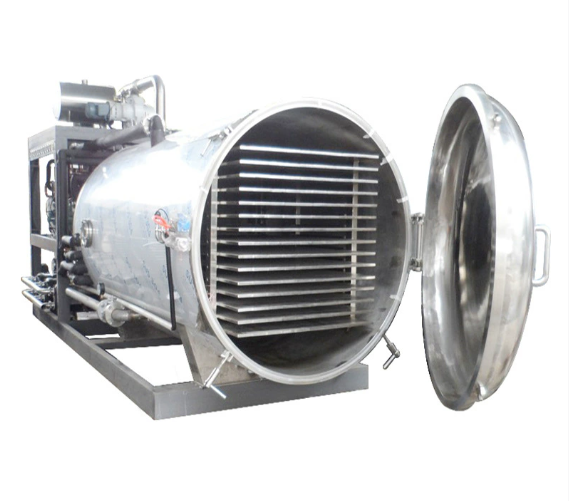
According to research, more than 60% of biologic products wouldn’t be possible without lyophilization. Freeze drying removes water from moisture and heat-sensitive products without damaging them. This preserves their biological activity and increases the shelf life.
Lyophilization involves four key steps: pre-treatment, pre-freezing, primary drying, and secondary drying. The freeze dryer itself comprises a vacuum drying chamber, shelves, a heat-exchange system, a condenser, a refrigeration system, a vacuum pump, and an automated control system. All parts work together to ensure efficient and precise drying.
9. Aseptic Filling System
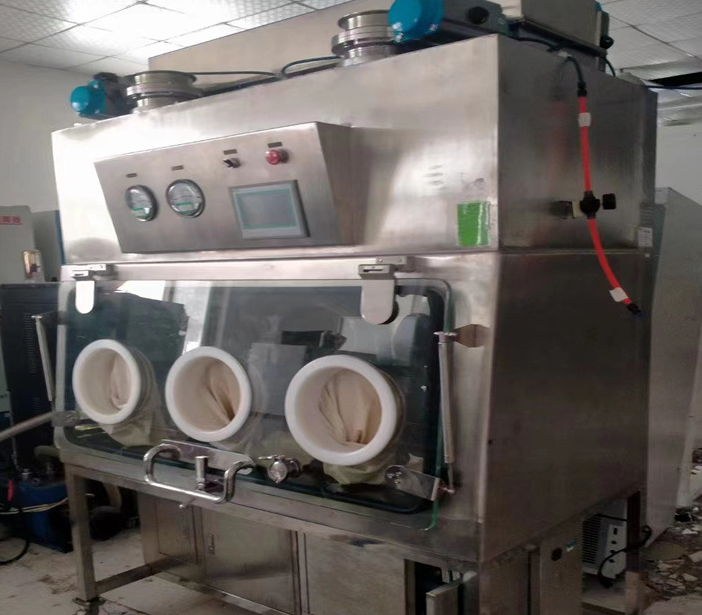
Packaging of biopharmaceutical products requires aseptic filling systems that eliminate all contamination risks. Equipment such as isolators, laminar airflow hoods, and sterile barriers ensures that biologics remain therapeutically safe.
Tubing assemblies connected to the filling stations, along with sterile containers, further prevent cross-contamination during transfer processes.
The finishing stage also includes closing and sealing systems. Each type of container is closed in a different way. For instance, vials are closed by stoppering, while ampoules are closed by heat-sealing. The products are labelled and coded before they’re sent for final packaging, inspection, storage, and transportation.
10. Blister Packaging Machine
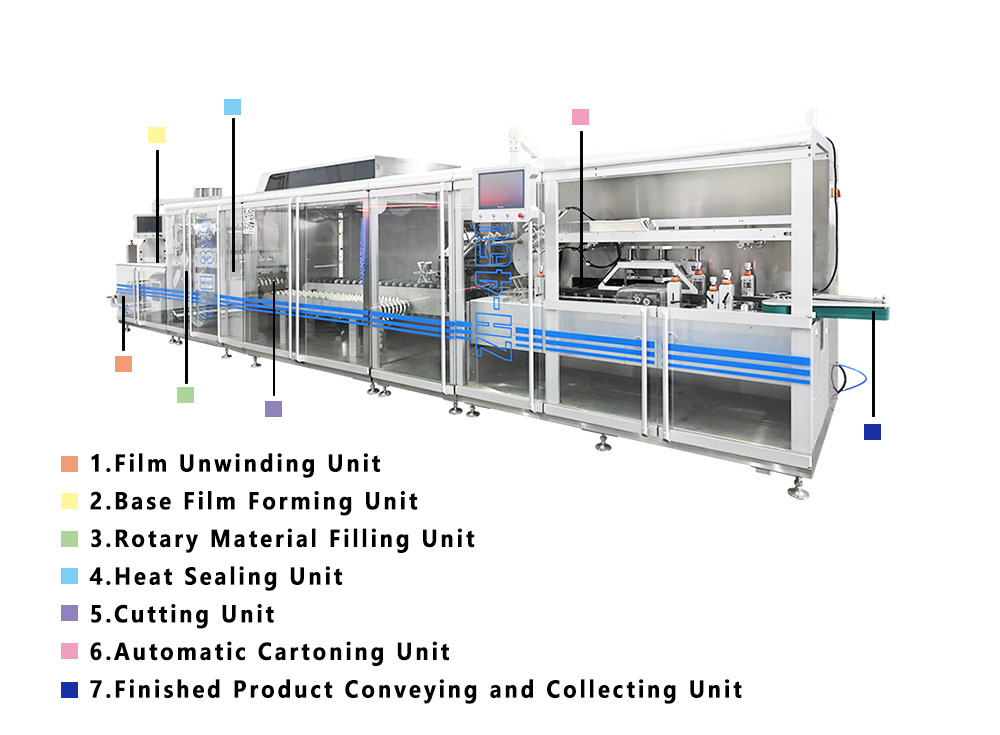
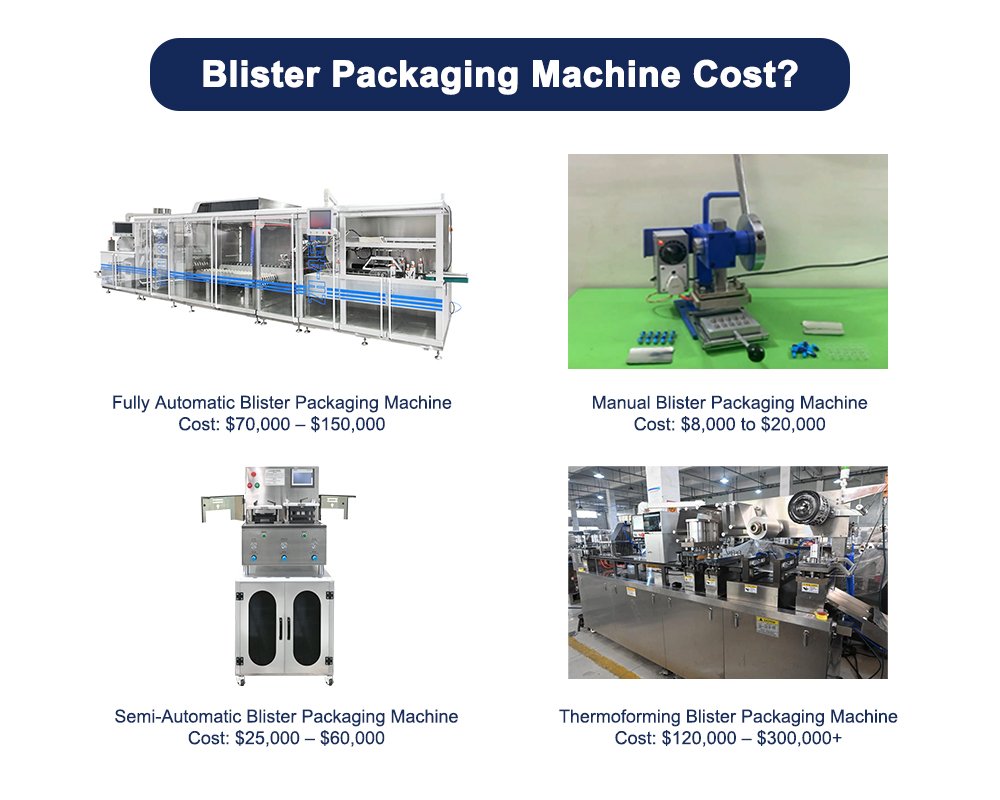
Blister packaging machines protect biopharmaceutical products by forming cavities from PVC, PET, or aluminum. The material is molded through cold forming, thermoforming, or thermo-cold forming. This improves protection, reduces tampering, extends shelf life, and makes dosing easier for patients.
The machines operate by heating the plastic sheet and molding it into cavities to securely hold the products. Once placed, the cavities are sealed with a lidding material, and the finished blister packs are precisely cut into individual units, ready for distribution.
FAQs
1. How important is automation and process control for biopharma equipment?
Automation provides real time monitoring, consistent control of critical parameters such as pH, dissolved oxygen and temperature, and reliable data capture for batch records. Robust control systems reduce human error and simplify regulatory compliance and investigations.
2. Why do manufacturers perform stability testing?
Stability testing determines how a drug’s potency, appearance and safety change over time under different storage conditions. It defines the shelf life and recommended storage statement.
Upgrade Your Manufacturing Process with Advanced Equipment
The FDA approved 50 new biologics and therapeutics in the past year. This number is promising, which means the coming years will bring even more groundbreaking discoveries. However, making discoveries in the biopharmaceutical industry requires advanced biopharmaceutical manufacturing equipment.
Reliable equipment reduces the overall operational costs by lowering the risk of malfunctions and downtime. To source premium equipment, you need a trusted supplier like Finetech.
We provide a full range of pharmaceutical manufacturing equipment designed to enhance productivity, strengthen compliance, and meet global industry standards. You can also take advantage of our free sample proofing to ensure the equipment aligns perfectly with your production needs.
Contact our team today to get started.
Copyright Notice:
You may not reproduce, modify, publish, display, transmit, or in any way exploit any content on this website, or use such content to construct any kind of database without prior express written approval by Finetech Group. For permission to use the content, please contact: info@pharmamachinecn.com
Disclaimer:
The information contained in this article is for general information purposes only. The Company does not guarantee the accuracy, relevance timeliness or completeness of any information, and the Company assumes no responsibility for errors or omission in the content of this article.