English
  Russian
  Turkish
  Spanish
  French
  German
  Japanese
The sweet taste and smooth finish of a pill is the first thing a patient notices. It’s a key benefit of the coating process in the pharmaceutical industry, a precise and crucial step that makes medications palatable and easy to swallow.
This final layer is much more than a cosmetic finish. It is essential for protecting a drug from environmental factors, such as moisture and light. The process also allows for the controlled release of a medication in the body, which is crucial for a drug’s success and overall patient experience.
In this blog, we’ll discuss all the necessary details about the pharmaceutical coating, its benefits, different types and a detailed step-by-step coating process.
Understanding the Coating Process in the Pharmaceutical Industry
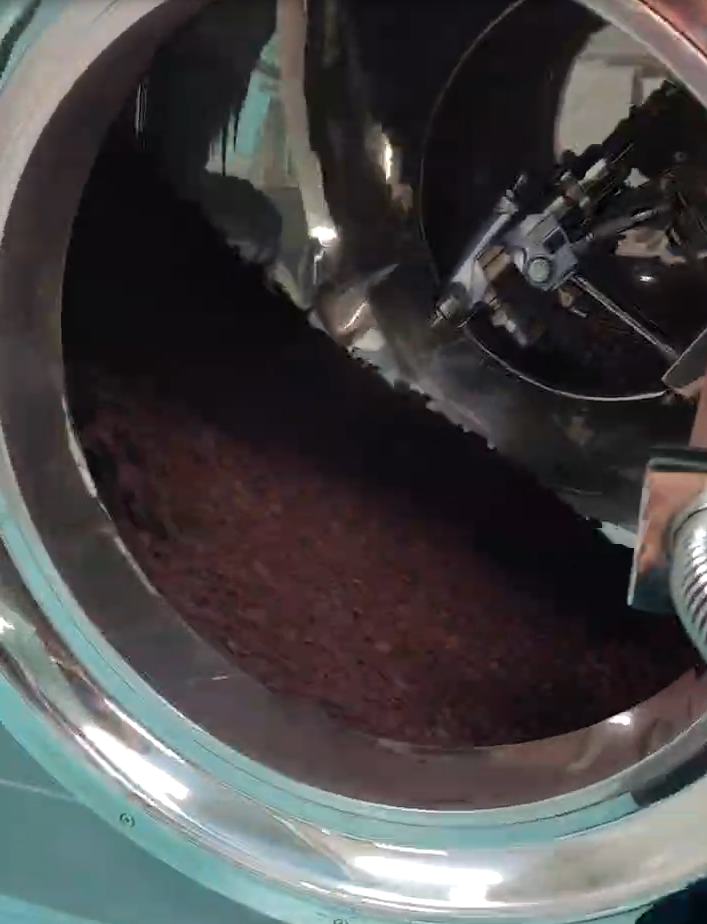
Tablet or capsule coating is a fundamental process in pharmaceutical manufacturing. It involves applying a thin outer layer to the tablet’s surface, typically made from a polymer or film. This layer protects the drug from environmental factors, masks unpleasant tastes, and can control the drug’s release rate.
The coating process enhances the medication’s stability and improves patient acceptance and compliance. Without coating, tablets may degrade faster, become sensitive to light or moisture, or have an unpleasant taste that discourages patients from taking them.
Moreover, coated tablets prevent acid-sensitive drugs from harming the intestine and ensure controlled release of the active ingredient in the body.
Importance and Benefits of the Coating Process
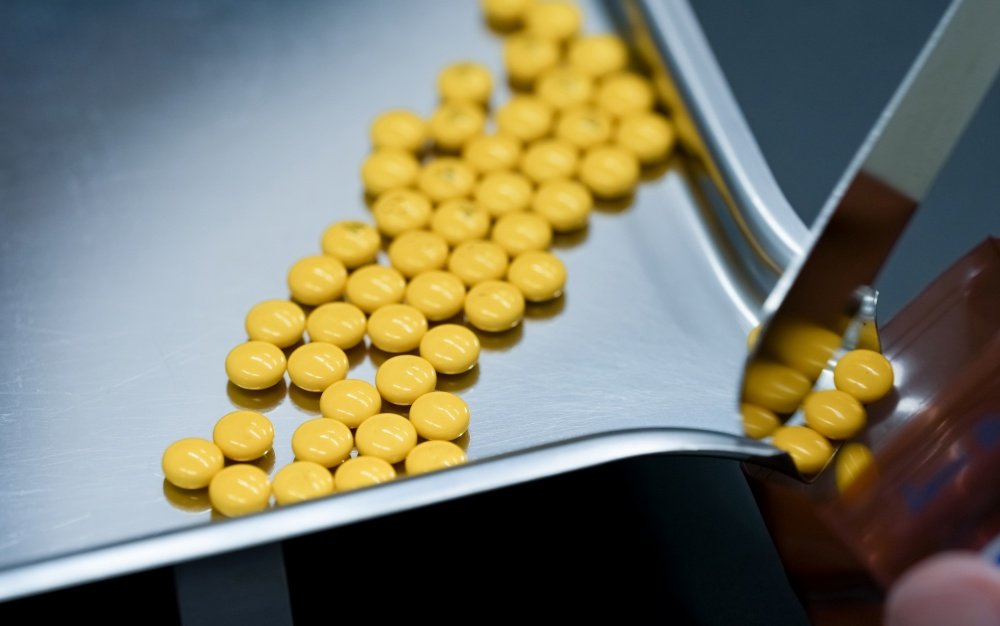
The coating processes offer several benefits beyond just aesthetics. Applying a thin layer to a tablet core can be a critical step in ensuring a drug’s effectiveness, stability, and ease of use for the patient. Let’s take a look at some key advantages of the tablet coating process:
1. Improve Taste and Odor
Medicines can have an unpleasant taste and odor. Research indicates that bitterness and aroma are significant challenges associated with some of the most important active pharmaceutical ingredients. Coating tablets can mask these attributes, often under a sweet-tasting or neutral film. This process makes the medication more palatable and improves a patient’s willingness to take it as prescribed.
2. Physical and Chemical Protection
Tablet coating serves as a protective shield for medicines that are sensitive to light and moisture. This is especially important for certain antibiotics and vitamins, which can get damaged from excessive humidity or exposure to light.
The coating creates an impermeable barrier that protects the active ingredients from degradation and damage. This not only ensures the medicine’s potency and stability but also extends its shelf life.
3. Appearance and Identification
Tablet coatings give medications a glossy or matte finish and make them easier to swallow. This is important for both branded and generic tablets, as color and shape help differentiate them in the market and prevent medication errors. The distinct appearance also improves a patient’s perception of the product and helps ensure proper identification.
4. Control Dug Release
Extended-release (ER or XR) drugs are designed to release their active ingredient slowly over a longer period, typically 12 to 24 hours. A specialized coating is applied to the medication to achieve this. The coating’s thickness and composition are precisely engineered to dissolve at a slow, controlled rate. It reduces the need for frequent doses and helps minimize side effects by maintaining a consistent level of the drug in the body.
Tablet Coating Process (Step-by-Step Explained)
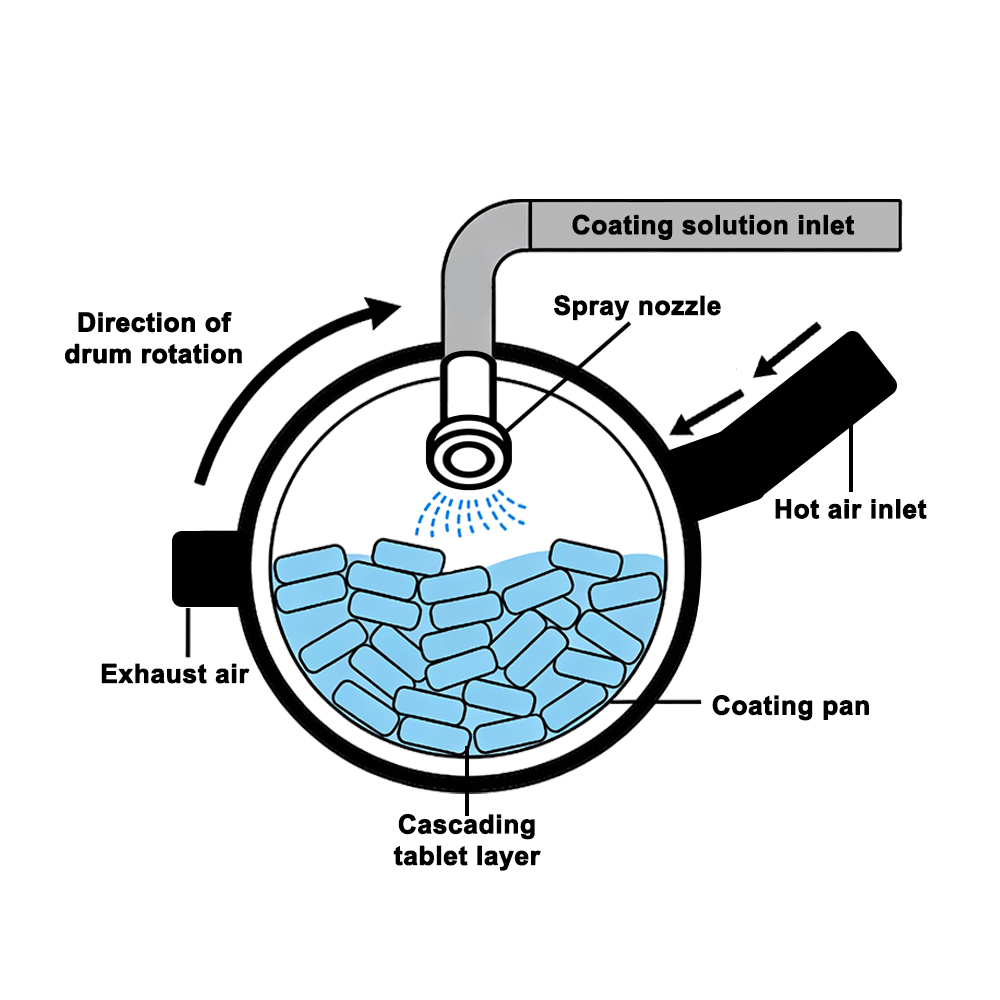
Tablet coating transforms the simple components of a tablet into a sophisticated pharmaceutical product. It makes sure that the final medicine is ready to meet the demands of both patients and Good Manufacturing Practices (GMP). Here is how the coating process in the pharmaceutical industry takes place:
Step 1. Preparation of Tablet Cores
The first step is the preparation of the tablet cores. It is the uncoated, central part of a solid oral medication. These cores must be strong and sturdy, with a clean surface to ensure that coating adheres properly.
Step 2. Preparation of the Coating Solution
The next step is to prepare the coating solution or suspension. This solution typically includes film-forming polymer, plasticizers, additives, and different pigments for desired color and gloss. A precise composition of all these ingredients helps you achieve the desired quality of the final coated product.
Step 3. Application of the Coating
The application of a tablet coating is a precise process done in a specialized machine, like a coating pan or a fluid bed coater. The three main steps are loading, tumbling, and spraying:
- Loading: The first step is to load the tablet cores into the coating equipment. Remember, the quantity of tablets should be appropriate for the machine’s capacity for proper movement and uniform exposure.
- Tumbling: Once loaded, the tablets are set in motion through the rotation of a coating pan. The constant tumbling of the pan keeps the tablets continuously moving and prevents them from sticking together.
- Spraying: As the tablets tumble, a fine spray of coating solution is applied through nozzles positioned inside the machine. The solution is atomized into tiny droplets to cover the tablets evenly and forms a smooth, uniform film.
Step 4. Drying
After each spraying cycle, the tablets are exposed to a controlled flow of warm air for drying. The airflow evaporates the solvent from the solution and leaves behind a solid dry film.
Step 5. Polishing (Optional)
Some coatings, especially the older sugar coatings, need a final polishing step. This process involves applying waxes to the tablets as they tumble, which gives them a glossy, shiny appearance. Polishing enhances the visual appeal of tablets and makes it easy for patients to swallow them.
Different Types of Coating
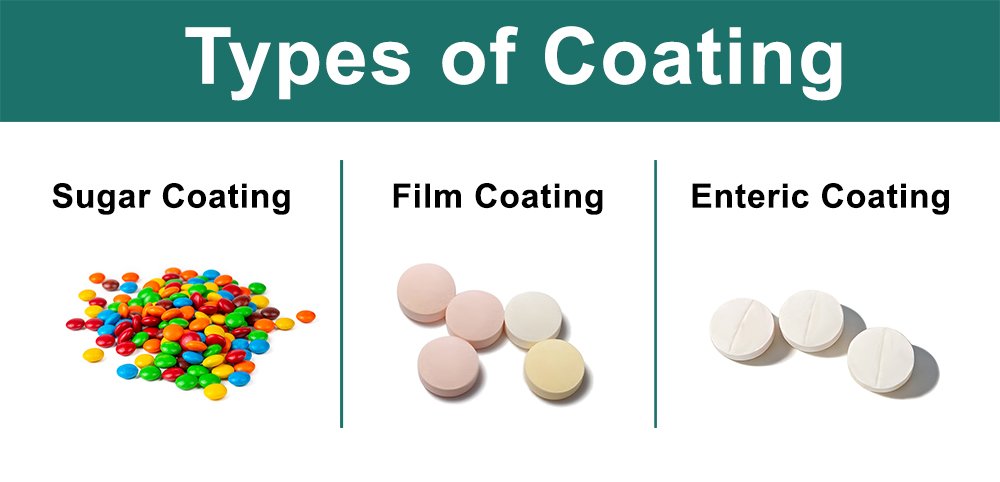
There are various types of coatings, each designed for a specific purpose. These coatings are applied according to the needs of the medication, whether taste masking or physical protection. Let’s take a look at the most common types.
1. Sugar Coating
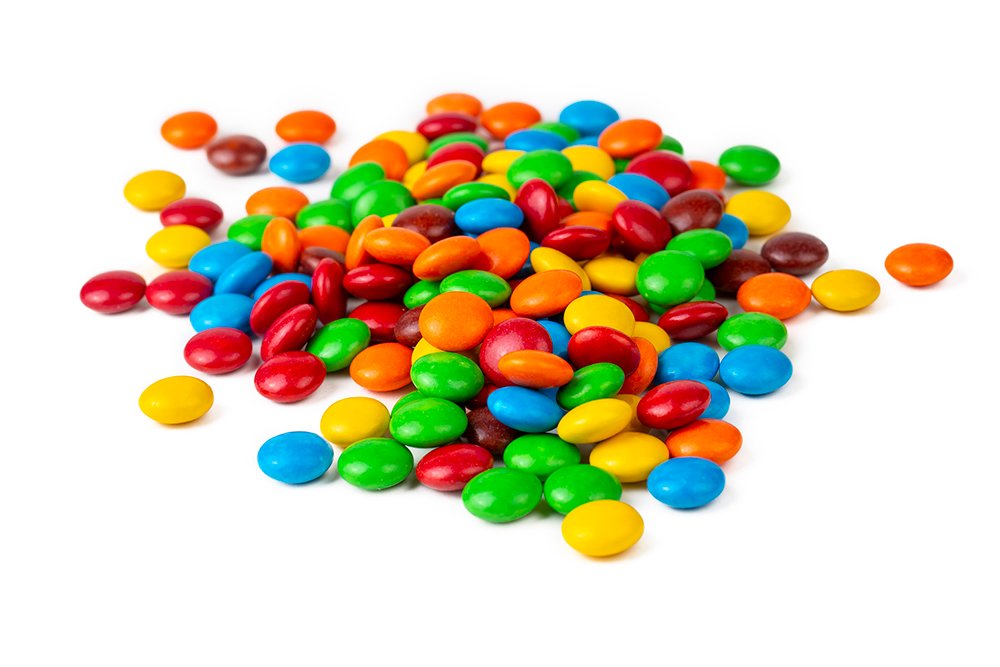
Sugar-coating is one of the oldest and most traditional coating methods. The coating is made of sucrose-based syrup, which is applied in multiple layers. This process is particularly suited for masking the unpleasant taste or odor of certain medications.
Beyond functionality, sugar-coating also enhances the tablet’s appearance by providing a glossy, polished finish, which improves patient acceptance.
2. Film Coating
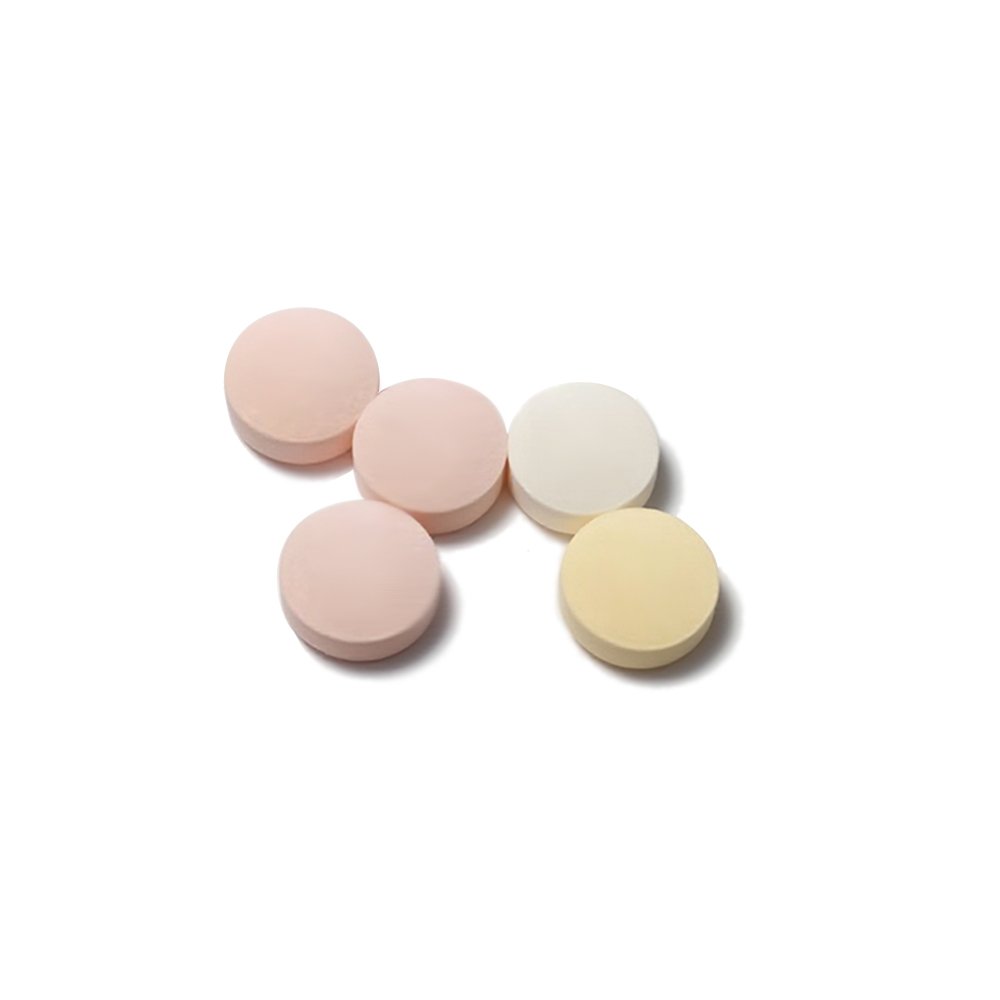
Film coating involves applying a thin layer of a polymer-based film through a spray mechanism. The primary purpose is to protect the medication and enhance its appearance by minimizing weight gain.
3. Enteric Coating
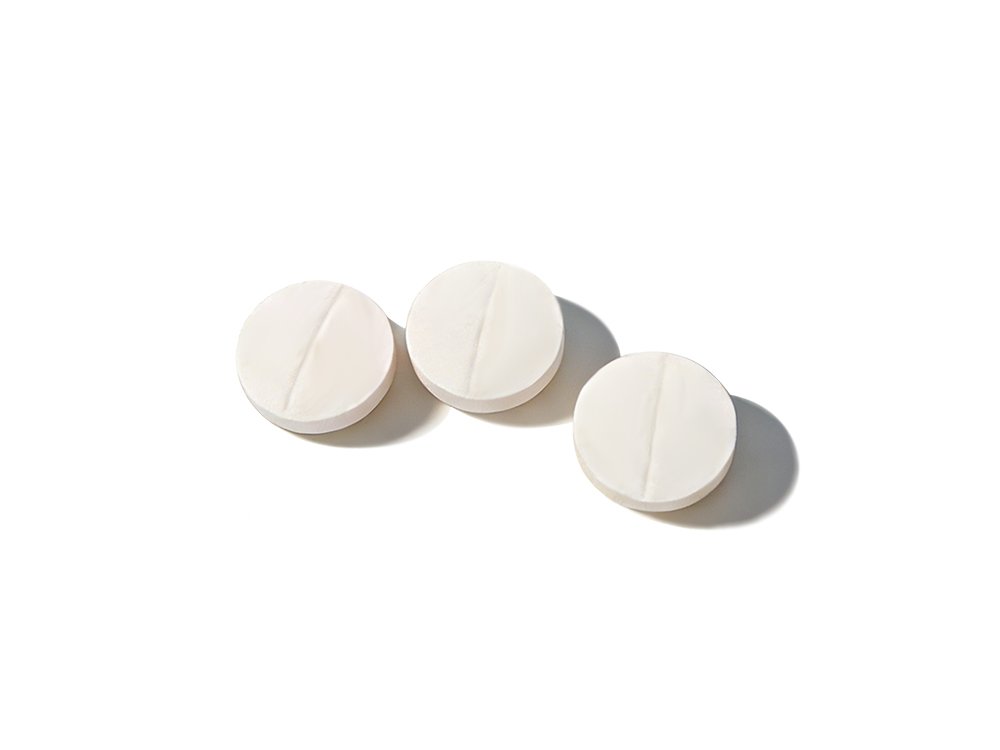
It is a specialized film coating that resists stomach acid. This coating allows the tablet to pass through the stomach intact and dissolve in the small intestine. Enteric coatings are applied to drugs that can irritate the stomach lining or are sensitive to stomach acid.
Film Coated Tablets vs. Sugar Coated Tablets
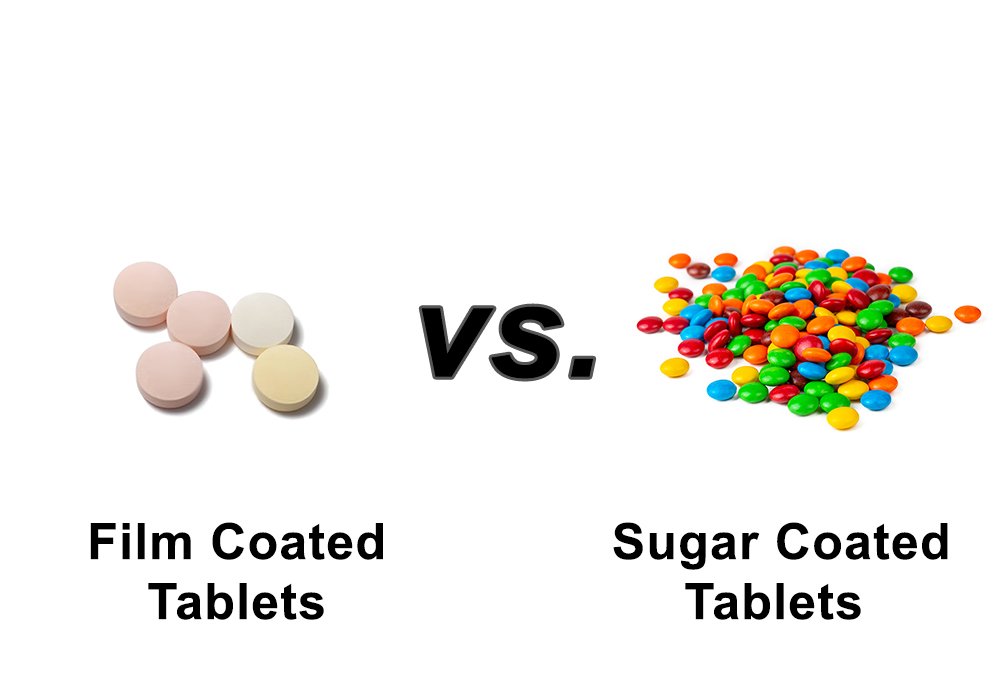
Film-coated tablets and sugar-coated tablets are two of the most common types of finished oral medications. While both provide protection, they differ significantly in their process, composition, and final result. The choice between them depends on the desired properties and manufacturing quality.
| Feature | Film Coated Tablets | Sugar Coated Tablets |
| Process | Single-stage, fast | Multi-stage, time-consuming |
| Coating | Thin polymer layer | Thick, multi-layered sucrose syrup |
| Weight Gain | Minimal (2-3%) | Significant (up to 50%) |
| Appearance | Glossy or matte, with clear imprints | Very smooth, shiny, rounded, no imprints |
| Durability | High; resistant to chipping | Can be prone to chipping |
| Primary Use | Modern standard for protection and functionality | Traditional method to mask unpleasant taste and odor |
Film Coating vs. Enteric Coating
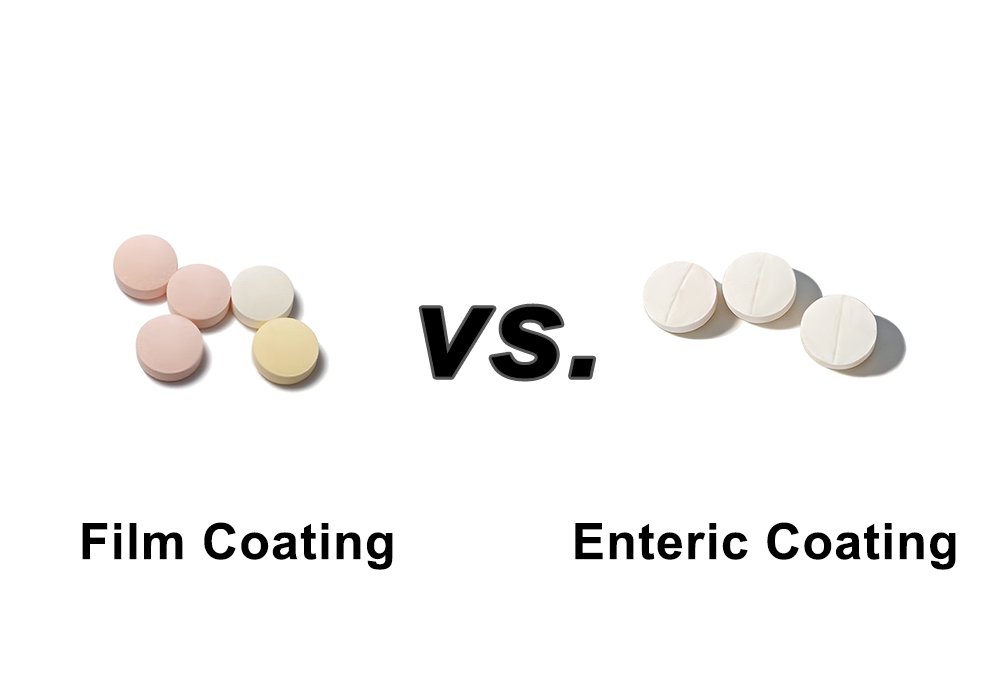
Film and enteric coatings are both polymer-based applications, but they are different in their primary function. Film coating is a general-purpose method used to protect and improve the aesthetics of a tablet.
In contrast, enteric coating is a specialized technique designed to prevent the tablet from dissolving in the stomach. The table below outlines the key differences between them.
| Feature | Film Coating | Enteric Coating |
| Primary Purpose | Protection, stability, aesthetics, and taste masking. | To resist stomach acid and dissolve in the small intestine. |
| Composition | Made from standard polymers like HPMC (hydroxypropyl methylcellulose). | Made from pH-sensitive polymers that are insoluble in acidic conditions. |
| Dissolution | Dissolves rapidly in the stomach’s acidic environment. | Remains intact in the stomach and dissolves only at a neutral to alkaline pH. |
| Functionality | Immediate release, extended release, or sustained release. | Delayed release to bypass the stomach. |
| Application | Widely used for oral solid medications. | Specifically for drugs that are stomach-irritating or acid-sensitive. |
FAQs
1. What are some common problems that can occur during the coating process?
Several issues can arise during coating. First, twinning, where tablets stick together, can be caused by insufficient drying. A rough, bumpy finish known as “orange peel” can result from a high viscosity in the coating solution. Another common problem is bridging, which occurs when the coating fills in a tablet’s logo or score line.
2. What common ingredients are used in tablet coatings?
Tablet coatings are primarily composed of polymers such as hydroxypropyl methylcellulose (HPMC), polyvinyl alcohol (PVA), and ethylcellulose. They also contain plasticizers, such as triethyl citrate or polyethylene glycol, to make the film flexible.
3. What quality control tests are used to ensure the quality of a tablet coating?
Coated tablets undergo different quality control tests. One common test is friability, which assesses the resistance of the tablets to chipping or breaking.
Another test is disintegration, which measures how quickly the coating and tablet core break down in intestinal fluid. Finally, dissolution testing measures the rate at which the active drug is released from the tablet over time.
Optimize Coating Process in Pharmaceutical Industry With Finetech
The coating process is one of those final steps that is crucial for patient acceptance and for meeting ultimate compliance standards. While it may appear to be a simple aesthetic layer, it is actually a sophisticated technological solution. From improving taste and odor to physical protection to controlled drug release, it is an integral part of drug development.
To maintain the highest production standards, your facility requires advanced technological solutions and machinery. Finetech is a professional supplier of complete pharmaceutical equipment. We utilize precise engineering and automation to optimize every aspect of the process, from preparing the coating solution to drying the final product.
Contact us today for complete pharmaceutical manufacturing solutions that guarantee superior quality and performance.
References:
Tablet Coating Defects and Remedies You Should Know.
SOP of the Tablet Coating Machine.
What is a Tablet Coating Machine?
Copyright Notice:
You may not reproduce, modify, publish, display, transmit, or in any way exploit any content on this website, or use such content to construct any kind of database without prior express written approval by Finetech Group. For permission to use the content, please contact: info@pharmamachinecn.com
Disclaimer:
The information contained in this article is for general information purposes only. The Company does not guarantee the accuracy, relevance timeliness or completeness of any information, and the Company assumes no responsibility for errors or omission in the content of this article.