English
  Russian
  Turkish
  Spanish
  French
  German
  Japanese
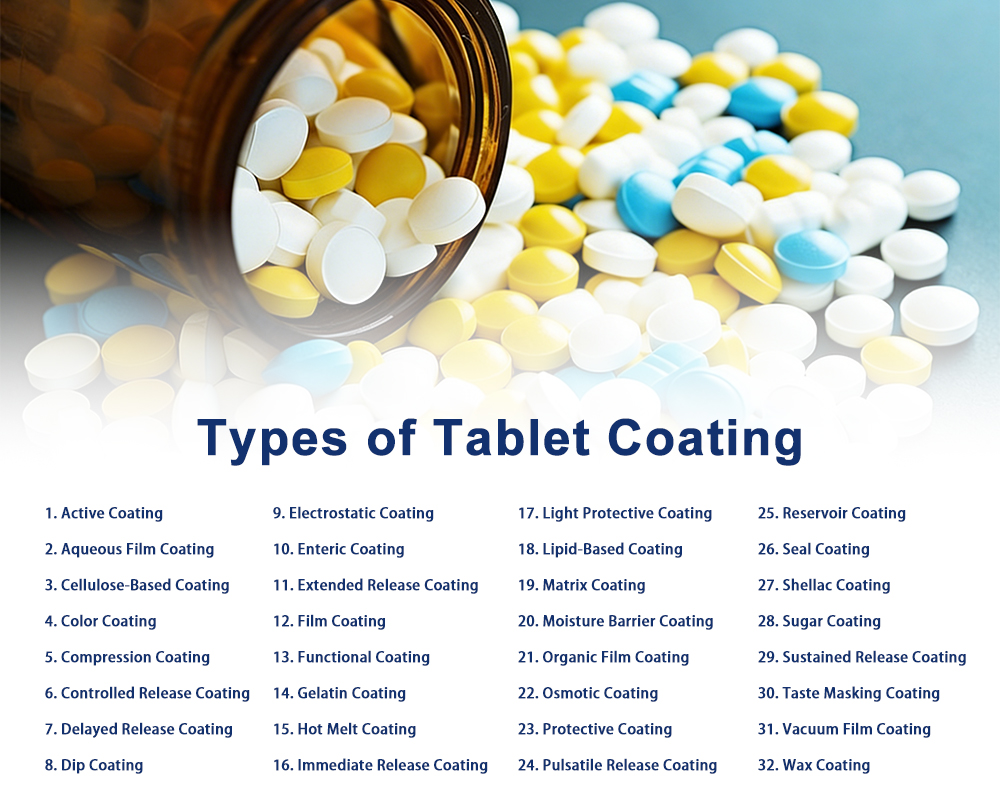
Active Coating
Active coating puts the drug in the coating itself. Not in the tablet core. Sounds backwards but it works. The core might be a placebo or a different drug entirely. Layering happens in a coating pan. Drug solution gets sprayed on gradually. Multiple passes build up the dose.
Why do this? Sometimes drugs work better absorbed from the surface. Faster onset. Other times you want two drugs in one tablet but they can’t touch. One goes in the core, one in the coating. Combination products use this trick often.
Aqueous Film Coating
Aqueous film coating uses water as the main solvent. No organic solvents needed. Safer for workers. Better for the environment too. The coating dries when water evaporates. Most pharma companies prefer this now.
Polymers like HPMC dissolve in the water. Then they spray it on spinning tablets. Fast process. Clean process. Lower fire risk than solvent-based options. The equipment is simpler too. No explosion-proof rooms required.
Drying takes a bit longer than organic solvents. Water doesn’t evaporate as fast as alcohol. But modern equipment handles this fine. Inlet air temperature and airflow make it work. Most new facilities only do aqueous coating now.
Cellulose-Based Coating
Cellulose-based coatings are everywhere in pharma. HPMC is the big one. Hydroxypropyl methylcellulose. Try saying that five times fast. It dissolves in water, forms nice films, and works with most drugs.
Other cellulose options exist too. Ethylcellulose for sustained release. Methylcellulose for basic film coating. Hydroxypropyl cellulose for both aqueous and organic systems. Each has its own properties. Formulators pick based on what the drug needs.
Color Coating
Color coating does exactly what it sounds like. Adds color to tablets. But it’s more than just looks. Different colors help patients tell pills apart. Important when someone takes multiple medications.
Brand identity matters too. That purple pill everyone knows? Color coating. Companies trademark specific shades. Generic versions sometimes can’t copy the exact color. Legal stuff gets involved. Iron oxides, lakes, and dyes provide the colors. Some are natural, some synthetic.
Compression Coating
Compression coating is also called dry coating or press coating. No liquids involved at all. A tablet core goes into a larger die. Then powder gets compressed around it. Two layers become one tablet.
Good for moisture-sensitive drugs. Also works when two ingredients can’t touch each other. The outer layer keeps them apart. Takes more time than spray coating. But some drugs need it. The equipment is specialized. Not every factory has it.
Some extended release products use compression coating. The outer layer dissolves first. Then the core releases drug slowly. Simple concept, effective results.
Controlled Release Coating
Controlled release coating manages how fast drug leaves the tablet. Broad category really. Extended release fits here. Sustained release too. The goal is predictable drug levels in the blood.
Polymers do the controlling. Some swell and form gels. Drug has to diffuse through. Others erode slowly over time. Drug escapes as the coating wears away. Combination approaches work too. Depends on how long you need the effect to last.
Patients benefit the most. Once daily dosing instead of three times. Better compliance. Fewer missed doses. Steadier drug levels mean fewer side effects sometimes. The science behind these coatings keeps advancing.
Delayed Release Coating
Delayed release coating holds back the drug. Doesn’t let it out right away. Enteric coating is one type. But delayed release is broader. Could be time-based instead of pH-based.
Some coatings dissolve after a set time in any fluid. Others need specific conditions. The delay lets the tablet pass through part of the gut before releasing. Targeting specific intestinal regions is possible. Colon delivery uses this approach.
Dip Coating
Dip coating is exactly what it sounds like. You dip the tablet into a coating solution. Pull it out. Let it dry. Simple concept that’s been around forever.
The tablet gets held by a tool or vacuum device. Down it goes into the liquid. Coating solution covers the surface. Then it comes back up and dries. Repeat for more layers. Manual process traditionally. Automated systems exist now too.
Works well for certain products. Gelatin coatings often use dipping. Some enteric coatings too. The finish can be very smooth and even. Thickness depends on solution viscosity and withdrawal speed. Faster pull means thinner coat. Slower pull means thicker coat.
Not great for high volume production though. One tablet at a time is slow. Batch processes work better for most pharma manufacturing. But for specialty products or small runs, dip coating still makes sense. Some tablet shapes coat better this way too.
Electrostatic Coating
Electrostatic coating uses electrical charge. Coating particles get charged one way. Tablet gets charged the opposite way. Opposites attract. Powder sticks to the surface evenly.
Common in other industries. Automotive painting uses this. Pharma adopted it more recently. Benefits include less waste. Overspray gets attracted back to the tablet. Material efficiency improves. Equipment costs are higher though. Not widespread yet in pharma but growing.
Enteric Coating
Enteric coating protects the stomach. Or it protects the drug from the stomach. Works both ways. The coating won’t dissolve in acid. Stomach acid can’t break it down. But the small intestine is different. Higher pH there. Coating dissolves and releases the drug.
Aspirin often gets enteric coating. Protects the stomach lining from irritation. NSAIDs in general benefit from this. Some drugs just work better when absorbed in the intestine. Enzymes in the stomach would destroy them otherwise.
The polymers used are pH-sensitive. Eudragit L and S grades are common. Shellac works too, the old school option. HPMCP is another choice. Testing involves acid exposure then buffer exposure. Coating has to survive the first and dissolve in the second.
Extended Release Coating
Extended release coating makes drugs work longer. One pill lasts all day. Sometimes longer. The coating controls how fast the drug escapes. Slow and steady release into the body.
Patients take fewer pills. Better compliance that way. Missing one dose matters less when blood levels stay stable. Different polymers control the release rate. Some swell up. Some erode slowly. Ethylcellulose is popular. Certain acrylics work well too.
Testing these coatings takes time. Dissolution studies run for 12, 24, even 48 hours. The release profile has to match what the body needs. Getting it right takes lots of development work.
Film Coating
Film coating is the most common type today. Thin polymer layer on the tablet. Usually just 2-4% weight gain. Much thinner than sugar coating. Changed the industry when it came along.
Spray guns hit tablets tumbling in a pan. Coating solution dries quick. Colors hide ugly drug cores. Logos get printed on easy. Protects against moisture and light too. HPMC is the popular polymer choice.
Modern film coating is fast. A batch might take 45 minutes to an hour. Compared to sugar coating taking days. Efficiency drove the switch. Most tablets you see in pharmacies have film coating now.
Functional Coating
Functional coating does something beyond looking nice. Taste masking is functional. Extended release is functional. Enteric protection is functional. The coating has a job.
Compare this to aesthetic coating. That just improves appearance. Functional coatings change how the drug works in the body. They require more development effort. Regulatory agencies want proof they perform consistently. Dissolution testing, stability studies, the whole process.
Gelatin Coating
Gelatin coating creates a smooth glossy finish. Soft gel capsules use this concept. But tablets can get gelatin too. The process differs from standard film coating.
Dipping works for some products. Tablet goes into gelatin solution, comes out coated. Banding is another method. Gelatin strip wraps around the tablet middle. Creates tamper evidence. You can see if someone opened it.
Animal sourcing is the issue. Gelatin comes from pigs or cows usually. Religious restrictions apply. Vegetarian and vegan patients avoid it. Plant-based alternatives exist now. HPMC capsules for example. Market is shifting slowly.
Hot Melt Coating
Hot melt coating uses no solvent at all. Waxy materials melt with heat. They spray onto tablets and solidify on contact. No drying needed because there’s nothing to dry.
Fast process. Environmentally friendly. No solvent recovery equipment required. The coatings are usually lipid-based. Waxes, fatty acids, glycerides. Good for moisture protection. Not always suitable for immediate release though. Some hot melt coatings slow drug release.
Temperature control matters a lot. Too hot and you damage the drug. Too cold and coating doesn’t spread properly. Equipment has to maintain tight ranges. Growing in popularity for the right applications.
Immediate Release Coating
Immediate release coating doesn’t slow anything down. The coating dissolves fast in the stomach. Drug releases right away. So why coat at all?
Protection during storage. Moisture barrier. Light barrier. Taste masking for the few seconds in the mouth. Color for identification. The coating does its job until swallowing. Then it gets out of the way quickly.
Water-soluble polymers work best here. HPMC again. PVA sometimes. The coating shouldn’t add any delay to drug release. Dissolution testing confirms this.
Light Protective Coating
Light protective coating blocks UV and visible light. Some drugs break down when exposed to light. Photodegradation is the technical term. Packaging helps but coating adds another layer of protection.
Opaque coatings work best. Titanium dioxide makes things white and blocks light. Iron oxides give colors while protecting. Some drugs are so light-sensitive they need both protective packaging and coating. Belt and suspenders approach.
Lipid-Based Coating
Lipid-based coating uses fats and waxes. Carnauba wax. Beeswax. Stearic acid. Hydrogenated vegetable oils. These materials resist water well.
Good for moisture-sensitive drugs. Also useful for sustained release. Lipids don’t dissolve in stomach acid. They erode slowly or melt at body temperature. Drug releases over time. Hot melt coating often uses lipid materials.
Matrix Coating
Matrix coating embeds drug throughout the coating layer. Different from reservoir systems where drug sits in the core. Here the drug mixes with the coating polymer. Release happens as the matrix erodes or as drug diffuses out.
Multiple mechanisms work together. Swelling, erosion, diffusion all play roles. Modeling drug release gets complicated. But the manufacturing is simpler than reservoir systems. One coating step instead of multiple layers. Cost-effective for some products.
Moisture Barrier Coating
Moisture barrier coating keeps water out. Some drugs break down when wet. Humidity ruins them. This coating stops that. Hydrophobic polymers do the work.
Ethylcellulose is common. Waxes work too. Some acrylics provide good barriers. Tropical climates need this protection especially. Shelf life gets longer. Stability improves. Often combined with other coating types. A moisture barrier might go under a color coat.
Organic Film Coating
Organic film coating uses solvents like alcohol or acetone. Older method than aqueous coating. Dries very fast. Some polymers only dissolve in organic solvents. That’s when you need this approach.
Flammability is the big concern. Explosion-proof equipment required. Solvent recovery systems cost money. Environmental regulations are strict. Worker safety needs attention. Ventilation has to be excellent.
Most companies moved away from organic solvents. But some situations still need them. Certain polymers. Certain drugs that can’t handle water. The technology isn’t dead, just less common.
Osmotic Coating
Osmotic coating is high-tech stuff. Uses osmotic pressure to push drug out. The tablet has a semipermeable membrane. Water enters through the membrane. Pressure builds inside. Drug gets pushed out through a laser-drilled hole.
Sounds complex because it is. Very controlled release profiles result. Zero-order kinetics sometimes. Drug releases at constant rate regardless of pH or food. OROS technology from Alza was famous for this. Expensive to manufacture but effective for certain drugs.
Protective Coating
Protective coating is a general term. Protects against what exactly? Moisture sometimes. Light other times. Physical damage during handling. Oxygen exposure for drugs that oxidize.
Most coatings offer some protection. This category emphasizes protection as the main goal. The tablet works fine uncoated. But it won’t survive storage or shipping without help. Protective coating solves the problem.
Pulsatile Release Coating
Pulsatile release coating creates bursts of drug release. Not continuous like extended release. Timed pulses instead. First dose releases immediately. Second dose releases hours later from the same tablet.
Useful when the body needs drug at specific times. Chronotherapy matches drug delivery to body rhythms. Blood pressure drugs might work better dosed at certain hours. Pulsatile coating makes this possible with one tablet.
Complex to formulate. Multiple coating layers with different properties. The outer layer dissolves first. Inner layers have lag times built in. Impressive technology when it works.
Reservoir Coating
Reservoir coating surrounds a drug-containing core. The core is the reservoir. Drug has to pass through the coating to escape. Rate-controlling membrane determines release speed.
Fick’s law of diffusion applies. Coating thickness matters. Polymer properties matter. Drug solubility matters. All these factors combine to give a release profile. Consistent manufacturing is essential. Small variations in coating thickness change everything.
Seal Coating
Seal coating goes on first. Before other coatings. It seals the tablet surface. Prevents moisture getting into the core. Stops drug from migrating into outer layers.
Creates a smooth base for film coating. Uneven tablet surfaces coat poorly. Seal coating fixes that. Also prevents interactions between core and coating. Some drugs react with coating polymers. Seal coating keeps them apart.
Shellac was traditional. Now synthetic polymers work better. HPMC often serves as seal coat. Thin layer does the job. Maybe 1-2% weight gain. Important step that people sometimes skip. Shouldn’t skip it though.
Shellac Coating
Shellac coating has history. Used for over a century. Natural material from lac beetles. Sounds strange, but it’s true. Dissolved in alcohol, sprayed on tablets.
Creates a glossy finish. Good moisture barrier. Enteric properties, too. Shellac resists stomach acid. But quality varies batch to batch. Natural products do that.
Synthetic alternatives largely replaced shellac. More consistent. Easier to source. But shellac still appears in some products. Confectionery uses it. Some pharma applications continue.
Sugar Coating
Sugar coating is the old school method. Been around over 150 years. Multiple layers of sugar solution. Takes hours. Sometimes days. Skilled operators needed.
The process has many steps. Seal coat first. Then subcoat to round the tablet. Then syrup layers for smoothing. Then color coat. Finally polish with wax. Each step requires drying between coats.
The tablet gets big and round. Smooth finish though. Bitter tastes disappear completely. Looks elegant on the shelf. Patients like swallowing them. The coating itself tastes slightly sweet.
But it’s slow and expensive. Operator skill matters enormously. Consistency is hard to achieve. Weight gain can be 50-100% of the core tablet. That’s a lot of added material. Most companies switched to film coating decades ago.
Some products still use sugar coating. Certain brands are known for it. Tradition matters in consumer products. Advil has that smooth sugar coat look. M&Ms too, though not pharma obviously.
Sustained Release Coating
Sustained-release coating maintains drug levels over time. Overlaps with extended release. Some people use the terms interchangeably. Others make distinctions.
Generally, sustained release means maintaining therapeutic levels. Extended release means any prolonged release. Subtle difference. Both use similar coating technologies. Rate-controlling polymers. Thickness optimization. Dissolution testing over many hours.
Taste Masking Coating
Taste masking coating hides bad flavors. Some drugs taste awful. Bitter, metallic, just nasty. Kids won’t take them. Adults struggle too.
The coating creates a barrier. Taste buds never touch the drug. Polymers stay intact in the mouth. Only dissolve in the stomach. A few seconds of protection makes all the difference.
Chewable tablets really need this. Orally disintegrating tablets too. These formats spend more time in the mouth. Flavor additives help but coating does the heavy lifting. Without it, some drugs would be impossible to take.
Vacuum Film Coating
Vacuum film coating uses reduced pressure to improve the process. Air gets pumped out of the coating chamber. Tablets sit in a partial vacuum. Then coating solution gets applied.
Why bother with vacuum? Solvent evaporates faster at low pressure. Drying happens quicker. Lower temperatures work too. Heat-sensitive drugs benefit from this. Less thermal stress on the product.
The equipment is more complex though. Vacuum chambers cost more than standard pans. Seals have to hold. Pumps need maintenance. Not every facility has this capability. But for certain products, it’s worth the investment.
Porous tablets coat better undera vacuum too. Air trapped in pores can cause defects. Vacuum pulls that air out first. Coating solution penetrates better. More uniform coverage results. Some sustained release products use vacuum coating for this reason.
Wax Coating
Wax coating uses natural or synthetic waxes. Carnauba wax is common. Comes from palm trees. Beeswax works too. Microcrystalline wax is synthetic.
Applied through hot processes usually. Wax melts, coats the tablet, solidifies. Good moisture barrier properties. Also provides nice sheen. Often used as the final polish step in sugar coating.
Sustained-release applications use wax too. Wax doesn’t dissolve in water. Drug has to escape through the pores or as wax slowly erodes. Simple technology that still has uses.
References:
TOP 10 Tablet Coating Machine Manufacturers In The World.
Tablet Coating Defects and Remedies You Should Know.
SOP of the Tablet Coating Machine.
What is a Tablet Coating Machine?
Copyright Notice:
You may not reproduce, modify, publish, display, transmit, or in any way exploit any content on this website, or use such content to construct any kind of database without prior express written approval by Finetech Group. For permission to use the content, please contact: info@pharmamachinecn.com
Disclaimer:
The information contained in this article is for general information purposes only. The Company does not guarantee the accuracy, relevance timeliness or completeness of any information, and the Company assumes no responsibility for errors or omission in the content of this article.