English
  Russian
  Turkish
  Spanish
  French
  German
  Japanese
An FFS machine (form fill seal) does three jobs in one pass. It forms the bag, fills it with product, and seals it shut. That’s a lot of moving parts working together at speed.
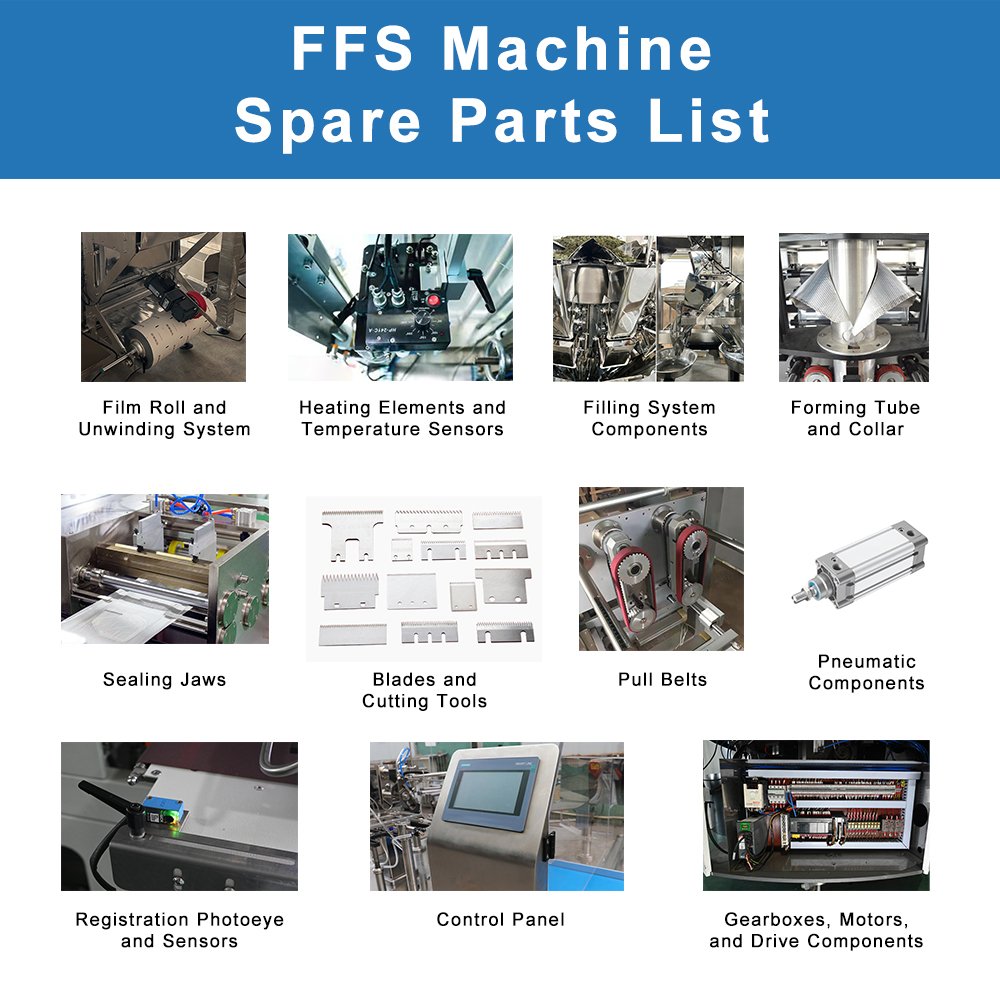
When something wears out or breaks, you need the right FFS machine spare parts list for your setup so you’re not guessing at part numbers while the line sits idle.
Both VFFS (vertical) and HFFS (horizontal) machines share a lot of the same wear parts. Some are different. This covers what you’ll need across both types.
1. Film Roll and Unwinding System
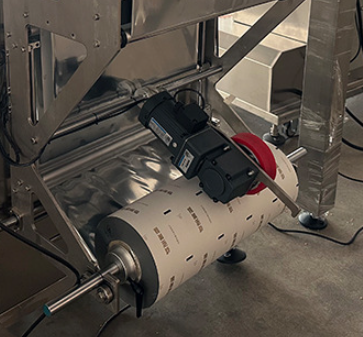
Everything starts with the film roll. The unwinding system holds the roll and feeds film into the machine at a steady, controlled rate.
The roll holder has bearings that wear out. When they get rough or seize, the roll doesn’t spin freely and the film feeds jerky. That causes wrinkles, misaligned prints, and bad seals downstream.
Tension control springs and brakes also wear. If the tension is off, the film either sags (too loose) or stretches (too tight). Both mess up the finished bag.
Some machines use a dancer arm or roller to maintain consistent tension. The pivot bearings on that arm wear and the roller surface can get grooved. Once the dancer stops responding smoothly, tension fluctuates and film registration goes haywire.
Splice tape and film roll changeover mechanisms are worth mentioning too. On high-speed lines, a slow roll change kills throughput. Worn or sticky splicing components make changeovers take longer than they should.
2. Forming Tube and Collar
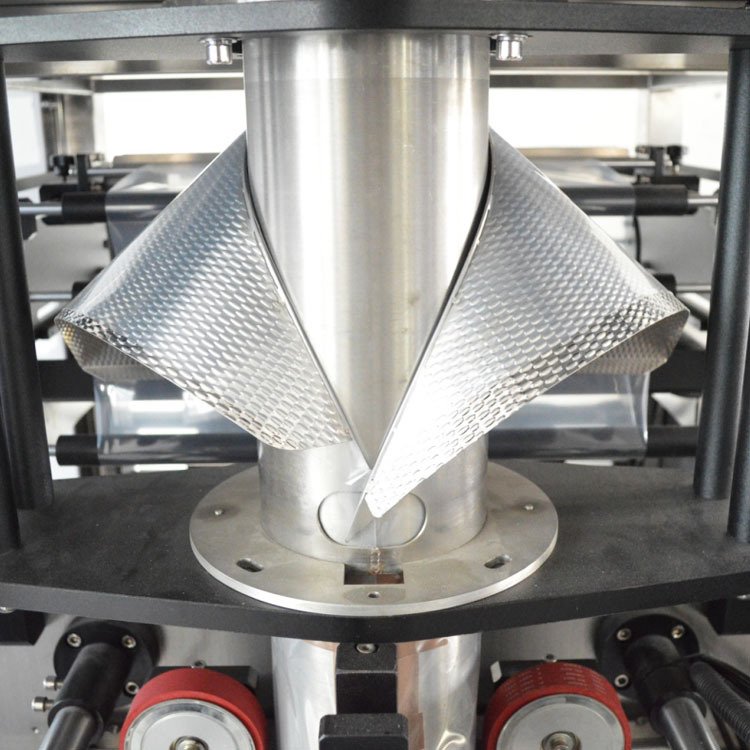
The forming tube (also called a forming shoulder or former) shapes flat film into a tube or pouch shape. The collar guides the film around the tube and folds it into position.
These parts wear from constant film contact. The collar’s edges can get rough or scored, which scuffs or tears the film as it passes over. A worn forming tube changes the bag dimensions slightly. Bags come out wider or narrower than spec, or the back seal doesn’t line up right.
Forming tubes and collars are sized for specific bag widths. Different product, different bag size, different former. Keep them organized and labeled or changeovers turn into a scavenger hunt. Stainless steel formers last longest. Coated aluminum ones are cheaper but wear faster with abrasive films.
3. Pull Belts
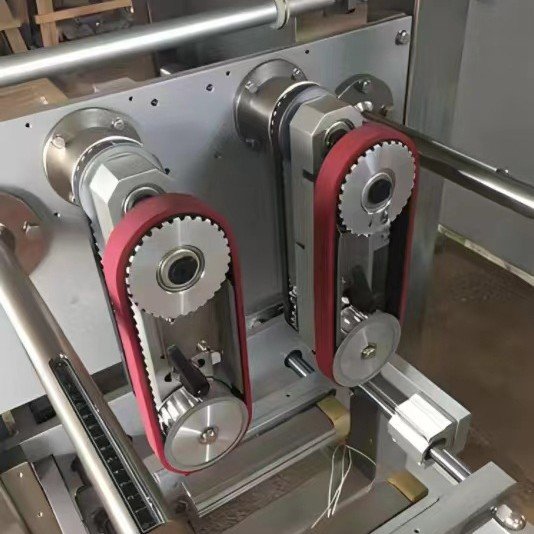
Pull belts grip the film and drag it down (on VFFS) or across (on HFFS) through the machine. They control how much film advances per cycle, which directly affects bag length.
Friction belts are the cheaper option. They wear faster, especially with dusty or oily products that get between the belt and the film. The grip fades and the film starts slipping. That throws off bag length and seal position.
Vacuum belts cost more but last a lot longer. They use suction to hold the film against the belt surface, so they don’t rely on friction alone. Worth the investment if you’re running anything messy.
Both types stretch with use. A stretched pull belt means the film doesn’t advance the same distance each cycle. Bags get longer or shorter depending on where the stretch is.
If bag lengths are drifting and you’ve already checked the settings, the pull belts are probably the problem.
Replacing pull belts is a pain on some machines because you have to remove other components to get at them. Know the procedure before you need to do it in a rush.
4. Sealing Jaws (Cross Seal and Back Seal)
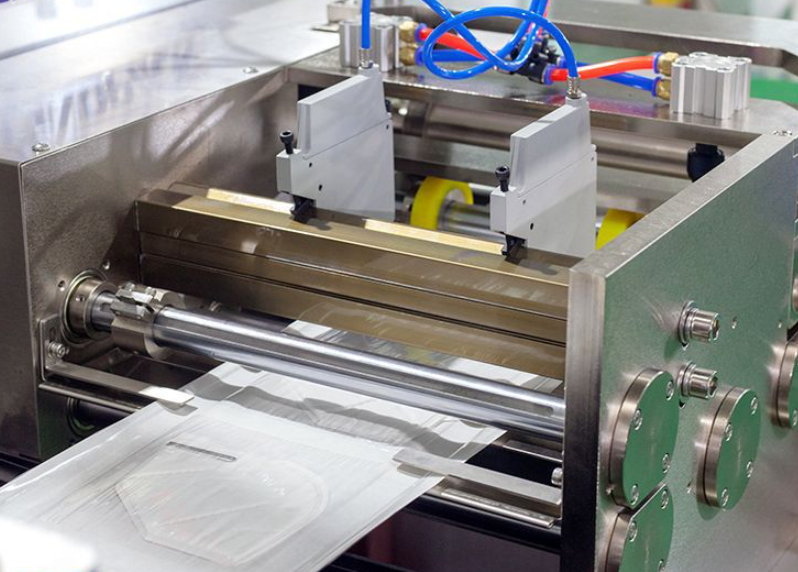
FFS machines have two types of seals. The back seal (also called a fin seal or lap seal) runs along the length of the bag. The cross seal goes across the top and bottom, closing the bag after filling.
Both use heated jaws or bars that press together and bond the film. The jaw surfaces wear down from heat and pressure. Serrations flatten. Teflon tape or PTFE covers burn through. All of it leads to weak or inconsistent seals.
Cross seal jaws on VFFS machines take more abuse because they also have to support the weight of the filled product while sealing. That constant load wears them faster than back seal bars.
Check jaw alignment regularly. Jaws that don’t meet flat give you seals that are strong on one edge and weak on the other. A leaking seal means product spoilage, customer complaints, and potential recalls depending on what you’re packing.
Replace the Teflon covers and tape on a schedule instead of waiting for them to fail. It’s cheap insurance.
5. Heating Elements and Temperature Sensors
Behind every sealing jaw there’s a heating element. Cartridge heaters are the most common. They sit inside the jaw body and heat the sealing surface. When one burns out, that part of the jaw goes cold and seals fail in that spot.
Temperature sensors (RTDs or thermocouples) tell the controller how hot the jaw is. A bad sensor sends wrong readings. The controller thinks the jaw is at temp when it’s actually 20 degrees off. That means either burnt film or weak seals, depending on which direction the reading is wrong.
Both parts are cheap relative to the downtime they cause. Stock spares. Check element resistance during PM stops to catch failing elements before they die completely.
On machines running 24/7, elements tend to last a few months before they need swapping. Lighter duty operations get longer life out of them. Either way, keep a couple in the spare parts cabinet at all times.
6. Cutting Knife
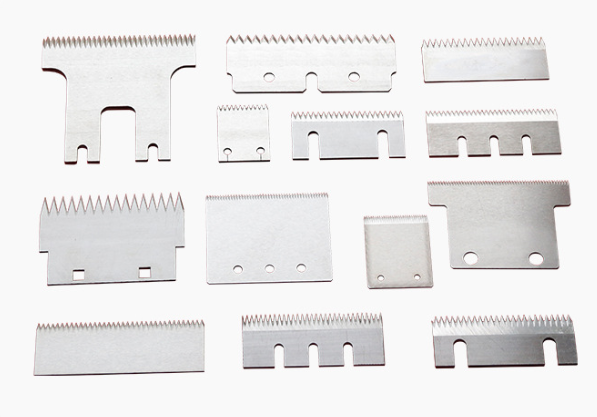
After the cross seal is made, a knife separates the finished bag from the film. On most machines it’s a straight blade that moves between the sealing jaws.
Dull knives tear instead of cutting clean. You get ragged bag edges, partial cuts, or bags that stay connected and jam the machine. Some FFS machines use a serrated blade, others use a smooth one. Make sure you order the right type.
Knife timing matters too. If the blade fires too early or too late, it cuts into the seal area and weakens it. Timing is usually cam or servo driven. If timing drifts, check the mechanical linkage before assuming it’s an electrical issue.
On some machines the knife also has a spring-loaded return. If the spring weakens, the blade doesn’t retract fully and catches on the next bag coming through. Quick to replace once you figure out that’s the problem.
7. Filling System Components
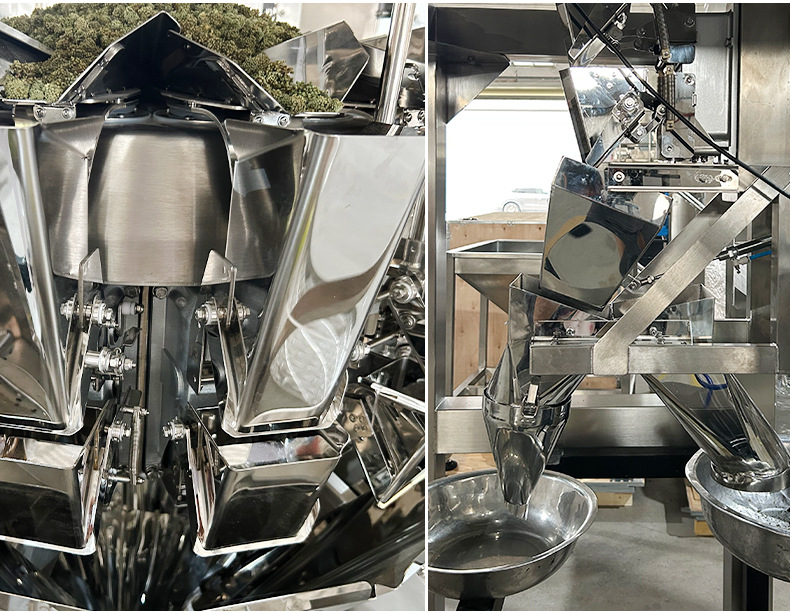
The filling system is machine-specific and product-specific. Auger fillers for powders, volumetric cups for granules, piston fillers for liquids, multihead weighers for snacks and irregular pieces.
Auger flights wear from abrasive powders. The clearance between the auger and the funnel wall increases, which drops fill accuracy. Volumetric cups lose their edge definition and don’t give a consistent volume anymore. Piston seals dry out and start leaking, which is a mess with liquid products.
Multihead weighers have their own set of wear parts. Radial feeders, pool hoppers, weigh buckets. Vibrating components eventually fatigue and crack. Load cells drift and need recalibration or replacement.
Whatever filler you’re running, fill accuracy problems usually trace back to a worn mechanical part, not a software setting. Check the hardware first.
Filler changeover parts matter too. If you switch between products or package sizes, you’re swapping funnels, tubes, augers, or cups. Those change parts take abuse during handling and storage. A dented funnel or bent tube affects fill accuracy even if the main filler is in perfect shape.
8. Registration Photoeye and Sensors
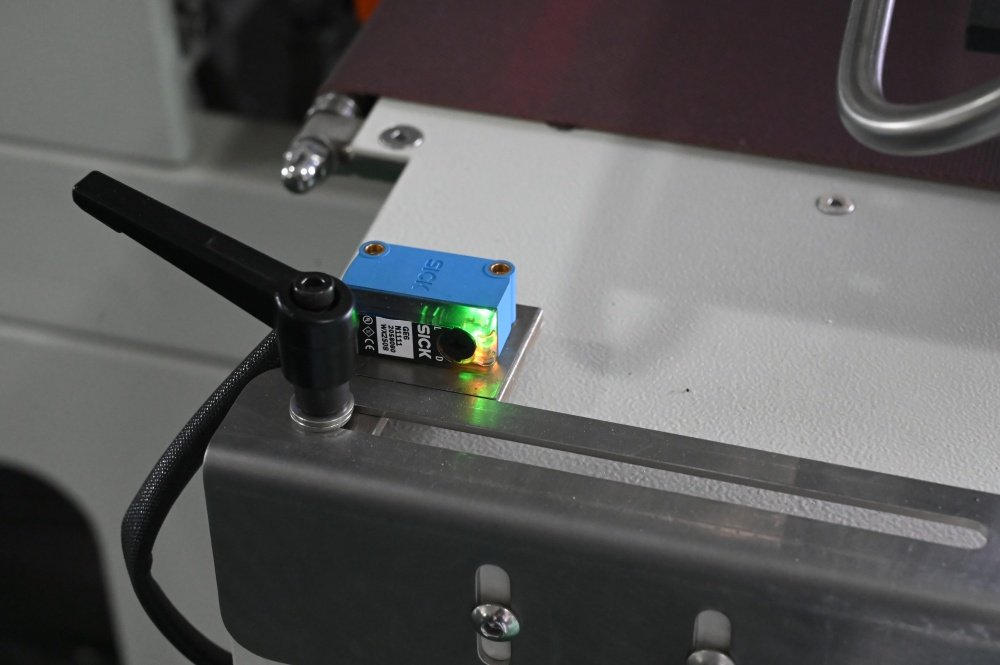
Printed film needs to be cut and sealed in the right spot relative to the print. A photoeye reads registration marks on the film and tells the machine where to make each cut and seal.
A dirty photoeye reads late or misses marks entirely. Every bag comes out with the print in the wrong spot. Cleaning takes seconds and fixes the problem most of the time. If cleaning doesn’t help, the photoeye itself might be failing.
Proximity sensors, limit switches, and safety interlocks are scattered all over FFS machines. They detect jaw position, film presence, product level, and guard status.
Wiring vibrates loose. Sensors drift. Switches wear out mechanically. Any one of them going bad can stop the machine or cause it to make bad product without anyone noticing right away.
During PM stops, wiggle the connectors on each sensor to check for loose connections. Tighten anything that moves. Takes a few minutes and prevents the kind of intermittent faults that drive maintenance people crazy.
9. Pneumatic Components
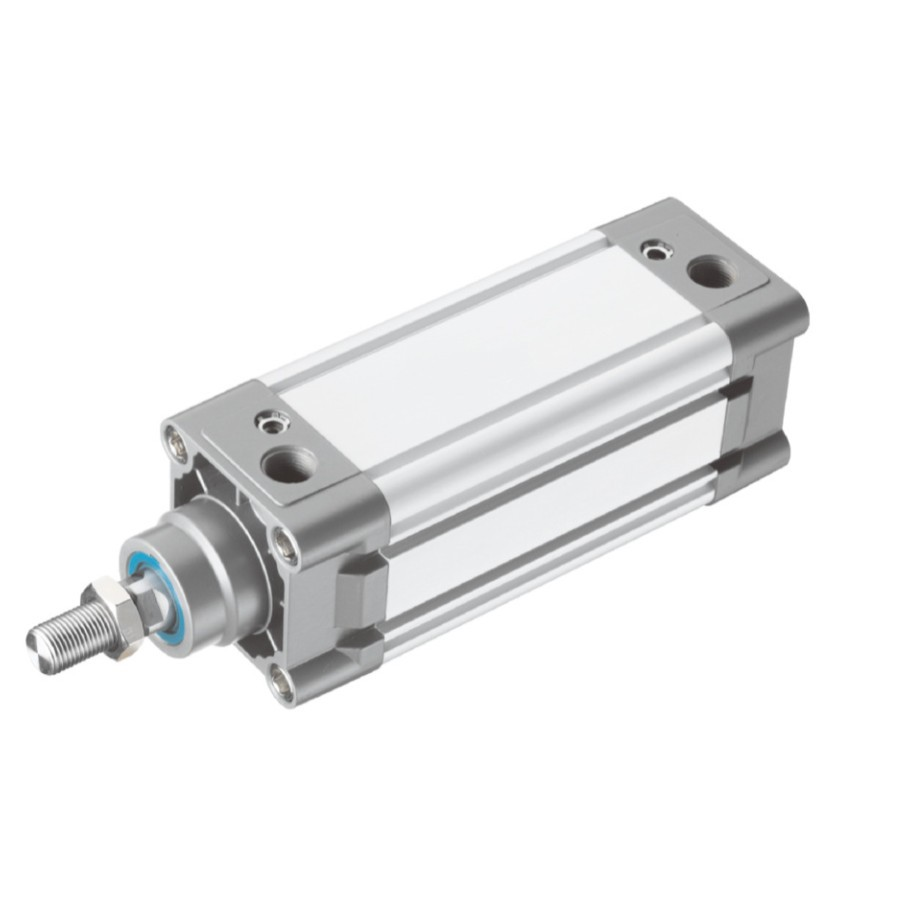
Air cylinders open and close jaws, actuate the knife, operate the filling system, and clamp film. Solenoid valves direct air to each cylinder at the right time.
Cylinder seals wear and the action gets sluggish. Valves stick or fail electrically. Fittings and tubing crack from age and vibration. Small leaks are the sneaky ones. The machine doesn’t stop but it gradually slows down and seal quality gets inconsistent.
Listen for hissing when the machine is pressurized but not running. Easiest way to find leaks.
Write down bore sizes, stroke lengths, and valve specs for each pneumatic component while things are still working. You’ll be glad you did when you need to order a replacement at 2 AM.
Air quality matters. Oil and water in the lines corrode cylinders and gum up valves. Put a filter and dryer near the machine if the plant air supply isn’t clean.
Regulator settings can drift too. If someone bumps the regulator or it wears internally, the whole machine gets the wrong pressure. Check it with a gauge, not just by looking at the dial on the front.
10. Gearboxes, Motors, and Drive Components
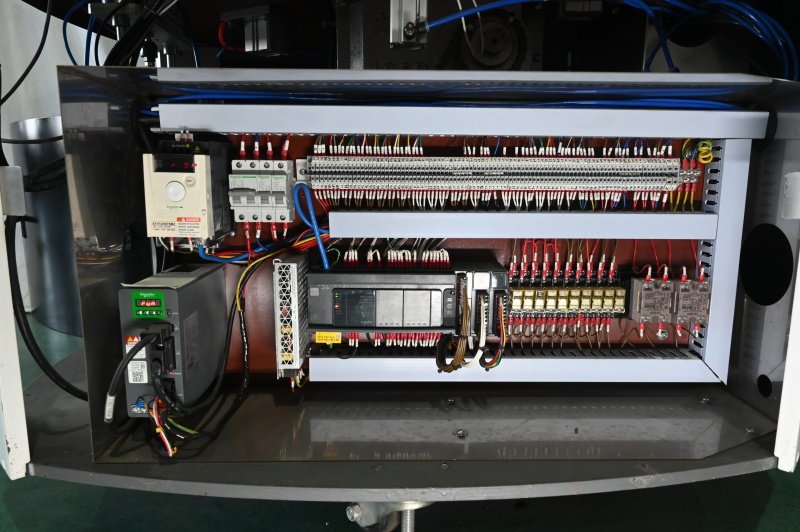
The main motor drives the machine through a gearbox. Servo motors handle individual stations on newer machines. Timing belts, chains, sprockets, and couplings connect everything together.
Gearbox oil degrades and gears wear. You hear it before you see it. Grinding or whining from the gearbox means something inside is on its way out. Servo motors are expensive to replace so document the model and specs somewhere accessible.
Timing belts and chains stretch with use. A stretched chain skips teeth and throws off timing across the whole machine. Sprockets wear into a hooked shape that accelerates chain wear. Replace chain and sprocket together.
Keep belt tension adjusted too. A loose timing belt slips and causes random defects that make people blame the PLC when the real problem is mechanical.
11. Control Panel, PLC, and HMI
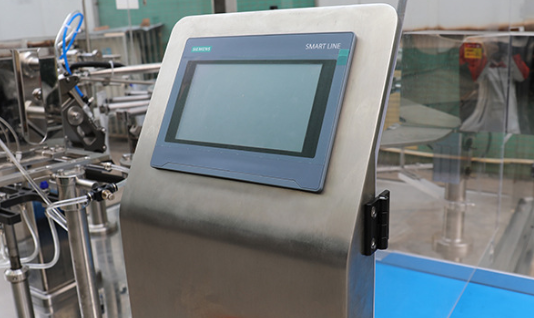
The PLC coordinates everything. Film feed, jaw timing, filler operation, knife actuation. The HMI touchscreen is where operators set bag length, seal temperature, fill weight, and speed.
PLC failures are rare but when they happen it’s a full stop. Keep a backup of the program on a USB drive. Power surges and outages can corrupt the program. Reloading takes minutes. Reprogramming from scratch takes days.
Touchscreens get abused. Operators poke them with tools, spill product on them, and crack them. Having a spare or knowing the lead time on one is worth it for older machines where the original screen has been discontinued.
Relays and fuses inside the panel wear out or blow. A chattering relay or intermittent fuse can cause problems that look electrical but are really just a $5 part. Check the simple stuff first.
What to Stock
Film-contact parts wear fastest. Pull belts, sealing jaw covers, cutting knives, and forming collars. After that, heating elements, temperature sensors, and pneumatic seals. Keep those on hand and you’ll handle most breakdowns without waiting on a supplier.
Write down every part number the first time you order it. Tape the list to the inside of the electrical panel door or stick it in a shared folder. When the next person needs to order that same part at 5 AM, they’ll have what they need.