English
 Russian
 Turkish
 Spanish
 French
 German
 Japanese

Essential for both healthcare and laboratories, vials are the primary containers used to store life-critical liquid, powder, or capsule medications. However, the integrity of these medicines depends entirely on a proper cleaning process in vial washing machines.
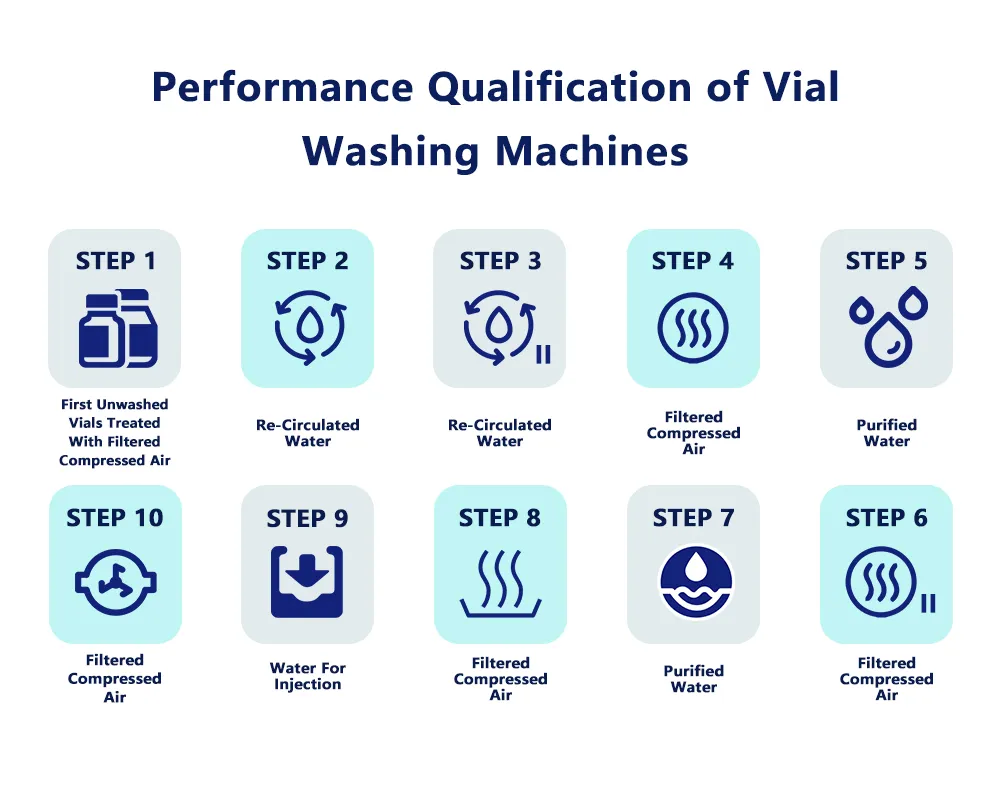
This is where the Performance Qualification of the vial washing machine becomes essential. PQ validates that the vial washing machine can consistently achieve the required cleaning performance under real production conditions, not just in controlled testing.
Without this confirmation, even minor cleaning failures can carry forward into production and compromise entire batches, putting patient safety at risk.
In this guide, we will break down the key parameters of PQ for vial washing machines and explain how each step ensures reliable performance in pharmaceutical manufacturing.
Performance Qualification (PQ) of Vial Washing Machine
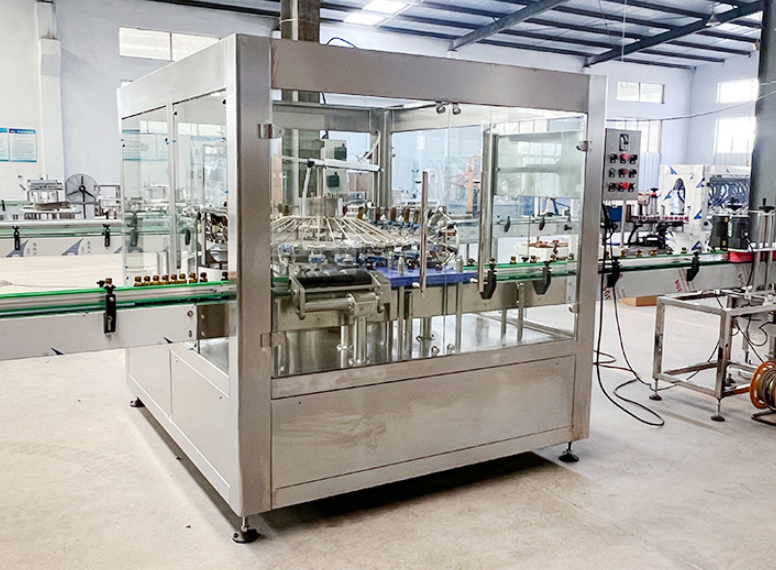
Vial washing machines are specialized pharmaceutical equipment designed to clean different types of vials (2ml to 100ml) for biotech and laboratory use. These containers are later filled with life-saving medicines like Insulin, Vaccines, or Oncology drugs.
Performance Qualification (PQ) is a documented process that confirms the machine consistently removes contaminants such as particles, endotoxins, and chemicals under normal operating conditions. This phase involves rigorous testing with spiked and soiled vials over three consecutive successful runs to confirm process consistency.
These trials verify that the washing, rinsing (WFI), and cleaning cycles meet strict, predetermined acceptance criteria for total cleanliness
Core Parameters of Vial Washing Machine PQ
Unlike ampoules, vials are multi-use or open-top containers that require intensive decontamination before filling. For PQ, validation teams focus on endotoxin and particulate removal because these containers have larger surface areas prone to environmental contamination. Let’s discuss some core parameters for PQ of vial washing machines:
1. Microbiological & Endotoxin Reduction
This is the first and most critical parameter in Performance Qualification. In this stage, vials are spiked with a known concentration of E. coli endotoxin (typically >1,000 EU/vial). The washing cycle must consistently demonstrate a 3-log reduction in endotoxin levels (99.9% removal).
Additionally, microbial bioburden testing assesses the total viable count on vials post-wash to ensure that the environment and media (WFI/Air) are not introducing new contaminants.
Note: Log reduction is a mathematical term used to show the relative number of live microbes eliminated from a surface. A 3-log reduction means the number of microorganisms is lowered by a factor of 1,000.
2. Particulate Matter Removal
All pharmaceutical vials must be free of visible and sub-visible particles to comply with USP <788> standards. In this testing phase, cleaned vials are filled with high-purity filtered water and analyzed using light obscuration or microscopic particle count methods.
Test results must fall significantly below strict pharmacopeial limits for the specific vial size being processed. It validates that no physical debris, such as glass lamellae or fibers, remains in the container. This verification prevents contaminants from compromising the safety of the injectable drug.
3. Water Pressure and Temperature
Vial washing machines require consistent water pressure and temperature. Validation teams monitor pressure to verify that the WFI jets possess enough force to reach the vial’s internal base, typically within a range of 2.0 to 3.0 bar. Simultaneously, the water temperature is tracked to ensure it remains between 60°C and 80°C.
4. Cycle Time
Cycle Time represents the total duration each vial is subjected to the cleaning media. To meet validated standards, this timing must be accurately calibrated to maintain sufficient contact between the WFI and the vial’s internal surfaces for effective soil removal. If the cycle is too fast, the mechanical and thermal actions may fail to eliminate persistent endotoxins or particulates.
5. Equipment Consistency
Equipment consistency is the core of performance qualification, as it proves the machine isn’t just functioning by chance. Validation requires a minimum of three consecutive successful runs per vial size to demonstrate that the process is statistically in control.
During these runs, teams often challenge the system with worst-case scenarios, such as operating at maximum mechanical speed or using the most complex vial geometries. Consistency tests validate that the washer maintains peak performance even under the most demanding production stresses.
Strategic Impact of Validated Washing Cycles
Performance qualification for a vial washing machine is the main link between mechanical operation and patient safety. Beyond immediate compliance, let’s see what the long-term strategic impact of a PQ is on manufacturing excellence and product integrity.
1. Patient Safety and Pyrogen Control
The primary risk associated with injectable drugs is a pyrogenic response, which triggers severe, fever-inducing reactions in patients. Even if a drug product is perfectly sterile, the presence of endotoxin/toxic components of bacterial cell walls can cause severe illness or death.
Performance Qualification (PQ) acts as the definitive safeguard by providing worst-case evidence that the machine consistently achieves a 3-log reduction in endotoxins. This level of decontamination proves the vials are chemically and biologically safe for filling.
2. USP Compliance
Regulatory bodies such as the FDA and EMA demand strict adherence to pharmacopeial standards to ensure global health safety. Achieving USP <788> compliance for particulate matter and maintaining Current Good Manufacturing Practice (cGMP) are non-negotiable requirements. PQ documents the machine’s ability to meet these specific standards under rigorous testing.
3. Risk Mitigation and Cost Control
Beyond safety, PQ is an integral tool for risk mitigation and long-term cost control. Identifying a cleaning failure during the qualification phase is a manageable technical adjustment. However, contamination after a product has been distributed can lead to multi-million-dollar product recalls and irreparable brand damage.
PQ for vial washing machines helps manufacturers create a safe zone for production. This proactive approach prevents batch rejections and enables a predictable manufacturing lifecycle.
FAQs
1. What tests are usually included in vial washing machine PQ?
Common PQ tests include sodium chloride challenge, particulate challenge, bacterial endotoxin challenge, visual inspection, vial breakage checks, and worst-case loading checks. Some protocols also use riboflavin coverage testing to confirm spray contact with difficult-to-clean surfaces.
2. How is particulate removal verified during vial washer PQ?
Particulate removal is usually verified by challenging vials with visible or measurable particles such as charcoal slurry or similar inert material. After washing, the vials are inspected or tested against defined particulate limits to confirm the washer removes contamination effectively.
3. What are typical acceptance criteria for vial washer PQ?
Acceptance criteria usually cover absence of chemical residue, acceptable particulate levels, compliance with endotoxin limits, no visible fibers or foreign particles, and no unacceptable vial breakage. The exact limits should match the approved protocol, vial type, product risk, and applicable pharmacopoeial or site standards.
Secure Your Vials With Professionally Validated Equipment
Performance Qualification (PQ) is the non-negotiable step in transforming a mechanical wash cycle into a validated pharmaceutical process. The successful removal of endotoxins and particulates across various vial sizes helps you move from theoretical capability to proven consistency.
With a robust validation system in place, you gain control over product quality and strengthen your regulatory compliance. This process becomes even more reliable when supported by Finetech’s high-quality vial washing machines that are ISO-certified and GMP-compliant.
At the end of the day, strong PQ practices combined with reliable equipment help safeguard product integrity, reduce batch risks, and support consistent manufacturing performance.
Contact our team today and request a quote for your production needs.