English
 Russian
 Turkish
 Spanish
 French
 German
 Japanese

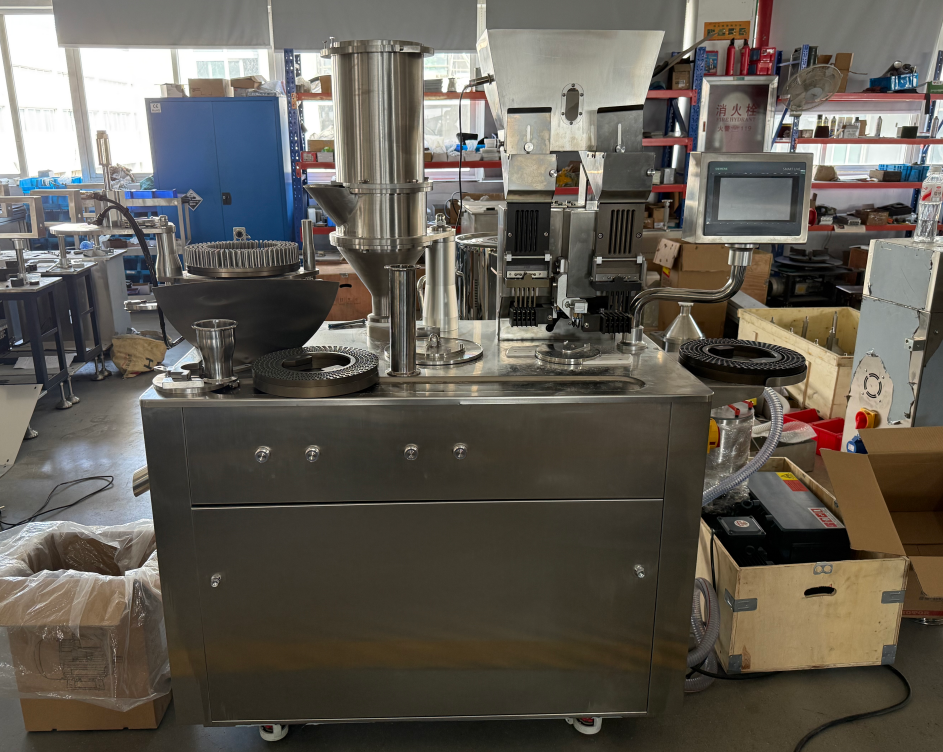
Choosing between a fully automatic and semi-automatic capsule filling machine is one of the most common questions manufacturers ask. Both fill capsules and are widely used, but they are built for fundamentally different production environments.
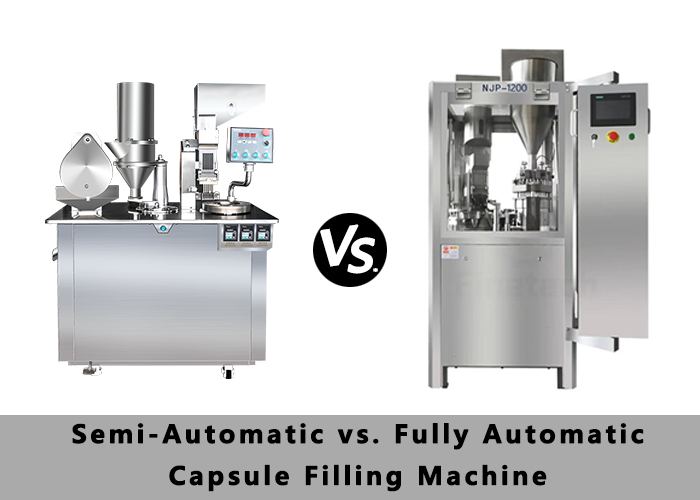
Get this decision right, and your line runs efficiently from day one. And we will help you do that by offering our honest two cents on both machines.
Pros and Cons of Fully Automatic Capsule Filling Machine
Let’s discuss the pros and cons you are here to know about fully automatic capsule filling machines.
Pros
| Pros | What It Means |
| High Output Speed | Produces 30,000 to 150,000+ capsules per hour with no manual intervention between cycles. |
| Dosing Accuracy | Automated weight checking and tamping systems maintain consistent fill weights across every capsule in the batch. |
| Minimal Labor | One operator can oversee the entire line, significantly reducing headcount and labor costs at scale. |
| GMP Compliance Ready | Built-in audit trails, data logging, and automated rejection systems meet FDA and EU GMP requirements out of the box. |
| Lower Cost Per Capsule | High throughput spreads fixed costs across more units, bringing cost per capsule down at volume. |
| Continuous Production | Designed to run uninterrupted across long production runs without performance degradation. |
Cons
| Cons | What It Means |
| High Upfront Cost | Entry-level fully automatic machines start with $15,000 and high-end systems exceed $100,000. |
| Complex Setup and Validation | Commissioning, IQ/OQ/PQ validation, and operator training take more time and expertise. |
| Longer Changeover Time | Switching between capsule sizes or formulations requires more steps and downtime than semi-automatic. |
| Not Ideal for Sticky Powders | High-speed automated feeding systems can jam or fill inconsistently with sticky or moisture-sensitive formulations. |
| Requires Skilled Operators | Programming, troubleshooting, and maintaining a fully automatic line requires trained technical staff. |
| Larger Footprint | Fully automatic machines require more floor space than semi-automatic equivalents. |
Pros and Cons of Semi-Automatic Capsule Filling Machines
Here are the pros and cons of semi-automatic capsule filling machine manufacturers should be aware of:
Pros
| Pros | What It Means |
| Lower Upfront Cost | Entry-level semi-automatic machines start from as little as $3,000, making them accessible for startups and small manufacturers. |
| Easier to Operate | Simpler controls and fewer automated systems mean operators can be trained and productive quickly. |
| Faster Changeovers | Switching between capsule sizes or formulations is quicker and requires fewer steps than on a fully automatic one. |
| Better for Difficult Formulations | Manual oversight during filling allows operators to adjust in real time for sticky, clumping, or moisture-sensitive powders. |
| Compact Footprint | Semi-automatic machines take up significantly less floor space, making them suitable for smaller facilities. |
| Lower Maintenance Complexity | Fewer automated components mean less to service, calibrate, and replace over time |
Cons
| Cons | What It Means |
| Lower Output Speed | Typically produces 10,000 to 40,000 capsules per hour, which becomes a bottleneck at scale. |
| Higher Labor Dependency | Requires consistent operator involvement throughout the filling process. |
| Less Consistent Fill Accuracy | Manual steps introduce variability that can affect fill weight consistency across batches. |
| Limited GMP Documentation | Most semi-automatic machines do not offer built-in data logging or audit trail functionality. |
| Not Suited for High Volume | Running a semi-automatic machine at high demand levels leads to operator fatigue and inconsistent output. |
Get the Right Capsule Filling Machine From Finetech
Now that you know the pros and cons of both semi-automatic and fully automatic capsule filling machines, it’s time to make a decision.
Once you do, Finetech is the place you need to be. We supply both semi-automatic and fully automatic capsule filling machines, GMP-compliant, and built for pharmaceuticals, nutraceuticals, and supplements.
Just tell us your production volume, product, and budget, and we will point you in the right direction.