English
  Russian
  Turkish
  Spanish
  French
  German
  Japanese
Roller compaction has become a preferred dry granulation method for pharmaceutical products that cannot tolerate moisture or heat.
Rather than relying on binders or drying steps, this process uses controlled mechanical force to improve powder flow and density. For pharmaceutical facilities, roller compaction dry granulation is a strategic choice that affects overall efficiency.
If you want the same strategic advantage, read this until the end to know how this process works and how it differs from wet granulation.
What Is Roller Compaction Dry Granulation?
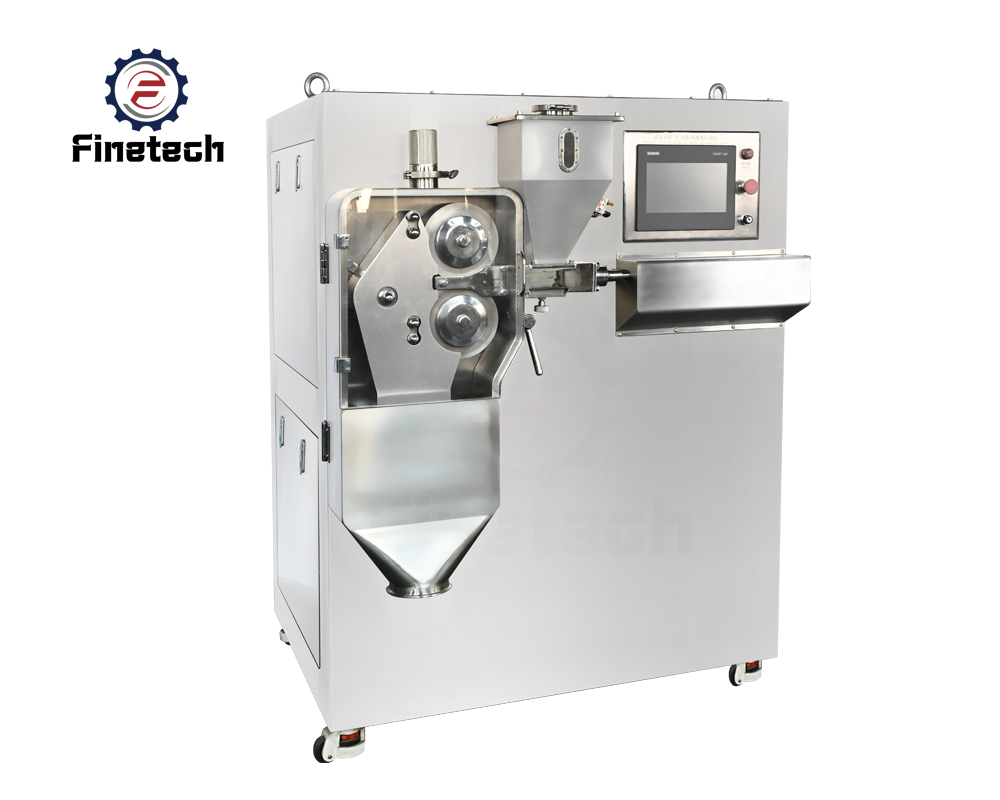
Roller compaction dry granulation is a mechanical granulation process used in pharmaceutical manufacturing to improve powder properties without using liquids or heat. It is applied when materials cannot tolerate moisture or prolonged drying.
Instead of forming granules with binders or solvents, this method relies on controlled pressure to densify powders.
The main purpose of this process is to prepare powders for stable downstream processing. Within pharmaceutical manufacturing workflows, roller compaction sits between blending and final dosage form production.
Why Pharmaceutical Facilities Use Dry Granulation
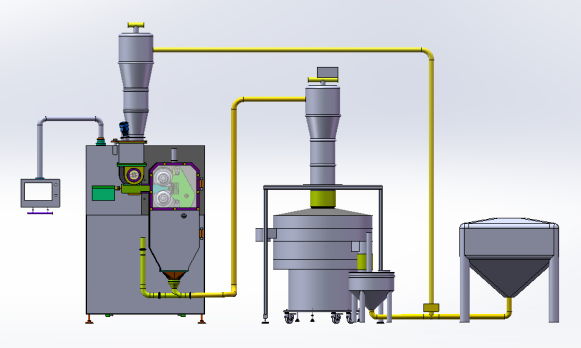
Some of the key reasons why roller compaction dry granulation is used include:
- Moisture Sensitivity: Some APIs and excipients react or degrade when exposed to water or solvents. Dry granulation avoids this exposure and helps preserve product stability.
- Heat Sensitivity: Wet granulation requires drying at elevated temperatures. Meanwhile, dry granulation removes this step and reduces the risk of thermal degradation.
- Simpler Process Flow: Pharmaceutical facilities choose dry granulation when adding liquid or heat creates unnecessary risk.
- Improved Powder Density: Dry granulation increases bulk density and improves flow without changing formulation chemistry.
- Reduced Validation Effort: With fewer steps and less equipment, qualification and validation activities become more straightforward.
How Roller Compaction Dry Granulation Works
Roller compaction dry granulation follows a fixed and repeatable sequence. Here’s how it works:
1. Powder Feeding
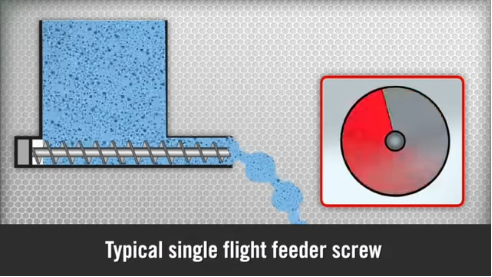
Image Source: YouTube
The process begins with a pre-blended powder made of API and excipients. This blend is fed into the roller compactor through a controlled feeding system, usually a screw feeder. The feeder controls the amount of material entering the compaction zone.
2. Powder Densification Between Rollers
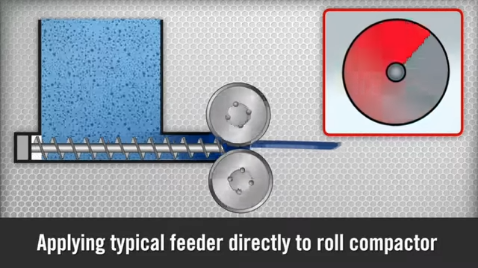
Once inside the machine, the powder moves between two counter-rotating rollers. These rollers apply mechanical pressure to the powder.
As pressure increases, air is removed, and particles are pushed closer together to form ribbons or flakes. These ribbons hold their shape as they exit the rollers. At this stage, the powder is no longer loose.
3. Ribbon Transfer to Milling Unit
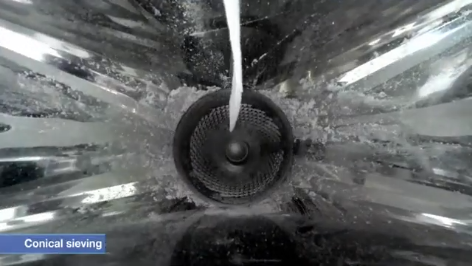
Image Source: YouTube
The compacted ribbons are guided directly into a milling unit. No drying or intermediate handling is needed.
This direct transfer helps maintain consistency and reduces material loss.
4. Milling Into Granules
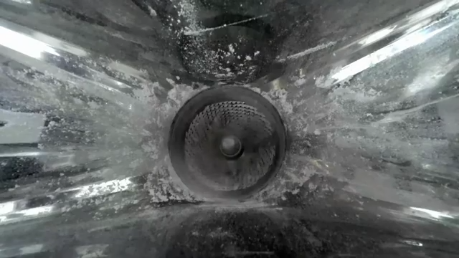
The milling unit breaks the ribbons into granules of controlled size. Screens or sieves inside the mill define the final granule size range.
Oversized pieces are broken down further. Fine particles can be minimized by adjusting milling speed and screen size.
5. Granule Collection and Transfer
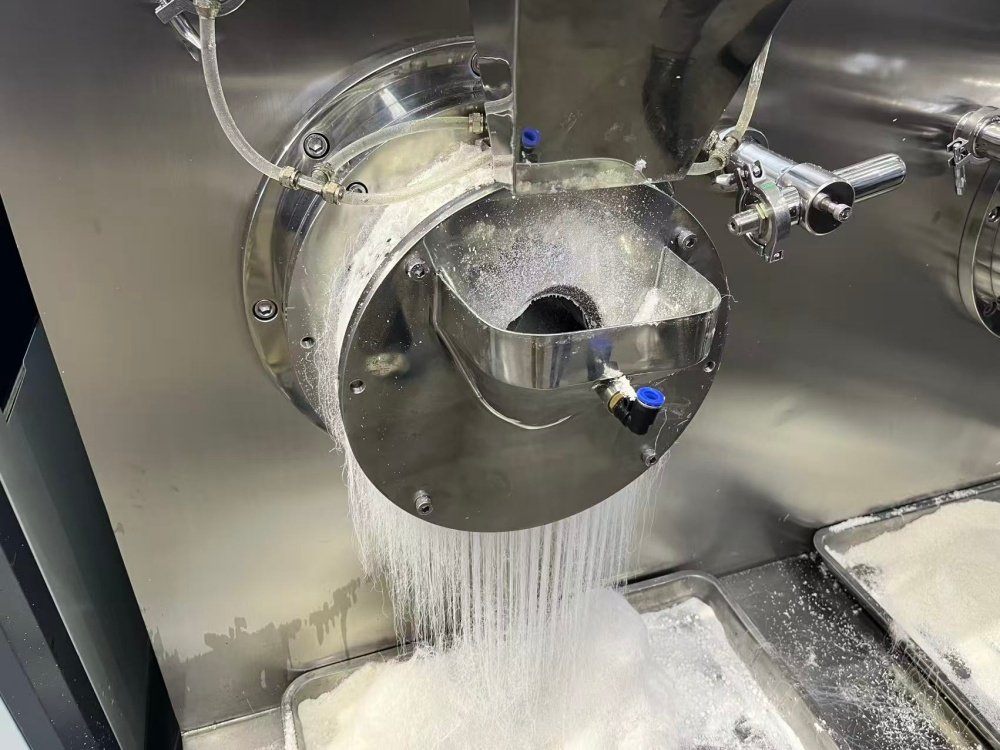
The finished granules are collected and transferred to the next step. This is usually tablet compression or capsule filling.
Because density and flow have improved, downstream operations become more stable and predictable.
Key Components of a Roller Compaction System
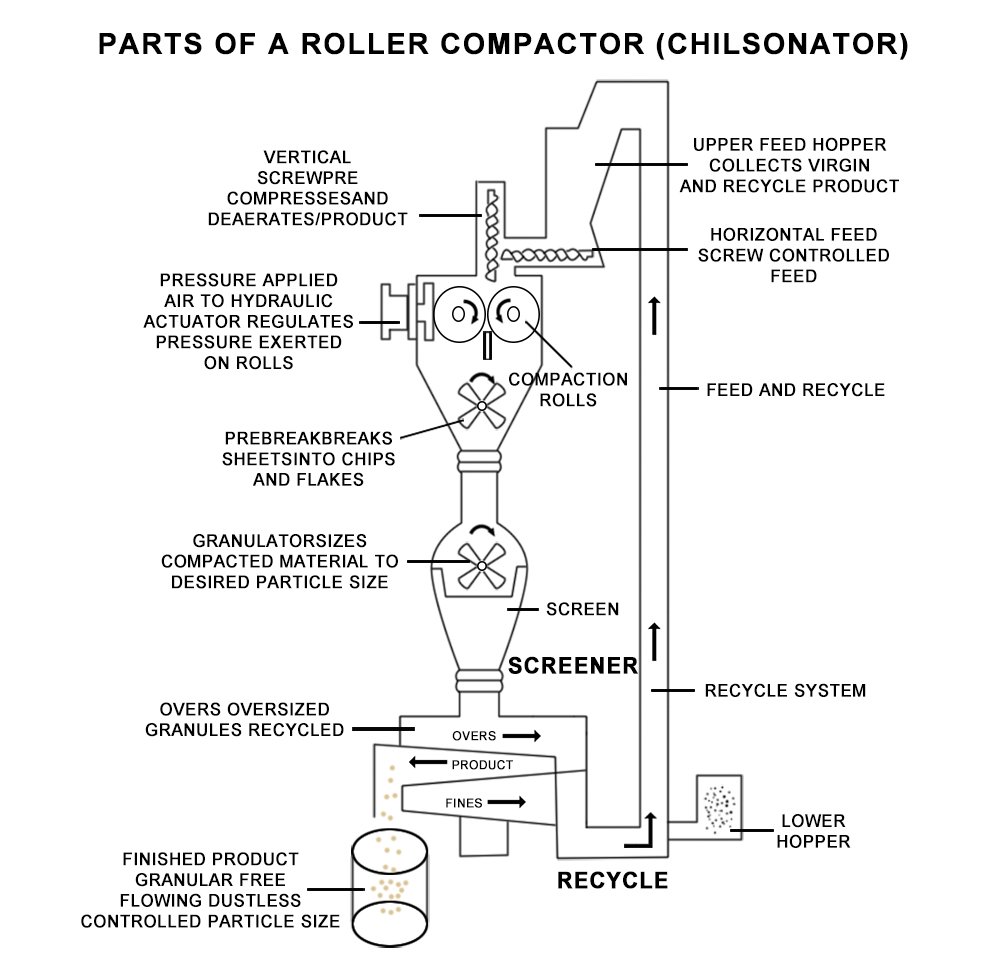
A roller compaction system is made up of a few core components, each responsible for keeping the dry granulation process controlled and consistent. Here is a simple breakdown of each part and their role.
- Feed Hopper: Holds the pre-blended powder before compaction. It ensures a steady supply of material enters the system without interruptions.
- Screw Feeder: Moves powder from the hopper into the compaction zone at a controlled rate. Consistent feeding helps prevent density variation in the final granules.
- Vent System: Releases trapped air from the powder before and during compaction. Removing air improves ribbon strength and reduces defects.
- Compaction Rollers: Two counter-rotating rollers apply pressure to densify the powder. Roller force and gap settings control ribbon density and quality.
- Crusher or Flake Breaker: Breaks compacted ribbons into smaller pieces. This step prepares the material for final size reduction.
- Milling or Granulation Unit: Converts broken ribbons into granules of controlled size. Screen selection and milling speed influence granule uniformity.
- Sampling Point: Allows in-process checks of ribbon or granule quality. Sampling supports process monitoring and GMP control.
Why Roller Compaction Is Preferred Over Other Dry Granulation Methods
Pharmaceutical facilities have more than one way to handle powders without using liquids or heat. However, not all dry approaches offer the same level of control, consistency, or GMP alignment.
With that said, here’s the difference between roller compaction and other granulation methods.
| Aspect | Roller Compaction | Slugging | Direct Compression |
| Process Type | Continuous and controlled | Batch-based | No granulation |
| Primary Purpose | Dry granulation with density control | Dry granulation using a tablet press | Direct tableting of powders |
| Process Control | High control over pressure and ribbon density | Limited control over slug quality | Minimal control over powder behavior |
| Granule Consistency | Uniform and predictable | Variable between batches | Depends heavily on raw powder quality |
| Material Handling | Low manual intervention | High manual handling | Simple but restrictive |
| GMP Suitability | Well aligned with modern GMP systems | Less favored in current GMP setups | Acceptable only for specific formulations |
Benefits of Roller Compaction Dry Granulation
Roller compaction dry granulation offers clear advantages. Each of the benefits explained below directly supports better manufacturing outcomes without adding unnecessary complexity.
1. No Use of Liquids or Solvents
Roller compaction works without adding water or solvents to the formulation. This eliminates the risk of chemical reactions, degradation, or moisture-induced instability. It also eliminates the drying step, thereby shortening the process and reducing equipment and energy use.
2. Better Process Control
The process allows precise adjustment of key settings, including roller pressure, roller gap, and feed rate. These settings control how dense the ribbons become and how granules behave later. When parameters are kept stable, batch results remain consistent and predictable.
3. Improved Powder Flow and Density
Many raw powders do not flow well and can cause filling or compression problems. Roller compaction increases bulk density and creates granules that move more evenly through equipment. Better flow leads to more consistent tablet weight and capsule fill.
4. Suitable for Sensitive Materials
Some APIs and excipients cannot tolerate moisture or heat. Roller compaction protects these materials by avoiding both. This helps preserve product quality and reduces the risk of stability failures later in the product lifecycle.
5. More Efficient Processing
With fewer processing steps, the overall manufacturing workflow becomes easier to manage. Less equipment means fewer failure points and simpler validation. It supports strong GMP compliance and smoother day-to-day operations.
FAQs
1. Which materials benefit most from dry granulation?
Materials that are moisture-sensitive or thermolabile are the primary candidates since the process eliminates the aqueous wetting and high-heat drying stages of wet granulation. It is also ideal for high-dose drugs with poor flowability that require densification to fit into a standard-sized tablet or capsule.
2. How does roll pressure affect ribbon density?
Increasing the specific roll force (measured in kN/cm) directly increases the solid fraction and density of the ribbon. However, excessive pressure can lead to “over-compaction,” resulting in granules that are too hard to bond effectively during the final compression into tablets.
3. How does roller compaction differ from slugging?
Slugging is a batch process using a conventional tablet press to create large, crude “slugs,” whereas roller compaction is a continuous process using specialized rollers. Roller compaction offers significantly higher throughput, better process control, and more uniform granule density compared to the variability often found in slugging.
4. Is roller compaction suitable for continuous manufacturing?
Yes, it is one of the most compatible technologies for continuous manufacturing (CM) lines because it lacks the discrete “batch” steps of wet granulation. It allows for real-time monitoring of ribbon density and thickness, which can be integrated into automated feedback control loops.
Get Your Roller Compaction Setup Right
Roller compaction dry granulation works best when it is integrated into a complete manufacturing system. Remember that the quality of the final granules depends on how well powder feeding, compaction, milling, and downstream equipment work together.
To find the right roller compactors and dry granulators, there is no better place than Finetech.
Beyond supplying machines, we help facilities with line configuration and on-site technical support so that the equipment performs as a unified system. So, if you’re planning a new dry granulation line, our specialists are ready to help.