English
  Russian
  Turkish
  Spanish
  French
  German
  Japanese
A pharmaceutical manufacturing facility depends upon different types of chemicals to transform raw materials into healing treatments. These substances are not just individual components but rather a cohesive system that delivers medicines safely to consumers’ hands.
Every solvent, acid, and excipient plays a specific role to ensure that a drug is stable, effective, and safe for human use.
Deeply understanding these chemicals is extremely critical to patient safety and public health. Here is a complete list of the chemicals used in the pharmaceutical industry, detailed by their function and classification.
List of Chemicals Used in the Pharmaceutical Industry
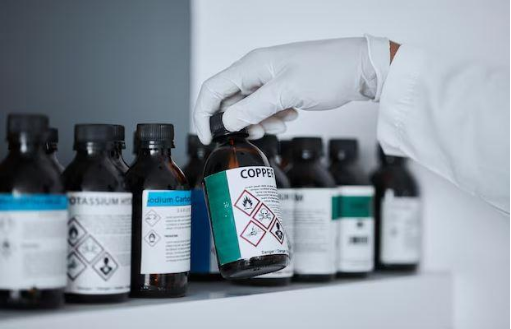
The pharmaceutical industry uses a wide range of chemicals and specialized agents. This inventory includes diverse APIs, solvents, acids, bases, and specific excipients. Such substances facilitate pharmaceutical manufacturing at various stages and maintain drug stability. Let’s take a look at them one-by-one in detail.
Active Pharmaceutical Ingredients
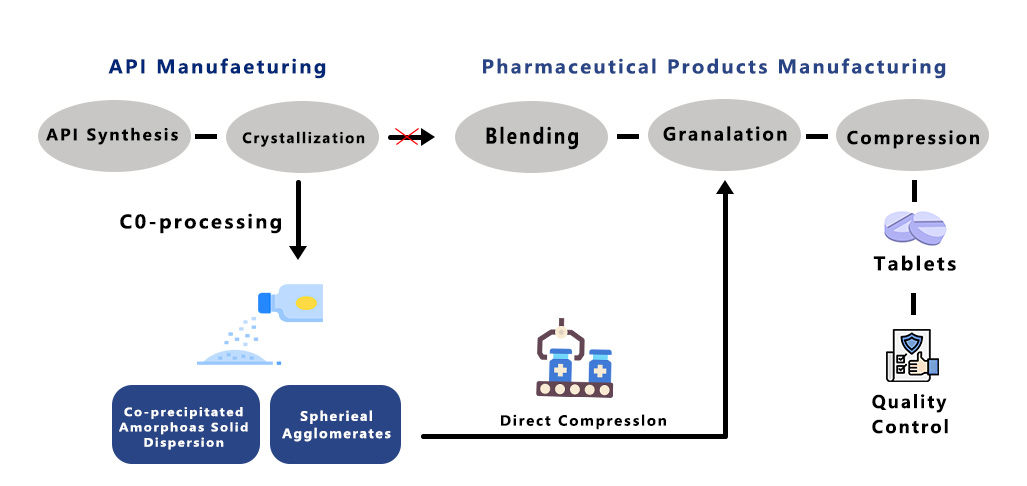
Active pharmaceutical ingredients (APIs) serve as the integral ingredients of any medicine, responsible for its desired therapeutic effect. It is the active component that targets specific biological pathways to treat or manage a condition. For example, the API in a Panadol tablet is paracetamol, which provides the primary analgesic and antipyretic relief.
| API Category | Common Examples |
| Analgesics | Paracetamol, Ibuprofen, Aspirin, Diclofenac, Naproxen |
| Antibiotics | Amoxicillin, Azithromycin, Ciprofloxacin, Ceftriaxone, Doxycycline |
| Steroids | Dexamethasone, Hydrocortisone, Prednisolone, |
| Cardiovascular | Atorvastatin, Losartan, Amlodipine, Metoprolol |
| Gastrointestinal | Omeprazole, Pantoprazole, Ranitidine, Domperidone |
| CNS & Psychiatric | Diazepam, Alprazolam, Fluoxetine, Sertraline |
| Respiratory & Anti-allergic | Cetirizine, Loratadine, Montelukast, Salbutamol, Budesonide |
| Antivirals | Acyclovir, Remdesivir, Favipiravir, Oseltamivir |
| Hormonal | Levothyroxine, Progesterone, Testosterone |
The classifications outlined in the table above highlight the key categories of pharmaceutical ingredients. Let’s discuss some of these groups in more detail to understand how they function within the human body.
1. Analgesics
Analgesics are a diverse group of chemical compounds designed to alleviate pain and discomfort. They represent one of the most commonly used therapeutic classes and function without causing loss of consciousness. These chemicals are divided into two primary categories: non-opioid analgesics and opioid analgesics.
Non-opioid analgesics, such as NSAIDs, work by blocking cyclooxygenase (COX) enzymes. This effectively reduces the production of inflammatory mediators like prostaglandins. In contrast, opioids bind directly to receptors in the brain and spinal cord to diminish the perception of pain.
2. Antibiotics
Antibiotics are essential chemicals that fight bacterial infections in both humans and animals. These agents work by either destroying the bacteria outright or inhibiting their ability to grow and multiply. They are used for treating common conditions such as pneumonia, strep throat, urinary tract infections (UTIs), and various skin infections.
3. Steroids
Steroids are a highly versatile class of natural or synthetic compounds that function as hormones to regulate bodily functions. They are categorized into corticosteroids, which reduce inflammation and immune activity, and anabolic steroids, which promote muscle growth. Steroids are also used to treat chronic conditions like asthma, allergies, and arthritis.
4. Solvents
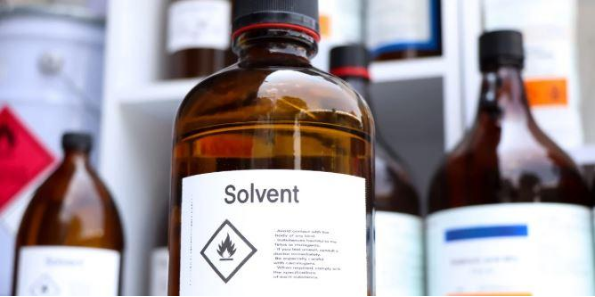
Solvents are typically liquid chemicals used to dissolve, suspend, or extract other materials without changing their chemical nature. They help maintain the purity and consistency of a medication. According to FDA regulations, solvents are categorized into three distinct groups. These are Class 1, Class 2, and Class 3, based on their toxicity, safety risks, and environmental impact.
| Solvent | Other Name(s) | Classification |
| Acetone | 2-Propanone / Propan-2-one | Class 3 |
| Acetic acid | Ethanoic acid | Class 3 |
| Anisole | Methoxybenzene | Class 3 |
| Benzene | Benzol | Class 1 |
| Butyl acetate | Acetic acid butyl ester | Class 3 |
| Chloroform | Trichloromethane | Class 2 |
| Ethanol | Ethyl alcohol | Class 3 |
| Formamide | Methanamide | Class 2 |
| Heptane | n-Heptane | Class 3 |
| Methanol | Methyl alcohol | Class 2 |
| Pentane | n-Pentane | Class 3 |
| Tetralin | 1,2,3,4-Tetrahydro-naphthalene | Class 2 |
| Xylene | Dimethylbenzene / Xylol | Class 2 |
1. Acetone
Acetone is a colorless, highly volatile, and flammable liquid solvent that mixes with both water and organic substances. Manufacturers utilize it to isolate active ingredients from raw materials and purify them through crystallization. These properties make acetone highly suitable for processing binders during the manufacturing cycle. It also helps in granulation and coating, and helps tablets maintain their proper density and structural integrity.
2. Methanol
Methanol, often referred to as methyl or wood alcohol, is known for its excellent solubility. Chemists use it to extract APIs from natural sources during the early stages of production.
Beyond extraction, it acts as a vital raw material or reaction medium in the synthesis of various pharmaceuticals. For example, antibiotics like streptomycin, essential vitamins, and cholesterol-lowering statins are synthesized using it.
3. Ethanol
Ethanol, or ethyl alcohol, is a clear and highly flammable liquid produced via fermentation or petrochemical processes. It helps dissolve drugs that are poorly soluble in water. This makes it a staple in the production of syrups, elixirs, and tinctures.
Its potent antimicrobial properties make it critical for sterilizing manufacturing equipment and surfaces. Ethanol is also used as a preservative in liquid formulations to prevent the growth of fungi and bacteria.
Acids and Bases
Acids and bases synthesize APIs and adjust pH levels to optimize drug stability. These chemical agents also enhance the solubility of compounds, which is important for effective absorption within the body. Both of these chemicals are strategically used to create medicinal salts and formulate stable buffers that prevent degradation.
Furthermore, they regulate the accurate environmental conditions required throughout the complex manufacturing process to ensure product consistency.
The table below summarizes the most common acids and bases used in pharmaceutical production, along with their specific roles and classification.
| Chemical Name | Classification | Primary Function in Manufacturing |
| Hydrochloric Acid (HCL) | Acid | Adjusts pH levels and improves drug absorption. |
| Acetic Acid | Acid | Acts as a chemical intermediate and reaction solvent during the synthesis of complex APIs. |
| Citric Acid | Acid | Creates the effervescent effect in oral tablets. |
| Lactic Acid | Acid | Regulates acidity in various formulations |
| Boric Acid | Acid | Provides mild antiseptic properties and stabilizes the pH of ophthalmic and external solutions. |
| Sodium Hydroxide | Base | Neutralizes highly acidic solutions |
| Calcium Hydroxide | Base | Remains a fundamental component in dental and topical products. |
| Potassium Hydroxide | Base | PH adjustment and in the production of specialized medicinal soaps and lubricants. |
1. Hydrochloric Acid
Hydrochloric acid is a powerful inorganic acid primarily used for pH adjustment and the formation of medicinal salts. Many APIs, such as ciprofloxacin and sertraline, are naturally insoluble in water, which prevents them from being fully absorbed by the body. Mixing them with HCl creates hydrochloride salts, which drastically improve their solubility and absorption in the human body.
2. Acetic Acid
Acetic acid, a milder organic acid, functions as a versatile solvent and chemical intermediate. It is an essential part of the acetylation process to produce common drugs like aspirin. Along with synthesis, it helps regulate the acidity of liquid formulations to prevent the degradation of sensitive ingredients.
3. Sodium Hydroxide
Sodium hydroxide is a strong base that neutralizes acidic solutions and facilitates the purification of various APIs. It is frequently employed in the manufacturing of soaps and detergents used to sanitize industrial equipment to prevent cross-contamination.
Additionally, NaOH also adjusts the pH of injectable medications to make them compatible with human blood.
Excipients
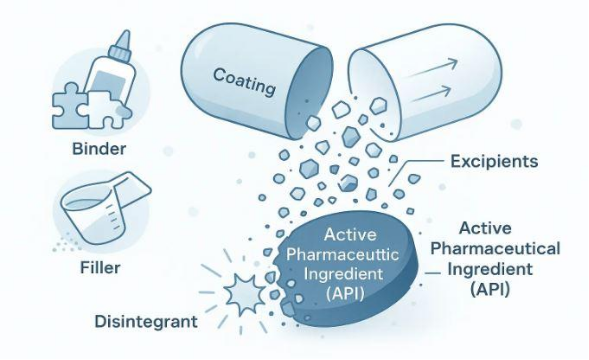
Active pharmaceutical ingredients provide the therapeutic effect, while excipients deliver them safely to the body. These pharmacologically inactive substances function as carriers, stabilizers, or functional aids. Different types of excipients are used to improve bioavailability, support the manufacturing process, and enhance patient compliance.
| Category | Primary Function | Common Examples |
| Diluents/Fillers | Provide bulk to the tablet | Lactose, Microcrystalline Cellulose (MCC), Starch, Mannitol, |
| Binders | Act as adhesives to hold the powder particles | Polyvinylpyrrolidone (PVP/Povidone), Hydroxypropyl Cellulose (HPC), |
| Lubricants | Reduce friction between the tablet and the machinery | Magnesium Stearate, Stearic Acid, Calcium Stearate, |
| Preservatives | Prevent microbial growth and protect the APIs | Benzalkonium chloride, methylparaben, propylparaben, ascorbic acid |
1. Diluents
Diluents are inert substances added to a tablet to provide sufficient bulk for handling. There are many active drugs, such as dexamethasone or fentanyl, that are potent in doses as small as a few milligrams.
Fillers like lactose or microcrystalline cellulose are necessary to create a pill large enough for a patient to hold and swallow. These agents make sure that the final product reaches a standardized weight and size and maintains this dosing accuracy across millions of doses.
2. Binders
Binders act as the glue that holds the medicinal powder together during the compression process. For instance, povidone (PVP) is frequently used to bind paracetamol granules. They form a strong adhesive matrix and prevent the tablets from crumbling into dust after they leave the press. This structural integrity keeps the medication intact during packaging and transport.
3. Lubricants
Lubricants are essential to avoid sticking and picking in tablet manufacturing. They reduce friction between the tablet surface and the metal walls of the tablet press. A common example is magnesium stearate, which is added to aspirin formulations to prevent the mixture from sticking to the industrial punches.
FAQs
1. What are the safety standards for handling pharma chemicals?
Chemical handling is governed by international standards like OSHA 1910 and REACH, which require detailed Safety Data Sheets (SDS) and specific storage protocols. These regulations ensure that hazardous reagents are managed to prevent fires, spills, and worker exposure.
2. What is the importance of high-purity water in pharma?
Purified water and Water for Injection (WFI) are the most common solvents used to dissolve ingredients in liquid medications. These must meet stringent USP/EP standards to ensure they are free from minerals, microorganisms, and endotoxins that could cause adverse reactions.
3. Why are catalysts like Palladium used in drug synthesis?
Transition metals such as Palladium, Platinum, and Rhodium are used as catalysts to accelerate complex organic reactions, particularly cross-coupling. These chemicals allow for the efficient construction of the intricate carbon frameworks found in modern anti-cancer and anti-viral drugs.
4. What is the function of binders in tablet manufacturing?
Binders like Gelatin, Cellulose, and Starch provide the mechanical strength needed to hold the API and excipients together in a solid tablet. They help the tablet remain intact during packaging and transport while still allowing it to dissolve properly once ingested.
Healthcare Innovation with Chemical Synergy and Technology
Building a reliable pharmaceutical inventory involves more than just a list of ingredients; it requires a deep understanding of how these chemicals interact to create safe, life-saving treatments. The better these chemical synergies are managed, the more effective and stable the final medication becomes.
Connecting this chemical synergy into a high-performance production cycle can transform your pharmaceutical manufacturing system. Choose Finetech as the catalyst for this transformation. As a leading pharmaceutical equipment supplier, we provide comprehensive technical support that covers everything from initial installation to specialized staff training and long-term maintenance.
Get in touch with us for a personalized quote today!