English
  Russian
  Turkish
  Spanish
  French
  German
  Japanese
Material consistency is one of the earliest quality checkpoints in pharmaceutical manufacturing. Before blending, compression, or filling even begins, powders must be free of agglomerates, foreign particles, and unwanted size variation.
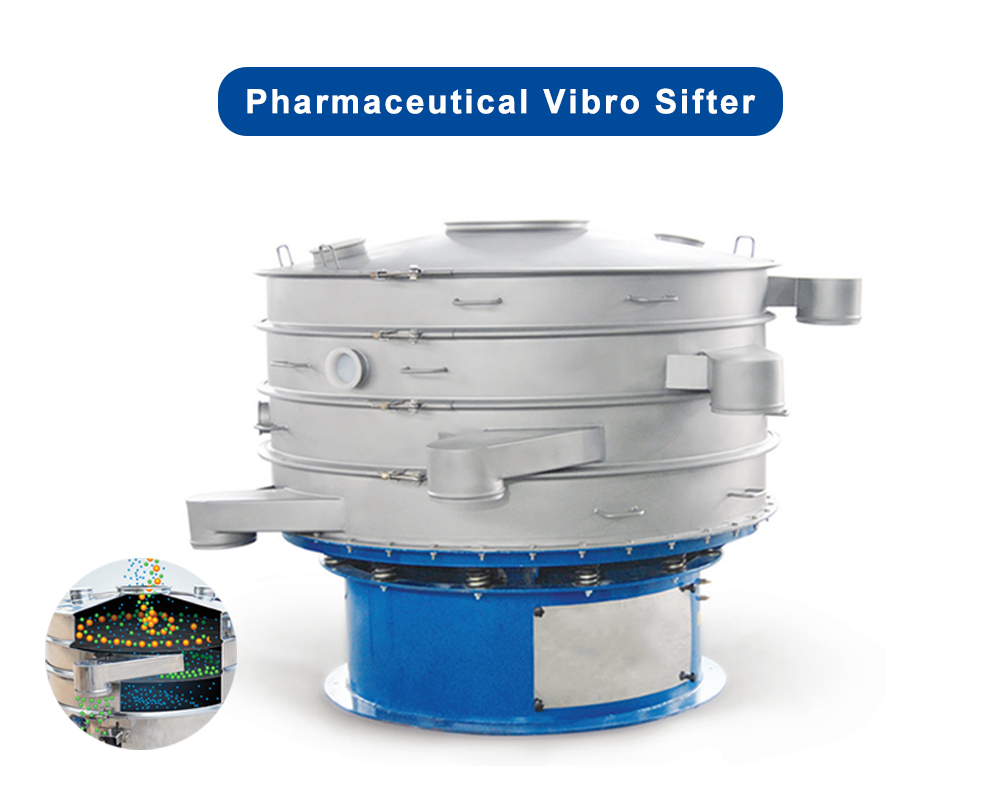
This is where a vibro sifter in pharma quietly plays a crucial role.
Although it is often viewed as a supporting machine, the vibro sifter directly affects product uniformity and GMP compliance.
For everyone wondering what it is and how it works, you’ll learn everything in this article, along with its role in facilities.
What Is a Vibro Sifter in Pharma?
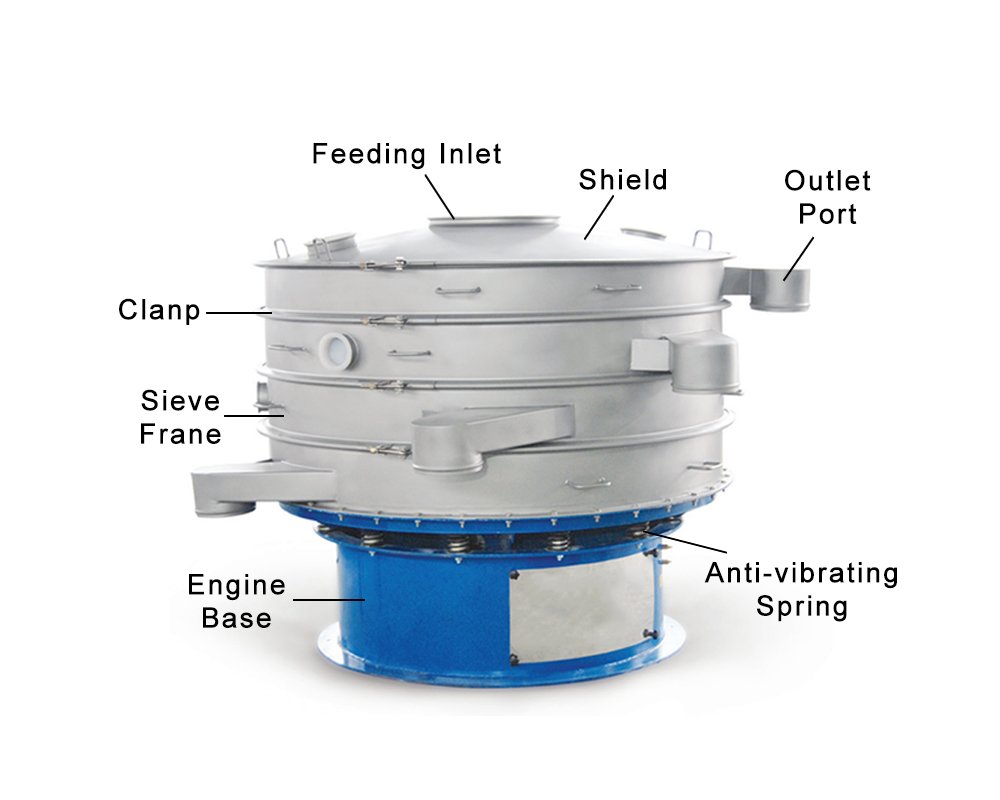
A vibro sifter in the pharma industry is a screening and separation machine used to remove oversized particles and break agglomerates. It is a critical quality control checkpoint placed early in the manufacturing process to protect downstream operations.
The primary purpose of a vibro sifter is to control particle size and material consistency. By passing powders through a defined mesh, the sifter guarantees that only material within the acceptable size range proceeds further.
It typically consists of a vibratory motor, a circular screening deck, a replaceable mesh screen, and sealed inlet and outlet connections.
Vibro Sifter Working Principle
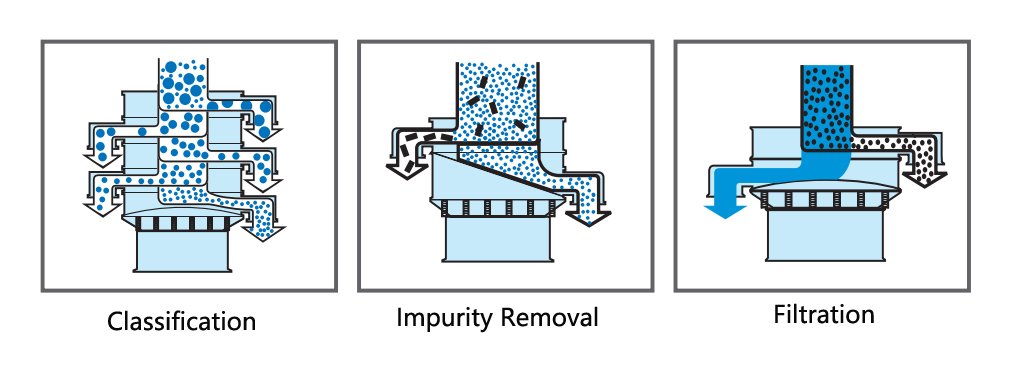
A vibro sifter works on a simple, repeatable mechanical principle. Below is the exact step-by-step flow, written the way operators, engineers, and QA teams actually experience it on the floor.
Step 1: Material Is Fed Into the Vibro Sifter
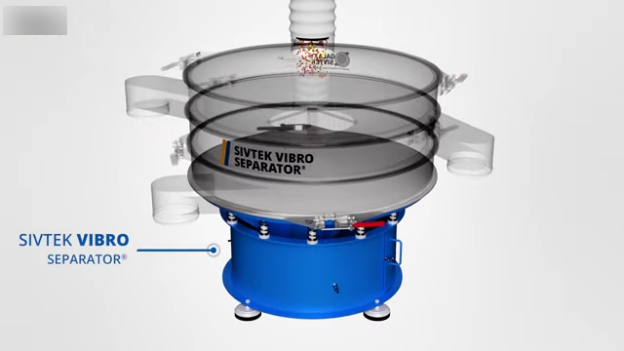
You start by feeding powder into the top inlet of the vibro sifter. This can be done manually, via vacuum transfer, or from upstream equipment.
At this stage, the material may contain lumps, oversized particles, or foreign matter. The vibro sifter is positioned here to remove these issues before the material enters critical processing steps.
Step 2: The Vibratory Motor Generates Controlled Movement
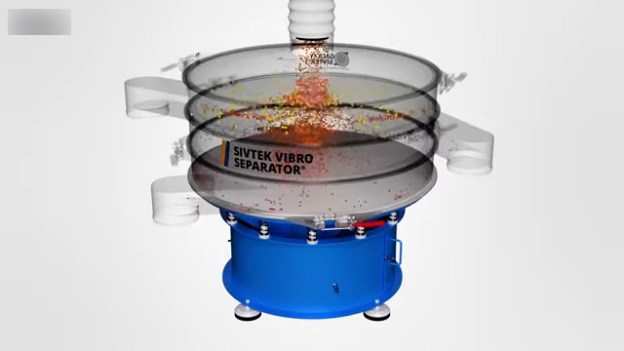
Once the machine is running, the vibratory motor mounted on the sifter creates controlled vibration. The vibration is usually a combination of vertical and horizontal motion.
This movement causes the powder to spread evenly across the mesh surface rather than piling up in one area. Even distribution is essential for consistent screening.
Step 3: Material Moves Across the Mesh Surface
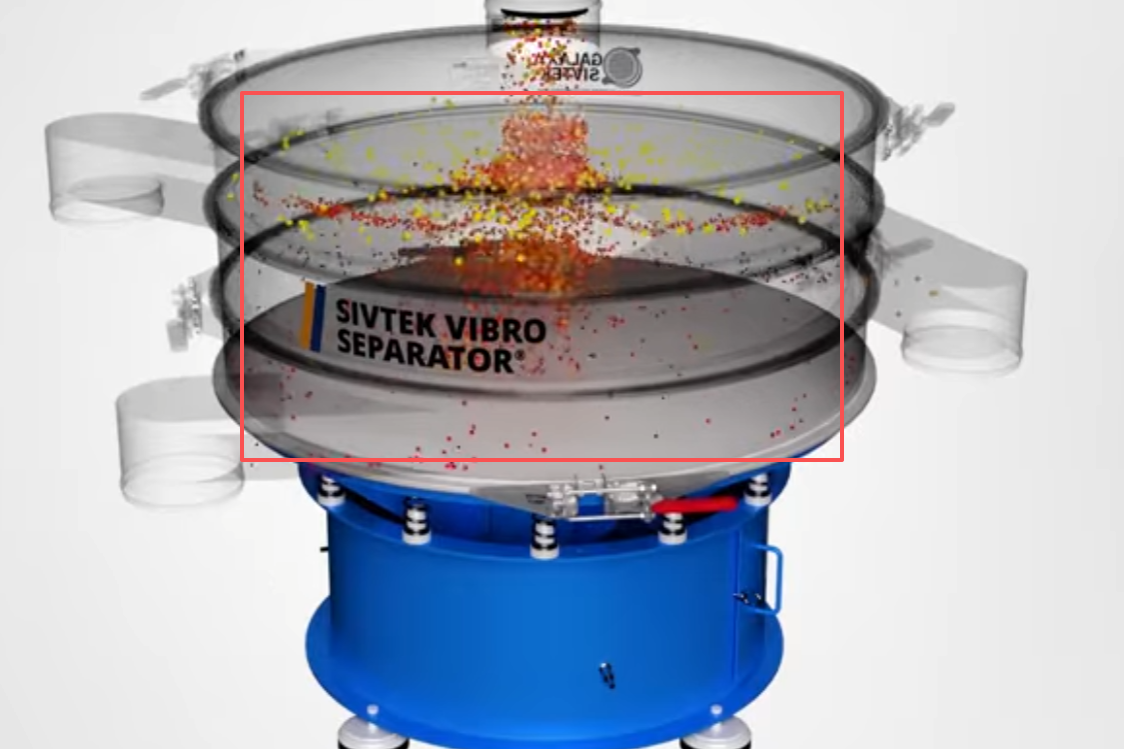
As the vibration continues, the powder begins to travel in a spiral or circular path across the mesh screen.
This motion keeps material moving forward while constantly exposing it to the mesh openings. Particles are not forced through the screen; they pass naturally based on size and movement.
Step 4: Fine Particles Pass Through the Mesh
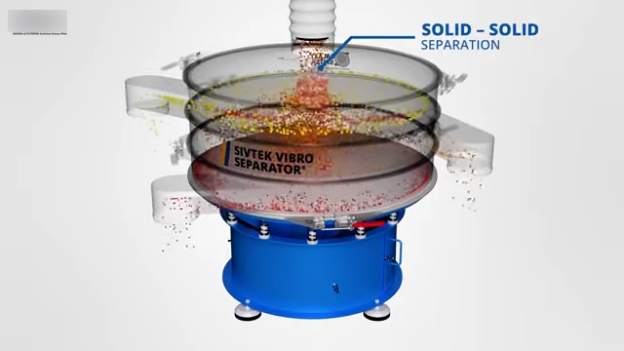
Particles that are smaller than the mesh opening fall through the screen. These fines are collected at the lower outlet and move on to the next manufacturing step.
Because the mesh size is predefined, this step ensures only material within the acceptable particle size range continues downstream.
Step 5: Oversized Particles Are Retained or Discharged
All Images Source: YouTube
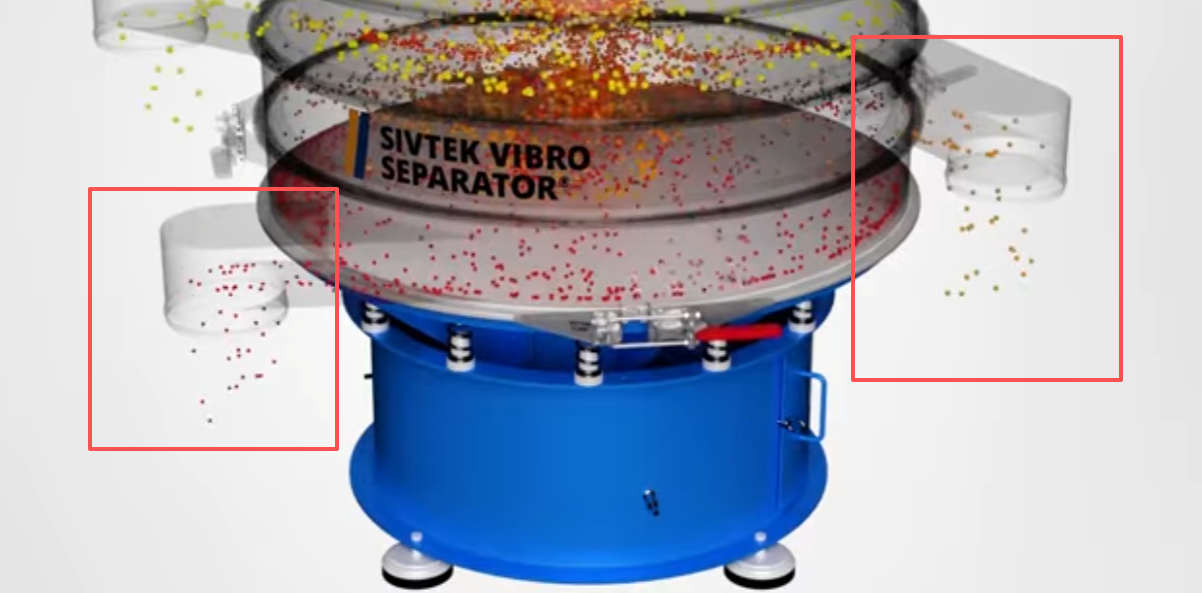
Particles that are larger than the mesh size cannot pass through. These oversized particles remain on the mesh surface and are discharged separately.
This prevents lumps or foreign matter from entering the blending, compression, or encapsulation stages, where they could cause serious quality issues.
Common Uses of Vibro Sifters in Pharmaceutical Facilities
Vibro sifters are not used randomly. They are placed at specific control points where material consistency directly affects product quality and process stability. Here are the most common places where these machines are used:
1. Raw Material Screening Before Processing
Vibro sifters are commonly used to screen APIs and excipients before they enter the blending or granulation process. At this stage, raw materials may contain foreign particles, packaging solutions, or oversized lumps formed during storage and transport.
Screening at the raw-material stage helps guarantee that only clean, free-flowing material enters the process.
2. De-Lumping After Storage or Transfer
Powders often form agglomerates due to humidity, compression during storage, or long transfer distances. Vibro sifters are used to break down these lumps gently without altering particle structure.
By delumping material before blending or compression, facilities improve flow behavior and reduce variability during downstream operations.
3. In-Process Control Between Manufacturing Steps
Vibro sifters are often installed between unit operations, such as after granulation and before compression. At this point, they act as an in-process control tool, making sure granules meet defined size and quality requirements.
This application helps catch issues early and prevents out-of-spec material from moving further into the process.
4. Support for High-Volume Production
In high-throughput pharmaceutical lines, vibro sifters support continuous material flow without interrupting production. Their simple design allows for steady screening at scale while maintaining process control.
For facilities focused on efficiency, repeatability, and high-volume output, this machine is well-suited.
GMP Benefits of Using a Vibro Sifter in Pharma
In pharmaceutical manufacturing, GMP compliance depends on how well risks are controlled at each stage of the process. When used correctly, vibro sifters strengthen multiple GMP pillars simultaneously.
1. Improved Contamination Control
Vibro sifters act as an early physical barrier against contamination. By screening raw materials and intermediates, they help remove foreign particles, oversized material, and unwanted debris before it enters processing steps.
From a GMP perspective, preventing contamination at the earliest possible point is always more effective than correcting it later.
2. Stronger Batch-to-Batch Consistency
Batch consistency depends heavily on material consistency. This is why many facilities use vibro sifters to start each batch with material of similar particle size and flow behavior.
By controlling these variables early, facilities reduce process variation during blending, compression, and filling. This leads to more predictable performance and fewer deviations linked to unexplained batch differences.
3. Support for Validated Processes
These machines contribute to process validation by helping maintain stable input conditions. When the material entering a process is consistent, validation results are more reliable and easier to defend.
This stability simplifies ongoing process verification and reduces the likelihood of repeated validation challenges.
4. Improved Inspection Readiness
During a GMP inspection, regulators simply want to understand how early risks are controlled before they can spread. And the best way to do so is by using the vibro sifter, which screens materials at the start and between key steps.
With the right documentation, you can prove compliance without lengthy explanations or defensive justifications.
Factors to Consider When Selecting a Vibro Sifter for Pharma Use
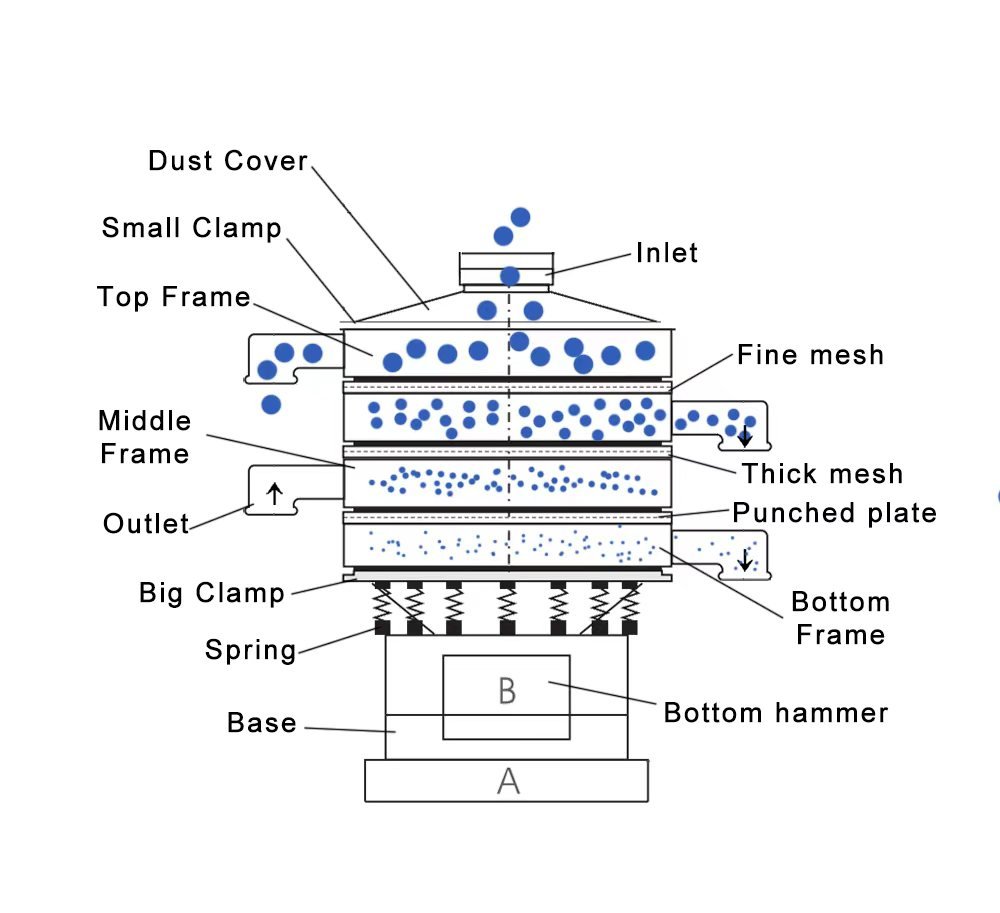
The factors below help keep the equipment fit for both the process and the regulatory environment.
1. Capacity and Throughput Requirements
Start by understanding how much material the vibro sifter needs to handle. The machine must match your production rate without becoming a bottleneck.
If the capacity is too low, material will back up, disrupting the flow. However, if capacity is too high, screening efficiency may drop. A balanced capacity keeps the process moving smoothly and supports consistent output across batches.
2. Mesh Size and Screening Accuracy
Mesh size determines which particles pass through and which are removed. Selecting the right mesh is critical because it directly affects material uniformity.
A mesh that is too fine can slow production, while one that is too coarse may allow unwanted particles to pass. The goal is to choose a mesh that supports downstream processing without unnecessary restriction.
3. Containment and Operator Safety Needs
Containment becomes important when handling potent APIs or dusty materials. In these cases, the vibro sifter should support closed operation and safe material transfer.
Proper containment protects operators, reduces environmental exposure, and helps maintain cleanroom conditions. This factor often influences enclosure design and connection options.
FAQs
1. What causes mesh blinding and how can it be mitigated in pharma?
Mesh blinding occurs when particles bridge over or wedge into the mesh openings, often due to high moisture or static charge. Mitigation strategies include using ultrasonic de-blinding systems, anti-static grounding, or adjusting the lead angle of the eccentric weights.
2. What is the role of bouncing balls within the vibro sifter assembly?
Bouncing balls are placed in a tray beneath the mesh to provide continuous impact against the screen during operation. This mechanical “de-blinding” method prevents fine or sticky particles from clogging the apertures, maintaining a steady throughput.
3. What is the difference between a single-deck and a multi-deck vibro sifter?
A single-deck sifter separates material into two fractions (oversized and undersized) through one screen. Multi-deck units utilize multiple stacked screens of varying mesh sizes to separate a single feed into three or more distinct particle size grades simultaneously.
4. Why is it important to avoid running a vibro sifter without material?
Running an empty sifter can cause excessive stress on the mesh and the motor bearings due to the lack of damping provided by the product. This often leads to premature mesh failure or the loosening of the clamping rings.
Get Your Pharmaceutical Production Line Right
A vibro sifter in pharma can only do its job properly when it is part of a stable, well-designed production line. Screening alone does not guarantee quality if upstream and downstream equipment are poorly matched.
Without a foundation, even a well-selected vibro sifter will struggle to deliver full value. And that foundation can be provided by Finetech.
We support pharmaceutical manufacturers by providing complete production and packaging solutions. Moreover, we offer on-site installation, technical guidance, and training to help facilities run their production lines with confidence.
If you are planning something new or facing equipment challenges, contact us right away!