English
  Russian
  Turkish
  Spanish
  French
  German
  Japanese
Are you a small-to-medium business owner dealing with the limitations of manual pouring and inconsistent fill levels? A small-scale bottling machine is exactly the solution your facility needs.
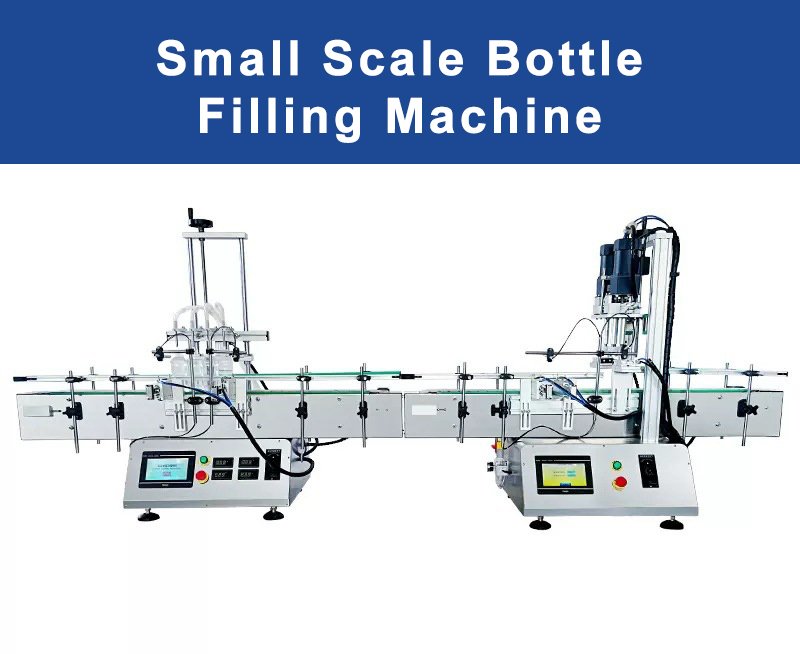
This technological upgrade is essential for a startup in the pharma, food, or cosmetic industry looking to compete in a demanding global market. The machine automates the filling process with precision, improves production efficiency, and ensures consistent output without requiring a large footprint or excessive investment.
It also helps reduce product waste and labor dependency, two factors that often account for a significant portion of operational costs. Below, we will break this down further by exploring how small-scale bottling machines work, the different types available, and the key benefits they offer for growing businesses.
What Is a Small-Scale Bottling Machine?
Small-scale bottling machines are compact bottle-filling systems designed for low-volume production, typically between 20 and 40 bottles per minute. Unlike massive industrial lines that require sprawling footprints and specialized crews, these units offer solutions that prioritize modularity and user-friendly operation.
This bottling line equipment serves as the primary filling solution for startups, home-based businesses, and craft producers in the beverage or pharmaceutical sectors. It helps you achieve professional consistency while maintaining a lean operational budget.
Types of Small-Scale Bottling Machines
Small-scale bottling machines are usually designed for agile businesses that need to scale production without the burden of massive machinery. These systems could be the catalyst for moving from a kitchen-table operation to a commercial facility. Here are the primary arrangements found in the market today:
1. Benchtop Bottle Fillers
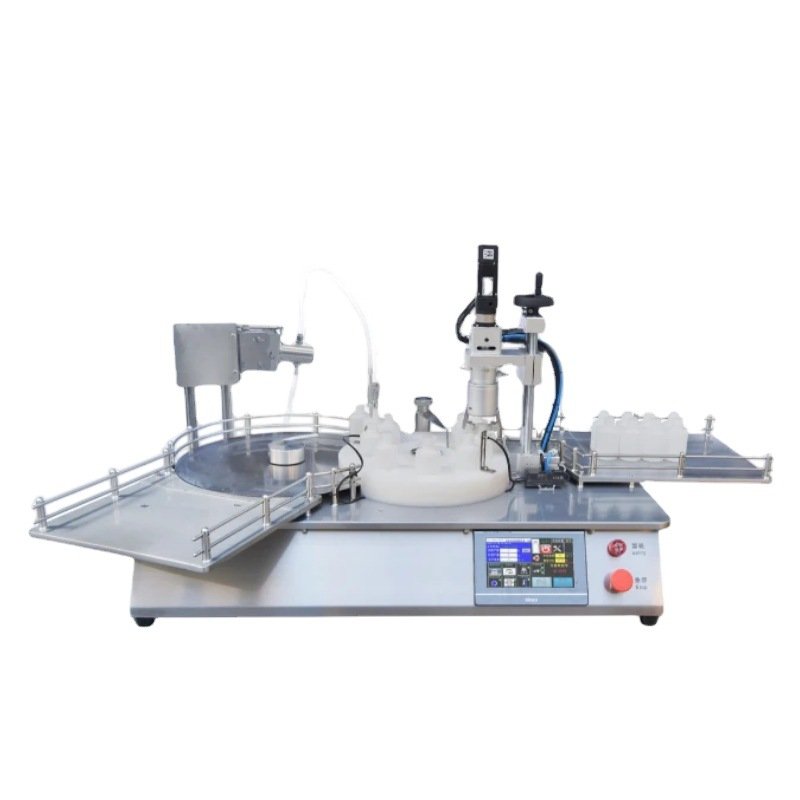
Benchtop bottle fillers are compact, portable machines that accurately dispense liquids, creams, or pastes into containers in small-to-medium production environments. They are primarily used in labs, startups, and small-batch manufacturing. These units feature single or multi-head nozzles with anti-drip technology to minimize waste.
Uses: Ideal for essential oils, vape juices, laboratory reagents, specialized condiments, and boutique skincare serums.
2. Semi-Automatic Bottle Fillers
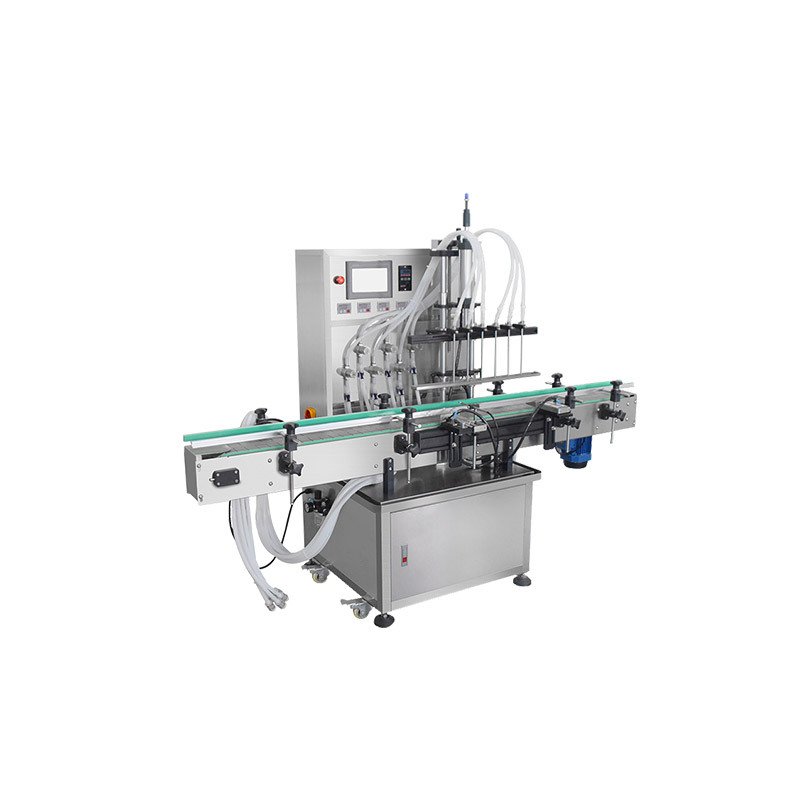
Semi-automatic bottle fillers are robust, operator-dependent machines designed for small-to-medium production. They can handle 250–600 bottles per hour in the craft, beverages, and pharmaceutical sectors.
These machines use gravity, vacuum, or piston technologies to match the product’s viscosity. Standard features include manual bottle placement, footswitch activation, and quick format changes for varying container sizes.
Uses: Widely used as a pharmaceutical filling machine for cough syrups or tinctures, as well as for bottling hot sauces, spirits, and household cleaning chemicals.
3. Monoblock Bottle Filling Machine
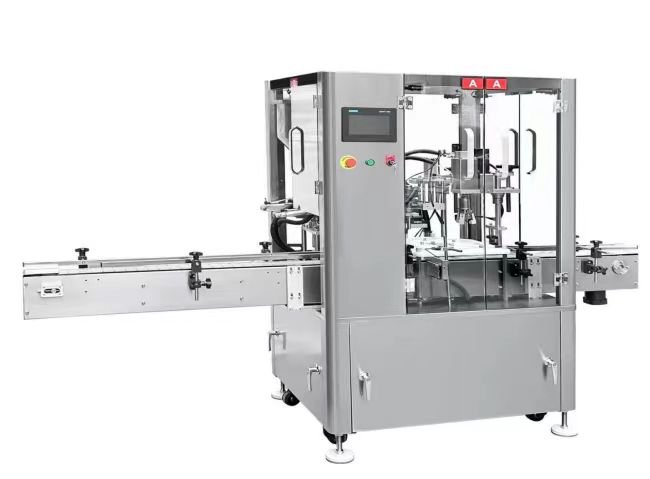
Monoblock systems integrate several production stages, such as rinsing, filling, and capping, into one synchronized unit. Consolidating these processes in a single frame reduces contamination risks and minimizes the total floor space required for the operation. This design keeps the entire sequence contained, which is important for strict quality control standards.
Uses: These units are used in craft breweries, wineries, and dairy products that need high throughput for retail distribution. The pharmaceutical industry also relies heavily on monoblock technology to maintain sterile conditions during the packaging of medications.
The Essential Core of A Small-Scale Bottle Filling Machine
The design of a small-scale bottle-filling machine focuses on maximizing accuracy and keeping the physical footprint minimal. These compact arrangements make it possible to achieve industrial-grade results within a limited workspace. Here are the key components of a professional filling unit.
1. Product Reservoir
The product reservoir is the main holding tank constructed from high-grade stainless steel. This component holds the liquid before it enters the filling valves. In high-viscosity applications, these hoppers may include heating elements or agitators to maintain a consistent flow. Gravity-fed systems place reservoir tanks above the filling heads to use natural pressure for dispensing.
2. Filling Nozzles
Nozzles act as the final contact point between the machine and the container. Different liquids require specific nozzle designs:
- Standard Overflow Nozzles: These nozzles seal against the bottle rim and recirculate any excess liquid back into the main reservoir. This process ensures that every container is filled to the exact same visual height, regardless of minor variations in the internal volume of the glass or plastic.
- Subsurface Nozzles: These long-reach nozzles go deep into the container and slowly retract as the liquid level rises. By filling from the bottom up, the nozzle remains submerged, which reduces liquid agitation that causes foaming or aeration.
3. Pumping System
The pumping system is the mechanical engine of the machine. Volumetric pistons are the standard choice for thick pastes or high-viscosity products and use a cylinder to dispense an accurate volume.
Alternatively, peristaltic pumps offer a sterile path for sensitive fluids. They use rotating rollers to move liquid through flexible tubing so the product never touches mechanical parts and prevents cross-contamination.
4. PLC Control System
Modern machines utilize a Programmable Logic Controller (PLC) to manage timing and speed. Operators interact with this via a human-machine interface (HMI), usually a touchscreen. This component allows for the adjustment of fill speeds, drip delays, and the saving of specific profiles for different product lines.
5. Conveyor and Indexing Units
In automatic setups, a conveyor belt moves the containers through the line. The indexing system uses star-wheels or pneumatic gates to pause bottles precisely under the filling heads. Sensors detect the presence of a bottle, and the no-bottle, no-fill safety feature prevents accidental discharges.
How Does a Small-Scale Bottling Machine Work? Step-by-Step Process
Source: YouTube
Small-scale bottling machines handle the entire packaging sequence through a synchronized process. Here is the step-by-step operation of a typical automated unit:
1. Bottle Loading and Alignment
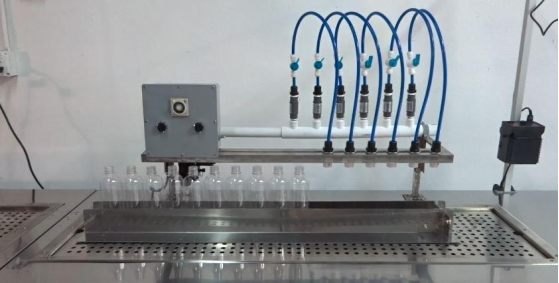
Empty bottles are fed into the system via a conveyor belt or a manual loading tray. Pneumatic gates or star-wheels align the bottles accurately under the filling heads, while sensors confirm each unit is in place to prevent accidental spills.
2. The Filling Cycle
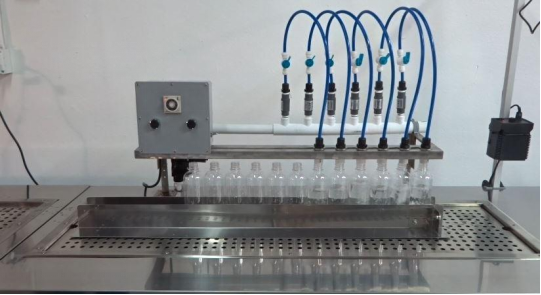
Once aligned, the nozzles descend into the containers. The pumping system dispenses a predetermined volume based on piston displacement or timed flow. This calculated delivery guarantees that every container maintains a consistent fill level.
3. Drip Prevention and Retraction
After the fill completes, specialized shut-off valves or suck-back mechanisms engage to stop the flow instantly. The nozzles then retract upward and keep the bottle shoulders and the conveyor surface clean.
4. Capping and Sealing
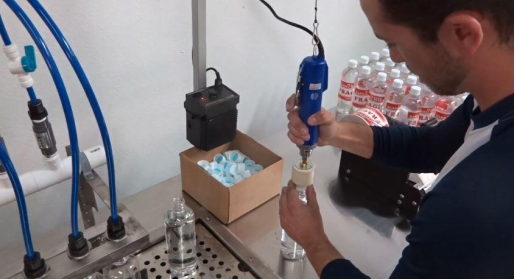
Filled bottles move to the capping station, where a mechanical arm places a closure. A torque-controlled capping head then rotates or presses the cap to create a hermetic, leak-proof seal. It is an automated process that protects the integrity of the product and prevents spoilage.
5. Discharge and Labeling
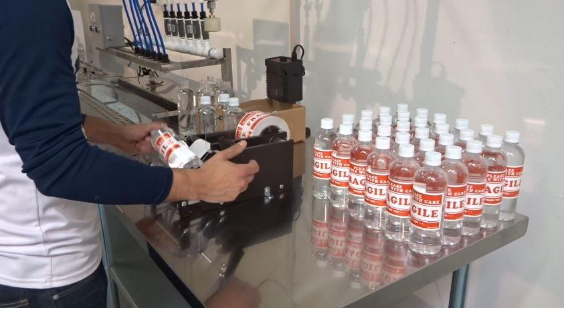
The sealed containers pass through a final sensor check before entering the labeling module. Once the adhesive labels are applied, the finished products are discharged onto a collection table for final packing and distribution.
How Small-Scale Bottling Machine Benefits Manufacturing
For an expanding enterprise, these machines serve as a catalyst for professional growth and operational stability. Here are some key benefits of small-scale bottling machines:
1. Improved Accuracy and Consistency
Mechanical filling eliminates the inconsistencies associated with manual pours. These systems deliver an exact volume to every container and help the brand meet strict regulatory weight requirements. This automated consistency maintains consumer trust through uniform product presentation and reduces expensive overfill waste.
2. Hygiene and Safety
Small-scale machines use closed-loop designs and medical-grade stainless steel to prevent external contamination. Along with that, a sanitary construction maintains the shelf life of medicines or perishable beverages. Such robust material choices also maintain compliance with the strict safety standards of the pharmaceutical industry.
3. Scalability and Versatility
Modern small-scale bottling machines are designed with modularity and scalability in mind. Manufacturers can quickly swap nozzles or adjust PLC settings to accommodate various bottle shapes and liquid viscosities. This flexibility helps the equipment grow alongside a diversifying product catalog without undergoing a total system overhaul.
FAQs
1. Who needs a small-scale bottling machine?
Small-scale bottling machines are useful for startups, homegrown brands, test labs, contract packers, farmers, cosmetic makers, food producers, and beverage businesses. They help when hand filling becomes slow, messy, inconsistent, or too labor-heavy. A machine is usually worth considering once bottle volume becomes predictable and repeat orders start increasing.
2. Can a small-scale bottling machine fill glass and plastic bottles?
Yes, many machines can fill both glass and plastic bottles if the bottle shape, stability, and neck size work with the machine. Glass bottles may need gentler handling because they are heavier and breakable. Lightweight plastic bottles may need guides or supports to prevent tipping during filling and capping.
3. How much space does a small-scale bottling machine need?
A tabletop filler may fit on a bench, while a semi-automatic filling and capping setup may need a dedicated room or production corner. Space planning should include operator movement, product tanks, clean bottles, filled bottles, caps, labels, cleaning supplies, and finished cartons. A cramped layout can slow production even if the machine itself is fast.
Pick the Best Bottling Technology for Your Business
Investing in small-scale bottling technology represents a strategic shift toward industrial professionalism. This system offers a significant opportunity for businesses requiring high levels of accuracy without the spatial or financial demands of a massive factory.
Whether handling volatile pharmaceutical reagents or artisan beverages, these units protect your bottom line by reducing waste and labor costs.
In a competitive market full of evolving demands, choose a partner that prioritizes your growth. Finetech makes sure that your production never misses a beat. Our bottling packaging line features advanced inline systems and modular units designed to scale with your needs. You can achieve flawless consistency and operational excellence, no matter the size of your business.
Visit our website today and discover how our bottling systems can transform your facility.