English
  Russian
  Turkish
  Spanish
  French
  German
  Japanese
At some point, every packaging operation questions whether they should invest in a semi-automatic or a fully automatic blister packaging machine.
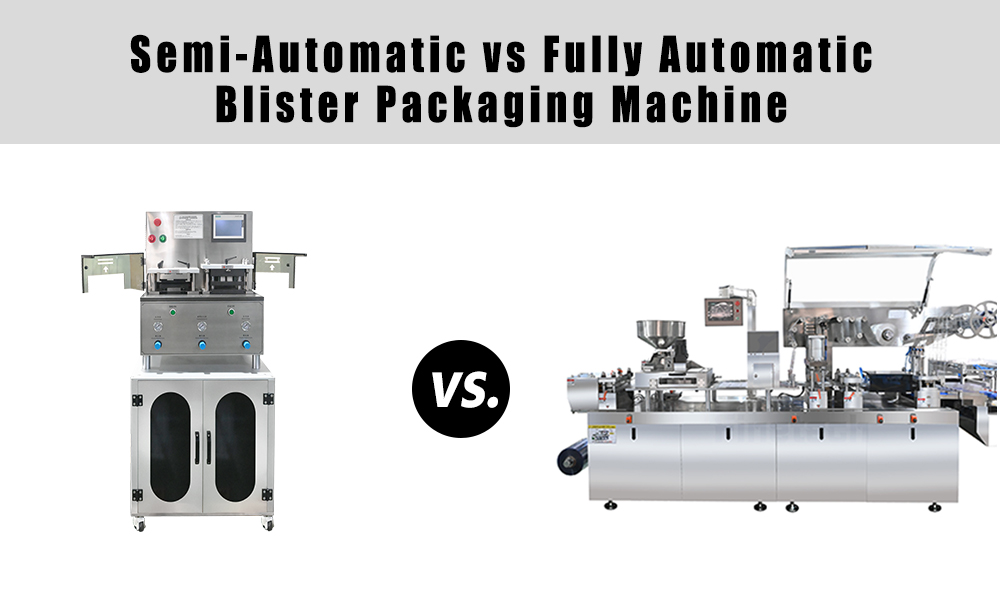
If you get it right initially, your production line will run efficiently, and your costs will stay in check. However, going with the wrong one can either make you overpay or run a machine that cannot keep up with your demand.
So, in this guide, we will pen down a full semi-automatic vs fully automatic blister packaging machine comparison.
Semi-Automatic vs Fully Automatic Blister Packaging Machine: Full Comparison
| Factor | Semi-Automatic | Fully Automatic |
| Output | 500-3,000 packs/hour | 4,000+ packs/hour |
| Operator Involvement | High. Manual loading and unloading required. | Minimal. One supervisor monitors multiple lines. |
| Upfront Cost | $5,000 to $50,000 | $80,000 to $300,000+ |
| Changeover Time | 30 to 60 minutes | 15 to 30 minutes with quick-change tooling |
| Maintenance Complexity | Low. Simpler mechanical design. | High. Requires qualified technicians. |
| GMP Compliance | Achievable with correct setup | Built-in across all systems |
| Energy Consumption | Lower. Intermittent operation. | Higher. Offset by efficiency gains at scale. |
| Best For | Small to medium batches and frequent format changes. | High-volume continuous production. |
Let’s discuss the two machine types and how they compare with each other based on multiple factors.
1. Output and Speed
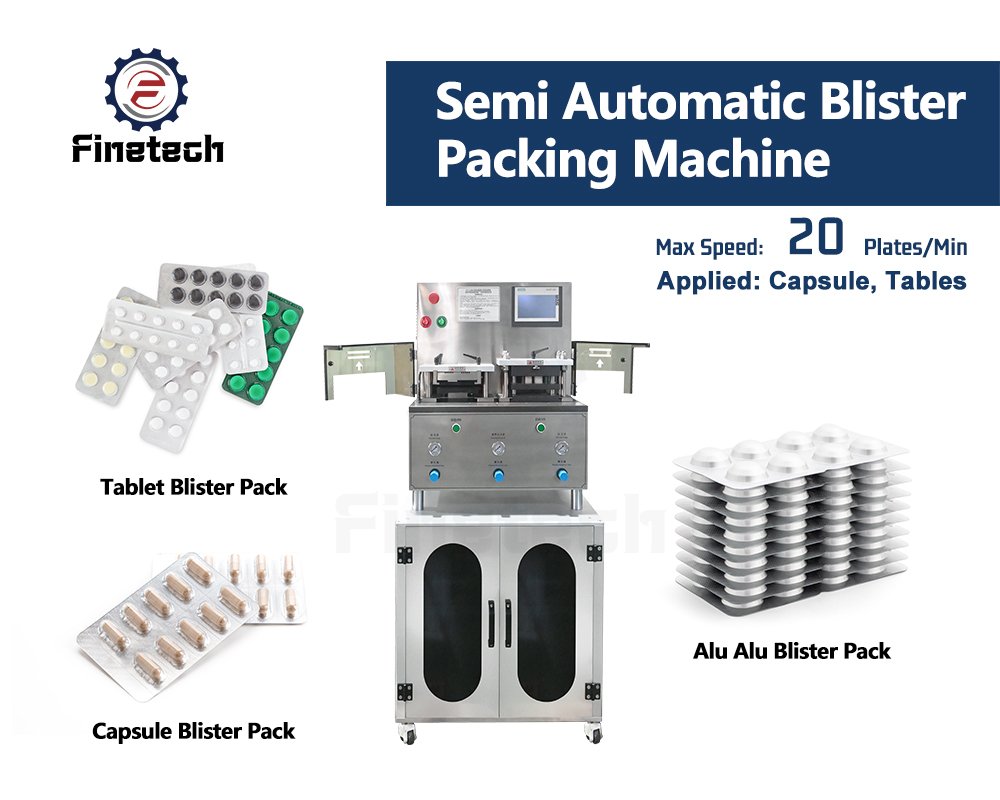
Semi-automatic blister packaging machines produce 500 to 3,000 packs per hour, while fully automatic machines exceed 4,000 packs per hour. That gap compounds fast at commercial scale.
A semi-automatic machine running a single shift may be sufficient for a startup or a small nutraceutical producer. However, for a pharmaceutical manufacturer running two or three shifts daily, the output ceiling becomes a hard operational limit.
2. Operator Involvement and Labor Costs
If you’re using a semi-automatic machine, you require operator intervention at key stages, including loading blisters and unloading finished packs. This means labor costs remain a significant ongoing expense, and output depends directly on the operator.
In a fully automatic system, there’s no need for any operator. As little as one supervisor is enough to monitor multiple lines. This reduces labor costs by 40% to 60% compared to semi-automatic setups.
3. Upfront Cost
Semi-automatic blister packaging machines range from $15,000 to $50,000, while fully automatic systems range from $80,000 to over $300,000. It all depends on the configuration, compliance certifications, and output speed.
For startups and small operations, the lower entry cost of a semi-automatic machine makes it the only realistic starting point. As for established manufacturers, the higher upfront cost of a fully automatic line is typically recovered through labor savings and increased throughput.
4. Changeover Time
Interchangeable tooling on modern machines reduces changeover time from 2 hours down to under 30 minutes. This allows operations to run multiple product formats and adapt quickly to new product lines.
Semi-automatic machines have a natural advantage here because of their simpler mechanical design. Fully automatic ones, on the other hand, offer faster changeovers when equipped with quick-change tooling, but require more technical steps to reset between products.
5. Technical Requirements
Semi-automatic machines are generally simpler to maintain due to their less complex mechanical design. Alternatively, fully automatic machines are equipped with monitoring systems that prevent breakdowns, but they require regular servicing.
So, for operations without dedicated engineering staff, the maintenance demands of a fully automatic machine can become a liability.
Purchase Tips: What to Know Before You Buy
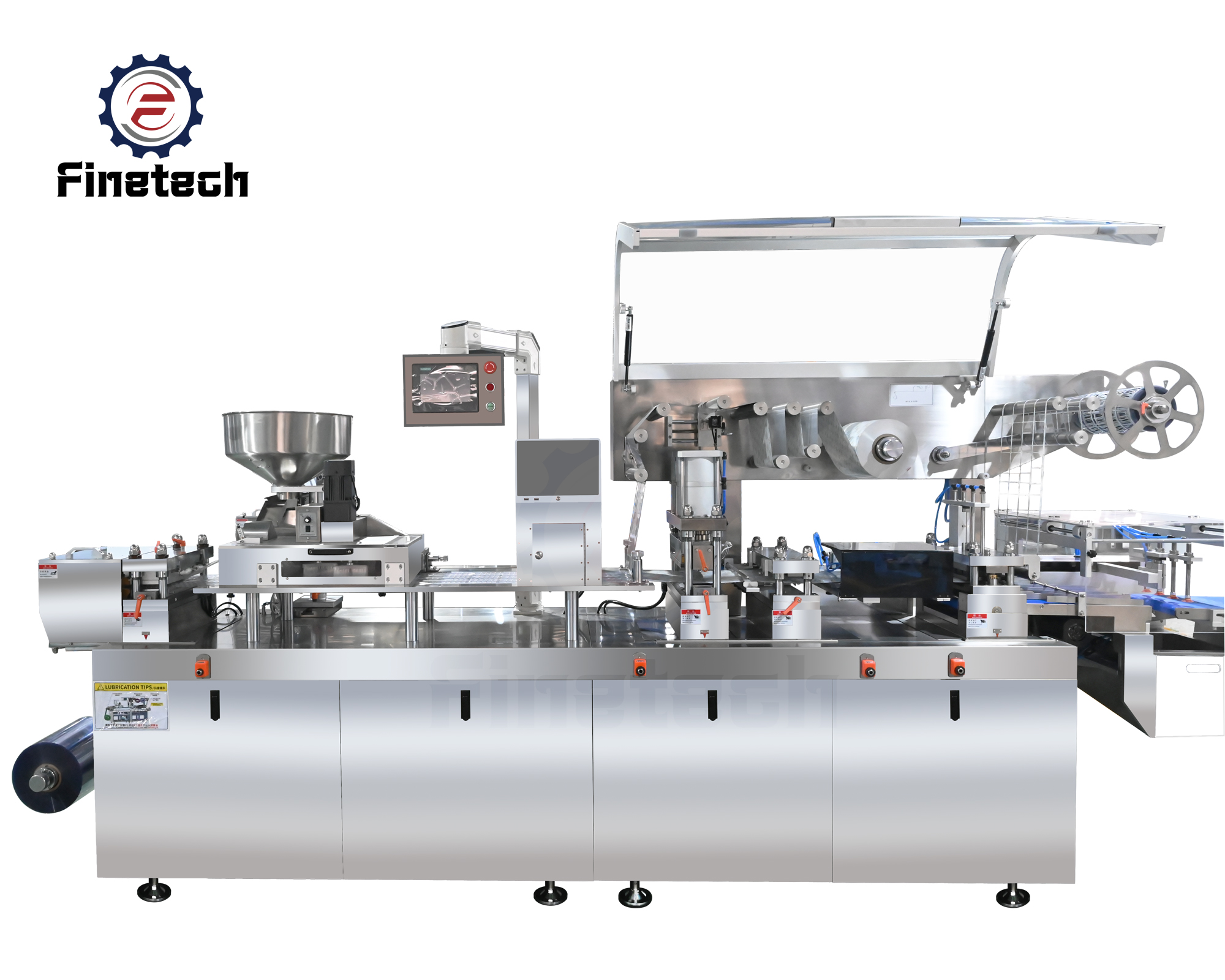
We understand that buying a blister packaging machine is a significant investment, and the wrong decision can be expensive. So, here is what to evaluate carefully before committing to either machine.
- Match Your Volume: Below 5,000 units per day, a semi-automatic machine is usually sufficient. Above 20,000, full automation is the stronger investment.
- Calculate Total Cost of Ownership: The five-year total cost typically runs 2.5 to 3 times the initial purchase price when you factor in energy, maintenance, spare parts, and labor. Run the full numbers.
- Check Material Compatibility: Confirm the machine supports the film and foil your product requires, such as PVC, PVDC, or aluminum cold-form. Not all machines handle all materials.
- Confirm Compliance Certifications: For pharmaceutical use, always request IQ/PQ/OQ validation Also, verify certification numbers with the issuing body.
- Ask About Changeover Time: Quick-change tooling can cut changeover from two hours down to under 30 minutes. This is critical if you run multiple SKUs.
- Clarify After-Sales Support: Confirm warranty terms, on-site response times, and whether training and remote diagnostics are included.
Find the Right Blister Packaging Machine at Finetech
The semi-automatic vs fully automatic blister packaging machine comparison comes down to one thing. Knowing where your pharmaceutical production stands today and how fast you need it to grow.
If you’re looking for any of these machines, Finetech is the place to search.
We carry both semi-automatic and fully automatic blister packaging machines. Every machine comes with a one-year warranty, full installation service, after-sales support, and a team that stays available long after the machine is running.
Talk to our specialists to find the right machine for yourself!