English
  Russian
  Turkish
  Spanish
  French
  German
  Japanese
| Blister packaging machine prices range from $8,000 to $400,000+ because they differ in automation level, speed, and production requirements. A basic machine designed for small batches costs far less than a high-speed line built for continuous pharmaceutical production. |
Typical Blister Packaging Machine Price Ranges
| Machine Type | Automation Level | Typical Output | Price Range |
| Manual / Basic | Manual | Very low | $8,000 – $20,000 |
| Semi-Automatic | Partial automation | Low to medium | $25,000 – $60,000 |
| Fully Automatic | Full automation | Medium to high | $70,000 – $150,000 |
| High-Speed Blister Line | Full automation + integration | Very high | $180,000 – $400,000+ |
Focusing only on the upfront number often leads to poor decisions. What really matters is understanding how blister packaging machine price relates to long-term production efficiency and whether the investment can pay for itself.
This is where many buyers get stuck. They see different machines with wide price differences, but they are unsure how to calculate ROI for their facility.
For manufacturers struggling to calculate ROI for a blister packaging machine, this guide will show how to do so using the right factors.
Blister Packaging Machine Price Breakdown by Machine Type
Blister packaging machine price varies mainly because different machine types are built for very different production realities.
Below is a clear, manufacturer-focused breakdown.
1. Manual / Entry-Level Blister Packaging Machines
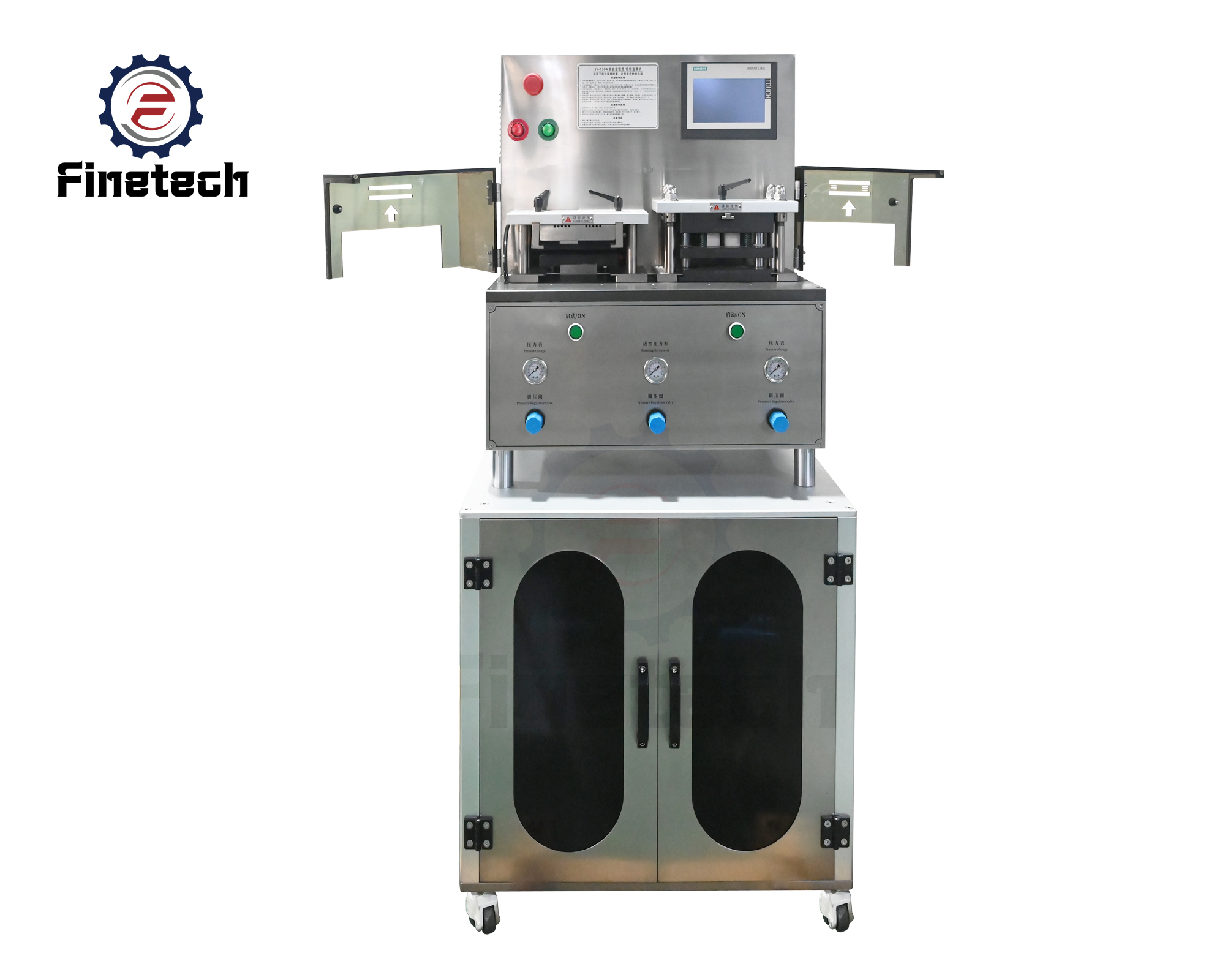
Price Range: $8,000 – $20,000.
Manual blister packaging machines sit at the lowest end of the price range. These machines rely heavily on operators for loading, forming, sealing, and unloading. Automation is minimal in these machines, and output is limited.
Because of their simple design, the initial cost is low. However, labor dependency is high, and consistency depends on operator skill. As a result, they are rarely used in regulated pharmaceutical production, except for testing very small batches.
2. Semi-Automatic Blister Packaging Machines
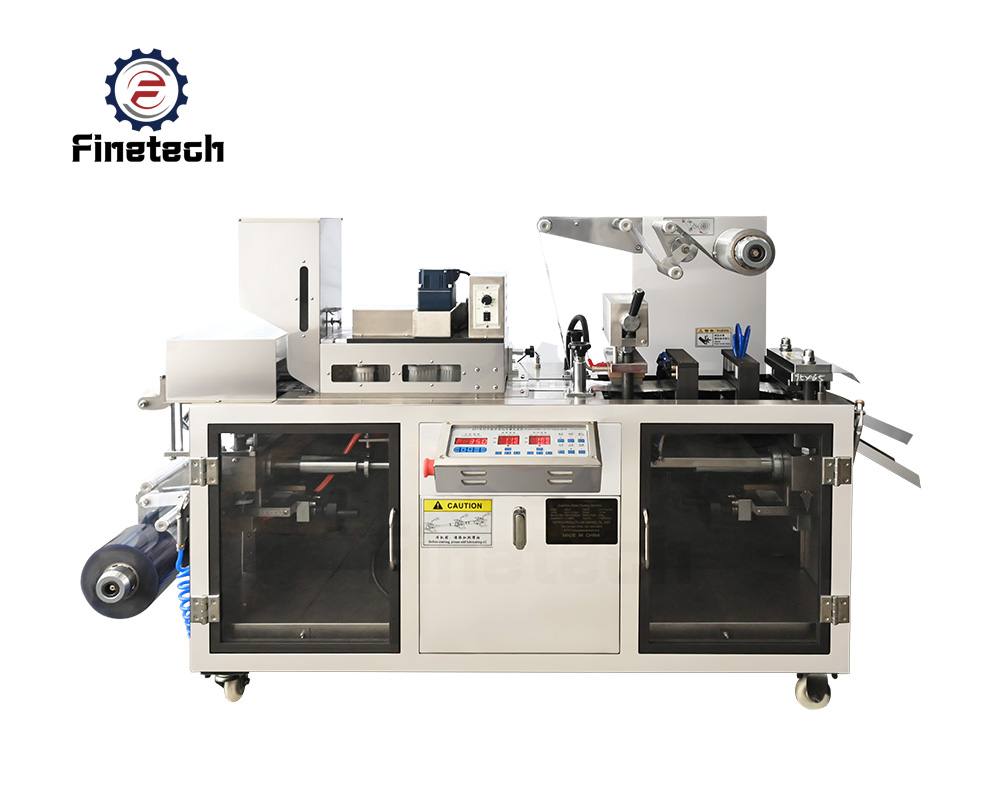
Price Range: $25,000 – $60,000.
Semi-automatic machines automate key steps such as blister forming and sealing, while operators still handle product feeding or card loading. This balance keeps costs moderate while improving consistency.
Blister packaging machine price increases here because of better control systems, improved sealing quality, and higher reliability. Many small and mid-sized manufacturers choose this category as a starting point for commercial production.
3. Fully Automatic Blister Packaging Machines
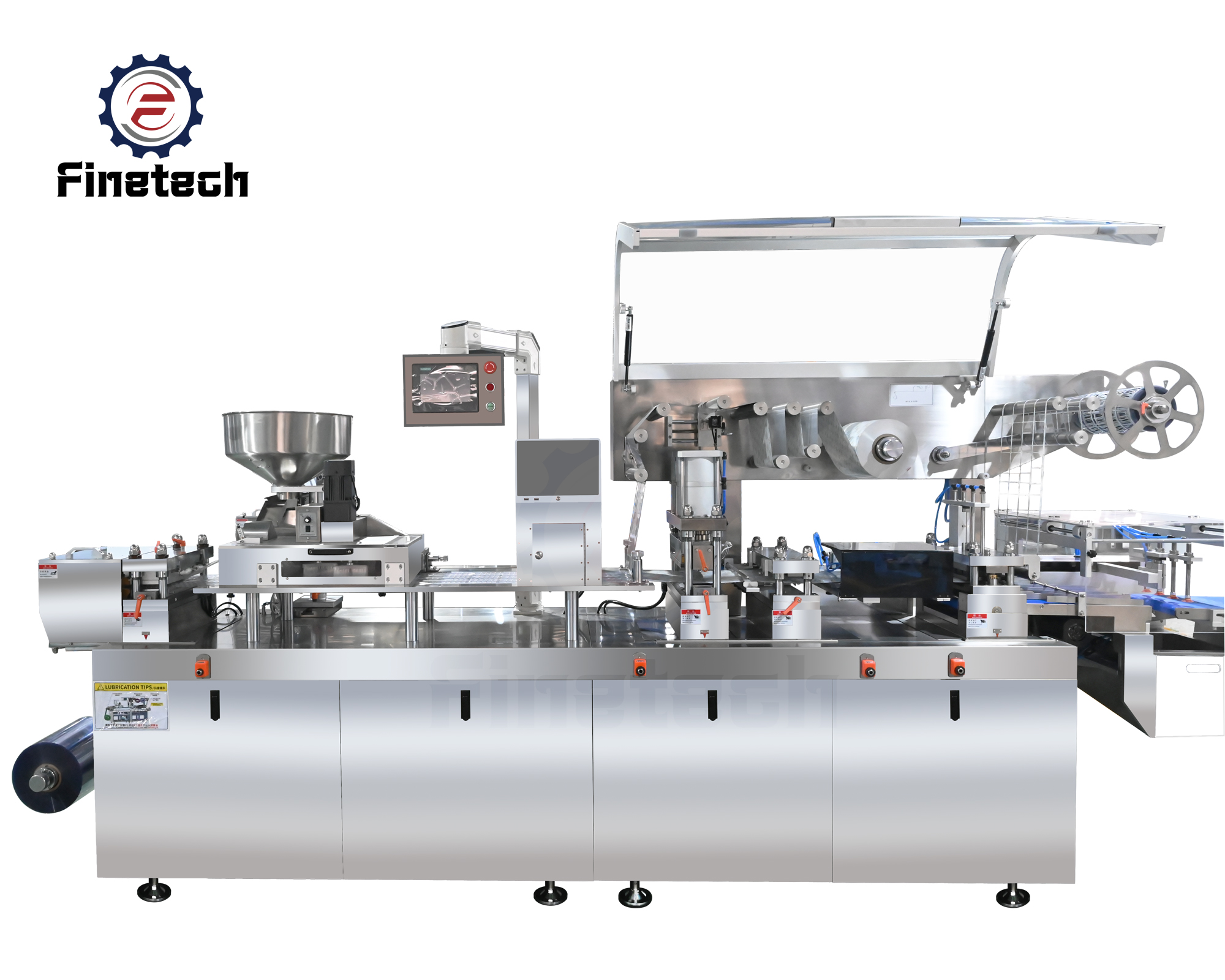
Price Range: $70,000 – $150,000.
Fully automatic blister packaging machines handle the entire blister packaging process with minimal operator involvement. Feeding, forming, filling, sealing, cutting, and discharging are all automated processes in this machine.
The higher price reflects increased speed, stable quality, reduced labor costs, and better suitability for GMP environments. These machines are best suited for high production volumes and long production shifts.
4. High-Speed Blister Packaging Lines

Price Range: $180,000 – $400,000+.
High-speed blister lines are complete systems rather than standalone machines. That means they include automatic feeders, vision inspection, cartoning, and line integration to make the entire process much faster.
However, the machine price rises sharply in this category because these systems are built for maximum throughput and minimal downtime. On top of that, engineering complexity, customization, and validation readiness increase costs.
5. Thermoforming Blister Packaging Machine
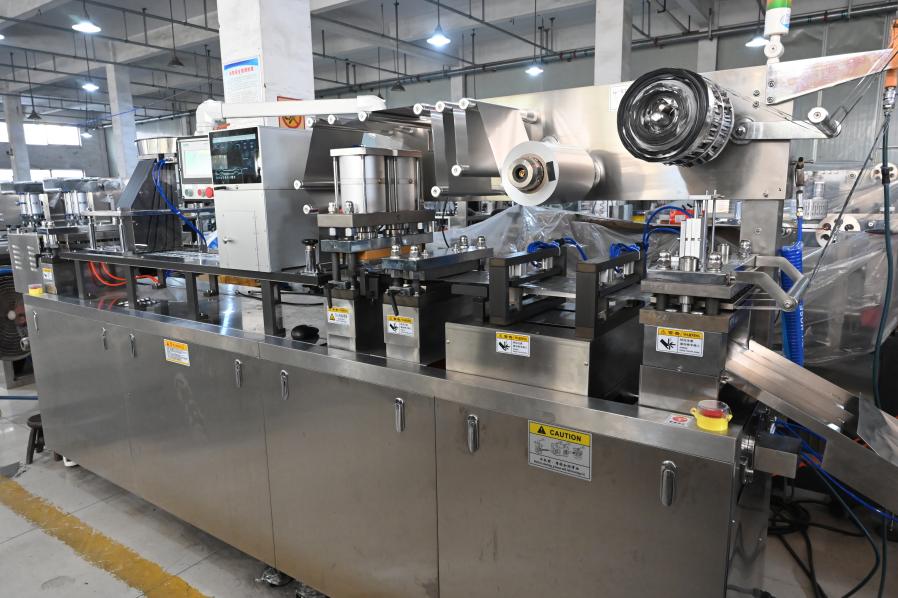
Price Range: $120,000 – $300,000+
Thermoforming blister packaging machines are a specific type built for forming packaging from roll stock, rather than using pre-formed shells. In thermoforming, a plastic sheet is heated and shaped into cavities using pressure or vacuum, then filled and sealed.
Because thermoforming machines handle forming, filling, and sealing in a continuous flow, they are often larger, more complex, and more expensive. For companies that use products requiring customized blister profiles, this machine is ideal.
What Influences the Cost of a Blister Packaging Machine
Two machines may look similar from the outside, but what they are designed to handle on the production floor can be completely different. With that said, here are the factors that influence blister packaging machine price:
1. Automation Level
Automation has the strongest influence on overall cost. Basic machines depend heavily on operators, while automated machines handle everything on their own. This automation also noticeably increases the price.
In practical terms:
- Manual to semi-automatic can increase the price by 30-50%.
- Semi-automatic to fully automatic can increase cost by 60-100%.
Automation increases upfront cost, but it reduces labor dependency, improves consistency, and supports higher output.
2. Production Capacity
Machines built for higher output must operate faster while maintaining sealing accuracy and material control. This requires stronger mechanical components, better heat regulation, and tighter synchronization between stations.
As speed increases, so does engineering complexity. A machine designed to produce twice the output of a low-speed model often costs 20-40% more. Meanwhile, high-speed machines built for continuous production can cost two to three times more than entry-level units.
3. Machine Configuration
Fixed-format machines are simpler and less expensive. On the other hand, machines designed to handle multiple blister sizes, materials, or product types need adjustable tooling and modular stations.
That flexibility adds mechanical parts and setup logic. In most cases, multi-format capability increases cost by 15-30%, while quick-change tooling systems add further cost but reduce downtime between products.
4. Compliance and Build Quality
Machines intended for pharmaceutical use require higher build standards. They include stainless steel construction, enclosed processing areas, smoother finishes, and documentation support. All these things add to manufacturing time and material cost.
Compared to basic industrial packaging machines, pharma-grade blister machines typically cost 20-40% more. Skipping these features may lower initial cost, but it often creates regulatory and maintenance issues later.
How to Calculate ROI for Blister Packaging Machine
Calculating ROI is not complicated if you break it down into real production numbers. The goal is to compare what you spend with what you save or earn back every year. For everyone wondering how to calculate ROI, here’s what you need to do:
Step 1: Calculate the Total Initial Investment
Start with everything you must pay to get the machine running. These include machine purchase price, installation and commissioning, operator training, and any required accessories.
For instance:
- Blister packaging machine: $95,000
- Installation and training: $8,000
- Tooling and setup:$7,000
Total initial investment = $110,000
This is the number your ROI calculation starts from.
Step 2: Measure the Increase in Production Output
Next, look at how much more the new machine can produce. If your old setup runs at 2,000 blisters per hour and the new machine runs at 6,000 blisters per hour, the gain is 4,000 blisters per hour.
This means running one shift for 250 days a year adds up to 8 million extra blisters annually. If each blister contributes roughly $0.03 after costs, the added production alone brings in $240,000 per year.
Step 3: Factor in Labor Savings
Automation usually reduces the number of operators needed per shift.
Example:
- Old setup: 3 operators.
- New machine: 1 operator.
So, if one operator costs $22,000 per year, then:
Annual labor savings = 2 x $22,000 = $44,000
This is one of the most predictable ROI components.
Step 4: Account for Waste and Quality Improvements
Older or manual systems usually generate more rejects. If waste drops from 5% to 1%, the difference becomes significant over millions of units.
If you produce 10 million blisters per year and each blister costs $0.05 in material:
- Old waste cost: 500,000 × $0.05 = $25,000
- New waste cost: 100,000 × $0.05 = $5,000
Annual waste savings = $20,000
Step 5: Include Efficiency and Downtime Gains
Newer machines tend to run more reliably and change over faster. Saving just 30 minutes of downtime per shift adds up to about 125 hours of recovered production time per year.
If one hour of production is worth $500, that time recovery adds roughly $62,500 annually to your return.
Step 6: Put the Numbers Together
Now add all annual gains together:
- Additional output contribution: $240,000
- Labor savings: $44,000
- Waste reduction: $20,000
- Downtime/efficiency gain: $62,500
Total annual benefit = $366,500
Step 7: Calculate ROI and Payback Period
Now, let’s calculate the ROI and payback period for buying a blister packaging machine.
ROI formula:
- ROI (%) = (Annual Benefit ÷ Initial Investment) × 100
Using our example:
- ROI = ($366,500 ÷ $110,000) × 100
- ROI ≈ 333%
Payback period:
Payback Period = Initial Investment ÷ Annual Benefit
- Payback = $110,000 ÷ $366,500
- Payback ≈ 3 years (about 4 months)
Simple Reality Check Not every case delivers this level of return. Even if you remove half the gains, the payback period is still well under two years, which is why blister packaging machines are often justified through ROI rather than price alone. |
FAQs
1. What is the difference between thermoforming and cold forming in terms of cost?
Thermoforming machines are generally more affordable as they use heat to shape plastic films like PVC. Cold forming machines require more robust mechanical pressure to shape aluminum foil, leading to higher equipment costs but superior product protection for light-sensitive drugs.
2. What impact do recent tariffs have on blister machine pricing?
In 2026, global trade policies and tariffs on stainless steel and electronics have led to a 10% to 15% price increase for imported machines. Buyers must verify if the quoted price includes these fluctuating duties to avoid budget overruns.
3. Does the inclusion of a “Pinhole Detection System” for Aluminum foil increase the ROI?
A pinhole detector for cold-form foil (Alu-Alu) is a specialized sensor that adds roughly $5,000 to the equipment cost. It significantly boosts ROI for sensitive medications by ensuring the moisture barrier is 100% intact, thereby extending product shelf life and reducing the waste of expensive active pharmaceutical ingredients (APIs).
Turn ROI Calculations Into Real Production Gains
By now, you’ve seen how blister packaging machine price connects directly to output, labor, efficiency, and long-term returns. But just remember, the right machine is not the cheapest option; it’s the one that fits your production goals.
If you’ve reached the point where you’re ready to move to action, Finetech is here to assist you.
With over 30 years of experience, we offer a complete range of blister packaging machines. Beyond machines, we provide installation support and ongoing technical assistance to ensure your equipment delivers the ROI you expect.
Contact Finetech today to find the right blister packaging solution for your facility!