Zum Inhalt springen
  German
  English
  Russian
  Turkish
  Spanish
  French
  Japanese
Tablet tooling refers to the components and machines that determine the physical characteristics of the medication and ensure consistent quality. They help you win the trust of customers, leading to brand security. But what are the different types of tablet tooling and their benefits? How can you choose the right machine and material? Let’s find out!
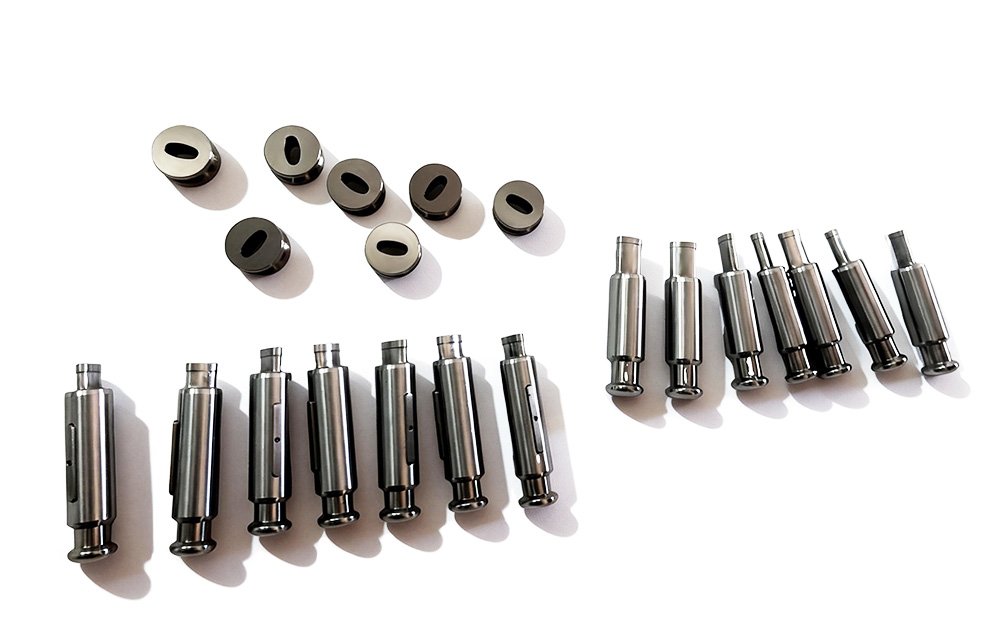
Tablet Compression Machine Tooling Type
Know that when it comes to pharmaceuticals, there’s no one-size-fits-all machine. You have to learn about different types of tablet tooling to find the right component for a particular application. Here’s an overview:
D Type
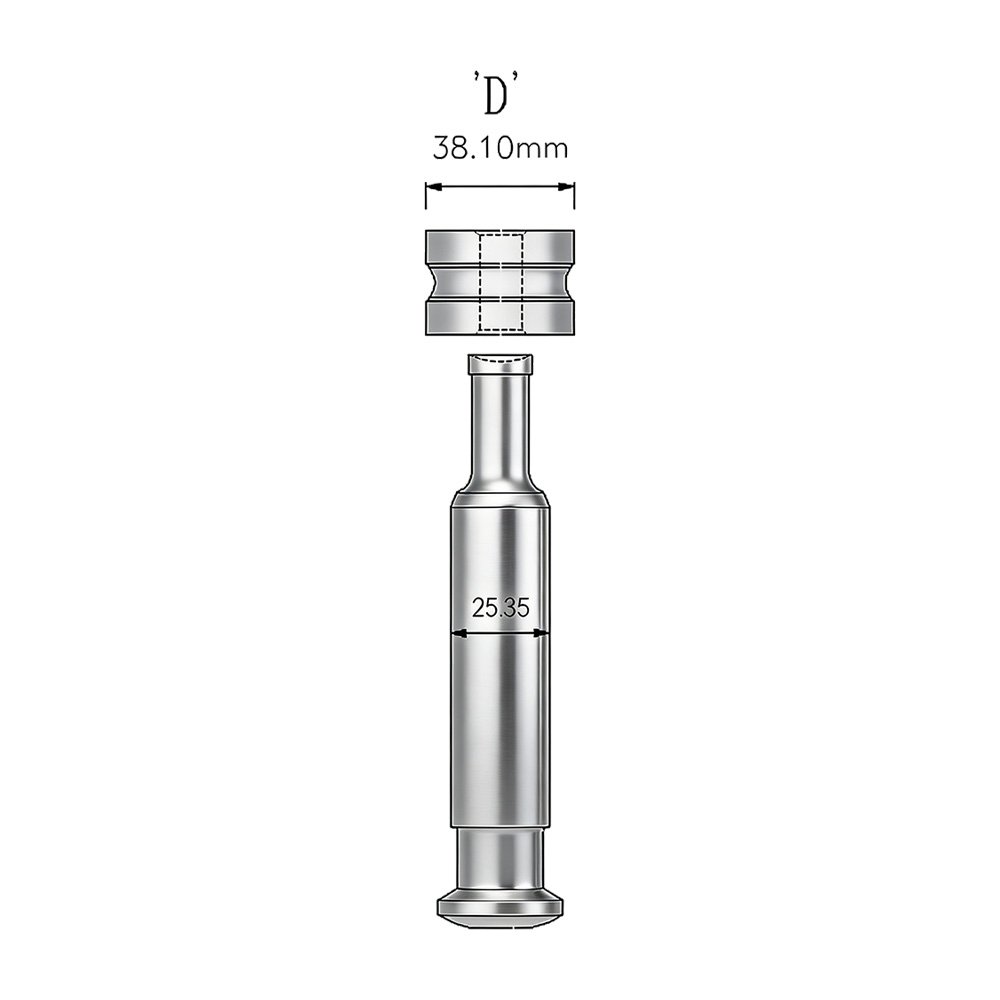
D-type tooling, also known as European Tooling, is a famous standard for tablet manufacturing. It features a die with a flat top and bottom punch, while the shape of the tablet is determined by the die cavity.
This type of tablet tooling is more suitable for complex tablet designs, including bilayer tablets. Not only this, but the flat surface also enables smooth embossing, which is key to easy tablet identification.
Overall, the D type is suitable for all standard pharmaceutical machines. You can use them when creating specific pharmaceutical doses with large sizes and higher doses.
DB Type
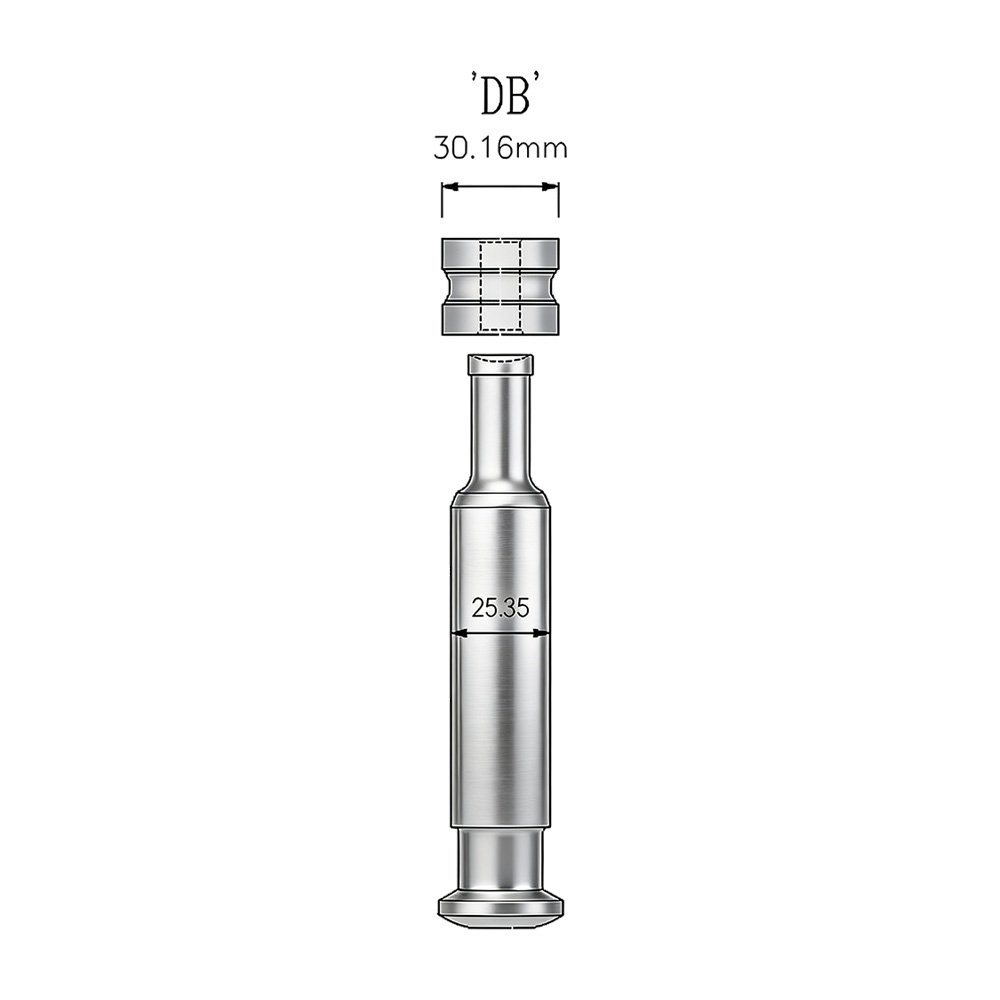
DB tooling, as evident by its name, is a standard configuration for pharmaceutical machines that combines aspects of the B and D tooling systems. In this case, the punch diameter is similar to that of the D tooling, but the die diameter is that of the B tooling.
This setup ensures high output capacity and efficiency, allowing you to meet and exceed customer expectations. You can use them to create tablets that are very hard and dense with small to medium sizes.
B Type
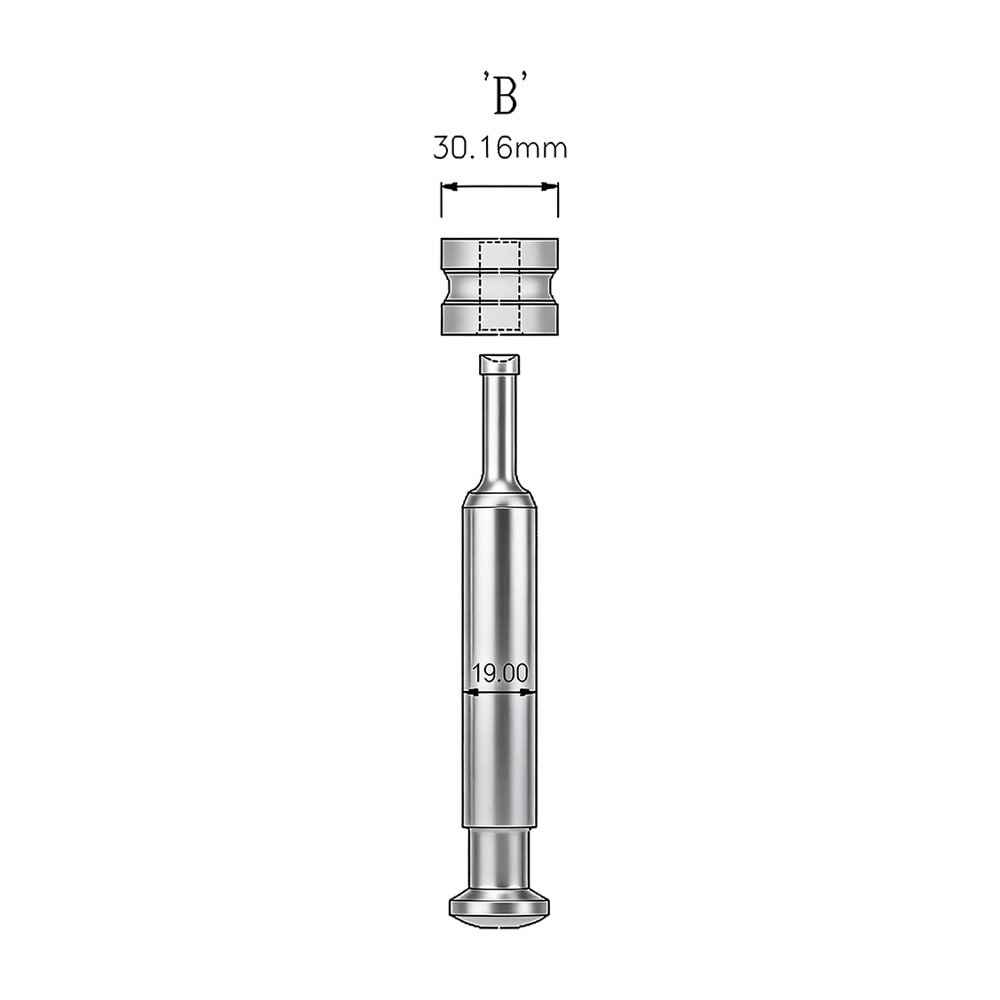
One of the most common types of tablet tooling in the pharmaceutical industry is B type. When we look at its structure, it features a round-shaped die with a concave top and bottom punch.
Based on the specific machine sizes and configurations, the punch head and die diameter are standardized. It’s compatible with almost all types of tablet compression machines, including the 16-station model.
You can use it for your large-scale industrial applications, including the production of small to medium-sized tablets in various shapes, such as round and oval. Since it’s widely available and cost-effective, more and more manufacturers are investing in it.
BB Type
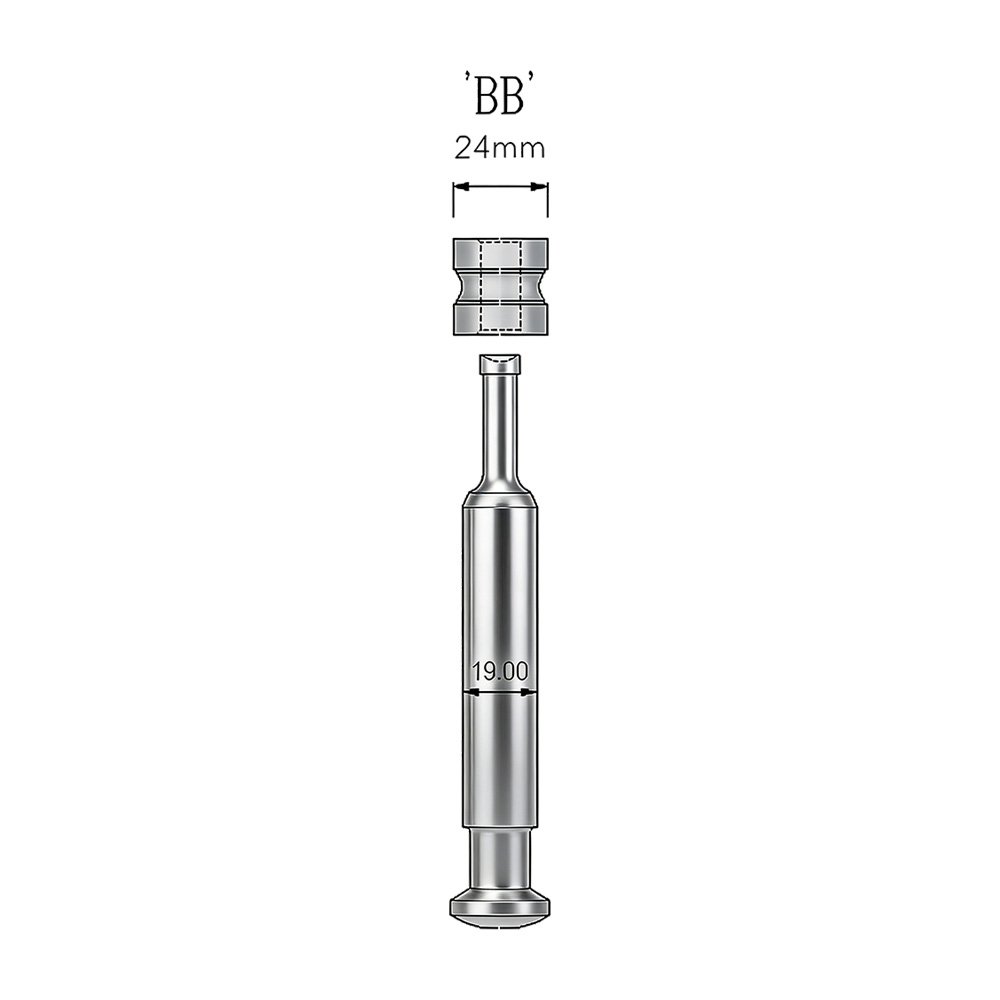
BB tooling is another type of tablet tooling, known for its smaller diameter. It offers a moderate output capacity, allowing you to produce small tablets, such as lozenges, mints, and mini tablets.
However, despite its size, this tooling stands out due to its incredible precision. You can rely on it to ensure accurate dosing uniformity in your tablets for high customer satisfaction.
Difference Between D Tooling and B Tooling Tablet Compression Machine
This is a fundamental distinction in tablet press tooling (punches and dies) that is critical for machine compatibility and safety.
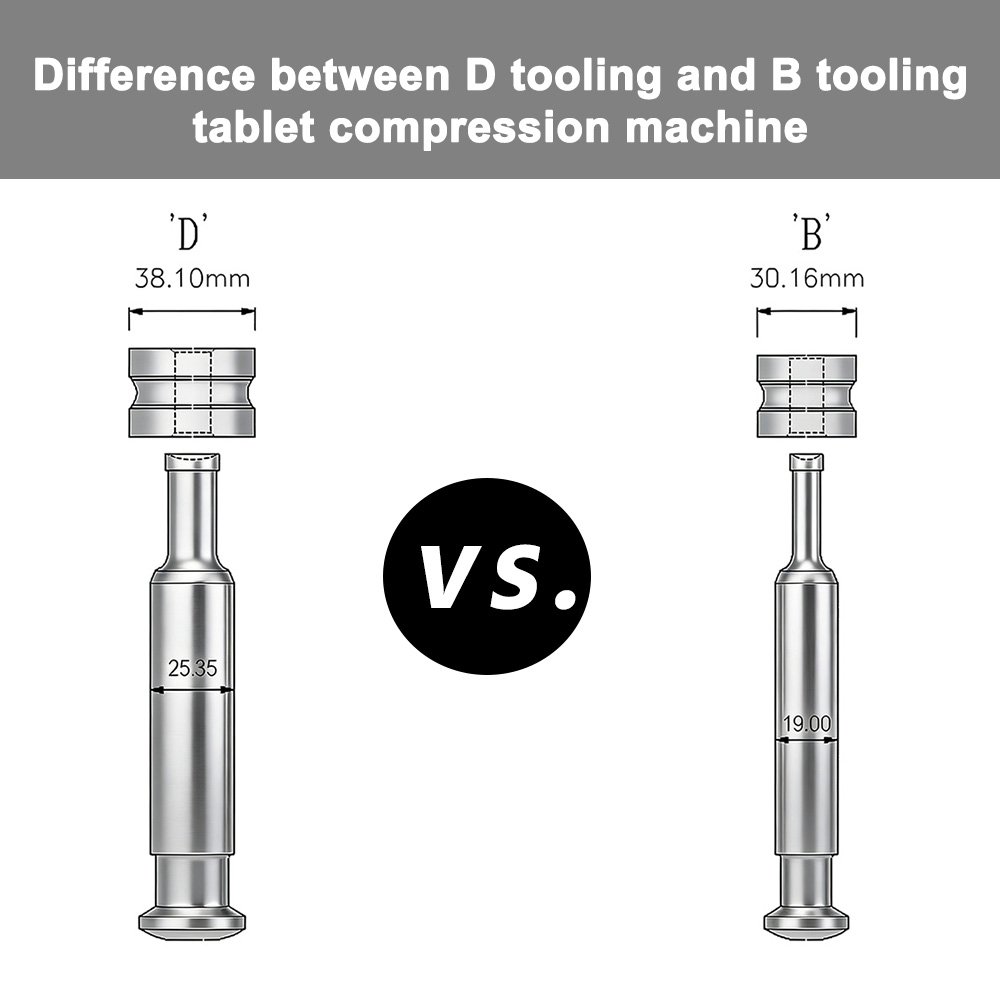
The primary difference between D-tooling Und B-Werkzeuge lies in their physical dimensions, locking mechanisms, and the size of the tablet presses they are designed for. They are not interchangeable.
Here’s a detailed breakdown:
| Besonderheit | D-Tooling (Standard “D” Type) | B-Tooling (Standard “B” Type) |
|---|---|---|
| Key Dimensions | Larger. Punch barrel length: ~133.35 mm (5.25 inches). Punch head diameter: ~31.75 mm (1.25 inches). | Smaller. Punch barrel length: ~133.35 mm (5.25 inches) – Note: Length is the same. Punch head diameter: ~25.4 mm (1.00 inch). |
| Head Flange | No projecting rim or “lock.” The head is a simple, flat disc. | Ja. Has a distinct projecting rim or lip. This is the key visual identifier. |
| Locking Mechanism | Secured in the machine turret by a retainer (chuck) and a key that fits into a notch on the punch barrel. | The projecting head flange fits into a matching recess in the turret. It is then locked in place by a clamp that fits over the flange. |
| Die Locking | Dies are secured with a die lock screw. | Dies are secured with a hex key (Allen wrench) directly into the die. |
| Machine Compatibility | Entwickelt für older, heavy-duty, and typically larger tablet presses. Common in many Stokes and older Fette models. The design is robust for high-tonnage compression. | Der modern, most widely used standard globally. Used in the vast majority of modern medium to high-speed presses (e.g., Fette, Korsch, Manesty, IMA). |
| Werkzeugstandard | Known as the “American Standard” (TSM standards). | Known as the “European Standard” (EU standards, now dominant globally). |
| Typischer Anwendungsfall | Often found in R&D, university labs (with older machines), and specific production lines with legacy equipment. Also common on single-station/ eccentric presses. | The industry standard for high-speed rotary tablet presses used in large-scale pharmaceutical, nutraceutical, and industrial production. |
| Visual Identification | Look at the punch head: Flat, no lip. Look for a notch on the barrel for the key. | Look at the punch head: Clear, raised lip/flange. Barrel is smooth. |
Tablet Tooling Specifications
| Tooling Types | Body Diameter | Die Outer Diameter | Die Height | Tablet Sizes |
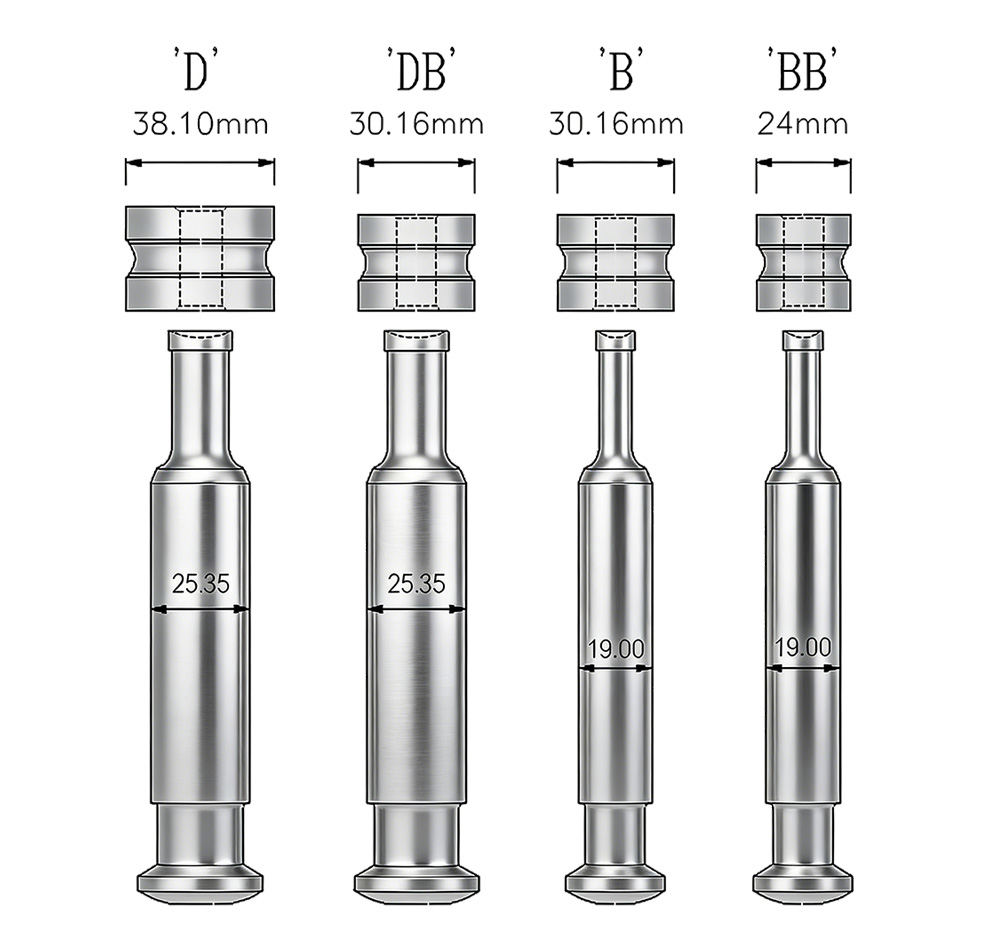
| D | 25.35mm | 38.10mm | 23.81mm | Round 5mm to 25mm, Shape 5mm to 25mm |
| DB | 25.35mm | 30.16mm | 22.22mm | Round 5mm to 19mm, Shape 5mm to 19mm |
| B | 19mm | 30.16mm | 22.22mm | Round 4mm to 16mm, Shape 4mm to 19mm |
| BB | 19mm | 24mm | 22.22mm | Round 4mm to 13mm, Shape 4mm to 19mm |
Standards for Different Types of Tablet Tooling
Now that you are aware of the different types of tablet tooling, let’s move on to discuss the various standards used for them:
TSM
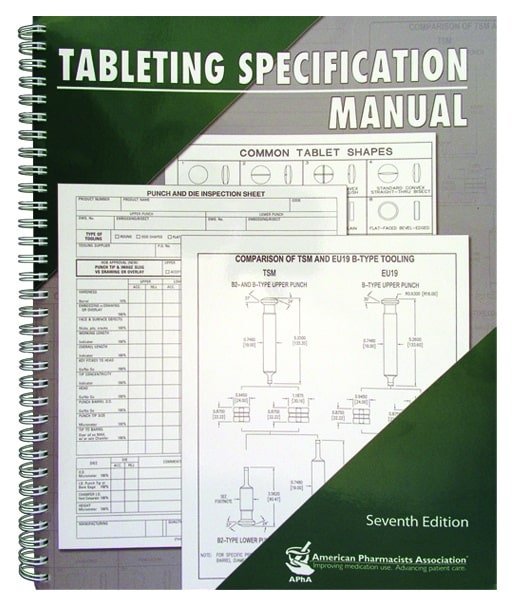
The TSM (Tableting Specification Manual) is actually a North American standard for tablet tooling. It’s published by the American Pharmacists Association, which provides specific measurements and terminology for tablet punches and dies. Whether it’s information on tooling dimensions, types, design, or manufacturing, everything is regulated by the TSM in the US.
EU
The EU standard for tablet tooling is the ISO 18084 standard, which specifies the dimensions for punches and dies. It also categorizes the different types of tablet tooling, including B and D, as well as others such as BB and DB. With this standard in place, it becomes easy to interchange and rationalize the tablet tooling across different pharma manufacturers in various locations. Here’s an overview of the key differences between the TSM and EU standards:
- TSM punch heads have angled top profiles, while the EU ones have a domed head profile.
- The punch inside head angle of the TSM for the B-type tooling is 37°, which is significantly higher than the 30° of the EU.
- The punch length of the TSM tool is 0.010 inches shorter than the EU.
Benefits of Tablet Tooling
Manufacturers pay special attention to the types of tablet tooling they are choosing, as it impacts the end product outcome. Let’s look at the many benefits of the right tooling:
- Better Tablet Quality: Standardized and precision-made tooling ensures the tablets have a consistent shape, weight, and dosage. You won’t experience issues like capping and lamination that lead to product wastage as well as dissatisfied customers.
- Reduced Expenses: While investing in tablet tooling costs a little more upfront, it significantly reduces your expenses in the long term. How? Well, higher-quality tooling leads to fewer rejected tablets, which in turn use raw materials more efficiently, allowing you to produce more tablets. There’s no need for frequent purchasing of materials; hence, lower manufacturing costs.
- Anpassung: Nowadays, personalization is a must for all businesses. One of the major benefits of investing in different types of tablet tooling is that you can customize them in unique shapes and designs. You can also use them to engrave your company’s logo on the tablets for quick identification and branding.
- Less Downtime: Do you know? However, reliable tooling ensures smooth operations with minimum interruptions in production processes. This lowers the overall downtime and also helps you save money on labor costs.
Maintenance Tips for Tablet Tooling
You’ve bought the right set of tooling and are using it for your daily pharmaceutical tasks, but after some time, you notice wear on them. To avoid it, here are some must-follow maintenance tips:
- Start by cleaning the tooling using an ultrasonic bath, which creates microscopic bubbles through cavitation and helps you access hard-to-reach areas.
- After cleaning, you should dry the tools to prevent corrosion and discoloration.
- Carry out a careful visual inspection of the punches and dies to identify signs of wear or damage. Make sure the punches are aligned and tend to damage rectification, if any.
- Regularly polish the tooling, especially the punch cups, to restore their smooth, polished appearance.
- Apply lubricant to all the moving parts of the tooling so all tasks are carried out smoothly.
- When not in use, store the tooling properly to avoid contact with other equipment and maintain its condition over time.
Notiz: Wear gloves to prevent moisture from oils and moisture from fingers from getting on the tooling.
How to Choose the Right One?
If you are unable to choose the right types of tablet tooling, follow the given tips and make decision-making easy:
Evaluate the Tablet Design
First things first, you should understand the type of tablet you need. Do you want a round and oval shape, or are you looking to manufacture bi-layered drugs? Based on the tablet design and desired characteristics, you can then choose the right type of tooling from D and B and their sub-categories.
Choose Appropriate Tooling Material.
Consider in which environment the tooling is going to be used. Is there going to be high moisture exposure or contamination risk? If yes, then you must invest in a high steel grade that offers the best balance between toughness and compressive strength.
Ensure Machine Compatibility
Make sure the tooling is compatible with the tablet press machine before you purchase it. This ensures optimal machine performance, minimal adjustments, and high overall output.
FAQs
What materials are tablet punches and dies made of?
Tablet punches and dies are made of high-quality steel alloys such as HRC tool steel to prevent corrosion and mechanical stress.
What causes tablet tooling to wear?
Tablet tooling can wear due to improper lubrication, abrasive materials, and poor cleaning.
Can the same tablet press machine use B and D tooling?
Yes, some modern tablet press machines can have interchangeable turrets that work with both B and D tooling types.
Abschluss
You must invest in reliable types of tablet tooling to make your pharma operations smoother and more efficient. Wondering where you can get top-notch machinery? Explore Pharmazeutische Ausrüstung von Finetech. All our products are warrantied and come at a competitive price, making them the manufacturer’s choice!
Referenzen:
Standardarbeitsanweisung für Tablettenpressmaschine.
Ein vollständiger Leitfaden für Tablettenpresswerkzeuge in der industriellen Pharmazie
Erläuterung der Standardgrößentabelle für Tablettenstempel und -matrizen.