English
 Russian
 Turkish
 Spanish
 French
 German
 Japanese

The global capsule filling machine market is set to expand from $1.8 billion in 2025 to $3.2 billion by 2035. It’s mostly driven by rising pharmaceutical production, automation adoption, and tightening regulatory standards worldwide.
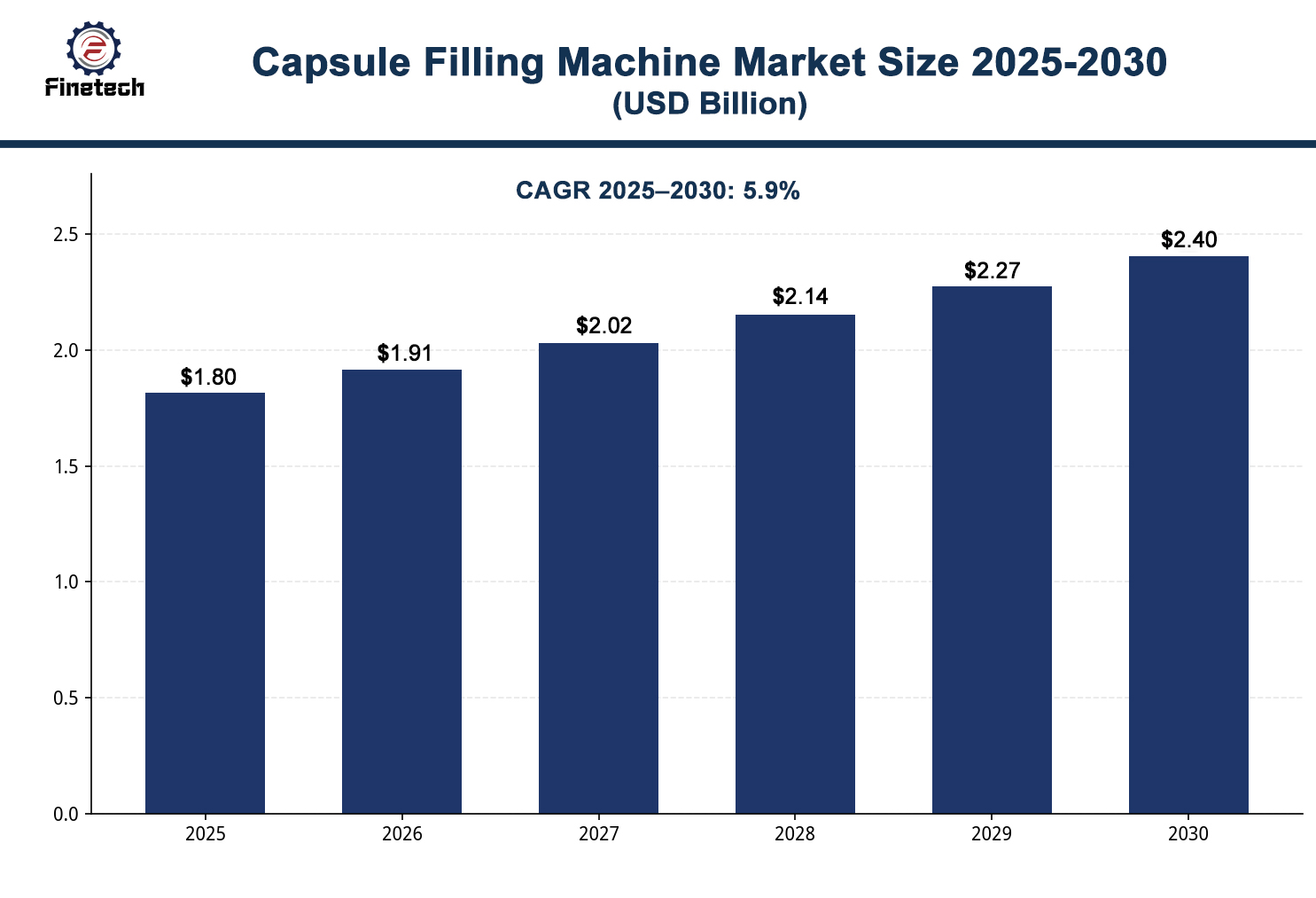
In the sections ahead, we will break down the key market trends, regional growth leaders, and what they mean for manufacturers between 2025 and 2030.
Key Market Trends Shaping 2025 to 2030
Here are the key market trends that manufacturers need to know and how they can shape the next few years:
1. Rise of Fully Automatic Capsule Filling Machines
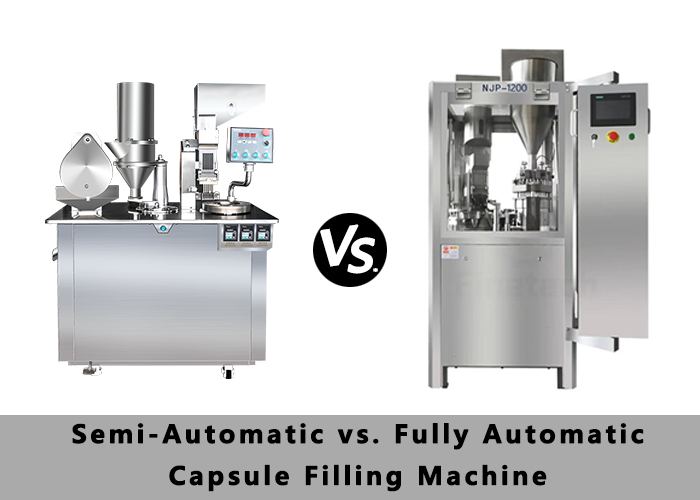
Automation is the single biggest force reshaping the capsule filling machine market right now. Automatic capsule filling machines already hold over 65% of the total market, due to high output capacity and minimal human intervention.
As production volumes increase and regulatory scrutiny around dosing accuracy tightens, fully automated systems are becoming the baseline expectation.
With time, even manufacturers using semi-automatic and manual machines are finding that the productivity gap is impossible to close through labor alone.
2. Integration of AI, Vision Inspection, and Smart Controls
The next generation of capsule filling machines is not just faster. It is smarter. These technological advancements include integrated weight checking, vision inspection systems, and connectivity with enterprise resource planning.
You should know that AI-powered predictive maintenance, real-time defect detection, and automated quality control systems are worth using. They reduce reliance on manual inspection, cut reject rates, and enable the kind of data traceability that regulators require.
If you are a manufacturer investing in new equipment, you need to be aware of these advancements to get the best output.
3. Shift Toward Vegetarian and HPMC Capsules
Consumer demand for plant-based, vegan-friendly, and halal-certified products is driving a significant shift in capsule material preferences. In fact, the global HPMC vegetable capsule market is projected to reach $1.225 billion by 2032.
HPMC capsules behave differently from gelatin during the filling process, requiring specific tooling, validated machine settings, and adjusted operating parameters.
Manufacturers, like yourself, purchasing new capsule filling equipment in the next few years, need to confirm HPMC compatibility upfront. And remember that retrofitting machines are not originally designed for plant-based capsules as it adds high cost.
4. Containment Solutions for Potent Compounds
The rise of highly potent APIs across oncology, hormonal therapies, and targeted drug delivery is creating parallel demand for capsule filling machines.
Surprisingly, cancer-related APIs already constitute 73.23% of overall HPAPI demand, and 28% of FDA new molecular entity approvals in 2024 fell into the highly potent category. Standard filling machines, however, are not equipped to handle these compounds safely.
Due to that, isolator-integrated systems, negative pressure enclosures, and dust-free discharge mechanisms are increasingly required for operator safety and regulatory compliance. This segment is growing fastest in North America and Europe.
Looking for a Capsule Filling Machine?
You need to know that the capsule filling machine market is moving fast. Automation is becoming standard, compliance requirements are tightening, and manufacturers who invest in the right equipment now will be better positioned through 2030 and beyond.
So, if you have made up your mind and are looking for a capsule filling machine, you can come to Finetech. We offer GMP-compliant machines built for where the industry is heading, not where it has been.
Contact us today to get the machine for your future production!