...

Professional supplier of overall solutions for pharmaceutical manufacturing and packaging

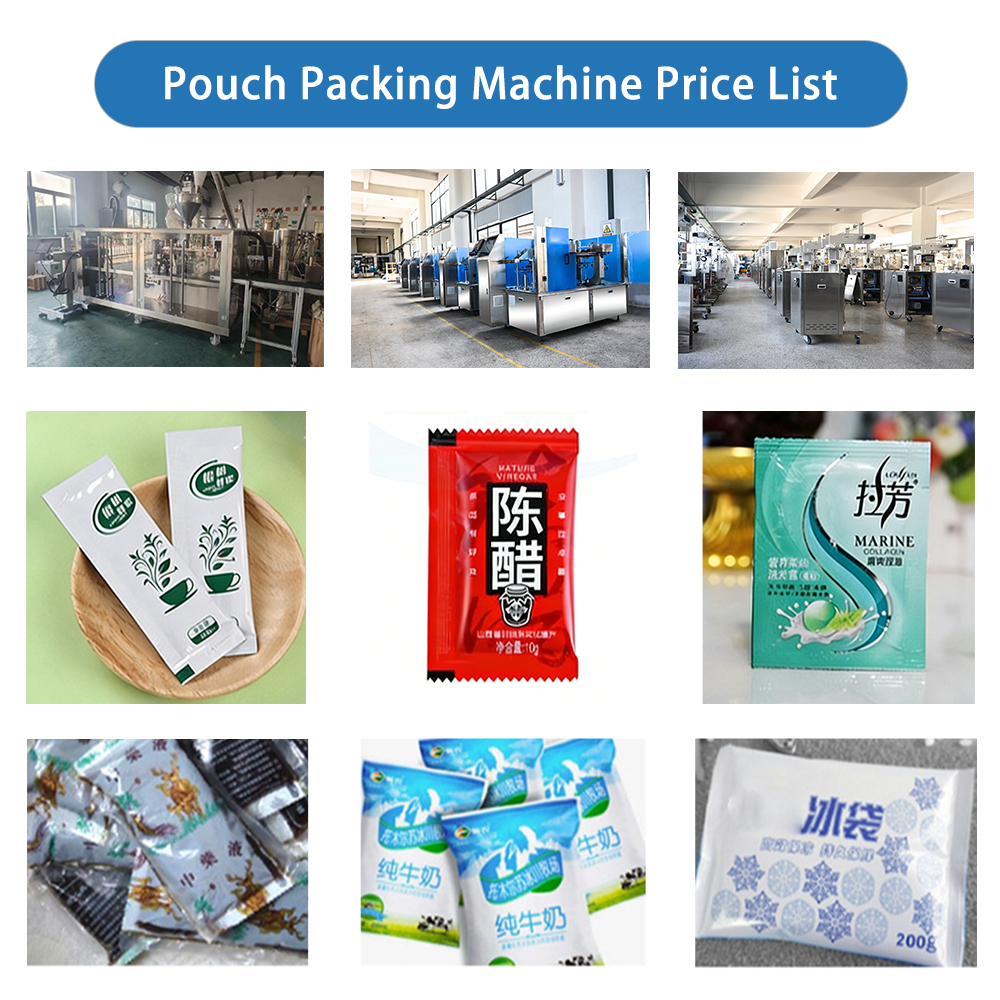
Pouch Packing Machine Price List

Table of Contents

Pouch Packing Machine Price List
Pouch Packing Machine Price List.

Manual Impulse Pouch Sealer

This is a simple tool many shops start with. You place the pouch mouth on the sealing bar, press the handle, and let the heat seal the film. It’s easy to learn and quick to set up.

Impulse sealers work well on PE and PP pouches, plus many laminated films if the thickness stays in range. A longer sealing bar also helps when you run wide pouches or want more room at the top.

Price: $40 – $400

Pedal Pouch Sealer (Impulse or Constant Heat)

A foot sealer keeps your hands free while you fill and square up the pouch top. Step on the pedal, the jaws close, and the seal forms with steady pressure.

Impulse pedal models handle many common pouch films. Constant heat versions are better for tougher laminates, but they need warm-up time and careful settings.

Pedal units also help you keep the pouch mouth flat for cleaner seals.

Price: $200 – $1,500

Continuous Band Sealer for Filled Pouches

Band sealers help when you’re sealing more pouches than a table sealer can handle. Pouches ride on a small conveyor and pass through heated bands. If the top edge is flat and clean, the seal comes out even.

Vertical band sealers keep product settled at the bottom, which is useful for coffee, snacks, and blends. Many plants choose them to reduce spills and keep the top edge cleaner.

Many units can add a coder, so you can stamp dates or batch codes during sealing. That keeps your station simple and avoids moving pouches to a second printer.

Price: $300 – $3,000

Semi-Automatic Pouch Filling and Sealing Workstation

This type of station is common when you want steadier results but you’re not ready for full automatic pouching. You dose the product, present the pouch, and the machine handles the clamp and seal timing. It’s a clean way to pack powders and granules without constant rework.

Workstations pair well with pre-made stand-up pouches, including zipper pouches when you seal above the zipper. They also fit businesses that run many SKUs, since changeovers are mostly guides and simple settings.

Price: $4,000 – $20,000

VERTICAL FORM FILL SEAL (VFFS) POUCH MACHINES

Entry-Level VFFS for Pillow Pouches

VFFS machines form pouches from roll film, fill them, then seal and cut in one cycle. Entry models suit dry products where you want basic automatic packing at moderate speeds.

These units are used for rice, grains, sugar, spice blends, and small snacks. Good feeding matters, because unstable flow shows up fast in fill weights and sealing.

Many entry machines offer basic bag styles like pillow packs and simple gussets. If you want to test a few formats without buying premade pouches, this is a practical place to start.

Price: $8,000 – $15,000

Standard Automatic VFFS with Better Controls

Standard VFFS machines add a stronger frame, smoother motion, and more dependable sensors. You get wider pouch size ranges, cleaner bag length control, and less downtime in long runs. It’s the step many brands take once volume becomes steady.

Retail packs benefit from neat seals and repeatable pouch length. Those details also reduce scrap, because you spend less time rejecting pouches at the end of the shift.

Price: $15,000 – $35,000

VFFS with Auger Filler for Fine Powders

An auger filler is a solid choice for powders that do not flow well. It meters product by screw rotation, which can hold weights steady for coffee, flour, protein powder, and seasoning mixes. Operators like it because it’s predictable once tuned.

Powder work can get messy if dust reaches the seal area. A well-set drop height and a simple mouth cleaner keep the top edge clean before the seal closes.

Many teams keep spare augers for different products. Swapping an auger can be faster than trying to force one setup to handle every powder you run.

Price: $12,000 – $25,000

VFFS with Multihead Weigher for Snacks and Mixed Items

Multihead weighers help when pieces vary in shape or size. The weigher builds a target weight fast, then drops product into the formed pouch. That combo is common for chips, nuts, dried fruit, candy, and mixed snack blends.

These setups are popular in plants that run several products on one line. Saved settings make it easier to repeat a job without guessing on day two.

Daily cleaning tends to be straightforward, but it still needs to happen. When hoppers and chutes stay clean, weights stay steady and seals stay cleaner.

This is also where you can add pouch styles that look better at retail, like gussets and stronger top seals. You still run roll film, so you have lots of material and pouch-format choices.

Price: $25,000 – $70,000

VFFS Liquid Pouch Machine with Pump Filling

Liquid pouch packing needs controlled fills and clean cutoffs. These machines use piston, diaphragm, or peristaltic pumps, based on whether you run thin liquids, thicker sauces, or products with small bits. The dosing method matters more than most people think.

Seal quality is key with liquids because small channels turn into leaks. Many setups seal in a vertical position so product stays away from the top until the seal is finished.

Price: $9,000 – $20,000

Multi-Lane Sachet VFFS for Small Packs

Multi-lane sachet machines create several narrow pouches at once. They’re used for shampoo, ketchup, sugar, instant drinks, and sample packs where pouch width is tight. Output rises because lanes run in parallel.

These machines take careful setup around film tracking and jaw alignment. Once dialed in, they run steady and produce sachets that stack clean and carton well.

Price: $11,000 – $55,000

PREMADE POUCH FILLING MACHINES

Semi-Automatic Premade Pouch Filler and Sealer

Premade pouch machines start with finished pouches, not roll film. A semi-auto unit clamps the pouch, supports filling, then seals with set timing. The operator still loads each pouch, but the results are much steadier than hand sealing.

This option fits stand-up pouches with features like zippers and hang holes. It also stays simple when you swap pouch sizes often, since you’re not changing forming parts.

Price: $5,000 – $15,000

Entry Rotary Premade Pouch Packing Machine

Rotary systems index pouches through stations that open, fill, and seal in a repeating cycle. Even entry rotary models cut a lot of manual work, because pouch opening and sealing happen the same way every time. That uniform motion helps quality.

They can package snacks, pet treats, coffee, powders, and detergents, based on the filler you pair with the machine. The filler choice is what makes the line feel smooth or frustrating.

Pouch magazines and pick-up systems vary a lot between brands. A stable pouch feed reduces stops and keeps the operator focused on product flow.

If you run zipper pouches, a good zipper opener matters, since crushed zippers lead to poor seals. The same is true for pouch opening, since half-open pouches slow filling and create mess.

Price: $25,000 – $55,000

High-Speed Rotary Premade Pouch System (8-Station)

When output targets climb, an 8-station system is a common step. You get more time at key stations and better support for larger filling heads. It also helps when you run thicker films that need more seal time.

At this level, the pouch opener and gripper timing are more stable. That keeps pouches open and reduces mess.

More stations make it easier to add features without slowing everything down. Double sealing, zipper cooling, and pouch mouth cleaning can be added while keeping a strong cycle rate.

Many lines at this level run with automatic pouch pick-up and a steadier magazine feed. That reduces stops and keeps operators focused on product flow, not pouch handling.

Price: $55,000 – $150,000

Premade Pouch Machine with Vacuum or Nitrogen Flush

Vacuum and gas flush features help when you want longer shelf life or a tighter-looking pack. Coffee, nuts, and sensitive snacks often use nitrogen flush before the final seal.

These systems are also picked for premium retail pouches where the finished look matters. A flatter pouch, less oxygen, and a strong seal help avoid returns and leaks.

If you pack products that lose aroma, flush features can help finished packs stay closer to how they left your line.

Price: $35,000 – $180,000

STICK PACK AND SACHET MACHINES

Single-Lane Stick Pack Machine

Stick packs are narrow pouches used for single-serve powders and liquids. A single-lane machine stays compact, is easier to maintain, and fits brands that do not need extreme output. Many teams like it for product launches.

These lines run sugar, drink mixes, seasonings, and some cosmetic liquids with the right dosing head. Clean seals are the main focus, because wandering fin seals make the pack look rough.

Price: $500 – $6,500

Multi-Lane Stick Pack Machine

Multi-lane stick pack equipment is made for high volume. With several lanes running together, output jumps without forcing one lane to run too fast. That makes sealing easier to keep consistent.

More lanes bring more moving parts and more tuning. Each lane needs steady dosing and clean seals, so setup checks and daily care matter.

Price: $25,000 – $150,000

Sachet Packing Machine for Liquids

Liquid sachet machines are common in personal care and food service. They run 3-side or 4-side seals and often include an easy-tear notch. The pack opens clean and looks neat.

Stable liquid flow prevents stringing and drips. Small changes in viscosity can shift fill accuracy, so it helps to match the pump style to the product.

Price: $9,500 – $20,000

Sachet Packing Machine for Powders

Powder sachet machines often use auger dosing, especially for fine powders that bridge or clump. They are used for instant coffee, drink mixes, spices, and sample packs. The footprint is usually small for the output you get.

Dust control is the make-or-break point. Keeping the seal area clean helps avoid leaks and keeps the finished pack looking sharp.

Price: $12,000 – $18,000

ZIPPER, DOYPACK, AND STAND-UP POUCH EQUIPMENT

Doypack Stand-Up Pouch Packing Machine

Doypack equipment focuses on stand-up pouches that sit well on shelves. Many setups are built for snacks and granules, paired with a weigher or a cup filler. The goal is a pouch that looks consistent and stays upright.

Thicker laminated pouches need enough dwell and pressure at the sealing jaws. Clean sealing prevents wrinkles and helps the pouch stand with a flat base.

When you’re sealing above a zipper, keeping product out of that top area matters. A clean top gives you a better seal and fewer bad packs.

Price: $2,400 – $12,000

Zipper Pouch Machine with Bucket Feeding

Bucket feeding helps when product does not flow smoothly through a standard chute. Dried fruit, dates, and sticky snacks are common examples. A controlled feed keeps fill weights more consistent.

It also protects delicate pieces, since the drop is gentler than many gravity systems. That matters when you use premium pouches and want the product to look whole.

Price: $10,900

SPOUT POUCH FILLING AND CAPPING MACHINES

Desktop Spout Pouch Filler and Capper

This type suits small runs and new products. You place the pouch, the machine fills, and the cap goes on with repeat torque or pressure. It cuts hand work and keeps packs more uniform.

It’s used for sauces, cosmetics, and sample pouches where a spout makes sense. Small units often stay useful later for testing, seasonal runs, and limited batches.

Price: $1,199 – $6,549

Semi-Automatic Multi-Nozzle Spout Pouch Filler

Multi-nozzle units add speed while keeping an operator in the loop. You load pouches and caps, then the machine runs a fill cycle across several heads before moving to capping. It fits teams that want a boost without a fully automated floor.

This approach also works for contract packing where products change often. Changeovers are usually quicker than on fully automated rotary systems.

Many multi-nozzle units support thicker products when paired with the right pump. That flexibility helps when you pack more than one liquid type.

Price: $1,663 – $2,900

Rotary Spout Pouch Filling and Capping Machine

Rotary spout pouch machines run filling and capping in a continuous cycle. They’re built for higher output and are used for drinks, detergents, and liquid foods packed in squeeze pouches. The line can run with fewer hands once it’s set.

Because spouts need both liquid control and cap control, these systems use more sensors and tighter guarding. When they’re tuned well, they run clean and deliver a steady finished pack.

Some lines include automatic cap feeding and cap checking to reduce rejects. That keeps packs consistent when you run long shifts.

Price: $11,000 – $58,000

FILLING, FEEDING, AND SUPPORT EQUIPMENT

10 to 14 Head Multihead Weigher

A 10 or 14 head weigher is a common upgrade in snack packing. It improves accuracy and speeds up mixed-product dosing where cups and basic scales struggle. That helps reduce giveaways and rework.

These weighers also pair well with premade pouch lines when the product mix changes often. Saved recipes in the controller make repeat jobs easier to run.

Price: $10,000 – $25,000

Linear Weigher or Volumetric Cup Filler

Linear weighers and cup fillers stay simple, so training and upkeep stay light. They fit free-flowing granules like sugar, rice, seeds, and small hardware. Many plants keep one around even after upgrading other parts.

When accuracy needs are moderate and speeds are sensible, these fillers do the job. They keep the line moving without extra complexity.

Price: $4,000 – $12,000

Auger Filler (Stand-Alone)

Stand-alone auger fillers upgrade a semi-auto pouch station or feed a premade pouch line. They handle powders that behave poorly in gravity-fed systems. Many also support quick part swaps for different products.

Shops often keep extra auger sets for different powders, since flow and particle size change dosing. Easy cleaning matters when you swap flavors or run allergen-sensitive jobs.

Price: $2,750 – $15,000

Pump Filler for Liquids and Pastes

A small pump filler helps when you run spout pouches or premade pouches with thicker products. Peristaltic pumps stay clean and gentle, while piston pumps handle thicker goods with steadier fills. The best choice depends on your viscosity.

If your product foams, slow fills and controlled nozzles help. Filling cleanly keeps product out of the seal zone and reduces waste.

Price: $3,500 – $12,000

Bucket Elevator or Z Conveyor

A steady feed keeps your filler stable and your seals cleaner. Bucket elevators and Z conveyors are used for snacks, grains, and other bulk products.

They make it easier to plan a tidy layout. Product can come from one loading point and feed a hopper without constant lifting.

Price: $4,600 – $7,899

INSPECTION, CODING, AND QUALITY CONTROL

Inline Checkweigher

A checkweigher flags underfills and overfills before product leaves the line. Even basic units improve control because issues show up right away. That saves time and reduces rework.

Checkweighers also help you track drift over time. When weights start to slide, you can clean or reset the dosing system before it turns into a bigger problem.

Price: $1,200 – $15,000

Conveyor Metal Detector

Metal detection is common in food and many regulated categories. Conveyor systems scan pouches as they pass through and reject packs that do not meet the set standard. It’s a simple step that can protect your brand.

Pouch film matters, especially with foil-heavy materials. If you run metallized pouches, you’ll want a system matched to that type of packaging.

Good systems also log rejects and settings for audits and checks.

Price: $5,000 – $50,000

Hot Stamp or Roller Coder for Pouch Seals

Seal-area coding stays popular because it’s simple and easy to read. Coders can mount on a band sealer or run as a small in-line unit. Dates and lot codes print as the seal is made.

For many small brands, this meets basic coding needs without adding a separate label station. It also keeps the code in a spot customers can find fast.

Price: $80 – $1,500

Industrial Inkjet Coding Printer

Inkjet coders print on many pouch materials, and they can handle more than a simple date stamp. You can print longer text, barcodes, and logos when needed. That fits SKUs.

Mounting and ink choice matter on glossy films. A stable head and the right drying time help keep prints sharp and readable.

Price: $1,500 – $8,000

COMPLETE POUCH PACKING LINES

Starter Pouch Packing Line

A starter line is often one pouch machine, one sealer, and basic handling at the end. It’s enough to make sale-ready pouches while you lock in pouch size, fill weight, and film choice.

Growth from here is usually step-by-step. Add better dosing, add a conveyor, then move into higher automation when demand is proven.

Price: $8,000 – $25,000

Mid-Volume Automated Pouch Line

Mid-volume lines pair an automatic pouch machine with better feeding, simple inspection, and faster sealing or coding. The goal is a steady pace with a small crew. It’s a strong fit for brands that ship weekly.

Balance starts to matter at this level. When stations run at similar speed, quality becomes steadier and the line feels easier to manage.

Price: $35,000 – $120,000

High-Output Integrated Pouch Line

High-output lines connect feeding, pouching, inspection, and end-of-line handling into one flow. They are built for long shifts and tighter quality targets. Finished pouches come out in a steady stream.

Trained support becomes important on these lines. Space for access, spare parts, and regular cleaning keeps uptime high once you run all week.

Price: $120,000 – $450,000

Need pouch packing machines? Finetech has you covered. Send your pouch size and product details, and we’ll quote quickly.

1 thought on “Pouch Packing Machine Price List”

Leave a Comment

Your email address will not be published. Required fields are marked *

Share The Post Now:
Picture of Hey there, I’m Tony Tao

Hey there, I’m Tony Tao

I am the CEO of Finetech, with more than 10 years of experience in the pharmaceutical equipment industry. I hope to use my expertise to help more people who want to import pharmaceutical processing equipment from China.

Related Articles

Scroll to Top