English
  Russian
  Turkish
  Spanish
  French
  German
  Japanese
Pharmaceutical reactors help make the chemical reactions needed to produce medicines. As drug development grows more complex, the tools used to create them have to keep improving. Engineers now focus on building equipment that works safely, efficiently, and meets strict quality demands.
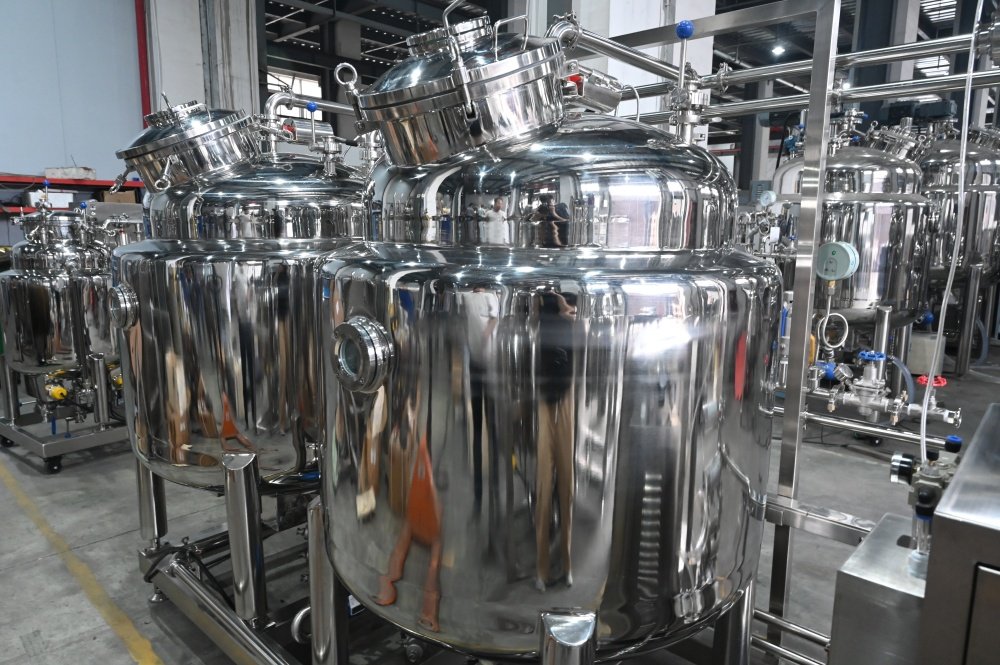
A pharma reactor is a sealed vessel where chemical reactions take place to make medicines and drug ingredients. It controls temperature, pressure, and mixing so the reaction happens safely and correctly. The materials inside must stay pure, so these reactors are built from glass-lined steel or other materials that don’t react with the chemicals.
| Company | Founded | Country |
| GMM Pfaudler | 1884 | India |
| De Dietrich Process Systems | 1684 | France |
| Büchi Glas Uster | 1946 | Switzerland |
| HLE Glascoat | 1981 | India |
| Zibo Taiji Industrial Enamel | 1995 | China |
| Wuxi Zhanghua Pharmaceutical Equipment | 1976 | China |
| Guangdong Jinzong Machinery | 1999 | China |
| Parr Instrument Company | 1899 | United States |
| Pope Scientific | 1963 | United States |
| AGI Glassplant | 1950 | Japan |
GMM Pfaudler
Year Founded: 1884
Main Products:
- Glass-lined reactors (AE and BE type reactors).
- Glass-lined storage vessels and receivers.
- Glass-lined heat exchangers.
- Glass-lined columns and agitators.
- Mixing systems (CBT, TBF, PBT, FBT, ANC turbines).
- Filter dryers.
- Cryo-Lock® agitator technology.
- Half-pipe jacket reactors.
- Pfaudler Clean Coil (PCC) technology.
- Glass-lined valves, pipes and fittings.
- Nutsche filters.
- Membrane separation systems.
- Fluoropolymer equipment.
- Alloy process equipment.
GMM Pfaudler’s main office is in Mumbai, India, but it all started back in 1884 in Rochester, New York. A German man named Caspar Pfaudler, who brewed beer, invented something called Glasteel. He found a way to melt a layer of glass onto the inside of a strong steel tank. This was a great invention because it mixed the toughness of steel with the clean, non-rusting surface of glass.
At first, he just used it for making beer. But soon, other industries saw how helpful it was. Companies that made chemicals and medicines really liked it. The glass lining was perfect because it didn’t react with their chemicals, which kept the products pure.
The Indian part of the business began in 1962, started by Dr. Ashok Patel. His company later teamed up with the American Pfaudler company in 1987. Now, the founder’s son, Tarak Patel, runs the business. In 2021, the Indian company did something big: it bought the entire global Pfaudler group. This means the headquarters for the whole company is now in India.
The company is now a worldwide leader in this technology. It runs 21 factories on four continents, including places like the US, Germany, China, and India. They also own a bunch of other brands that make different kinds of equipment.
They sell many types of glass-lined reactors for making medicine. You can get them in small sizes for labs (like 63-liters) or giant ones for factories (40,000-liters). They also created some clever inventions, like the Cryo-Lock agitator. This design lets workers fix the mixer just by going through the manhole. Because their quality is so good, most of the world’s biggest chemical companies use their equipment.
De Dietrich Process Systems
Year Founded: 1684
Main Products:
- Glass-lined reactors (AE, BE, and CE type reactors).
- Glass-lined storage vessels and tanks.
- Glass-lined heat exchangers.
- Borosilicate glass reactors (QVF brand).
- Glass-lined columns.
- Nutsche filter dryers.
- Powder handling equipment.
- Mixing systems and agitators.
- Glass-lined valves and fittings.
- Heat exchangers (shell and tube, spiral, plate).
- Pharma reaction systems.
- Filter/dryer technology.
- API synthesis plants.
- Gas scrubbers.
- Distillation columns.
De Dietrich Process Systems is a French company, though it has offices in places like New Jersey. This company is incredibly old, with a history that starts all the way back in 1684. A man named Johann Dietrich started it. He built a forge in a small village in France to make iron things like pots and stoves.
The business changed a lot over the centuries. For a while, they built parts for trains. They even made cars that raced in some of the first big car races. But a really important year was 1870. That’s when they made their first glass-lined vessels. This let them sell to chemical and pharma companies that needed equipment that wouldn’t rust or break down.
The modern company was formed by buying other useful businesses. They bought companies that were experts in special filters and dryers. They also bought a German company named QVF, which was a specialist in making equipment from a strong type of glass.
In 2001, all these different parts were merged into one business, De Dietrich Process Systems. This move made one strong company. It could now offer a full lineup of equipment for making medicines and chemicals.
Now, they are famous for making glass-lined reactors that work great for the pharma industry. These reactors have a special blue enamel coating called DD3009. It’s very smooth and does a great job resisting strong chemicals. You can get them with removable tops for easy cleaning, or welded-shut tops for high-pressure work where you must prevent leaks.
They can build and deliver entire factory setups that follow the strict cGMP rules for making drugs. Their special Pharma Reaction Systems are often built to be compact and sometimes have glass domes, so you can see what’s happening inside. The company is still getting bigger. In 2024, it bought another group, making it a leader in equipment that separates solids from liquids.
Büchi Glas Uster
Year Founded: 1946
Main Products:
- Glass reactors and process equipment.
- Glass-lined steel reactors (AE and BE types).
- Pressure reactors (Polyclave systems).
- Metal pressure reactors (stainless steel, Hastelloy).
- Nutsche filter dryers.
- Pilot plant systems.
- Distillation equipment.
- Heat exchangers (spiral condensers, shell and tube).
- Glass columns and vessels.
- Scrubbers.
- Mixing systems.
- Büchiflex coupling systems.
- cGMP pharmaceutical production equipment.
- Hydrogenation systems.
Büchi Glas Uster is a Swiss company from a town called Uster. Two brothers, Jakob and Hermann Büchi senior, founded it in 1946. They had a big invention in 1949 called Büchiflex. This is a smart system for connecting glass tubes using a flexible joint that looks like a ball and socket. It was important because it let scientists build complex glass setups that were easy to change or clean.
In the following years, the company started making more products. They began making pilot plant equipment in 1979, which is used for testing new processes and for small-scale production. In 1980, they added pressure reactors made from both glass and metal. These are needed for chemical reactions that have to happen under a lot of pressure.
They build reactor systems for all steps of making a drug, from the first small tests in a lab to full-size factory production. They offer reactors made of glass or glass-lined steel, which are good at fighting rust and chemical damage. For very demanding jobs, they also make reactors from tough metals like stainless steel or Hastelloy.
Their Polyclave pressure reactor systems are built to be very strong. They can handle extreme conditions, like 500 bar of pressure or 500°C temperatures. They also have neat features like magnetic stirrers. This means a motor spins the mixer inside using magnets, so there isn’t a hole in the lid for a stirrer shaft. That design is an excellent way to stop any leaks.
HLE Glascoat
Year Founded: 1981
Main Products:
- Glass-lined reactors.
- Glass-lined storage vessels and receivers.
- Glass-lined heat exchangers.
- Glass-lined storage tanks and columns.
- Glass-lined agitators.
- Glass-lined valves, pipes and fittings.
- Agitated nutsche filter-dryers.
- Rotary vacuum. paddle dryers.
- Kilo-lab filter dryers.
- Rapid disc dryer-coolers.
- Orbicular dryers.
- Shell and tube heat exchangers.
- Corrugated heat exchangers.
- Spiral heat exchangers.
- Plate heat exchangers.
- Exotic metal equipment.
- cGMP pharma model reactors.
HLE Glascoat is an Indian company based in the city of Anand. It wasn’t always called HLE Glascoat, though. The company first started in 1991 with the name Shri Glassteel Equipments Limited. It changed to its current name in 2019 after two separate businesses merged into one.
One of those businesses was HLE Engineers, a maker of filters and dryers. The other business was Swiss Glascoat Equipment, which made glass-lined items. By joining together, the new company could sell a much wider variety of equipment to its customers.
This company is part of a bigger family-run business called the Patel Group. That group was first started a long time ago, in 1951, by Dr. Khushalbhai H. Patel. The person in charge today is Himanshu Patel. He has been working hard to make the business even bigger and has pushed for major expansions.
With him in charge, the company has even started to buy businesses in other countries. For instance, they bought Thaletec GmbH, which is a big German company that also makes glass-lined equipment. These kinds of moves are helping HLE Glascoat change from just an Indian company into a true global competitor.
Back in India, this equipment maker is a top manufacturer of filtration and drying machines. It’s also one of the biggest suppliers in the country for glass-lined equipment.
They make special reactors that are built just for pharma companies. These machines are designed to follow the very strict cGMP cleanliness rules that are required when making medicine.
These reactors use the company’s own glass-lining formula. This special lining gives great protection from the strong chemicals used to make drugs. All their equipment is made to meet global quality standards. Because they are growing so much, they are becoming a very important name in the pharmaceutical reactor world.
Zibo Taiji Industrial Enamel
Year Founded: 1995
Main Products:
- Glass-lined reactors (K-type open reactors).
- Glass-lined storage tanks.
- Glass-lined heat exchangers.
- Half-pipe jacket reactors.
- Conical glass-lined reactors.
- Large-scale glass-lined equipment (up to 200,000 liters).
- Glass-lined columns.
- Glass-lined agitators.
- Glass-lined valves and fittings.
- Non-standard glass-lined equipment.
- Pressure vessels (carbon steel, stainless steel, titanium).
- Fluoroplastic equipment.
- Glass-lined nutsche filters.
- TJ2009 and TJ2016 high-performance glass enamel.
- Glass-lined equipment parts.
Zibo Taiji Industrial Enamel is a Chinese company located in Zibo City. This part of China is actually famous for making glass-lined equipment. The company was officially started in 1994, but its real history goes back even further, to 1972.
That year, a man named Mr. Fu Qi’en, who is the father of the current president, led a team to make the first-ever batch of glass-lined equipment in China. He was a true pioneer in this field.
His son, Mr. Fu Guangsheng, took over the business in 1986. He worked hard to build the company. It eventually became China’s largest maker of this kind of equipment.
The company showed it cared about quality from the beginning. In 1997, it was the first Chinese company in this industry to earn an ASME certification. That certification is an important seal of approval. It proves their equipment is built to high international safety standards.
This is a very large company. Its factories cover more than 190,000 square meters. They have over 1,000 people working for them. They are a major force in this industry.
Every year, they make over 30,000 sets of equipment. That’s a huge number. Their production accounts for a big piece of the total Chinese market for these machines.
They build all kinds of glass-lined reactors. You can get small ones for labs or truly giant ones for factories. They are actually famous for building some of the world’s biggest reactors, like a 135,000-liter model they finished in 2024.
The company also develops its own special glass formulas. These formulas have names like TJ2021S and are extra tough against chemicals and sudden temperature changes. The business has over 100 patents for its technology. It also holds many international certifications, so it can sell products to more than 50 countries.
Wuxi Zhanghua Pharmaceutical Equipment
Year Founded: 1976
Main Products:
- Agitated nutsche filter dryers.
- Rotary vacuum paddle dryers.
- Vacuum drying equipment.
- Reactors (glass and stainless steel).
- Crystallization equipment.
- Mixing equipment.
- V-efficiency mixers.
- Eccentric blenders.
- Double cone drying systems.
- Cylinder-cone washing, filtering and drying systems.
- Two-in-one equipment.
- Moveable three-in-one units.
- Rake dryers.
- U-shape mixing vacuum dryers.
- High shear mixers.
- Pressure vessels (stainless steel, Hastelloy, Inconel).
Wuxi Zhanghua Pharmaceutical Equipment is a Chinese company located in Wuxi City. It was founded back in 1976, so it has nearly 50 years of experience. All of that time in the business has helped it become one of China’s top companies for pharmaceutical equipment.
When they started, they mainly built machines for drug companies. Today, they also supply equipment to other industries, like fine chemicals, new energy, and new materials. Their goal is to stay up-to-date with the world’s best technology and build great products for their customers.
When a client needs a reactor, this company often provides a complete, custom-built solution. They are able to combine reaction, crystallization, filtering, and drying all into one single system. They use some very advanced tools to build their machines. This includes giant computer-controlled machines and even welding robots. Using robots to weld helps make the equipment safer, more precise, and stronger.
The company’s technical team has a lot of experience. Its engineers are experts in areas like process design and welding. This expertise means they can help customers design a whole process, not just sell them one machine. For dangerous materials that could be flammable or toxic, they build special, automated equipment that is completely sealed to keep workers safe.
All of their equipment meets the strict FDA and cGMP standards for making medicine. They also have other global certifications, such as ASME and CE. Because their quality is so high, many of the world’s biggest pharmaceutical companies use their machines. This includes well-known names like Pfizer, Sanofi, Bayer, and Novartis.
Guangdong Jinzong Machinery
Year Founded: 1999
Main Products:
- Chemical reactors.
- Stainless steel reactors.
- Enamel reactors.
- Pharmaceutical reactors.
- Vacuum emulsifying machines.
- Dispersers and mills.
- Mixing tanks and vessels.
- Paint mixing tanks.
- Resin reactors.
- High shear mixers.
- Filling machines.
- Fermentation equipment (fermentors, bioreactors).
- Extraction and concentration tanks.
- Distillation equipment.
- Vacuum systems.
- Powder mixers.
- Three roller grinding machines.
Guangdong Jinzong Machinery is a Chinese company with its main headquarters in Zhaoqing City. Founded in 1999, it has grown a lot over the past 20+ years. It makes machinery for a lot of different industries, such as cosmetics, chemicals, pharma, and new energy.
The business is split into several different divisions. Each division is focused on one specific industry. For example, they have a pharma division and a coatings division. They also run two large factories in China, which gives them plenty of power to build big reactors and complete systems.
In China, they are known as a national high-tech enterprise. This means they focus a lot on creating new things. They also hold dozens of patents for their unique product designs.
Quality is also a very big deal for them. Their factories are ISO 9001 certified. Their products have also earned CE certification, which is a requirement for selling things in Europe.
For pharma companies, they offer a wide range of products. You can buy just one machine or a whole automated production line. They provide “turnkey” services, which means they can manage an entire project for you, from start to finish. They sell stainless steel reactors, glass-lined reactors, and other equipment for making APIs.
They are especially good at building custom systems. They have special expertise in making fermentors, which are needed to create biologic drugs. They also build extraction tanks for herbal medicines and reactors for chemical-based drugs. They can even link their machines to smart software that helps manage the whole factory, from production to the warehouse.
Parr Instrument Company
Year Founded: 1899
Main Products:
- Stirred reactors (bench top, floor stand models).
- High pressure reactors (up to 5,000 psi).
- High temperature reactors (up to 600°C).
- Pressure vessels (25 mL to 20 liters).
- Micro batch reactor systems.
- Mini reactors (100-600 mL).
- Floor stand reactors (1-100 liters).
- Compact reactors (25-600 mL).
- Glass reactors (160-1,500 mL).
- Multiple reactor systems.
- Tubular reactors.
- Oxygen combustion calorimeters.
- Digestion vessels
- Acid bombs.
- Hydrothermal synthesis vessels.
- Cell disruption vessels.
Parr Instrument Company is an American business located in Moline, Illinois. It is a very old company, started way back in 1899 by a man named Professor Samuel Wilson Parr. At first, his company was called the Standard Calorimeter Company. A calorimeter is a device that measures the energy in something, like coal, and his invention helped show the quality of Illinois coal.
After World War II, the company began making lab-sized pressure vessels. These are strong, sealed containers built for chemical reactions that require high pressure or high heat. This was the start of their reactor business for labs and pharma research, which is now a huge part of what they do. The company is still privately owned. It has about 100 employees, and many are skilled machinists and technicians. They are very successful internationally, selling over 60% of their products to customers outside the U.S.
Their equipment is mainly for research and development (R&D) in labs and small pilot plants. They make a wide variety of reactors and pressure vessels. These range from tiny 25 mL models to larger 100-liter floor stands. This equipment is built to handle extreme conditions, like 5,000 psi of pressure or 600°C temperatures, which is just what many scientists need.
They are certified to meet high-pressure safety rules like ASME and PED. A lot of their work involves building custom reactors for a specific research project. In 2024, the company celebrated its 125th birthday and started building a $22 million expansion to its factory.
Pope Scientific
Year Founded: 1963
Main Products:
- Wiped-film molecular stills.
- Wiped-film evaporators.
- Short path distillation equipment.
- Thin film evaporators.
- Fractional distillation columns.
- Batch distillation systems.
- Continuous distillation systems.
- Stainless steel pressure vessels.
- Reactors.
- Mixing vessels.
- Nutsche filter dryers.
- Liquid handling systems.
- Hydrogenation systems.
- High shear mixers.
- Process vessel systems.
- Turnkey processing systems.
- Cryogenic Dewar flasks.
Pope Scientific Inc. is an American company based in Saukville, Wisconsin. It was founded in 1963. It has become famous all over the world for its skill in one special area: distillation equipment.
Distillation is a process that people use to separate and purify different liquids. Pope Scientific is the company that builds the advanced machinery you need to do that job correctly.
They work out of a large 64,000-square-foot building. This facility has offices for engineers, a production floor, and technical labs. They even have their own shop for glassblowing.
Their team is full of chemical and mechanical engineers. These experts help customers design and build the exact processing systems that they need for their specific job.
Even though they are best known for distillation, they also make stainless steel pressure vessels and reactors. You can get portable, pharma-grade vessels from them. These are certified for safety under ASME rules. They can be customized for all kinds of jobs, like mixing, fermenting, or just holding liquids.
The company’s true specialty is purifying very sensitive materials, especially for drug companies. They make machines called “wiped-film” stills and evaporators. These are perfect for chemicals and drug ingredients that can be easily ruined by too much heat.
This technology works in a cool way. It spreads the liquid into a very thin film inside the machine. This thin film is heated for only a few seconds. That’s just enough time to gently separate the product without destroying it. This method is much safer for sensitive materials than regular distillation, which might heat them for hours.
AGI Glassplant
Year Founded: 1950
Main Products:
- Glass reactors (borosilicate glass).
- Quartz glass reactors.
- Filter reactors.
- Nutsche filters.
- Pressure reactors.
- Jacketed reactors with Ring Baffle technology.
- Rotary evaporators (up to 200 liters).
- Short path evaporators.
- Thin film evaporators.
- Distillation systems.
- Shell and tube heat exchangers.
- Coil-type heat exchangers.
- Extraction equipment.
- Universal reactors.
- Glass columns and vessels.
- Quartz glass burners.
- Crystallization equipment.
- Calorimetry equipment.
AGI Glassplant is a Japanese company that is headquartered in Kumamoto. A man named Mr. Yutaka Ikeda founded it in 1950. His goal was to make high-quality, exact-sized glass equipment for scientists to use in their labs.
The business is still run by the same family today. The founder’s grandson, Yasu Ikeda, is now the CEO and leads the company.
The company first started in Japan, where it became very successful. It actually controls about 80% of the whole Japanese market for scientific glass. After that, it expanded to other countries. Now, AGI Glassplant has offices and factories in the UK, Switzerland, the US, and India.
The AGI Group is now the biggest employer of scientific glassblowers in the world. They have teams of very skilled craftspeople. These artisans work right alongside engineers and scientists. This mix of old-school glassblowing skill and modern engineering is not common. It lets them build very complicated glass reactor systems for pharma companies.
They are well-known for making reactors entirely out of borosilicate glass, which is very strong. One of their special features is called “Ring Baffle” technology. This is a smart design used in their jacketed reactors. It helps the heating or cooling liquid flow evenly around the whole reactor. This gives much better, more exact temperature control, which is super important when making delicate medicines.
These experts can make very large and complex glass items. For example, they make the world’s largest rotary evaporator, a huge 200-liter model. Customers can order all kinds of custom equipment. This includes filter reactors that let you do two steps in one machine. They even make reactors from quartz glass for jobs that need to be extremely pure.
Conclusion
Pharma reactors do the hard work behind every medicine, making sure each reaction happens the way it should. Their design has come a long way, bringing more control and consistency to how drugs are made. As science moves forward, these reactors will stay at the center of how new treatments are created.