Russian
  English
  Turkish
  Spanish
  French
  German
  Japanese
За каждым спасающим жизнь лекарством или вакциной стоит технологический процесс, призванный обеспечить сохранение их эффективности и стабильности в течение длительного времени. Эти процессы в первую очередь зависят от современного фармацевтического оборудования, в том числе от лиофилизаторов.
Лиофилизаторы удаляют воду из продукта с помощью процесса, известного как сублимация. В результате получаются лекарственные препараты, которые сохраняют свою безопасность даже после многолетнего хранения. Важность фармацевтических лиофилизаторов очевидна, поскольку более 50% одобренных FDA фармацевтических продуктов производятся методом лиофилизации.
Из этого руководства вы узнаете, что такое фармацевтические лиофилизаторы и почему они необходимы для крупномасштабного производства лекарственных средств.
Как работает фармацевтическая лиофилизатор? Пошаговый процесс

Сублимационная сушка, также известная как лиофилизация, представляет собой процесс, в ходе которого биологические препараты преобразуются в сухой порошок, который впоследствии можно восстановить. Этот метод исключительно хорошо подходит для термочувствительных препаратов, которые теряют свою эффективность при воздействии высоких температур.
Давайте разберемся, как работают фармацевтические лиофилизаторы:
1. Предварительная обработка
Этот этап включает в себя ряд операций, необходимых для достижения оптимальных результатов. Начиная с определения температуры замерзания и заканчивая снижением концентрации растворителей с высоким давлением паров, на этом этапе продукты готовятся к использованию.
Например, для большинства вакцин требуются криопротектанты, которые выступают в качестве стабилизаторов в процессе сушки. Без этого этапа белки и ферменты, входящие в состав вакцины, могут разрушиться, что приведет к снижению стабильности и надежности препарата.
2. Предварительная заморозка
После подготовки продукт помещается в морозильную камеру. Его охлаждают до крайне низких температур — от -50 до -30 °C. В результате резкого и быстрого охлаждения содержащаяся в продукте вода превращается в твердые кристаллы льда. Однако крайне важно контролировать скорость замораживания, состав продукта и концентрацию некристаллизующихся веществ.
Эти факторы напрямую влияют на размер кристаллов, который играет решающую роль. Более крупные кристаллы создают больше путей для выхода водяного пара во время сушки, что делает процесс быстрее и надежнее.
3. Первичная сушка
После того как продукт заморожен, лиофилизатор приступает к первичной сушке, также известной как сублимация. В камере создается сильный вакуум, что резко снижает давление, при этом осуществляется контролируемое нагревание. Несмотря на дополнительное нагревание, общая температура остается ниже 0 °C, в результате чего лед превращается непосредственно в водяной пар, а не тает в жидкость.
Именно на этом этапе теряется большая часть жидкости. Исследования показывают, что первичная сушка удаляет почти 95% воды. Хотя это медленный и энергоемкий этап, его необходимо тщательно контролировать, чтобы регулировать температуру.
4. Вторичная сушка
Первичная сушка не позволяет полностью удалить воду. Некоторые молекулы воды по-прежнему остаются прикрепленными к структуре лекарственного средства. В результате происходит вторичная сушка, или десорбция.
Температуру плавно повышают до 30 °C, при этом поддерживается вакуум для удаления остаточной влаги. На этом этапе в продукте остаются лишь следовые количества влаги, которые не влияют на его стабильность.
5. Последующая обработка
Заключительный этап заключается в расфасовке продукта в стерильные флаконы, ампулы или блистерные упаковки. Упаковка осуществляется непосредственно внутри самого аппарата для обеспечения стерильности.
Для герметичной герметизации контейнеров используются специальные резиновые пробки, обеспечивающие их надежную защиту. Этот этап имеет решающее значение для обеспечения безопасности продукции и отслеживаемости.
Основные компоненты и особенности фармацевтического лиофилизатора
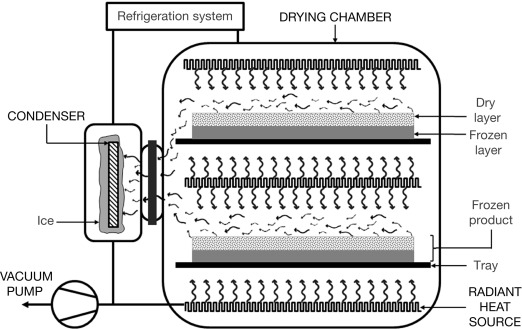
Лиофилизатор состоит из нескольких компонентов, которые работают согласованно, обеспечивая бесперебойное выполнение каждого этапа процесса. Давайте рассмотрим некоторые ключевые компоненты этого оборудования:
1. Морозильная камера
Процесс сублимационной сушки любого продукта начинается в камере замораживания. В ней создаются идеальные условия для кристаллизации воды в лед. Эти кристаллы льда необходимы для собственно этапа сушки. Камера изготовлена из нержавеющей стали и соответствует строгим стандартам стерильности, что позволяет предотвратить загрязнение.
2. Вакуумный насос
Снижая давление внутри камеры, вакуумные насосы позволяют льду пропускать жидкую фазу и переходить непосредственно в парообразное состояние. Вакуумные насосы фармацевтического класса поддерживают давление ниже тройной точки, что обеспечивает максимальную производительность.
3. Полки
Внутри камеры продукты размещаются на специально сконструированных полках со встроенными источниками тепла. Эти полки обеспечивают равномерное распределение тепла в процессе сушки. Главное — поддерживать баланс. Чрезмерное нагревание может повредить чувствительные белки или вакцины, тогда как недостаточное нагревание может замедлить процесс.
4. Система охлаждения
Полки выделяют тепло, а система охлаждения, в свою очередь, выполняет противоположную функцию. Её основная задача — поддерживать в конденсаторе и камере чрезвычайно низкие температуры.
5. Конденсатор ближнего действия
Конденсатор ближнего действия работает в тандеме с системой охлаждения, улавливая водяной пар, выделяющийся в процессе сушки. Эти пары конденсируются в лед, что предотвращает их циркуляцию внутри камеры. Таким образом, конденсатор успешно улавливает и удерживает пар, не давая ему распространиться.
5 основных преимуществ фармацевтического лиофилизатора
Фармацевтические лиофилизаторы выделяются среди прочих фармацевтическое оборудование благодаря их способности значительно продлить срок хранения продуктов. Хранение лекарств и вакцин, которые вы видите в аптеках и клиниках, возможно только благодаря этому оборудованию. Вот пять основных преимуществ лиофилизаторов:
1. Сохранение качества
Некоторые фармацевтические препараты содержат термочувствительные белки, ферменты и антитела. Традиционные методы сушки, такие как сушка горячим воздухом в печи, могут привести к разрушению этих чувствительных молекул, что негативно сказывается на качестве.
Лиофилизаторы решают эту проблему, работая при низких температурах в вакууме. Этот метод позволяет удалить воду, не подвергая продукт воздействию разрушающего тепла. Недавнее исследование показывает, что Лиофилизация часто применяется для стабилизации макромолекул, в том числе белков и пептидов.
2. Увеличенный срок хранения
Сублимационная сушка позволяет значительно продлить срок хранения лекарственных средств. Например, вакцины, срок хранения которых в жидком виде составляет от нескольких дней до месяца, после сублимационной сушки могут оставаться стабильными в течение многих лет при комнатной температуре.
Увеличенный срок хранения способствует сокращению отходов, а также облегчает распределение вакцины. В регионах с ограниченными возможностями хранения в холодильных камерах более длительный срок хранения может способствовать успешному проведению кампаний по вакцинации.
3. Подавление роста бактерий
Микроорганизмам необходима влага для выживания и размножения. Благодаря удалению влаги при лиофилизации создаются условия, в которых бактерии и грибки не могут развиваться.
Этот естественный способ консервирования повышает стерильность и безопасность. В сочетании со стерильной упаковкой данный процесс гарантирует, что каждый флакон останется свободным от загрязнений на протяжении всего срока хранения.
4. Эффективное хранение
Фармацевтические лиофилизаторы позволяют сделать продукцию более лёгкой и компактной. После удаления воды размеры продукции уменьшаются, а вес снижается. Это сокращает расходы на доставку и упрощает логистику холодовой цепи.
По данным ВОЗ, до 50% вакцин ежегодно теряются по всему миру из-за проблем, связанных с хранением и транспортировкой. Сублимационная сушка помогает сократить эти потери, упрощая процесс упаковки и дистрибуции.
5. Стабильность продукта
Некоторые соединения являются летучими или термочувствительными, и даже незначительные колебания температуры могут снизить их эффективность. К ним относятся антибиотики, сыворотки, клетки, ткани, вакцины и биотехнологические продукты с высоким содержанием белка.
Сублимационная сушка обеспечивает сохранность продуктов даже в неидеальных условиях хранения. Такая стабильность имеет решающее значение для жизненно важных лекарственных средств, которые необходимо доставлять в отдаленные районы, где не всегда имеется надежное холодильное оборудование.
6 факторов, которые следует учитывать при покупке фармацевтического лиофилизатора
При выборе фармацевтического лиофилизатора необходимо найти баланс между требованиями к продукции, нормативными требованиями и долгосрочными эксплуатационными расходами. Правильно подобранное оборудование обеспечит надежное выполнение циклов, сохранит качество продукции и органично впишется в инфраструктуру вашего предприятия.
1. Системы управления и автоматизации
Стабильность циклов лиофилизации имеет решающее значение. Обратите внимание на морозильные камеры с управлением на основе рецептов, плотной связью между полками и паровым потоком, а также регистрацией данных в режиме реального времени. Интеграция с вашими лабораторными информационными системами и системами управления производством (LIMS/MES) повышает прослеживаемость и целостность данных. Современная платформа управления помогает точно воспроизводить валидированные циклы.
2. Характеристики продукта и области применения
При выборе системы следует в первую очередь учитывать, как ваши конкретные препараты ведут себя при замораживании, а затем при сушке. Биологические препараты, белки, вакцины, низкомолекулярные соединения или суспензии предъявляют свои особые требования к теплообмену и массообмену. Если вы планируете работать с разнообразными препаратами, система должна обеспечивать гибкость в настройке скорости замораживания, программировании температуры хранения и вторичной сушке для достижения различных целевых показателей остаточной влажности.
3. Разработка циклов и инструменты PAT
Разработка надежных циклов лиофилизации — это в равной степени и искусство, и наука. Хорошая установка должна позволять проводить эксперименты, осуществлять мониторинг и дорабатывать процессы. Такие функции, как испытания на повышение давления, манометрические измерения температуры или датчики, установленные непосредственно в рабочей камере, помогают оптимизировать фазы первичной и вторичной сушки. Эти инструменты технологической аналитики (PAT) сокращают сроки разработки и повышают надежность процесса.
4. Энергоэффективность и коммунальные услуги
Лиофилизация — энергоемкий процесс. Необходимо понимать, какой объем электроэнергии, холодопроизводительности и вакуумного насоса потребует система. Более эффективный теплообмен, интеллектуальное управление ступенями вакуумного насоса и стратегии размораживания конденсатора позволяют снизить затраты на коммунальные услуги при длительной эксплуатации.
5. Техническое обслуживание, эксплуатационная готовность и поддержка
На протяжении всего срока эксплуатации оборудования важны доступность и удобство обслуживания. К таким деталям, как вакуумные насосы, холодильные агрегаты, клапаны, прокладки и датчики, должен быть обеспечен легкий доступ, а их замена — несложной процедурой. Кроме того, убедитесь, что поставщик обеспечивает поставку запасных частей, техническую поддержку и заключает договоры на техническое обслуживание. Сведение к минимуму простоев и удобство обслуживания имеют решающее значение для обеспечения непрерывного производства.
6. Общая стоимость владения
Не ограничивайтесь сравнением только капитальных затрат. Включите в свою модель затраты на монтаж, валидацию, энергопотребление, очистку, техническое обслуживание, простои и изнашиваемые детали. Самое экономически выгодное оборудование не всегда будет самым дешевым при первоначальной покупке. Хорошо спроектированный лиофилизатор, который работает надежно и имеет минимальные простои, может обеспечить наилучшую окупаемость инвестиций.
Часто задаваемые вопросы
1. В чём заключается разница между фармацевтическим лиофилизатором и бытовым лиофилизатором?
Основное различие заключается в области применения и вместимости. Бытовые лиофилизаторы в основном используются для консервирования продуктов питания и, как правило, имеют вместимость 3,8–15,1 литра. В свою очередь, фармацевтические лиофилизаторы предназначены для производства стерильных лекарственных средств и обладают гораздо большей вместимостью.
2. На каком принципе работает фармацевтическая лиофилизатор?
Фармацевтические лиофилизаторы работают по принципу сублимации. В ходе этого процесса лед, содержащийся в продукте, в условиях вакуума и низкого давления непосредственно превращается в пар, минуя жидкую фазу. Данный метод сушки позволяет избежать повреждения чувствительных соединений, таких как белки, ферменты и вакцины.
3. Какие факторы следует учитывать при выборе фармацевтического лиофилизатора?
Ключевые факторы включают в себя:
- Требования к размеру партии.
- Тип лекарственной формы (жидкая, твердая, биологическая).
- Уровень автоматизации.
- Соблюдение требований GMP/FDA.
- Энергоэффективность и эксплуатационные расходы.
Инвестируйте в надежный фармацевтический лиофилизатор
Именно благодаря фармацевтическим лиофилизаторам вакцины и другие чувствительные лекарственные препараты могут безопасно перевозиться через континенты и при этом сохранять свою эффективность. От стабилизации сложных биологических препаратов до обеспечения крупномасштабных программ вакцинации — лиофилизаторы кардинально изменили фармацевтическую отрасль.
Для производителей выбор подходящей лиофилизационной установки напрямую влияет на их производство. Именно здесь Файнтех здесь мы и приходим на помощь. Благодаря передовому фармацевтическому и упаковочному оборудованию мы поставляем продукцию высочайшего качества. Независимо от того, планируете ли вы наращивать объемы производства, модернизировать оборудование или изучать передовые технологии, компания Finetech предлагает индивидуальные решения, отвечающие вашим производственным потребностям.
Уведомление об авторских правах:
Вы не имеете права воспроизводить, изменять, публиковать, показывать, передавать или каким-либо образом использовать любое содержимое данного сайта, а также использовать его для создания любой базы данных без предварительного письменного разрешения компании Finetech Group. Для получения разрешения на использование контента, пожалуйста, свяжитесь с: info@pharmamachinecn.com
Отказ от ответственности:
Информация, содержащаяся в данной статье, предназначена только для общего ознакомления. Компания не гарантирует точность, актуальность, своевременность или полноту любой информации, и компания не несет ответственности за ошибки или упущения в содержании данной статьи.