English
 Russian
 Turkish
 Spanish
 French
 German
 Japanese

Are you wondering if a semi-automatic tube filling and sealing machine is still the right call, or is it time to move to a fully automatic one?
The answer is simply about which one matches your production volume, your budget, and your operator headcount. Get it right, and the machine pays for itself. If you don’t, you are running a machine that cannot keep up with demand.
This article breaks down exactly what separates semi-automatic from fully automatic tube filling and sealing machines.
Semi vs Fully Automatic Tube Filling and Sealing Machine
Here’s a quick overview of the differences between semi-automatic and fully automatic tube filling and sealing machines:
| Factors | Semi-Automatic | Fully Automatic |
| Production Speed | 40 to 80 tubes per minute | 60 to 400+ tubes per minute |
| Daily Output | 2,000 to 10,000 tubes per shift | 10,000 to 100,000+ tubes per shift |
| Fill Accuracy | ±1% to ±3% | ±0.5% to ±1% |
| Operator Requirement | 2 to 3 operators per shift | 1 operator per shift |
| Tube Filling | Automated with operator oversight | Fully automated with in-line weight check |
| Changeover Time | 30 to 60 minutes | 1 to 2 hours |
| Tube Size Range | 13 mm to 50 mm diameter | 13 mm to 60 mm diameter |
| Validation Support | Limited | Full IQ/PQ/OQ documentation |
| Footprint | Compact, 1 to 2 sqm | Larger, 4 to 12 sqm |
| Batch Record | Manual documentation | Automated PLC-driven batch records |
| Operating Cost Per Tube | Higher due to labor | Lower due to automation |
| Best For | Startups, R&D, small batch, and multi-SKU low volume | Mid to large scale, high volume, single or dual SKU production |
Let’s discuss these key differences between the two machines in detail now:
1. Production Speed and Daily Output
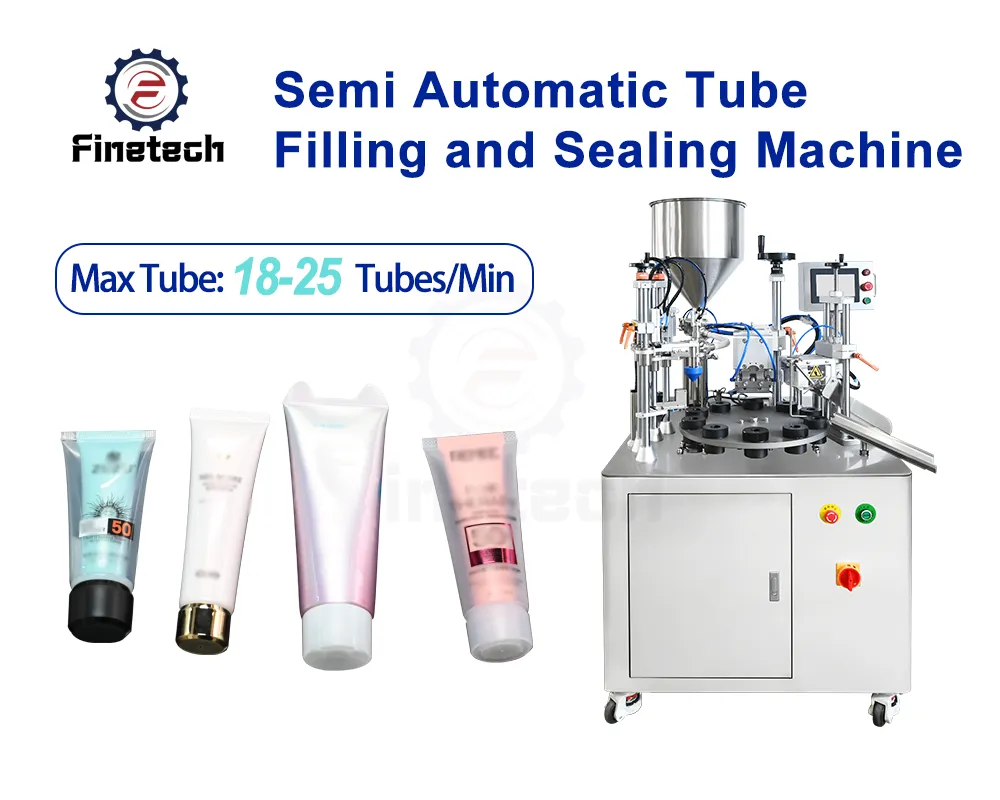
Semi-automatic tube filling and sealing machines run at 40 to 80 tubes per minute. Real-world output across a standard shift lands at 15,000 to 25,000 tubes once loading time and batch pauses are factored in.
Fully automatic machines start at 60 tubes per minute and go up to 400 tubes per minute on high-speed lines. At 150 tubes per minute, a fully automatic machine produces over 72,000 tubes per shift with one operator.
2. Operator Requirements
To run a semi-automatic machine, you need two to three operators per shift for tube loading, monitoring, and discharge handling. Across two shifts, that is four to six operators daily dedicated to one filling line.
It’s simpler for a fully automatic machine. For that, you only need one operator per shift to monitor the line and manage hopper refills. Everything else runs automatically.
3. Changeover and Flexibility
Semi-automatic machines complete size changeovers in 30 to 60 minutes. Their simpler mechanical setups make them the more practical choice for multi-SKU operations switching production frequently.
On the other hand, fully automatic machines require one to two hours for a full size changeover across all stations. For high-volume single or dual-SKU production where changeovers are infrequent, this is not a practical limitation.
4. Footprint and Space Requirements
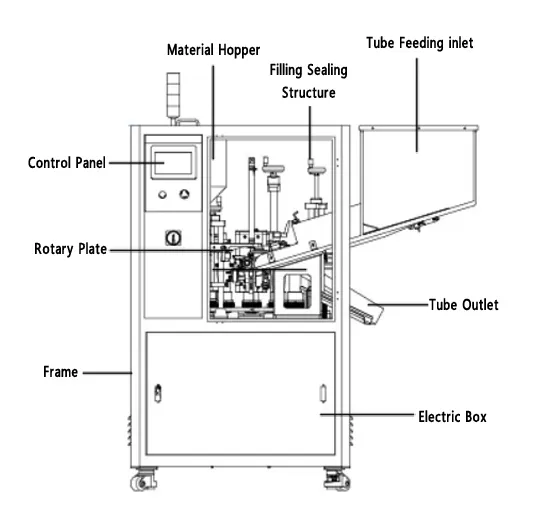
To install a semi-automatic machine, you need one to two square meters of floor space. Plus, with operator clearance and a staging area, the total installation footprint runs to around 10 to 15 square meters.
Fully automatic machines occupy four to twelve square metres for the machine body alone. However, it typically requires 20 to 40 square meters when you factor in conveyor runs, operator access, and utility connections.
5. Cost and Total Cost of Ownership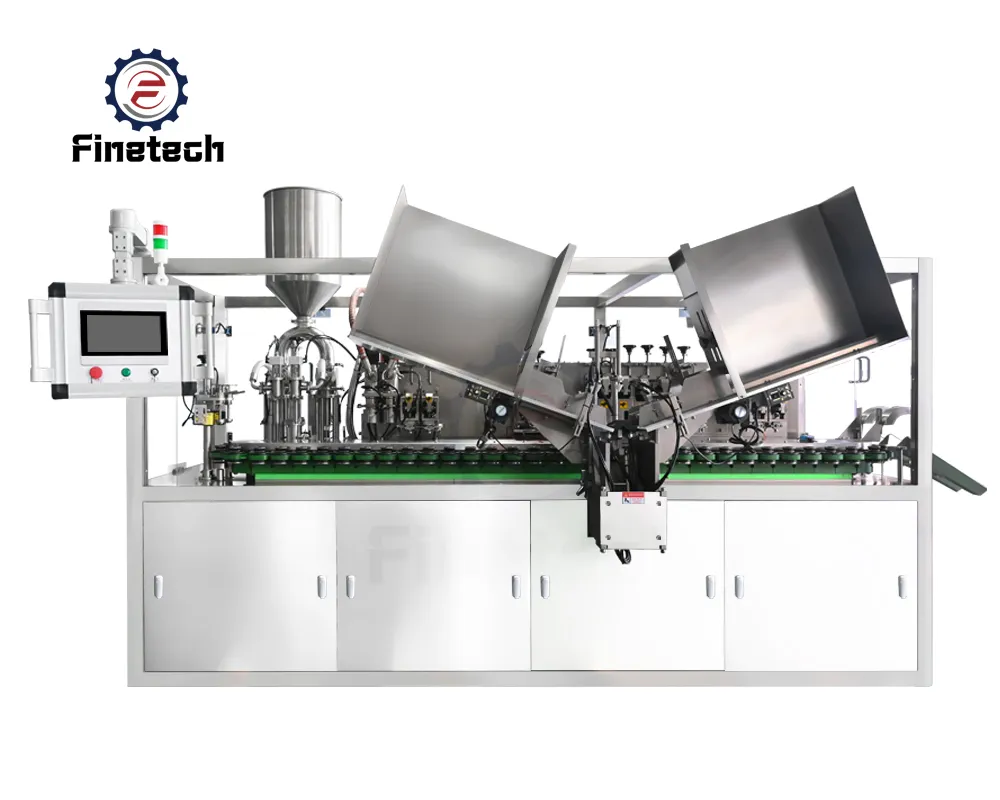
Semi-automatic machines carry a lower purchase price and suit operations with limited initial capital. The ongoing labor cost of two to three operators per shift adds up significantly over a multi-year operating period.
Fully automatic machines, in contrast, carry a higher purchase price but a lower cost per tube once labor savings are factored in. For most operations running two shifts or more, the five-year total cost of ownership of a fully automatic machine is lower.
6. GMP Compliance and Validation Support
Lastly, semi-automatic machines are available in GMP-compliant configurations suitable for standard cosmetic and nutraceutical production. Full IQ/OQ/PQ validation documentation for pharmaceutical regulatory requirements is limited.
Fully automatic machines are the standard for pharmaceutical tube filling. Full validation documentation, 21 CFR Part 11-ready PLC controls, automated batch records, and in-line rejection systems are standard features.
7. Filling Speed
- Semi-Automatic: A semi-automatic tube filler and sealer handles 10-35 tubes per minute. It’s quite slow and more suitable for startups with minimal production needs.
- Automatic: In semi-automatic vs automatic tube filling and sealing machines, the latter can fill 80 to 180 tubes per minute. You should opt for this if you are a large factory or a contract manufacturer that requires continuous operation without downtime.
8. Price
- Semi-Automatic: Well, semi-automatic machines are affordable, ranging from USD 3,000 to 15,000.
- Automatic: Automatic tube filling and sealing machines cost more initially due to advanced technology and automation, ranging from USD 80,000 to 300,000+.
However, you shouldn’t confuse the initial low price of semi-automatic models, as they will be affordable in the long run. They require labor and frequent maintenance, and reduce production efficiency, all of which impact a business’s profitability.
9. Labor
- Semi-Automatic: With semi-automatic tubes and fillers, you need 2 to 4 persons who insert tubes while the other collects finished products.
- Automatic: In contracts, an automatic tube-filling machine requires only 1 operator, significantly reducing your labor expenses.
10. Accuracy and Consistency
- Semi-Automatic: At its core, a semi-automatic machine has good accuracy, but depending on operator handling, it can lead to errors and waste.
- Automatic: An automatic capsule filler ensures accurate filling and uniform sealing because there’s little manual labor involved. When customers receive consistently high-quality service, they trust your business and return for more, boosting growth.
What are the Applications?
The applications of both automatic and semi-automatic tube filling and sealing machines include pharmaceutical companies, skin care ventures, and other cosmetic brands. Let’s discuss these:
- Cosmetics or Skincare: Do you know that Americans spend about $492 per year on skincare, with women spending more than men? More and more cosmetic and skincare brands are thus entering markets that require automatic and semi-automatic machines to fill products such as facial cleansers, sunscreen, hand cream, BB cream, foundation, and anti-aging solutions.
- Pharmaceuticals: Pharma companies rely on automatic and semi-automatic tube filling and sealing machines to fill ointments, gels, creams, and pastes into tubes. This equipment is often GMP-compliant and features stainless steel for enhanced hygiene and easy cleaning.
- Chemical Manufacturing: In chemical manufacturing, these machines are used to package silicone sealants, industrial adhesives, car scratch repair creams, and gels, ensuring that harmful products don’t leak out during storage and transportation.
Nonetheless, before choosing any machine, you must ensure the tube diameter, length, and viscosity specifications align with your product type.
Found Your Answer? Get Your Machine From Finetech
The choice between a semi-automatic and fully automatic tube filling and sealing machine comes down to three things. Your current production volume, your budget, and where your output is heading over the next two to three years.
If your production volume is pushing the limits, a fully automatic machine delivers better output and lower cost per tube. You can explore our tube filling and sealing machine at Finetech, including cosmetic and ointment sealing machines.
Every machine is GMP-compliant, CE-certified, and built to your specific tube format. So, contact us today to find the right fit.