English
  Russian
  Turkish
  Spanish
  French
  German
  Japanese
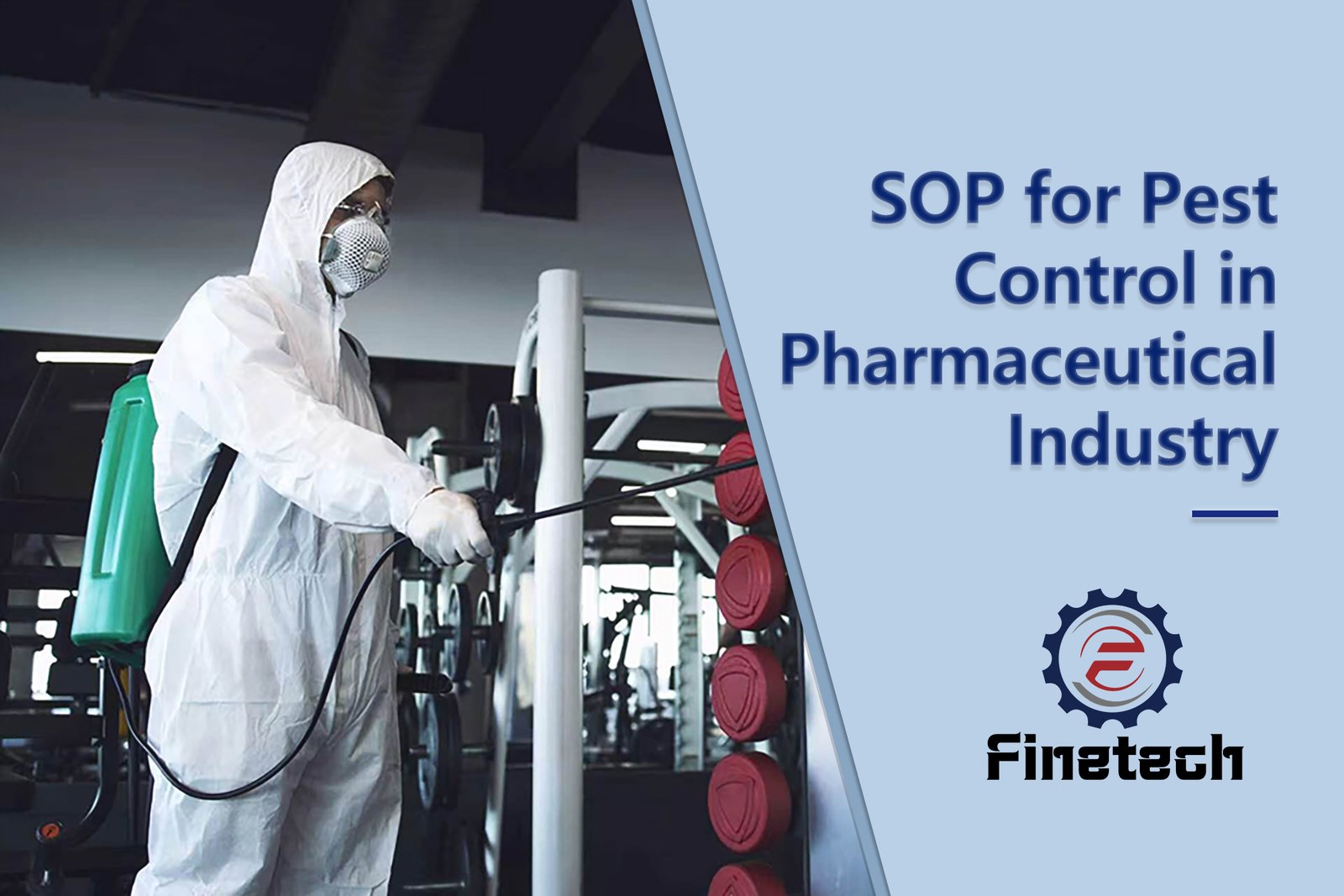
Standard operating procedure of Pest Control in the Pharmaceutical Industry.
1.0 OBJECTIVE:
To lay down the procedure for pest prevention, detection, and control across the pharmaceutical plant. The point of the whole procedure is simple: keep insects, rodents, birds, and other pests out of the facility before they get near product quality or put staff at any risk.
2.0 SCOPE:
This Procedure reaches across the whole plant. Production blocks, warehouses, quality control labs, utility areas, the canteen, the rest rooms, and the external perimeter up to the boundary wall are all covered.
3.0 RESPONSIBILITY:
Housekeeping Supervisor, External Pest Control Agency & QA Officer.
4.0 ACCOUNTABILITY:
Plant Head & QA Head.
5.0 PROCEDURE:
5.1 Pest control work at the plant runs under a formal written contract with an external agency. The scope of work, visit frequency, the chemicals in use, and every service record that has to be kept are all spelled out in that contract.
5.2 A Master Pest Control Program sits on file with the Housekeeping Supervisor. For every area of the plant, the program lists the treatment type assigned to that area along with the frequency.
5.3 Every pest control visit has to be booked with QA ahead of time. An unannounced visit inside production or warehouse areas will not be allowed through the gate.
5.4 Before any pest control work kicks off in a product contact area, a Line Clearance is pulled from QA. The clearance is the confirmation that products and open packaging have been moved out or covered up.
5.5 Target Pests and Risk:
5.5.1 Several pest types have to be kept in check at a pharmaceutical plant. Each type brings its own set of risks to product and to staff.
5.5.2 The main target pests and the risks tied to each one are set out below:
5.5.2.1 Rodents (rats and mice): contaminate raw materials, chew through packaging and electrical cables, and carry serious zoonotic diseases.
5.5.2.2 Flying insects (flies, moths, mosquitoes): pick up bacteria on their bodies and lay eggs in warm stored materials.
5.5.2.3 Crawling insects (cockroaches, ants, silverfish): leave droppings and shed skins on surfaces and hide in the warm dark spaces around machines.
5.5.2.4 Stored product pests (weevils, beetles, mites): get into dry goods such as excipients and packaging materials sitting in the warehouse.
5.5.2.5 Birds (pigeons and sparrows): nest on rooftops and around loading bays. Their droppings run highly acidic and carry fungal spores.
5.5.2.6 Stray animals (cats, dogs): slip in through gaps in the perimeter and bring fur, parasites, and dirt into the site.
5.5.3 Any sighting of a pest in a production or storage area is logged in the Pest Sighting Register and reported to QA. A confirmed infestation takes it a step further and requires an alert to QA within two hours of the sighting.
5.6 Preventive Measures:
5.6.1 Prevention beats treatment every time. The plant follows an integrated pest management approach to keep pest numbers low without leaning hard on chemicals.
5.6.2 Structural measures to block pest entry include the following:
5.6.2.1 Seal every wall crack, pipe entry, and cable hole with cement or silicone. Those seals get re inspected once every six months.
5.6.2.2 Fit metal mesh grills across all outside drains, windows, and vent openings. Pick a mesh size small enough to block a mouse.
5.6.2.3 Fit air curtains or self closing doors on the entry points to production and warehouse areas.
5.6.2.4 Check every dock leveler at the loading bays. Each one has to close tight against the trailer. A gap of even 6 mm is enough to let a mouse slip in.
5.6.3 Housekeeping measures to cut off pest attraction include the following:
5.6.3.1 Clear every bit of food waste out of the canteen within an hour of the meal break. Keep the waste bin outside the building.
5.6.3.2 Empty all bins at the end of each shift. A filled bin left in a corridor overnight is a pest magnet.
5.6.3.3 Stack raw materials on pallets, no less than 15 cm off the floor and no less than 45 cm away from walls. That clearance leaves a visual inspection path around each stack.
5.6.3.4 Fix any water leak within 24 hours. Standing water pulls in flies and rodents inside a few days.
5.6.3.5 Trim hedges and tree branches back so they sit at least 1 meter away from the building wall. Overgrown plants hand pests an easy path onto the roof.
5.7 Pest Control Devices:
5.7.1 Electronic Fly Killers (EFK):
5.7.1.1 EFKs sit at every main entry point and in the canteen. Each unit uses UV light to draw flying insects onto an adhesive board inside.
5.7.1.2 Mount each EFK at a height of 2 to 2.5 meters. Do not point the unit outward toward a window. A unit facing outside will pull more insects in from the street.
5.7.1.3 Swap out the adhesive board once a week. A used board carries a count of catches, and that count is a handy read on pest activity in the area.
5.7.1.4 UV tubes lose their strength after 12 months of use. Swap the tubes on schedule even when they still look lit.
5.7.1.5 Do not mount an EFK directly above a product contact surface. Dead insects can drop out of the unit during servicing.
5.7.2 Rodent Bait Stations:
5.7.2.1 Bait stations are tamper proof boxes. Each one holds rodenticide blocks inside, sits locked, and carries a unique ID label.
5.7.2.2 Place external bait stations every 10 to 15 meters along the perimeter wall. Fix each one to the ground so it cannot be moved.
5.7.2.3 Internal bait stations are not used inside pharmaceutical areas. Non toxic glue boards or snap traps do that job instead.
5.7.2.4 Every bait station gets inspected on the weekly pest control visit. Log any bait taken, any bait replaced, and any trapped rodent found.
5.7.2.5 Mark the location of every bait station on the Site Pest Map. Update the map the moment any station moves.
5.7.3 Glue Boards and Snap Traps:
5.7.3.1 Glue boards are used inside warehouses, corridors, and utility zones as a non toxic way to catch rodents and crawling insects. Glue boards are not placed inside active production cleanrooms.
5.7.3.2 Place glue boards along walls and near machine bases. Rodents run the walls rather than crossing open floor.
5.7.3.3 Change glue boards every week, or sooner if one has already caught a pest. A used board left sitting too long can spread bacteria.
5.7.3.4 Snap traps are kept to utility areas only. Check each trap daily. A dead rodent left in a trap will rot and pull in flies inside 24 hours.
5.7.3.5 Log every caught pest on the Pest Catch Log. Note the trap ID, the date, the pest type, and the action taken.
5.7.4 Pheromone Traps:
5.7.4.1 Pheromone traps target stored product pests such as weevils and moths inside the warehouse. A scent lure in the trap draws the target insect onto a sticky surface.
5.7.4.2 Place one pheromone trap per 100 square meters of warehouse floor. Hang each trap at a height of 1.5 meters.
5.7.4.3 Pheromone lures last 6 to 8 weeks. Swap the lure on schedule even when no catches have turned up.
5.7.4.4 One catch on a trap is a normal finding. A catch count that climbs over three weeks running points to a growing population that needs treatment.
5.8 Chemical Treatment Rules:
5.8.1 Every pesticide used at the plant must be approved by QA before it goes in for the first time. The approval rests on the product label, the safety data sheet, and the site list of permitted active ingredients.
5.8.2 No chemical treatment is allowed in a product contact area while production is running. Spraying takes place only once the area has been cleared out and any product covered.
5.8.3 Fogging and spraying are timed for weekends or planned shutdowns. The treatment plan gets a QA signature at least 72 hours before the work.
5.8.4 The pest control agency hands over a safety data sheet for every chemical they bring on site. Those sheets are filed in the Chemical Register kept by QA.
5.8.5 After any chemical treatment, the treated area is locked for a waiting period set by the chemical label. A typical waiting period runs from 4 to 24 hours.
5.8.6 A surface swab is pulled from product contact areas once the waiting period ends. The swab is tested for chemical residue before the area is cleared back into production use.
5.9 Agency Visit Protocol:
5.9.1 The external pest control agency runs a fixed weekly visit to the plant. Extra visits are booked whenever an infestation is reported.
5.9.2 Each visit starts at the security gate. The agency technician signs in there and then reports to the Housekeeping Supervisor.
5.9.3 Every technician has to wear plant issued PPE during the visit. Basic PPE is a disposable gown, gloves, and a hair net. Shoe covers go on for any clean area.
5.9.4 A plant staff member escorts the technician the whole way through the visit. The escort unlocks any controlled area, watches the treatment go in, and signs the service report at the end.
5.9.5 At the end of each visit, the technician hands in a Pest Control Service Report. The report lists the areas inspected, the devices serviced, any pests found, and any treatment applied.
5.9.6 QA reviews and signs the service report within one working day of the visit. A filed service report stands as GMP evidence during audits.
5.10 Monitoring and Trending:
5.10.1 The Housekeeping Supervisor keeps the Pest Catch Log updated after every inspection. Every pest found across the plant shows up in the log by date and location.
5.10.2 Weekly catch data gets plotted on a trend chart, one per pest category. The chart shows at a glance whether the catch count is rising, falling, or sitting flat.
5.10.3 Each pest type has an action threshold. Crossing the threshold kicks off a formal investigation along with a corrective action plan.
5.10.4 The Monthly Pest Report brings together the catch data, the treatments applied, and any corrective actions still in progress. QA walks through this report at the monthly GMP meeting.
5.10.5 Any sudden rise in any pest type is treated as a deviation. A deviation report goes in under the site deviation SOP, and the root cause is chased down.
5.11 Staff Training:
5.11.1 Every plant staff member sits through basic pest awareness training upon joining the company and then once per year after that. The session covers pest identification, reporting, and the housekeeping duties that sit on every staff member.
5.11.2 Housekeeping staff pick up extra training on external bait station inspection, glue board changeover, and safe handling of caught pests.
5.11.3 QA or the pest control agency runs the training. Attendance is captured on the Training Attendance Sheet.
5.11.4 Any staff member who spots a pest is encouraged to flag it to the supervisor at once. A Pest Sighting Register sits at every department notice board for that very purpose.
5.12 RECORDS:
5.12.1 Master Pest Control Program.
5.12.2 Site Pest Map.
5.12.3 Pest Catch Log.
5.12.4 Chemical Register.
5.12.5 Pest Control Service Report.
5.12.6 Monthly Pest Report.
5.12.7 Pest Sighting Register.
5.12.8 Training Attendance Sheet.
6.0 ABBREVIATIONS:
6.1 SOP: Standard Operating Procedure.
6.2 QA: Quality Assurance.
6.3 PPE: Personal Protective Equipment.
6.4 EFK: Electronic Fly Killer.
6.5 UV: Ultraviolet.
6.6 GMP: Good Manufacturing Practice.