 English
  Russian
  Turkish
  Spanish
  French
  German
  Japanese
We have all seen those perfectly shaped plastic trays holding fresh food, the clear packs protecting medicines, or the plastic containers displaying new gadgets. These packages come from the same place, that is, thermoforming packaging machines.
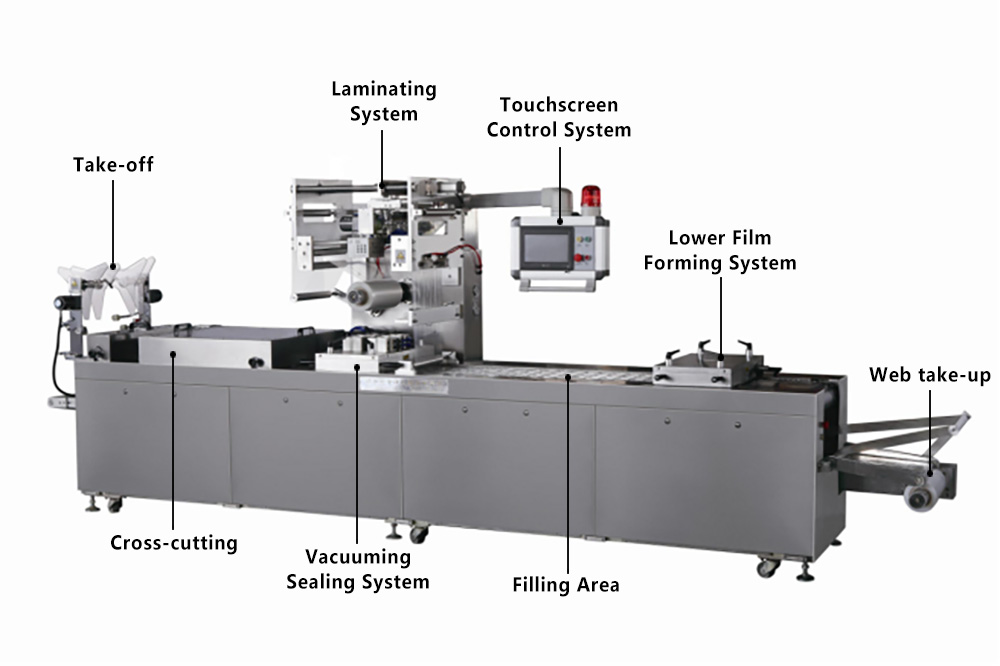
These highly automated systems are designed to transform plastic sheets into customized packaging solutions. From product packaging, protection, and presentation, thermoforming offers exceptional versatility across countless industries.
Keep reading this article if you want to understand thermoforming packaging machines and their benefits for your business.
What is a Thermoforming Packaging Machine?

A thermoforming packaging machine is an automated industrial equipment. It is designed to create customized packaging from various plastic films or sheets. This machine works by heating the plastic to a moldable state. Then, it shapes it into a predefined mold using vacuum pressure, positive air pressure, or mechanical force.
Thermoforming packaging machines are highly adaptable and versatile. They can integrate with multiple processes, such as forming, product filling, sealing, and trimming. You can produce a wide range of packaging solutions on an industrial scale, such as food trays, medical containers, or blister packs.
How Does a Thermoforming Packaging Machine Work?
A thermoforming packaging machine operates through a series of automated steps. First, a roll of plastic film is unwound and fed into the machine. This film moves into a heating station, where radiant elements soften it to a moldable temperature.
Next, the malleable film is transferred to a forming station. Here, it is drawn into or over a pre-designed mold. The plastic is shaped using vacuum pressure, positive air pressure, or mechanical force. After forming, the newly shaped package is rapidly cooled to solidify its form.
At this point, products can be loaded into the formed cavities. This process can happen within the thermoforming machine itself, especially for integrated systems. Otherwise, it occurs as a separate step further down the production line.
Finally, a lidding film is often sealed onto the package. The machine then trims individual units from the plastic web for discharge.
Note: This is a general overview of common thermoforming packaging machines. More advanced systems use two distinct films (upper and lower) for complex formations.
Understanding Different Types of Thermoforming Packaging Machines
Thermoforming packaging machines come in various types, optimized for specific packaging needs. Each of them has a different working process and film handling. To understand these differences, we will discuss the three key types.
1. Thermoform Vacuum Packaging Machine

A Thermoform Vacuum Packaging Machine combines thermoforming with vacuum sealing. It uses heat to soften the plastic sheet, usually a stretch film, for the lower part. This softened sheet is then shaped into a custom tray or container using a mold and vacuum pressure.
Once it’s loaded with the product, the machine extracts air from within and creates a vacuum. This significantly minimizes oxygen exposure inside the package. Vacuum packaging helps preserve food quality and reduces the growth of bacteria.
Best For: The food industry is the largest user of thermoform vacuum packaging. It is used in the packaging of processed meats, poultry, dairy products, and seafood. It is also used in medical devices, diagnostic kits, and pharmaceuticals.
2. Thermoform MAP Packaging Machine

A Thermoform MAP (Modified Atmosphere Packaging) Machine blends thermoforming with an advanced preservation technique. It uses two film rolls: a bottom stretchable film forms the product’s tray, while a top film seals it. After the tray is filled with product, the machine creates a modified atmosphere inside.
A vacuum pump replaces the air inside the package with a specific gas mixture. The mixture consists of nitrogen, carbon dioxide, and sometimes controlled oxygen levels. This precise gas blend preserves the product’s freshness, color, and texture. It does this by reducing oxidation and limiting microbial growth.
Best For: MAP is well-suited for fresh produce and bakery products. It’s also effective for electronic components and medical devices.
3. Thermoform Skin Packaging Machine
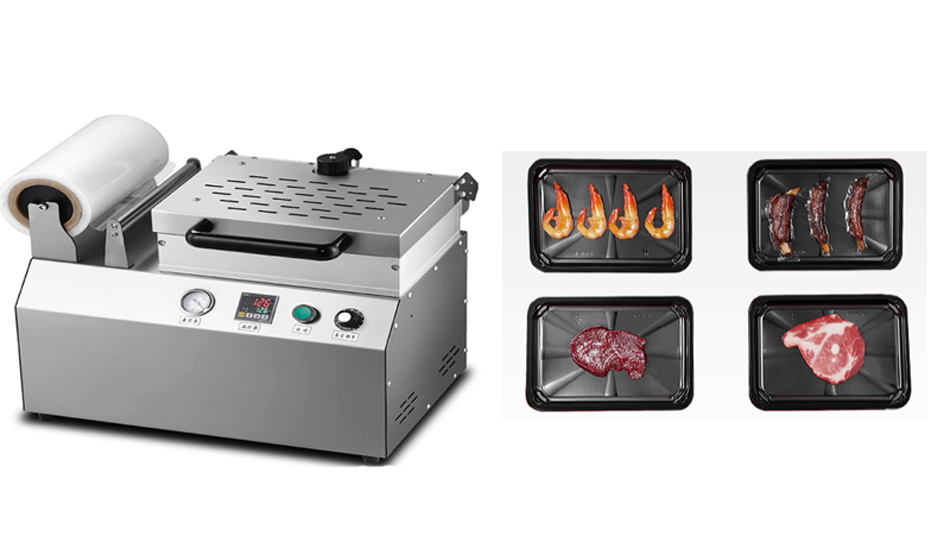
A Thermoform Skin Packaging Machine creates a tight, “second-skin” fit around a product. After the thermoforming, the product is placed onto a pre-formed tray. A heated film is wrapped over the product. Immediately, a vacuum is applied from underneath the backing board or tray, extracting all air.
This action pulls the softened film tightly around the product and seals it to the back. The secure seal protects the product from movement and damage, and offers excellent visibility.
Key Components of a Thermoforming Packaging Machine
A thermoforming packaging machine has different components working together to create plastic packages. We will look at them one by one:
- Loading Station: The loading station is the machine’s entry point where the roll of plastic film is securely mounted.

Loading Station - In-Feed System: The in-feed system accurately pulls the plastic film from the loading station into the machine. This ensures precise tension and alignment for the upcoming process.
In-Feed System - Heating Station: The heating station uses radiant or contact heaters to raise the plastic film’s temperature. Once the sheet achieves the desired shape, it’s ready for molding.
Heating Station - Forming Station: This is the core area where the heated plastic sheet is shaped into the desired cavity design. It utilizes either vacuum pressure to draw the plastic down or positive air pressure to push it into the mold.
Forming Station - Vacuum System: Consists of vacuum pumps, gas storage tanks, valves, pipelines, and gauges. It generates and controls the vacuum pressure necessary for putting the plastic into the mold.

Vacuum System - Cooling Device: This device often uses fans or water to cool the newly shaped plastic. It helps them to keep their true shape without any distortion.
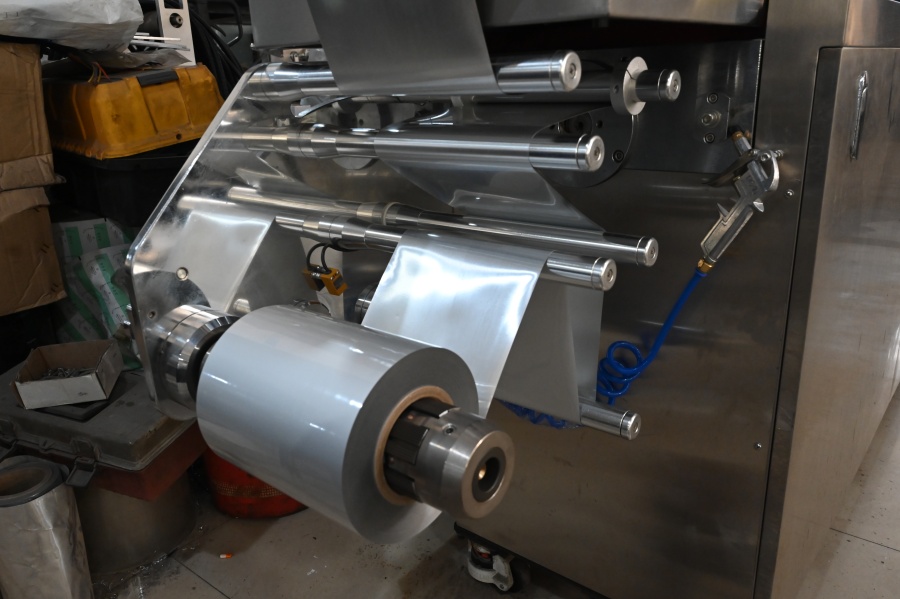
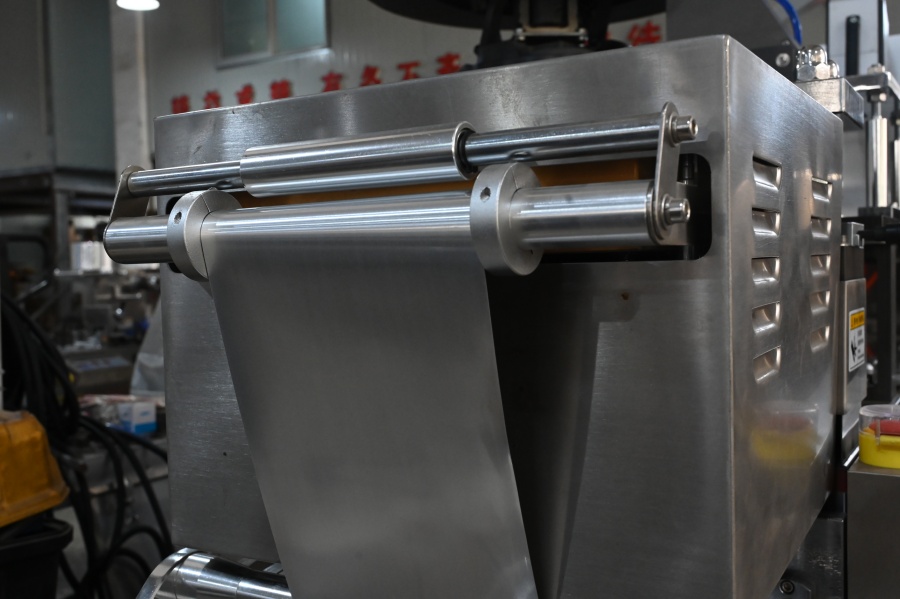
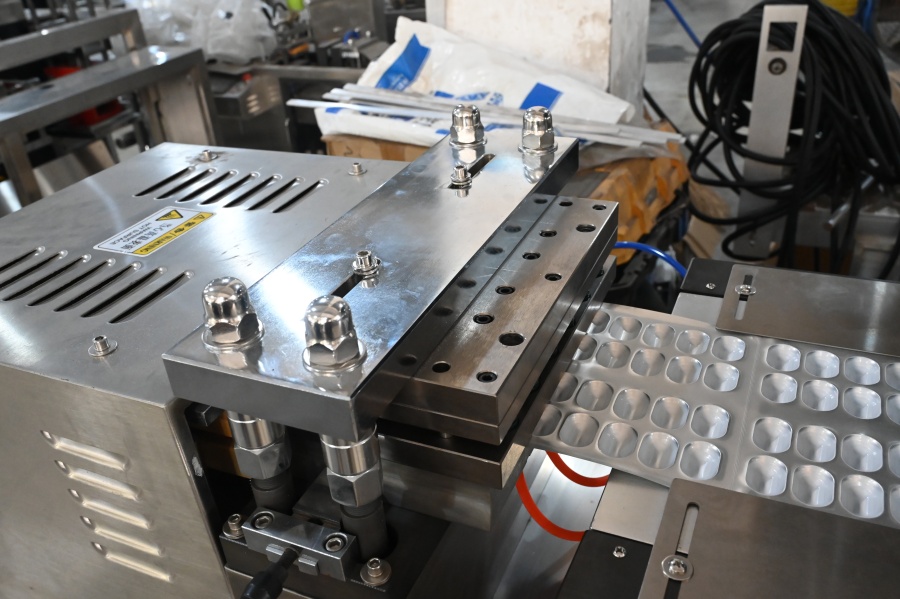
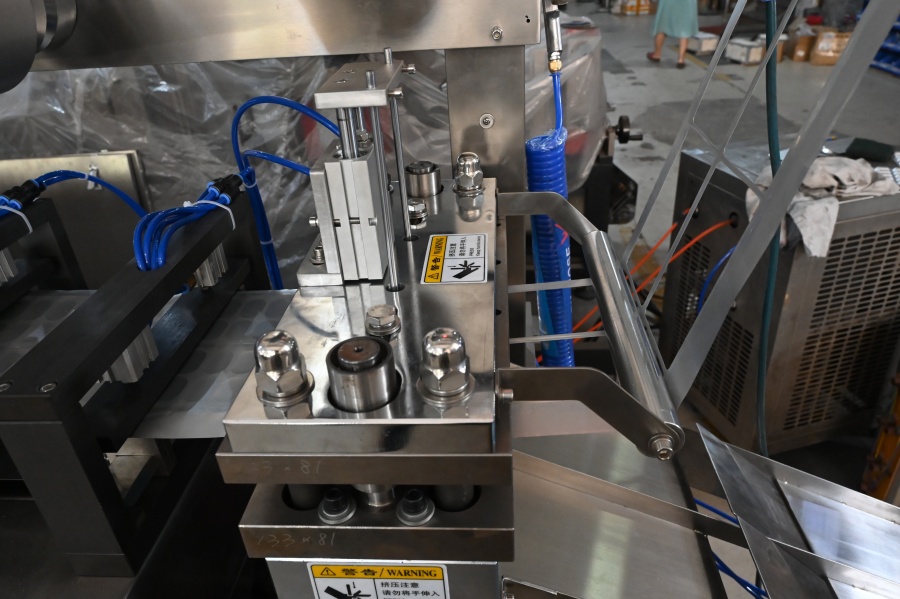
- Sealing and Cutting: Here, a top film (often called the lidding film) is applied over the formed cavities to create a sealed package.Transverse cutting system cuts across the sheet of formed and sealed packages. Then it separates them into individual units, ready to be sent out.
Sealing and Cutting Station


Role of a Thermoforming Machine Operator
Thermoforming machine operators play a critical role in the packaging production process. They are directly responsible for setting up, running, and monitoring the thermoforming equipment. This involves loading raw plastic materials, adjusting machine parameters, and conducting quality checks on the finished packages.
These skilled individuals also troubleshoot minor machine issues, perform routine maintenance, and uphold all safety protocols. Their expertise is essential for maintaining high-quality production standards and meeting critical outputs.
Applications of Thermoforming Packaging
Thermoforming packaging is widely used in different aspects of our lives. Here is a list of some of the most popular thermoforming applications:
1. Food Packaging Industry
Trays: Used for fresh produce, baked goods, ready-to-eat meals, and various deli items.
Clamshells: Commonly seen for fresh berries, salads, bakery items, and other products.
Lids: Used to seal trays and containers, often for dairy products, prepared meals, and other food items.
Cups: yogurt, desserts, and other single-serving food portions.
2. Pharmaceutical Packaging
Blister packs: Protect and display individual pills or capsules to ensure sterility.
Trays: They are used for organizing medical devices, surgical instruments, and diagnostic kits.
3. Consumer Goods
Blister packs: Often used for USB drives, memory cards, batteries, headphones, and small chargers.
Clamshells: Common for computer mice, webcams, smartwatches, small drones, and portable battery packs.
Trays (as inserts): Found inside boxes for smartphones, tablets, digital cameras, and e-readers.
Key Features And Benefits of Thermoforming Packages
Thermoforming packaging offers many benefits across various industries. Below, we have listed a few key benefits that highlight its adoption.
1. Cost-Effective Packaging
Thermoforming is a highly cost-effective method for producing packaging. It usually costs less to make the tools and molds compared to other plastic shaping methods. This makes it economical for short to medium production runs, as well as for prototyping.
2. Increased Production Speed
These machines are capable of speedy and continuous operations. High automation and cycle time increase your production speed and reduce manufacturing time.
3. Design Flexibility
This technology supports remarkable design flexibility. It can accommodate complex and custom shapes, intricate details, and varying wall thicknesses. Produce tailored packaging solutions that fit a product’s contours and space requirements.
4. Environment-Friendly Packaging
Thermoforming is a sustainable and environmentally friendly process. It promotes the use of lightweight materials. This means less plastic consumption and less pollution from transport. Furthermore, it also supports the use of recyclable, biodegradable, and organic materials.
Optimizing Your Packaging Strategy with Thermoforming
Thermoforming packaging offers a powerful solution for businesses that need economical packaging. It provides unparalleled design flexibility and cost-effectiveness for all kinds of products. A thermoforming packaging machine can revolutionize your production. Whether you run a food business, a pharmaceutical company, or a consumer goods brand, it ensures high-quality, protective, and visually appealing packages.
To truly utilize these benefits, always choose a reliable partner. A trusted supplier offers more than just cutting-edge thermoforming technology. They also provide expert support to ensure your packaging meets the highest quality, sustainability, and market appeal.
FAQs
What materials can be used in thermoforming?
Thermoforming uses different thermoplastics like PET (Polyethylene Terephthalate), PVC (Polyvinyl Chloride), PS (Polystyrene), PP (Polypropylene), ABS (Acrylonitrile Butadiene Styrene). The material selection depends upon some specific requirements such as clarity, barrier protection, durability, or cost.
How fast are thermoforming machines?
Thermoforming machines are highly efficient and can operate at impressive speeds. Many machines can achieve speeds ranging from 10 to over 70 cycles per minute. This allows you to produce thousands of packages per hour in high-volume operations.
Can thermoforming be used for sustainable packaging?
Yes, thermoforming is increasingly used for sustainable packaging. It supports using lightweight materials, which reduces material consumption and transport emissions. The process can also use recycled plastics, biodegradable materials, and some plant-based polymers.
Which industries are using thermoforming packaging?
Thermoforming packaging is widely used across different industries. Key industries include food packaging, pharmaceuticals, and consumer goods. It’s also extensively used in the automotive and transport industries for both interior and exterior components.



1 thought on “A Quick Guide on What Is Thermoforming Packaging Machine”
Your article helped me a lot, is there any more related content? Thanks!