Turkish
  English
  Russian
  Spanish
  French
  German
  Japanese
Even though both kapsül doldurma makineleri Ve tablet presleri produce oral solid-dose products and are located on the same floor, they operate on different principles. They also have very different cost and output implications.
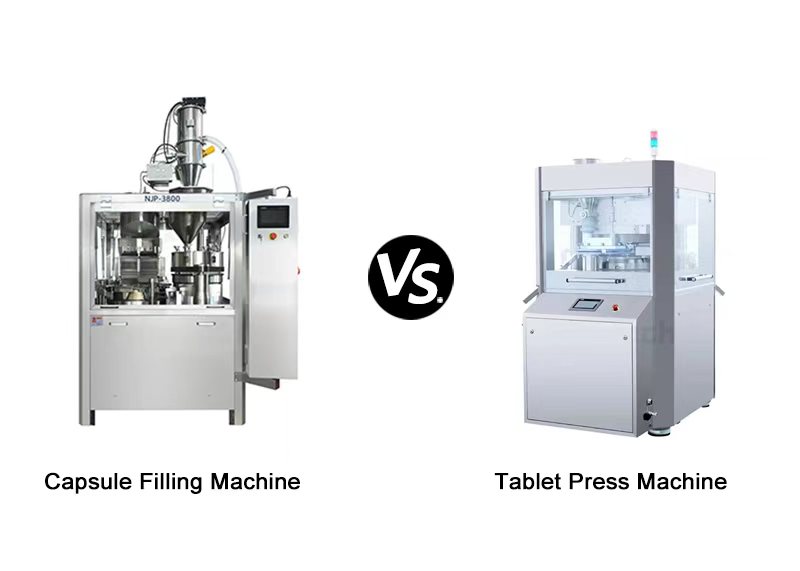
So, if you are deciding which equipment to invest in, the answer starts with understanding how each machine works. Let’s break it down ahead.
Capsule Filling Machine vs Tablet Press: Comparison
| Faktör | Kapsül Dolum Makinesi | Tablet Baskı |
| Production Process Complexity | Moderate. Multi-step but straightforward. | Higher. Requires granulation, compression, and often coating. |
| Çıkış Hızı | 24,000 to 450,000 capsules/hour | Up to 950,000 tablets/hour |
| Equipment Cost | Daha düşük başlangıç yatırımı | Higher. Requires additional granulation and coating equipment. |
| Material Flexibility | High. powders, granules, pellets, liquids, and combinations. | Limited. Material must be compressible. |
| Formulation Suitability | Ideal for sensitive, complex, or varied formulations. | Best for stable, high-volume, standardized formulas. |
| Production Steps Required | Fewer. Blend, fill, lock, and polish. | More. Blend, granulate, compress, coat, and dedust. |
| Scale-Up Potential | Strong at small to mid scale. | Exceptional at high volume. |
| Mevzuata Uygunluk | GMP compliant and simpler validation. | GMP compliant and broader validation requirements. |
Now, here’s a detailed comparison between the two machines, addressing important factors only.
1. Production Process Complexity
Capsule production generally involves blending the powder or pellets, filling pre-made kapsül kabukları and then sealing or locking the capsules. That’s why capsule lines have fewer steps and simpler machines.
Tablet production is a different story. It includes mixing the drug with binders and fillers, compressing on a tablet press, and then coating. More steps mean more room for error and more floor space required.
2. Output Speed
Raw numbers tell a clear story here. Tablets are typically faster to produce due to the efficiency of tablet press machines. In fact, high-speed rotary tablet presses can achieve outputs of up to 950,000 tablets per hour.
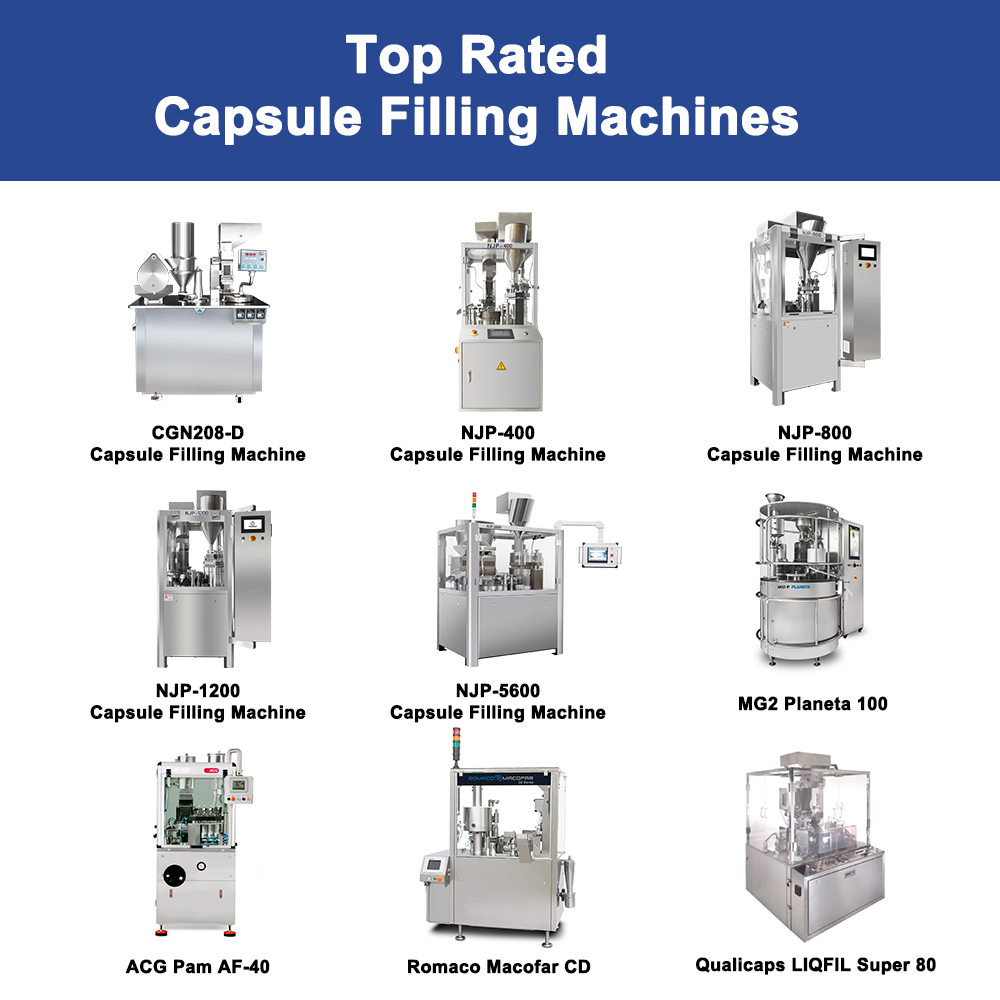
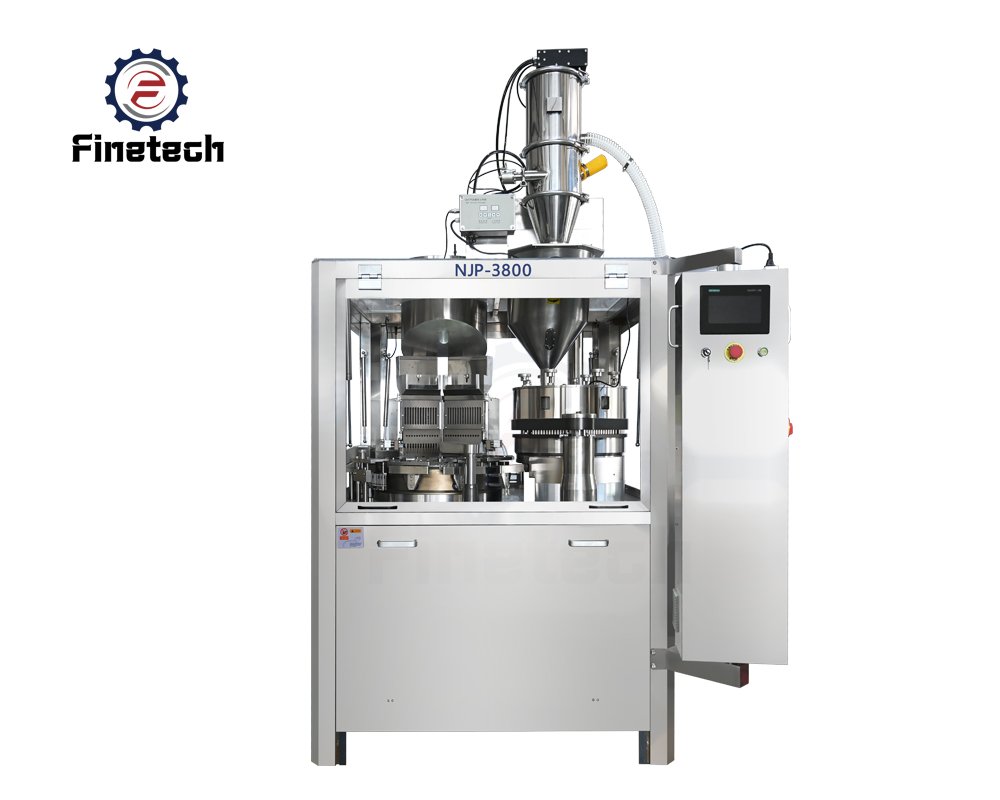
Kapsül dolum makineleri have also improved significantly, such as the NJP series. However, even top-tier fully automatic capsule fillers peak at around 450,000 capsules per hour. When pure throughput is the only metric that matters, the tablet press wins.
3. Equipment and Production Cost
Capsule filling machines and polishers are generally simpler and cheaper to buy than the heavy-duty tablet presses, granulators, and coaters. The tableting process uses mechanical pressure to directly compress pharmaceutical powder into shape.
Capsules, in contrast, demand the continuous procurement of pre-manufactured empty shells, especially HPMC capsules that cost 2 to 3 times more than standard gelatin shells.
4. Material Flexibility
Not every formulation can be compressed into a tablet. Some aktif farmasötik bileşenler are too sensitive to heat or pressure. Others simply do not bind well enough to hold tablet form without extensive reformulation.
Capsule filling allows incorporating drugs that are not easily compressed. A capsule filler deposits measured amounts into capsule shells rather than compressing them, meaning the API faces less mechanical stress.
Tablet presses require the material to flow consistently, compress uniformly, and eject cleanly.
5. Production Steps Required
Fewer steps mean fewer opportunities for quality failures, cross-contamination, and production delays. Capsule filling is genuinely lean in this regard as the process moves from blending directly to filling and closing.
Diğer taraftan, tablet manufacturing carries a much longer tail. Granulation alone can add two or three process steps before the material even reaches the press. Post-compression coating adds additional time and equipment.
Which One Is Right for Your Operation?
The right machine depends entirely on what you are making, how much of it you need, and how fast you need to get it to market. Here is how to think through the decision clearly.
Choose a Capsule Filling Machine If:
- Your Formulation is Complex and Sensitive: Active ingredients that cannot withstand compression pressure, oils, liquids, or multi-component fills.
- Speed to Market is Your Priority: Fewer process steps, simpler validation, and no need for granülasyonor coating means a capsule line can be up and producing faster than a tablet line.
- You Are Early in Your Production Journey: Lower upfront equipment cost and simpler operation make capsule filling the more accessible starting point for companies.
Choose a Tablet Press If:

- You are Running High-Volume Production: When output targets run into the hundreds of thousands of units per shift, the throughput ceiling of a tablet presiis unmatched.
- Cost Per Unit is Your Primary Concern: At large volumes, tablets win on economics. No ongoing shell procurement cost and lower material cost per dose drive the cost per unit down significantly.
- Your Formula is Stable: A mature, well-optimized formula that compresses clearly is the ideal candidate for tablet production.
The Right Machine Is Waiting for You at Finetech
By now, you should have some clarity on the debate of capsule filling machine vs tablet press. Just remember it is about which one is right for what you are making and where your production stands today.
If it’s complex, start with a capsule filling machine. But if you are chasing high-volume output, a tablet press is the stronger investment.
The best part is, at Finetech, we have both. So, whichever route makes sense for your operation, we have the equipment to back it. Uzmanlarımızla iletişime geçin to find the machine built for your product.