English
  Russian
  Turkish
  Spanish
  French
  German
  Japanese
Regulatory compliance in the pharmaceutical industry is about following the rules that govern how medicines are developed, manufactured, tested, stored, and distributed. These rules are issued by regulatory authorities and apply at every stage of a product’s lifecycle.
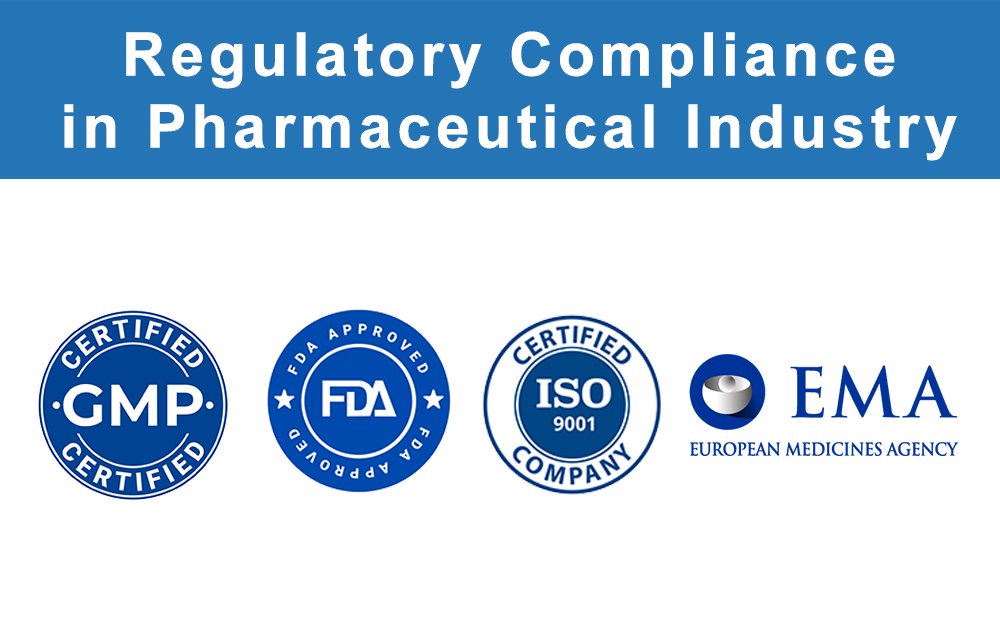
In practice, compliance means having the right processes in place that keep records accurate so you can show regulators that products meet the standards.
Below, we will discuss what regulatory compliance in the pharmaceutical industry means in detail, along with its key requirements and major regulatory authorities. Let’s get into the details!
What Is Regulatory Compliance in the Pharmaceutical Industry?
Regulatory compliance means following the laws, guidelines, and standards that control everything from development to selling. These rules are set by health authorities, such as the FDA, to ensure medicines are safe and manufactured the same way every time.
In day-to-day work, compliance involves using approved procedures, keeping accurate records, and responding properly to audits.
Simply put, it is an ongoing responsibility that shapes how operations, quality systems, and decisions are managed.
Six Important Regulatory Frameworks and Standards
Here are six of the most important regulatory frameworks and standards that help companies stay compliant:
1. Good Manufacturing Practices (GMP)
GMP standards define how medicines must be made to guarantee consistent quality. They focus on controlled processes, trained personnel, clean facilities, and proper documentation. These standards require companies to follow approved procedures.
During inspections, regulators look closely at how GMP is applied in daily operations, not just what is written in procedures. If GMP systems are weak, product quality and patient safety are put at risk.
2. GxP (Good Practice) Requirements
GxP (Good Practice) is a collective term that includes:
- GCP (Good Clinical Practice): Applies to clinical trials and protects patient safety and data integrity.
- GLP (Good Laboratory Practice): Governs laboratory studies and makes sure test results are reliable.
- GDP (Good Distribution Practice): Focuses on maintaining product quality during warehousing, transportation, and supply chain handling.
These requirements exist so that every stage follows defined standards, uses accurate data, and can be verified during audits.
3. ICH Guidelines
The International Council for Harmonisation (ICH) develops global guidelines to align regulatory expectations across regions. These guidelines cover quality, safety, and efficacy requirements.
Examples include ICH Q8 for pharmaceutical development, Q9 for quality risk management, and Q10 for pharmaceutical quality systems. ICH guidelines help companies design processes that meet multiple regulatory expectations at once.
4. 21 CFR Part 11
21 CFR Part 11 is a U.S. regulation issued by the Food and Drug Administration (FDA). It applies to electronic records and electronic signatures used in regulated activities. The rule requires systems to be secure, traceable, and reliable.
This includes access controls, audit trails, data backups, and validation of computerized systems. Companies must show that electronic data is accurate and cannot be altered without detection.
5. ISO 13485
ISO 13485 is an international quality management standard primarily used in the medical device industry. However, it is also relevant to pharmaceutical companies involved in combination products or device-related manufacturing.
The standard focuses on building a structured quality management system. Unlike general quality standards, ISO 13485 is closely aligned with regulatory expectations.
6. Pharmacovigilance Requirements
Pharmacovigilance focuses on monitoring drug safety after a product reaches the market. It involves collecting, reviewing, and reporting adverse events and safety signals. Companies must maintain systems to detect risks early and take action when needed.
This includes reporting serious adverse events to regulators within defined timelines. Regulators expect companies to actively monitor product safety, not react only after problems occur.
How Compliance Works on the Ground
Regulatory compliance in the pharmaceutical industry is built into daily work. It shows up in how systems are designed, how issues are handled, and how ready a site is when an inspector walks into your facility.
Here’s how the process usually works.
1. Quality Management Systems (QMS)
A Quality Management System defines how quality is controlled across the organization. It covers document management, change control, training, deviation handling, and management oversight.
Inspectors often begin by reviewing the QMS because it shows how decisions are made. Studies also show that more than 60% of Form 483 observations are linked to deficiencies in documentation.
2. Validation and Qualification
Validation and qualification provide documented evidence that equipment, systems, and processes work as intended. This includes process validation, cleaning validation, equipment qualification, and computerized system validation.
Regulators expect this evidence to be current and traceable. In fact, FDA inspection summaries consistently show that process validation and documentation gaps are among the top-cited GMP violations in pharmaceutical manufacturing.
3. Corrective and Preventive Actions (CAPA)
CAPA is how companies respond when something goes wrong. It involves identifying the root cause of an issue, fixing it, and preventing it from happening again. Regulators pay close attention to CAPA because weak investigations signal deeper problems.
A common issue during inspections is CAPAs that close on paper but fail to address the real cause. Over time, ineffective CAPA systems lead to repeat deviations and loss of regulatory confidence.
What Happens If Companies Don’t Comply?
When pharmaceutical companies fall out of compliance, the consequences go far beyond paperwork issues. In recent years, regulatory enforcement has increased sharply. In 2023 alone, the FDA issued over 1,200 warning letters for non-compliance.
Similarly, the financial impact is often severe. In some cases, large pharmaceutical companies have paid fines totaling hundreds of millions of dollars.
Industry compliance studies estimate that the average cost per major compliance violation is expected to reach nearly $15 million. This includes fines, corrective actions, and business disruption.
Best Practices for Regulatory Compliance
Regulatory compliance does not improve through isolated fixes. It improves when the right practices are built into daily operations and followed consistently across teams. Some of these best practices include:
1. Maintain Current Procedures
Procedures should reflect how work is actually performed, not how it was designed years ago. SOPs must be easy to follow, regularly reviewed, and updated after changes or deviations. Outdated procedures often lead to execution errors or gaps during inspections.
2. Build Strong Training and Accountability
Training should go beyond sign-off records. Employees need to understand their responsibilities and how their work affects product quality and compliance. Regulators frequently ask staff to explain processes during inspections, and any gaps are treated as failures.
3. Treat Validation as a Lifecycle Activity
Validation should not stop after initial approval. Equipment, processes, and systems change over time. Ongoing review after changes, trends, or failures helps prevent repeat findings and keeps validation evidence current.
4. Use CAPA to Fix Root Causes
Effective CAPA focuses on why an issue occurred, not just how to close it quickly. Root cause analysis, documented actions, and follow-up checks are critical. On the other hand, weak CAPA systems often result in repeat observations during inspections.
5. Conduct Regular Internal Audits
Internal audits help identify issues before regulators do. An honest gap analysis against current requirements allows teams to address weaknesses early. Sites that rely only on external audits often discover problems too late.
FAQs
1. Which global authorities oversee pharmaceutical adherence?
Primary oversight is conducted by the U.S. Food and Drug Administration (FDA), the European Medicines Agency (EMA), and Japan’s PMDA. These agencies collaborate through the International Council for Harmonisation (ICH) to align global safety and efficacy standards for cross-border trade.
2. What are the repercussions of non-compliance for a manufacturer?
Consequences range from multi-million dollar fines and product seizures to the complete revocation of manufacturing licenses. Beyond legal penalties, companies face irreversible reputational damage and the loss of investor confidence, which can halt future drug pipelines.
3. What does GxP stand for and why is it a universal term in pharma?
GxP is a general term for “Good Practice” guidelines. The “x” is a variable that changes based on the specific field:
- GMP: Good Manufacturing Practice (focuses on production).
- GCP: Good Clinical Practice (focuses on clinical trials).
- GLP: Good Laboratory Practice (focuses on lab testing).
- GDP:Good Distribution Practice (focuses on storage and transport).
Compliance with these “Practices” helps maintain consistent production and control in line with the quality standards appropriate for its intended use.
4. What is Pharmacovigilance (PV) compliance, and why is it mandatory?
Pharmacovigilance compliance refers to the legal requirement for pharmaceutical companies to monitor, identify, and report any adverse effects associated with their drugs after they reach the market. While clinical trials provide initial safety data, they cannot capture every rare reaction that might occur when a medication is used by millions of people with diverse health backgrounds.
Regulatory bodies like the FDA and EMA mandate this process to ensure that the risk-to-benefit ratio of a medicine remains favorable throughout its entire lifecycle.
Compliance Starts With the Right Systems
Regulatory compliance in the pharmaceutical industry also depends on the equipment you use and the company you choose to work with. Machines that are poorly designed, hard to clean, or inconsistent in performance create compliance risks.
This is why you shouldn’t look further than Finetech.
We offer manufacturers GMP-compliant equipment and long-term technical support. With decades of experience, in-house quality control, and installation across 100 countries, we help manufacturers reduce compliance risk.
Contact Finetech today or call us at +86-15382537883 for a quick consultation!
References:
What is GMP, GDP, FDA, DMF, and CEP: Understanding the Key Differences.
Key Global Certifications For Pharmaceutical Industry Manufacturers.
CAPA in the Pharmaceutical Industry.
How Many ISO Standards Are There in the Pharmaceutical Industry?
Copyright Notice:
You may not reproduce, modify, publish, display, transmit, or in any way exploit any content on this website, or use such content to construct any kind of database without prior express written approval by Finetech Group. For permission to use the content, please contact: info@pharmamachinecn.com
Disclaimer:
The information contained in this article is for general information purposes only. The Company does not guarantee the accuracy, relevance timeliness or completeness of any information, and the Company assumes no responsibility for errors or omission in the content of this article.