 English
  Russian
  Turkish
  Spanish
  French
  German
  Japanese
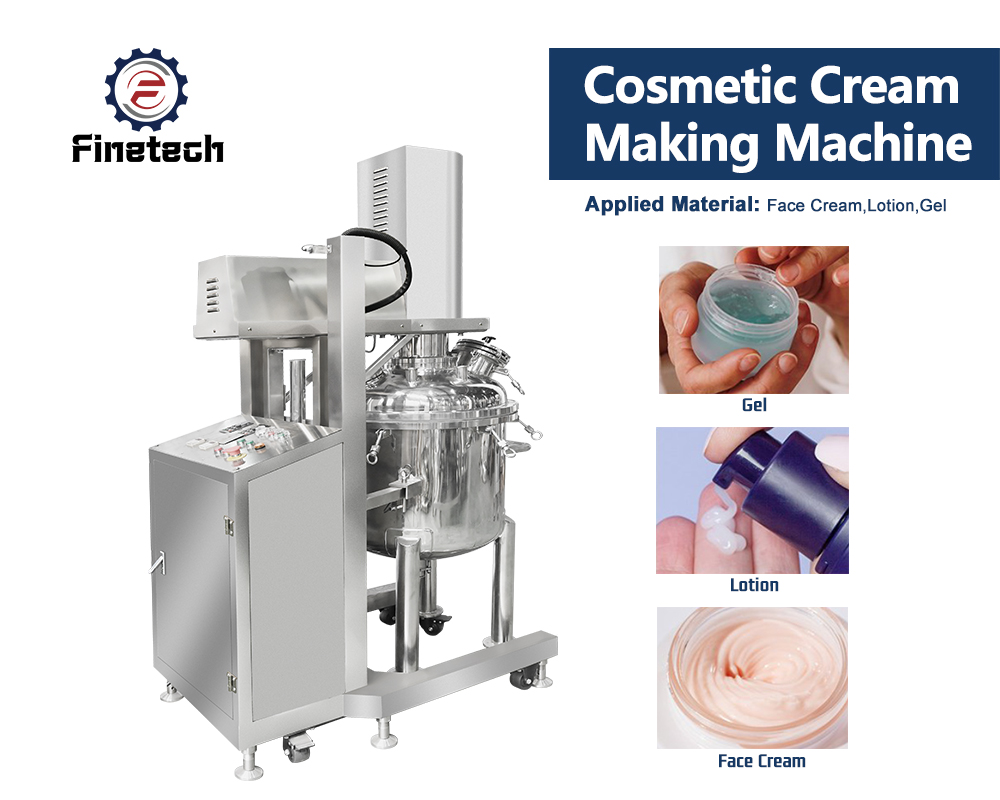
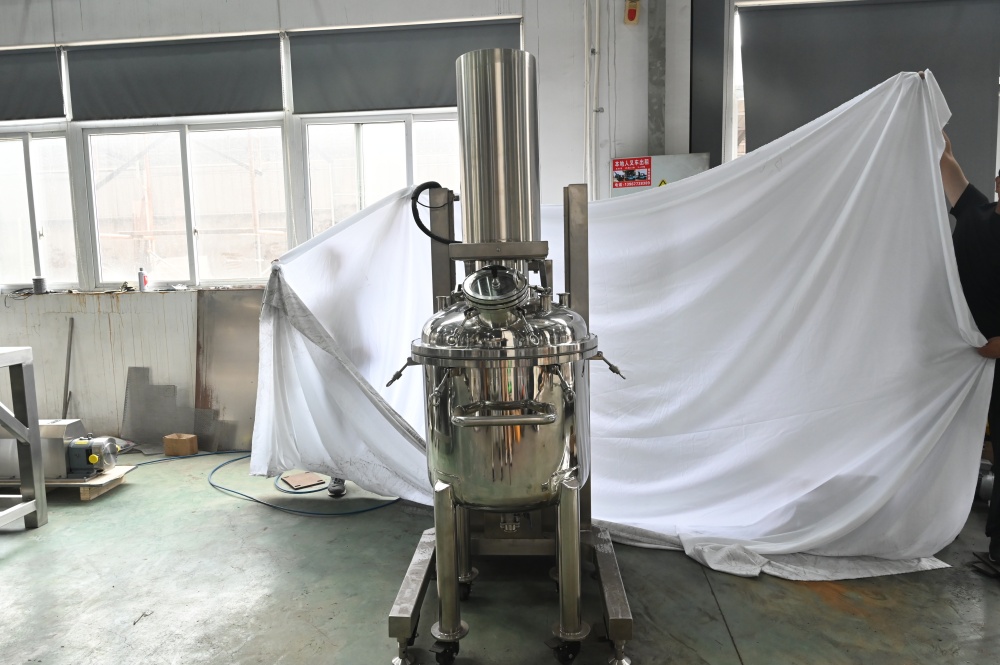
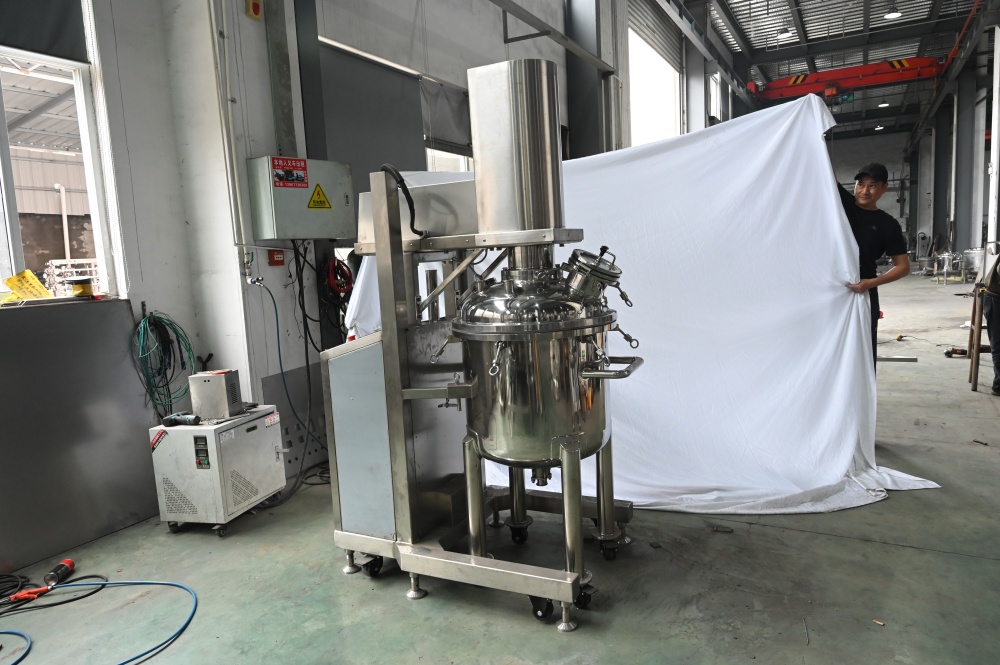
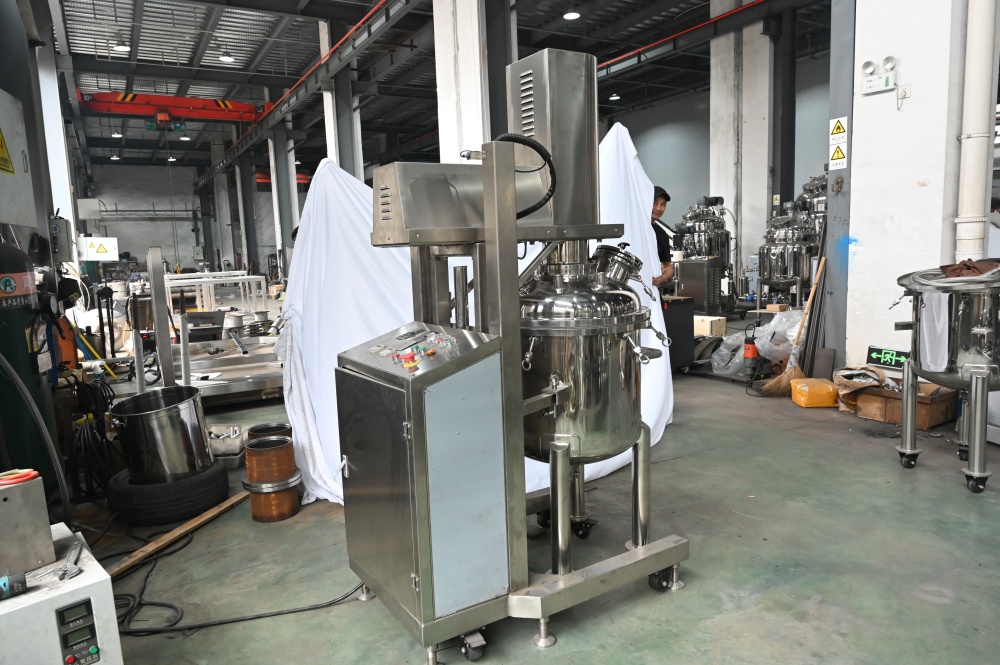
Cosmetic Cream Making Machine
We have developed this Cosmetic Cream Making Machine as a vacuum emulsifying system designed to handle mixing, emulsification, heating, and cooling. Rather than relying on separate mixing stages, the machine brings all the steps into one sealed environment.
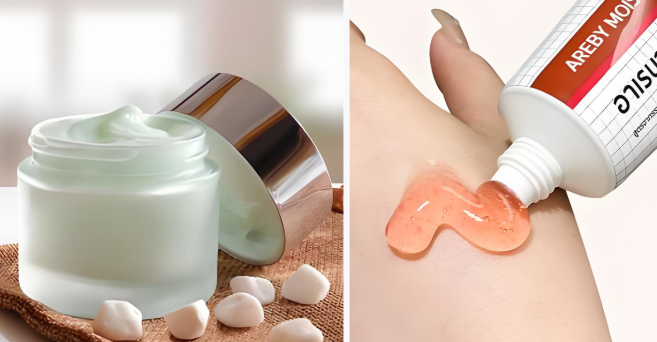
This machine is a multi-layer mixing structure that combines an anchor scraper stirrer, frame mixer, and high-shear homogenizer. It works differently from standard mixers by handling bulk movement, surface scraping, and fine emulsification simultaneously.
Need a Custom Quote?
Or More information About this product? Contact our sales stuff today!
Key Features
Technical Data
FAQ
Application Product Types
Reviews No reviews yet
Machine Details
- Clean Filling with Anti-Drip Nozzles: The lifting nozzle system is designed to rise and retract during filling, minimizing dripping at the end of each cycle. This keeps bottlenecks clean and reduces product waste.
- Scalable Output: It operates to fill 40-80 bottles per minute. For higher demand, the same line design is available in faster configurations, so you can scale your production.
- Consistent Liquid Management: A 50 L storage tank feeds the system with optional heating for temperature-sensitive liquids.
- Operator-Friendly Control: The PLC system with a touchscreen interface keeps control centralized. Adjustments to filling volume, speed, and timing can be made with it without stopping the entire line.
- Space-Conscious Layout: Despite being a complete filling line, the system is arranged in a compact footprint.
| Technical Item | Lab Small Model (R&D/Trial) | Medium Vacuum Emulsifying Model (Small Batch) | Large Automatic Model (Mass Production) |
| Working Volume (Nominal): | 5L, 10L, 20L, 30L | 50L, 100L, 200L, 300L | 500L, 1000L, 2000L, 3000L |
| Total Tank Volume: | 8L, 15L, 25L, 40L | 65L, 120L, 250L, 400L | 650L, 1200L, 2500L, 3800L |
| Emulsifying & Mixing System: | Anchor scraper stirrer + high-shear homogenizer + low-speed mixing | Anchor scraper stirrer + frame mixer + external cycle homogenizer + high-shear emulsifier | Double-layer anchor scraper + frame mixer + bottom homogenizer + bidirectional emulsifying system |
| Main Mixing Speed: | 0-60rpm (stepless frequency control) | 0-60rpm (stepless frequency control) | 0-45rpm (stepless frequency control, servo drive) |
| Homogenizer Speed | 0-3500rpm (stepless adjustable) | 0-6000rpm (high-shear emulsification) | 0-6000rpm (ultra-high shear, particle size ≤ 2μm) |
| Vacuum Degree: | -0.098MPa (max) | -0.098MPa (max) | -0.098MPa (max, automatic vacuum regulation) |
| Temperature Control Range: | Room temperature – 120℃ | Room temperature – 120℃ | Room temperature – 120℃ (intelligent PID constant temperature) |
| Heating Method: | Electric heating (jacket type) | Electric heating or water circulation heating | Steam heating or electric heating (optional) |
| Cooling Function: | Water circulation cooling (standard) | Water circulation cooling (standard, fast cooling) | Water circulation cooling (standard, dual-channel cooling) |
| Material Contact Parts: | SS316L stainless steel, mirror polished (Ra≤0.6μm) | SS316L stainless steel, mirror polished (Ra≤0.4μm) | SS316L stainless steel, mirror polished (Ra≤0.2μm, aseptic grade) |
| Machine Frame & Tank Body: | SS304 stainless steel, compact structure | SS304 thickened stainless steel | SS304 heavy-duty thickened stainless steel |
| Scraper Device: | Food-grade PTFE scraper, full-wall scraping | PTFE auto-following scraper, no dead corners | Dual PTFE scrapers, 360° full coverage scraping |
| Control System: | Digital display control panel | PLC + 7-inch touch screen | PLC + 10-inch touch screen, full-process intelligent control |
| Main Motor Power: | 0.75kW-1.5kW | 2.2kW-5.5kW | 7.5kW-22kW |
| Homogenizer Motor Power: | 0.55kW-1.5kW | 1.5kW-5.5kW | 5.5kW-15kW |
| Vacuum Pump Power: | 0.37kW-0.75kW | 0.75kW-1.5kW | 1.5kW-4kW |
| Feeding & Discharging: | Manual feeding, bottom pneumatic valve discharge | Vacuum feeding + manhole feeding, pneumatic discharge | Automatic vacuum metering feeding, pneumatic discharge with transfer pump |
| Machine Dimensions (L×W×H): | 700×600×1000mm ~ 1100×800×1300mm | 1300×1000×1500mm ~ 2100×1400×1900mm | 2400×1800×2200mm ~ 3800×2500×3000mm |
| Net Weight: | 100kg-220kg | 400kg-900kg | 1200kg-3200kg |
| Standard Certifications: | CE, CCC | CE, GMP Cosmetic Standard | CE, GMP, ISO9001, ISO22716 |
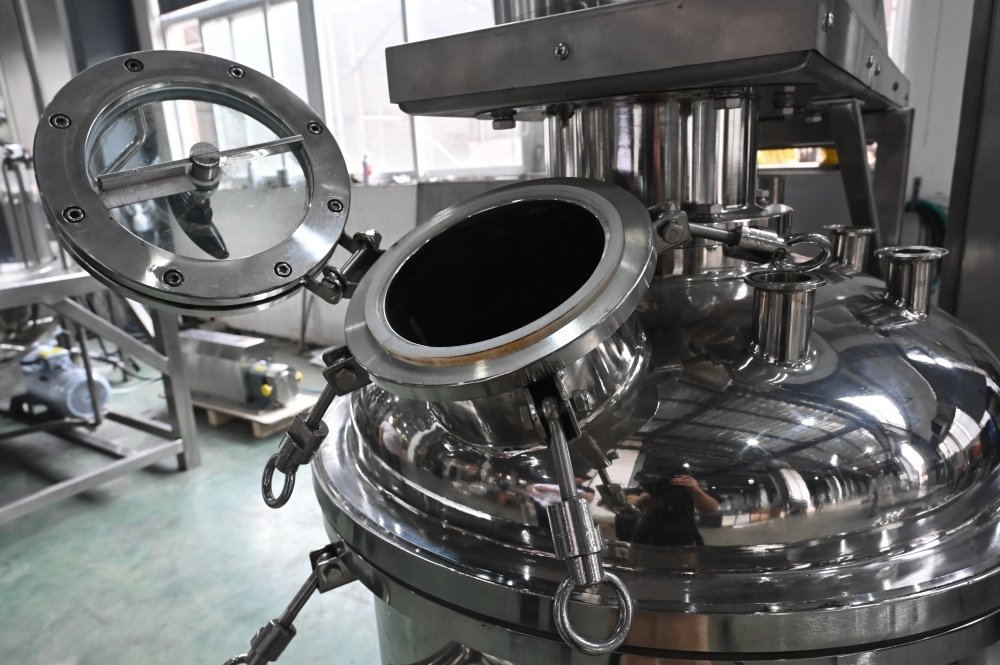
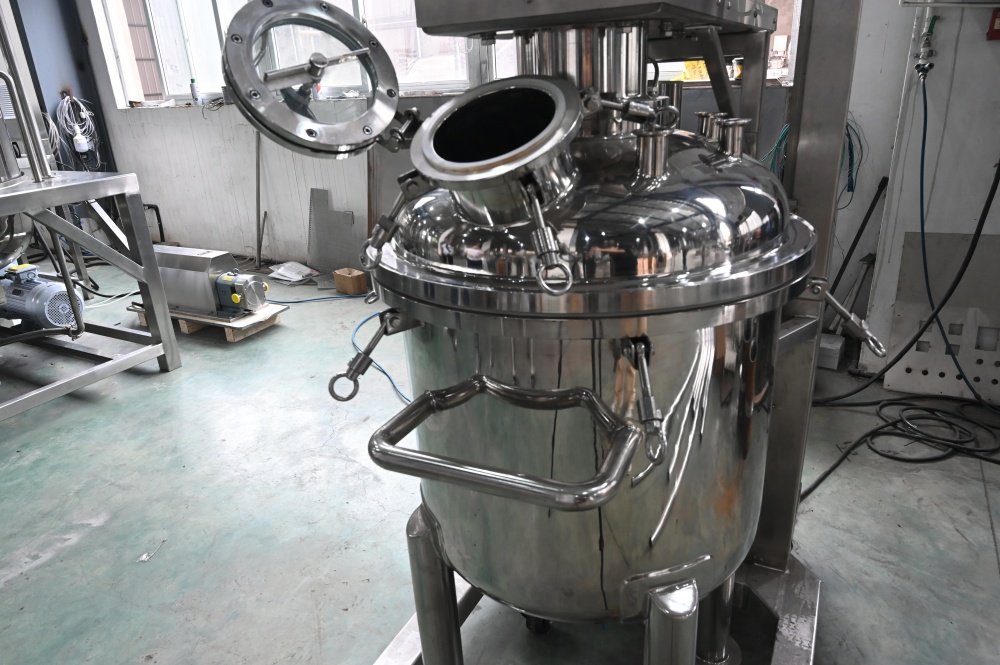
Main emulsifying pot: Where the actual mixing and emulsification occurs.
Water phase tank: For preparing and heating the water-soluble ingredients.
Oil phase tank: For preparing and heating the oil-soluble ingredients.
Vacuum system: Removes air bubbles and prevents oxidation.
Heating/cooling system: Controls temperature throughout the process.
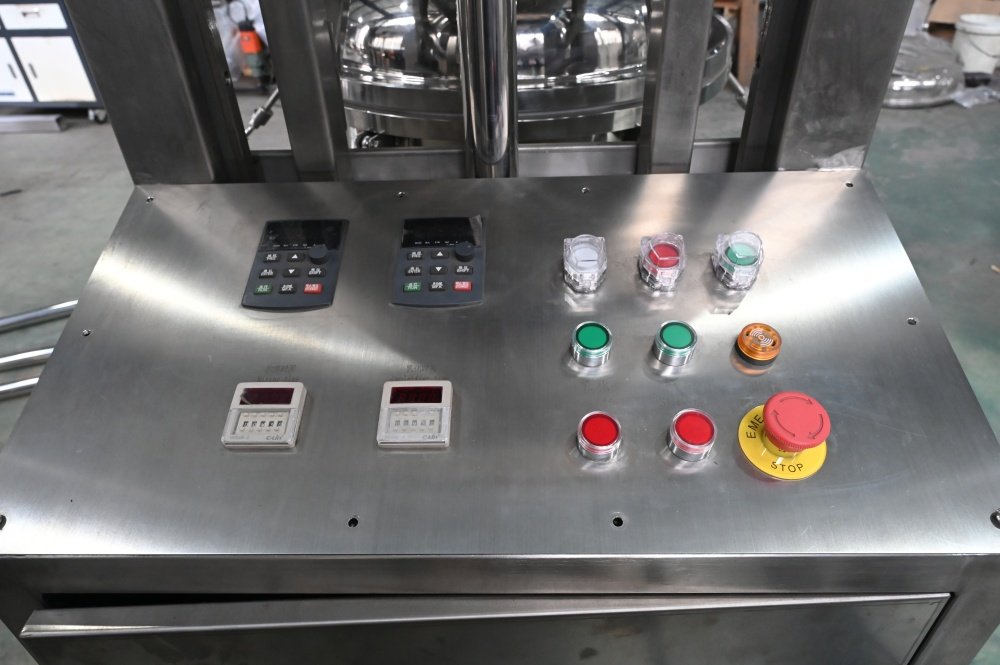
Control panel (PLC/HMI): For programming and monitoring the operation.
Agitator system: For slow mixing and scraping the sides.
Homogenizer: High-shear device for particle size reduction.
High-quality vacuum emulsifiers are designed to handle products between 10,000–50,000 cps (centipoise).
Lab/R&D scale: 10L–50L for formulation development.
Pilot scale: 50L–200L for trial production and small batches.
Production scale: 200L–5,000L for full manufacturing.
Yes.
| Symptom | Likely Cause | Solution |
|---|---|---|
| Too thick | Incorrect ingredient ratios, over-cooling | Adjust formulation, control cooling rate |
| Too thin | Insufficient emulsifier, inadequate homogenization | Increase emulsifier, extend homogenization time |
| Grainy/gritty | Incomplete ingredient dissolution, crystallization | Ensure complete melting before emulsification, control cooling |
| Lumpy | Poor powder dispersion, incorrect addition order | Pre-disperse powders, follow correct order of addition |
Essential spare parts inventory:
Seals and O-rings – Most commonly replaced items
Homogenizer rotor/stator – Critical for particle size control
Gaskets – For vacuum integrity
Belts – For drive systems
Temperature sensors – For accurate process control
Fuses and basic electrical components
Lubricants – Food-grade for moving parts
Customer Reviews
No reviews yet. Be the first to review this product!
Write a Review

Related Products
No reviews yet
No reviews yet
No reviews yet

No reviews yet

No reviews yet

No reviews yet