Russian
  English
  Turkish
  Spanish
  French
  German
  Japanese
In the medical and manufacturing worlds, sterilization is a non-negotiable standard. Regulatory agencies maintain a strict focus on decontamination protocols, yet millions of people still suffer from healthcare-associated infections every year.
This ongoing risk raises a critical question for every professional: how can we truly guarantee that a cycle has eliminated all microbial life?
Biological indicators emerge as the definitive answer to this safety dilemma. These tiny test systems play a massive role in validating microbial destruction and securing total peace of mind. Let’s explore more about what are biological indicators for sterilization, their specific types, and how they work to safeguard global health.
What are Biological Indicators For Sterilization?

Biological indicators are defined as the “gold standard” for verifying sterilization. They are specialized test systems that contain a specific population of highly resistant bacterial spores. Since these microorganisms are more resilient than standard germs, their destruction confirms microbial kill and proves a cycle that neutralizes all hidden threats.
Think of a high-performance fireproof box inside a controlled burn. If a delicate piece of paper inside the box remains unscorched, it means the box has demonstrated its highest protective power against heat and flames.
Biological indicators operate on the same mechanism. Instead of protecting paper, they prove that sterilization has penetrated every barrier and destroyed even the most resilient microorganisms.
Key Components of Biological Indicators
Biological indicators typically consist of two primary components: a spore carrier and a growth medium. Both elements must work in perfect harmony to provide an accurate reading. Let’s see how:
1. Spore Carrier
They are typically materials such as specialized filter paper, stainless steel discs, or glass fibers that serve as the spore carrier.
This material must remain completely stable and inert throughout the intense sterilization process. It provides a consistent surface area for the spores and exposes them to the sterilizing agent uniformly without any interference or shielding.
2. Growth Medium
Once the cycle ends, the spores require a specific environment to “wake up” and signal their survival. For this purpose, a nutrient-rich broth, often containing soybean casein digest, is used as the essential food source.
Most modern indicators include a pH-sensitive liquid that changes color, usually from purple to yellow. This resulting color shift serves as a clear, visual warning that the sterilization process failed, whereas a stable color confirms that all organisms were successfully eradicated.
Different Types of Biological Indicators
There are numerous biological indicators to monitor different sterilization processes. To match the sterilization method, technicians utilize specific microorganisms. These microorganisms are known for their unique resistance to a particular sterilizing agent. Here are the four main types used to ensure equipment is safe for clinical or industrial use.
1. Steam Sterilization Indicators
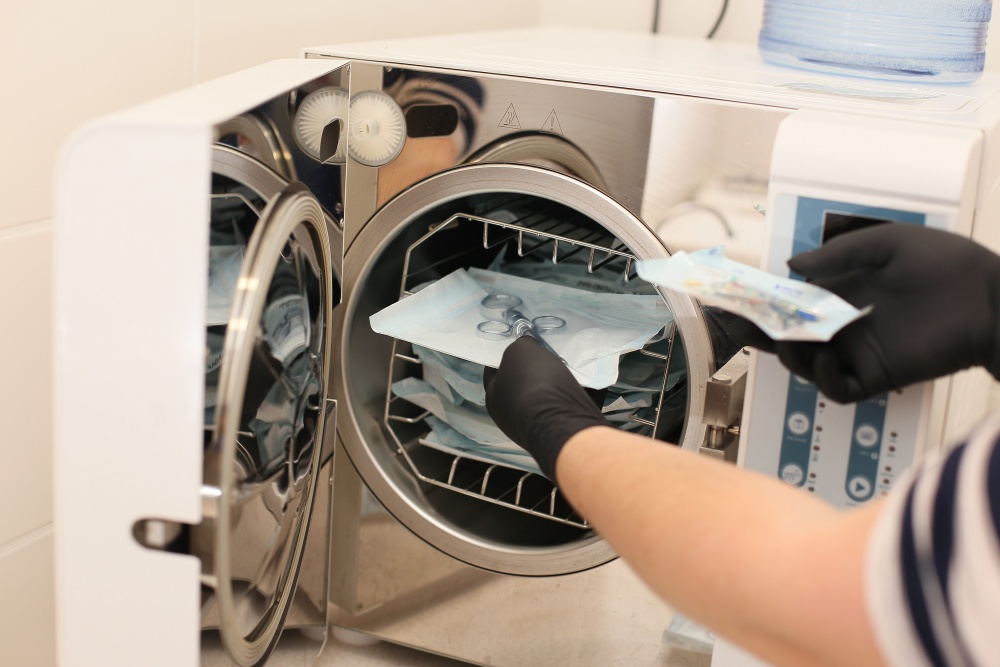
Healthcare facilities primarily utilize Geobacillus stearothermophilus for steam-based processes like autoclaving. These spores naturally thrive in extreme heat, which makes them for testing moist heat lethality.
If the autoclave successfully destroys these heat-loving organisms, it confirms that the steam and pressure were sufficient to reach every surface. This outcome guarantees that total sterilization has been achieved across the entire load.
2. Ethylene Oxide Indicators
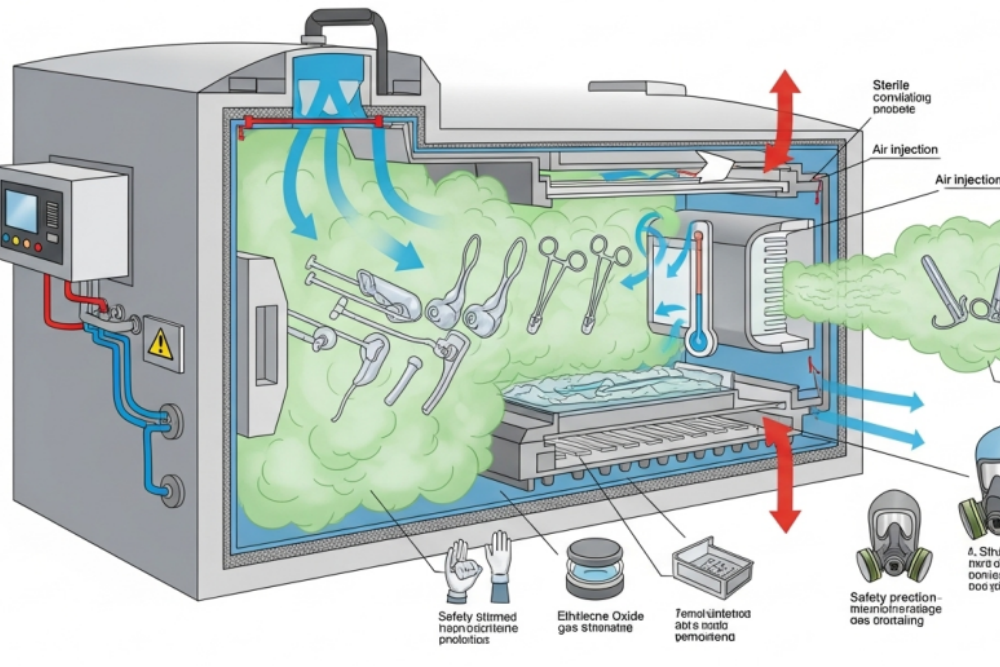
For gas-based chemical sterilization, industries often use Bacillus atrophaeus. They possess a unique cellular structure, which is highly resistant to toxic chemicals and alkylation used by Ethylene Oxide to kill microbes in vacuum chambers.
Bacillus atrophaeus are essential for the safety of heat-sensitive materials such as plastic catheters, syringes, and medical tubes.
3. Dry Heat Indicators
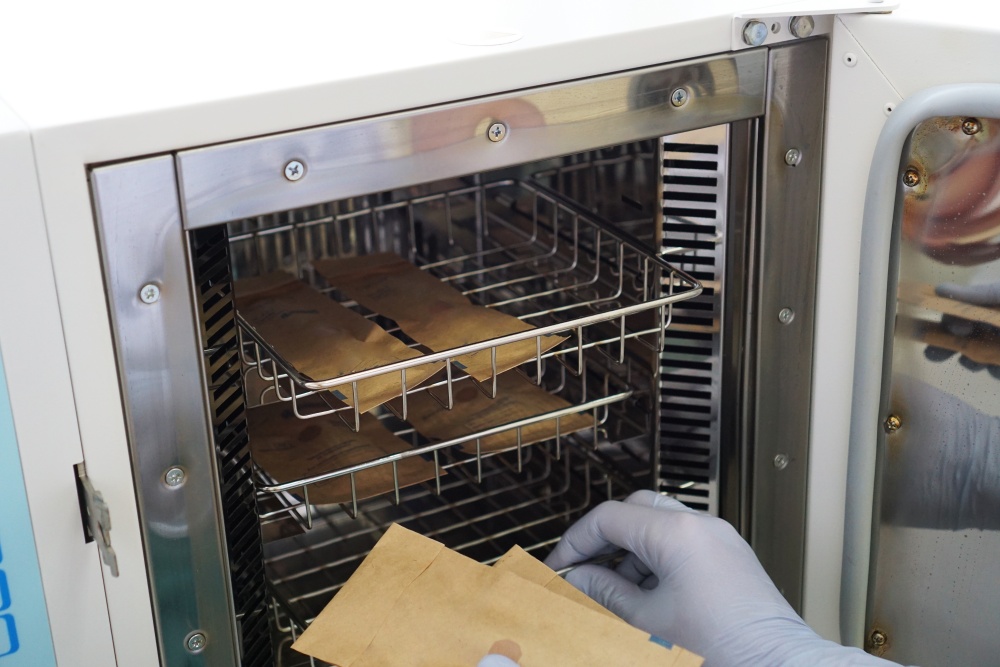
Dry Heat sterilization relies on oxidation to destroy microbial life. It is a much slower process than steam due to the lack of moisture and the lower heat-transfer efficiency of air. Because of its extreme resistance to desiccation, Bacillus atrophaeus serves as the primary test organism for this method.
Hot air circulates within the chamber to transfer heat directly to the instruments. This sustained thermal exposure successfully neutralizes any potential contaminants and makes it the ideal choice for glass and metal tools.
4. Radiation Indicators

Industrial sterilization using gamma rays or E-beam technology employs Bacillus pumilus as the primary challenge organism. This strain has a high degree of resistance to ionizing radiation, which usually shatters microbial DNA with ease.
The successful neutralization of these resilient spores helps manufacturers guarantee a safe dose for products like surgical gloves, sutures, and implants.
How To Use A Biological Indicator For Sterilization: Step-by-Step Process
A biological indicator is a critical device that must be used within a sterilization chamber under standard operating conditions. This process ensures that the most resistant life forms are neutralized during a cycle. Here is a step-by-step protocol for validating the safety of processed equipment.
- Selection: Choose the correct indicator specifically designed for your sterilization method, such as steam or ethylene oxide.
- Placement:Place the vial or strip in the most challenging or difficult area of the load (e.g., center of dense packs, bottom front near drain, inside lumens).
- Cycle Execution: Run the sterilization program according to the manufacturer’s validated parameters for time and temperature.
- Retrieval: Carefully remove the indicator once the cycle completes, allowing it to cool before handling.
- Activation: Activate it by breaking the internal glass ampoule ( often with a crusher) to mix the spores with the growth medium.
- Incubation: Place the activated vial in a dedicated incubator set to the required temperature for the specific microorganism. Most conventional indicators require a period of 24 to 48 hours to allow for potential microbial growth.
- Final Interpretation: Monitor the vial for a specific color change; a stable color confirms success, while a shift indicates a sterilization failure. For example, a shift from purple to yellow shows that surviving spores have germinated and produced acid, which marks an unsuccessful cycle.
The Critical Importance of Biological Indicators
Biological indicators are essential for confirming the total destruction of all microorganisms, including highly resilient spores. These tools provide the highest level of assurance for patient safety, prevent healthcare-associated infections, and guarantee strict regulatory compliance.
Below are some of the key benefits of biological indicators:
1. Proof of Sterilization
A biological indicator serves as the most reliable source of evidence that a sterilization process was successful. For instance, mechanical gauges only track environmental factors like temperature and pressure.
The actual destruction of a resistant test microbe is required to prove that the lethal agent reached every surface. This direct evidence confirms that the equipment is truly sterile rather than just exposed to heat.
2. Patient Safety
A validated sterilization process is extremely important for protecting patient health. Using unsterilized instruments can lead to severe infections, such as surgical site infections (SSIs) or the transmission of bloodborne pathogens like Hepatitis and HIV.
Maintaining sterile conditions ensures that patient safety remains the top priority in every medical procedure.
3. Соблюдение нормативных требований
Regulatory bodies such as the FDA and ISO require the use of biological indicators to validate sterilization processes. Adhering to these standards validates that facilities meet mandatory guidelines and legal requirements for quality control.
Consistent use of these indicators reflect a commitment to industry-best practices and operational safety.
Часто задаваемые вопросы
1. How does a self-contained biological indicator (SCBI) function?
An SCBI consists of a plastic vial containing a spore strip and a glass ampoule filled with growth media. After the sterilization cycle, the user crushes the vial to mix the spores with the media. If the liquid remains clear after incubation, the sterilization was successful.
2. Can BIs be reused if they show a negative result?
BIs are strictly single-use devices and must be disposed of as biohazardous waste after the result is recorded. Once the spores are exposed to the growth media or the sterilization process, the indicator’s integrity and standardized population are permanently altered.
3. Where should a BI be placed within the sterilizer?
The BI should be positioned in the “cold point” or the most challenging area for the sterilant to reach, usually the bottom shelf near the drain. Placing it inside a Process Challenge Device (PCD) or a test pack further mimics the resistance of densely packed surgical instruments.
Prioritize Patient Safety with a Reliable Partner
Biological indicators are a core component of the modern sterilization ecosystem. Understanding how to use them correctly is not just a technical requirement but a moral obligation that helps you meet global patient safety standards. From surgical sutures to plastic syringes and delicate implants, these indicators help every piece of equipment meet the highest sterility benchmarks.
Whether it involves clinical care or large-scale manufacturing, the ultimate success lies in collaboration with a trusted partner. Файнтех helps you meet rigorous industry demands and the latest regulatory compliance standards with its specialized expertise.
Get in touch with our experts today and let us help you choose the ideal equipment for your facility!
Уведомление об авторских правах:
Вы не имеете права воспроизводить, изменять, публиковать, показывать, передавать или каким-либо образом использовать любое содержимое данного сайта, а также использовать его для создания любой базы данных без предварительного письменного разрешения компании Finetech Group. Для получения разрешения на использование контента, пожалуйста, свяжитесь с: info@pharmamachinecn.com
Отказ от ответственности:
Информация, содержащаяся в данной статье, предназначена только для общего ознакомления. Компания не гарантирует точность, актуальность, своевременность или полноту любой информации, и компания не несет ответственности за ошибки или упущения в содержании данной статьи.