German
  English
  Russian
  Turkish
  Spanish
  French
  Japanese
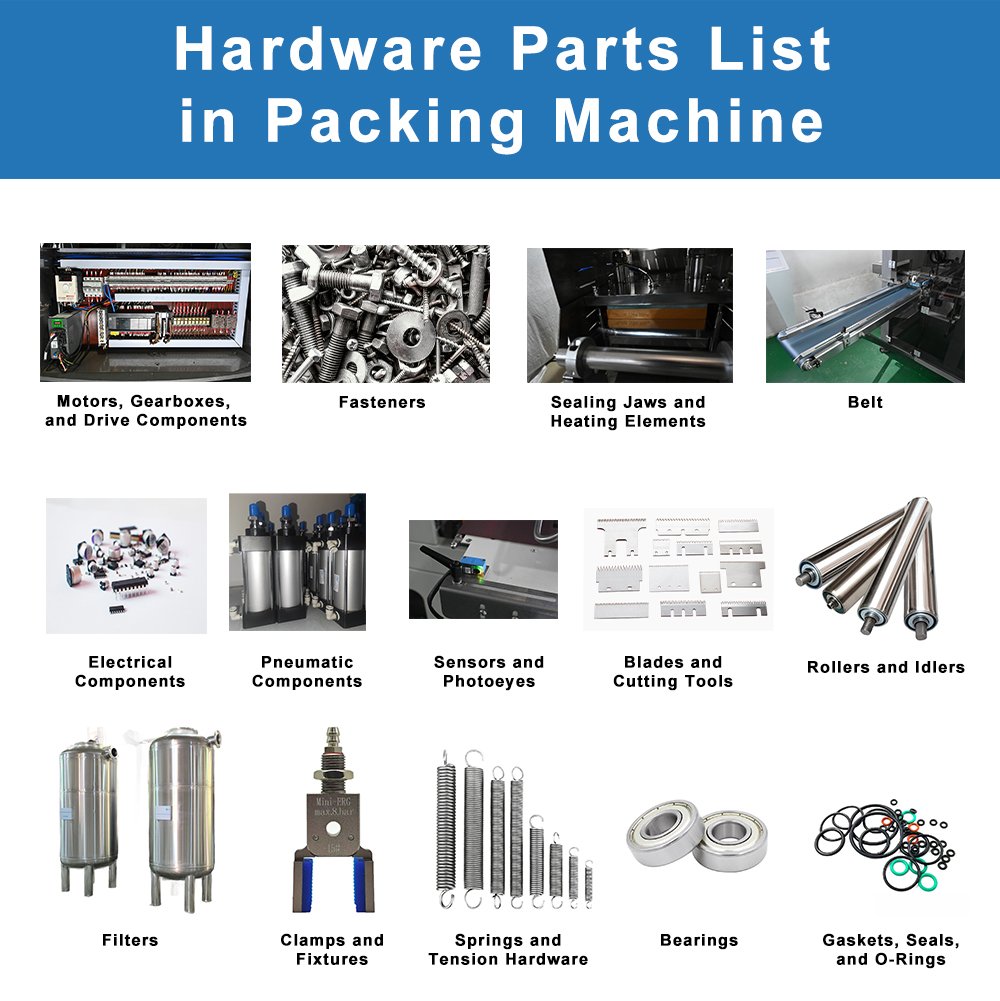
Jede Verpackungsmaschine besteht aus mechanischen Bauteilen. Messer, Riemen, Rollen, Dichtungen, Lager, Sensoren, Pneumatikzylinder, Motoren, Befestigungselemente. Die vollständige Liste der mechanischen Bauteile einer Verpackungsmaschine ist lang, und zu wissen, welche Funktion jedes einzelne Teil erfüllt, ist hilfreich, wenn man Ersatzteile beschaffen muss oder um 3 Uhr morgens vor einer ausgefallenen Maschine steht.
1. Klingen und Schneidwerkzeuge
Klingen übernehmen das Schneiden. Folie, Beutel, Tüten, Kartons, Schrumpffolie. Was auch immer getrennt, zugeschnitten oder perforiert werden muss – irgendwo an der Maschine gibt es eine Klinge, die diese Aufgabe übernimmt.
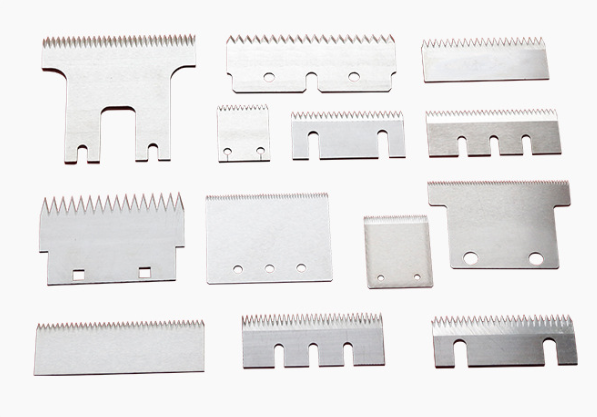
Gerade Klingen sind am weitesten verbreitet. Sie kommen in Querschneidestationen, Beutelherstellungsanlagen und Bandversiegelungsmaschinen zum Einsatz. Gezackte Klingen werden dort eingesetzt, wo das Material widerstandsfähiger ist oder die Verpackung eine Aufreißkante benötigt. Rotationsklingen drehen sich in Hochgeschwindigkeitsanlagen. Guillotine-Schneider schneiden Wellpappe.
Edelstahl ist Standard. Wolframkarbid und Keramik kosten drei- bis fünfmal so viel, halten aber deutlich länger scharf. Beim Schneiden von abrasiven Folien beträgt die Standzeit bei Wolframkarbid sechs bis achtzehn Monate, bei Edelstahl hingegen nur wenige Wochen.
Stumpfe Klingen führen zu ausgefransten Kanten, unvollständigen Schnitten und Staus. Die Beutel bleiben miteinander verbunden. Die Folie reißt, anstatt sauber durchgeschnitten zu werden. Das Produkt bleibt in der Schneidestation hängen. Manche Bediener erhöhen den Schneiddruck, um dies auszugleichen, was die Klinge schneller abnutzt und den darunterliegenden Amboss stark beansprucht.
Auf Anlagen mit hohem Durchsatz sollten die Klingen wöchentlich überprüft werden. In manchen Betrieben werden sie geschliffen und wiederverwendet. Andere werfen sie weg und nehmen eine neue. Halten Sie Ersatzklingen griffbereit. Der Austausch einer Klinge dauert nur wenige Minuten. Das Warten auf eine neue Klinge vom Lieferanten dauert hingegen Tage.
Die Ausrichtung der Klinge ist genauso wichtig wie ihre Schärfe. Eine scharfe Klinge, die um einen halben Millimeter gegenüber dem Amboss versetzt ist, führt zu ebenso schlechten Schnitten wie eine stumpfe. Überprüfen Sie nach jedem Klingenwechsel die Ausrichtung, bevor Sie mit der Verarbeitung des Materials beginnen.
2. Riemen
Förderbänder transportieren Güter. Produkte werden auf Förderbändern befördert. Folie wird von Zugbändern durchgezogen. Zahnriemen sorgen für die Synchronisation mechanischer Stationen. Antriebsriemen übertragen die Kraft vom Motor auf die Welle. Jede Art von Riemen nutzt sich irgendwann ab.
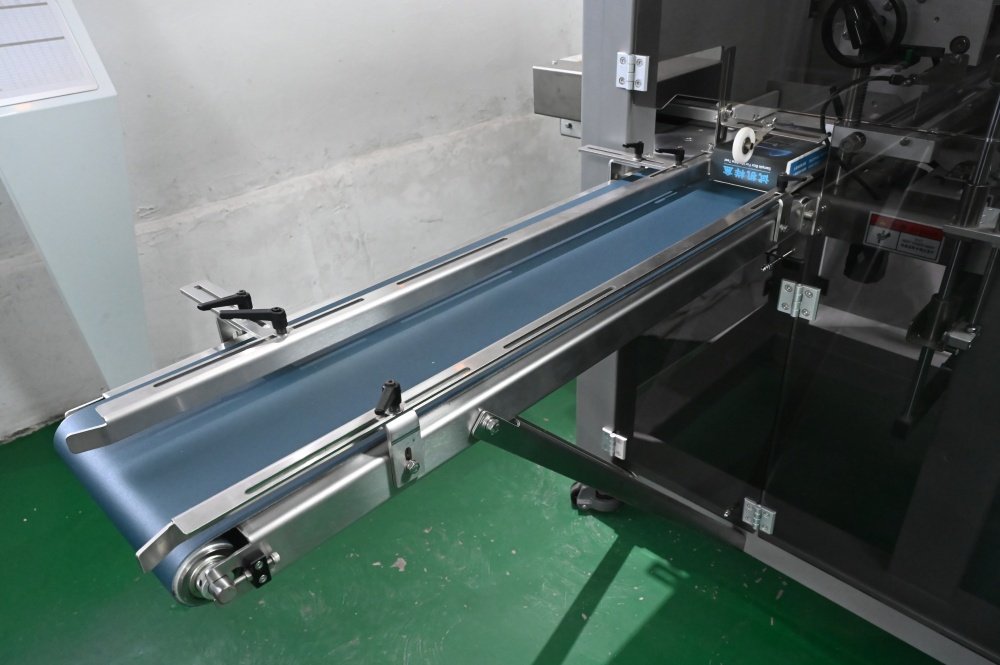
PVC, Polyurethan oder modularer Kunststoff für Förderbänder. PVC ist günstig. Eignet sich gut für trockene Güter. Polyurethan ist beständig gegen Öle und Fette, weshalb es in der Lebensmittelindustrie zum Einsatz kommt.
Modulare Kunststoffriemen lassen sich in Gliedern zusammenstecken. Ist ein Glied beschädigt, nehmen Sie es heraus und stecken Sie ein neues ein. Der gesamte Riemen muss nicht ausgetauscht werden. Die Lebensdauer beträgt fünf Monate bis drei Jahre, je nachdem, wie stark Sie die Riemen beanspruchen.
Zugbänder an VFFS-Maschinen greifen die Folie und ziehen sie durch die Formstation. Reibungszugbänder verlieren ihren Halt, wenn ihre Oberfläche durch Abnutzung glatt wird. Vakuumzugbänder nutzen Saugkraft und sind langlebiger, kosten jedoch mehr.
Wenn sich die Zugriemen dehnen oder an Griffigkeit verlieren, verschiebt sich die Beutellänge. Die Bediener versuchen, das Problem durch Softwareanpassungen zu beheben, obwohl die eigentliche Lösung darin besteht, den Riemen $40 auszutauschen.
Zahnriemen sind verzahnt. Sie greifen in Riemenscheiben ein. Wenn ein Zahn übersprungen wird, geraten die Stationen aus dem Takt. Dichtungen sitzen nicht richtig. Schnitte gehen daneben.
Diese Riemen reißen an der Zahnwurzel aufgrund von Hitze und Alterung. Tasten Sie während der Wartungsstopps entlang der Zähne ab. Fehlt ein Zahn? Dann ist der Riemen hinüber. Ausgefranste Kanten? Dann ist es bald soweit.
Keilriemen und Flachriemen verbinden Motoren mit Getrieben. Sie dehnen sich. Sie rutschen. Sie reißen. Rutscht der Antriebsriemen? Die Maschine läuft langsamer, als es der Sollwert vorgibt. Die SPS zeigt 60 Säcke pro Minute an, aber die Produktionszählung ergibt 52. Überprüfen Sie den Riemen, bevor Sie der Software die Schuld geben.
Wenn Riemen paarweise laufen, sollten Sie beide gleichzeitig austauschen. Ein alter Riemen neben einem neuen führt zu ungleichmäßiger Spannung, wodurch beide schneller verschleißen. Messen Sie den alten Riemen bei der Bestellung, solange er noch an der Maschine sitzt. Die Artikelnummern verschiedener Hersteller stimmen nicht immer überein.
3. Siegelbacken und Heizelemente
Die Siegelbacken werden zusammengedrückt und verschweißen die Folie durch Wärme. Quersiegel-, Endsiegel- und Rückensiegelbalken sowie Flossensiegelräder. Die Bezeichnungen variieren je nach Maschine. Zwei beheizte Flächen drücken die Folienschichten zusammen, bis sie verschmelzen und eine versiegelte Naht bilden.
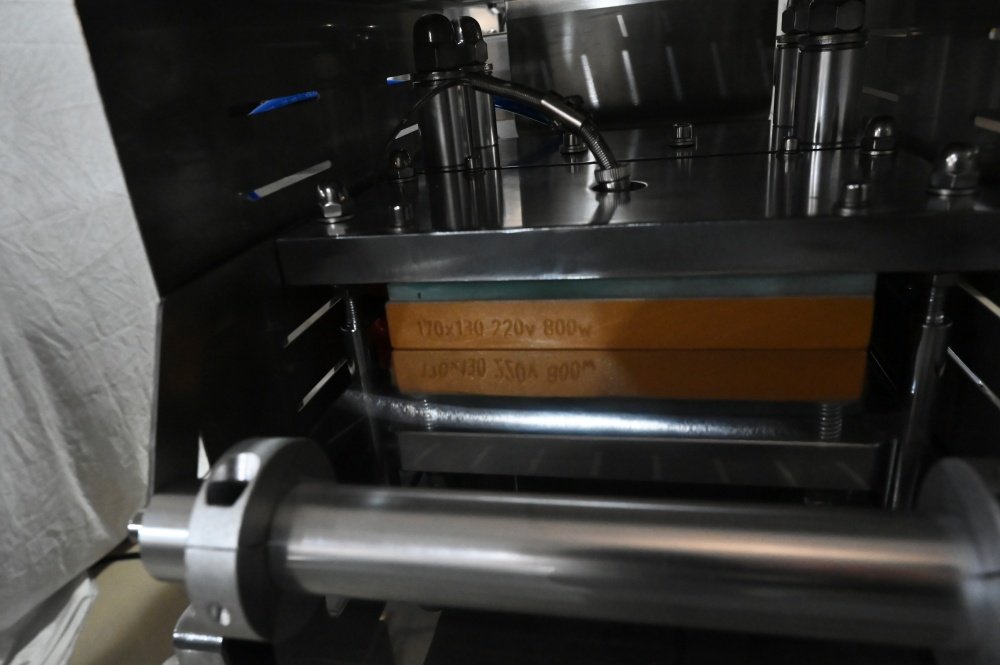
Die Backenoberflächen sind in der Regel verchromt oder mit Teflon beschichtet. Chrom ist abriebfester. Teflon sorgt für eine bessere Ablösung des Teigs und verhindert das Anhaften. Beide Materialien nutzen sich mit der Zeit ab.
Die Rillen auf der Klemmfläche werden durch Tausende von Druckzyklen abgeflacht. Sobald sie glatt sind, nimmt die Klemmkraft ab, da gerade diese Rillen die Druckpunkte bilden, die für eine starke Verbindung sorgen.
Die Heizpatronen befinden sich im Inneren des Backenkörpers. Dabei handelt es sich um eine Widerstandsspule in einem Metallrohr, die in eine Bohrung in der Backe eingepresst ist. Das ist nicht kompliziert.
Sie gehen ohne Vorwarnung kaputt. Eine Seite des Verschlusses wird kalt. Die Verschlüsse sind von Anfang an schwach oder springen auf. Die Maschine läuft weiter, und niemand bemerkt es, bis die Qualitätskontrolle die Charge beanstandet.
RTDs oder Thermoelemente in der Nähe der Backe liefern Temperaturmesswerte an den Regler. Wenn ein Sensor driftet, sind die Werte falsch, doch der Regler weiß das nicht.
Das System geht davon aus, dass die Pressbacke bei 180 °C läuft. Tatsächlich liegt die Temperatur bei 160 °C. Die Dichtungen bestehen eine Zeit lang die Sichtprüfung, scheitern dann aber bei den Qualitätskontrollen. Durch die planmäßige Kalibrierung der Sensoren lässt sich die Abweichung erkennen, bevor sie eine Charge ruiniert.
Teflonband oder PTFE-Abdeckungen schützen die Backenoberfläche und verhindern das Anhaften der Folie. Dabei handelt es sich um Verbrauchsmaterialien. Ersetzen Sie diese regelmäßig.
Wenn man wartet, bis das Klebeband durchbrennt, bleiben geschmolzene Folienrückstände auf der Klemmfläche zurück, die dann entfernt werden müssen, bevor neues Klebeband angebracht werden kann. In manchen Betrieben wird das Klebeband bei jeder Schicht gewechselt. Andere beschränken sich auf einmal täglich. Das hängt von der Art der Folie und der Siegeltemperatur ab.
Bei Maschinen, die rund um die Uhr laufen, halten Heizelemente nur wenige Monate. Bei geringerer Beanspruchung halten sie möglicherweise bis zu einem Jahr. Halten Sie mindestens zwei Ersatzteile pro Backenposition vorrätig. Wenn um 2 Uhr morgens ein Heizelement durchbrennt und kein Ersatzteil vorhanden ist, steht die Anlage still, bis die Frühschicht ein Ersatzteil besorgen kann.
Die Ausrichtung der Backen wird häufiger vernachlässigt, als es sein sollte. Backen, die nicht flach aneinanderliegen, sorgen für Dichtungen, die auf der einen Seite gut halten, auf der anderen Seite aber unbrauchbar sind. Passen Sie sie bei der Einrichtung mit Unterlegscheiben an. Überprüfen Sie dies nach einigen hunderttausend Zyklen erneut.
4. Dichtungen, Dichtringe und O-Ringe
Dichtungen verhindern das Austreten von Luft, Feuchtigkeit, Produkt und Verunreinigungen. Sie befinden sich zwischen den Passflächen und sorgen dafür, dass das, was drinnen ist, drinnen bleibt und das, was draußen ist, draußen bleibt. Jede Verpackungsmaschine verfügt irgendwo über solche Dichtungen.
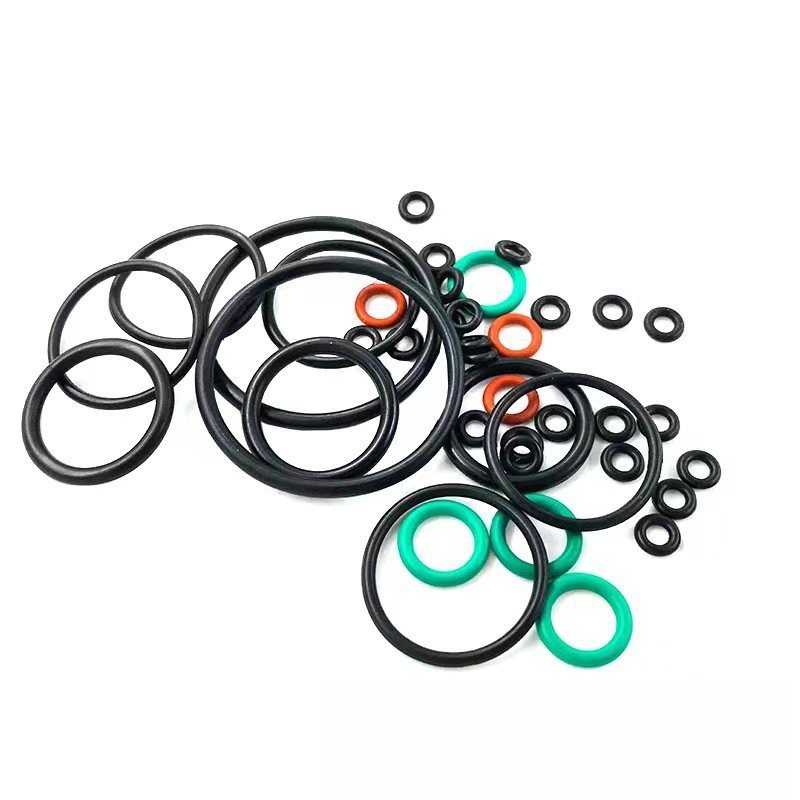
Silikon ist die erste Wahl für die Lebensmittel- und Pharmaindustrie. Es ist hitzebeständig, bleibt flexibel und erfüllt die FDA-Anforderungen. EPDM-Kautschuk ist kostengünstiger und eignet sich gut für Anwendungen, bei denen kein Kontakt mit Lebensmitteln zu befürchten ist. Viton ist die richtige Wahl für aggressive Chemikalien und Lösungsmittel, die Silikon regelrecht auffressen würden.
O-Ringe sitzen in Nuten an Zylindern, Ventilkörpern und Anschlüssen. Sie dichten gegen Druck ab. Ihre Lebensdauer variiert stark. Ein Niederdruck-Luftanschluss? Der könnte Jahre halten. Ein hochfrequentierter Pneumatikzylinder, der 60 Mal pro Minute auslöst? Vielleicht sechs Monate, bevor er anfängt zu zischen.
Die Druckverformungsrest ist das, was die meisten Dichtungen unbrauchbar macht. Eine Dichtung, die monatelang in derselben Position zusammengedrückt wurde, nimmt eine bleibende Verformung an. Sie federt nicht mehr zurück.
Die Dichtung lockert sich, sodass Luft oder Produkt eindringen kann. Die Türdichtungen an Vakuummaschinen und Kammerversiegelungsgeräten müssen regelmäßig ausgetauscht werden, auch wenn sie auf den ersten Blick noch in Ordnung aussehen.
Woran man erkennt, dass es kaputt geht: sichtbare Risse, ausgehärteter Gummi, eine bleibende Delle an der Befestigungsstelle oder ein Vakuum, das früher in 5 Sekunden aufgebaut war und jetzt 12 Sekunden dauert.
Fahren Sie die Maschine nicht weiter, bis sie den Geist aufgibt. Eine undichte Dichtung an einem Vakuumverpacker verschwendet Energie und verkürzt die Haltbarkeit jeder einzelnen Verpackung, die aus dieser Maschine kommt.
Halten Sie gängige Dichtungsgrößen aus Silikon und EPDM auf Lager. Sortieren Sie O-Ring-Sätze nach Bohrungsdurchmesser und Querschnitt. Wenn mitten in der Nacht eine Dichtung versagt, möchte niemand einen Eimer voller durcheinandergewürfelter O-Ringe durchwühlen, um den richtigen zu finden.
5. Rollen und Laufrollen
Walzen führen, spannen und stützen die Folie und das Produkt während des Durchlaufs durch die Maschine. Leerlaufwalzen sind nicht angetriebene Walzen, die sich einfach frei drehen, während das Material über sie läuft.
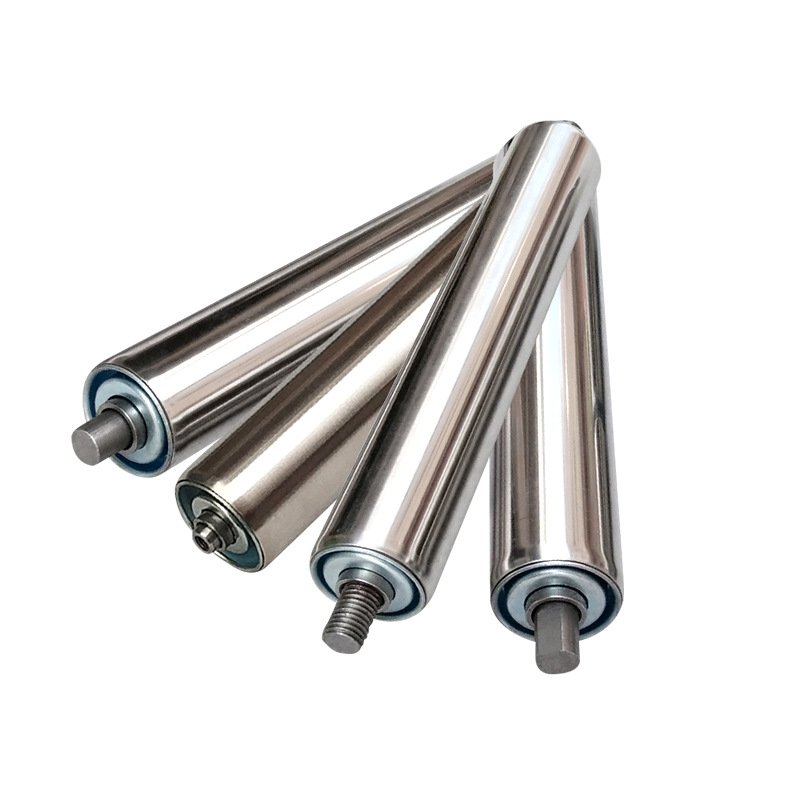
Edelstahl oder Aluminium mit polierter oder beschichteter Oberfläche. Manche sind mit einer Gummi- oder Silikonhülle versehen, um die Griffigkeit zu verbessern. Edelstahl eignet sich für Umgebungen, in denen die Rollen mit Wasser gereinigt werden. Aluminium ist leichter, was bei Tänzerarmen von Bedeutung ist, wo die Rolle schnell auf Spannungsänderungen reagieren muss.
Förderrollen treiben das Förderband an. Angetriebene Rollen sind an beiden Enden gelagert und über Ketten, Riemen oder eine direkte Zahnradkupplung mit dem Antriebssystem verbunden. Wenn ein Rollenlager ausfällt, blockiert die Rolle.
Das Förderband rutscht darüber, es entsteht eine abgeflachte Stelle an der Förderbandoberfläche, und es kommt zu Fehlzuführungen. Man hört es, bevor man es sieht. Ein rhythmisches Klopfen oder Quietschen aus dem Förderbereich deutet fast immer auf ein defektes Rollenlager hin.
Rollenoberflächen werden stark beansprucht. Gummibeschichtungen blättern ab. Edelstahl wird durch Fremdkörper zerkratzt. Sobald eine Rollenoberfläche beschädigt ist, läuft die Folie schief, es entstehen Falten und die Spannung wird ungleichmäßig.
Der Film driftet zu einer Seite, und nichts, was Sie an den Führungen versuchen, hilft? Schauen Sie sich die Rollen an. Verschleißspuren oder abgeflachte Stellen auf der Rollenoberfläche sind meist die Ursache.
Reinigen Sie die Walzen regelmäßig. Kleberückstände, Produktstaub und Etiketten-Trägermaterial sammeln sich auf den Walzenoberflächen an und verändern die Hafteigenschaften. Eine klebrige Walze zieht die Folie zu stark an. Eine staubige Walze lässt sie rutschen. Beides führt zu Problemen.
Sauberer, trockener Verpackungsraum? Dann halten die Rollen zwei bis fünf Jahre. Feuchte, säurehaltige Lebensmittelproduktion? Vielleicht ein Jahr. Weniger, wenn die Lager nicht richtig abgedichtet sind.
6. Lager
Überall dort, wo sich etwas dreht, kommt ein Lager zum Einsatz. Förderrollen, Antriebswellen, Umlenkrollen, Nockenfolger, Führungsrollen, Lüfterflügel. An einer typischen Verpackungsmaschine sind Dutzende von Lagern verbaut.
Kugellager eignen sich für die meisten Anwendungen. Rillenkugellager sind der Standard für allgemeine Anwendungen. Rollenlager kommen zum Einsatz, wenn die Belastungen höher sind oder wenn zusätzlich zur Radialbelastung eine Axialbelastung auftritt. Nadellager lassen sich in enge Stellen einbauen, in die ein normales Kugellager nicht passt.
Abgedichtete Lager sind bei Verpackungsmaschinen Standard. Lebensmittelstaub, Pulver, Spülwasser. Offene Lager halten diesen Umgebungsbedingungen ohne ständige Schmierung nicht stand, und selbst dann fallen sie früher aus. Achten Sie bei Verpackungsanwendungen auf Lager mit der Kennzeichnung 2RS (doppelte Gummidichtung) oder mindestens 2Z (doppelte Schutzkappe).
Ein defektes Lager verursacht Geräusche. Knirschen. Klicken. Ein Brummen, das letzte Woche noch nicht da war. Ignorieren Sie das nicht. Ein festgefressenes Lager zerstört die Welle, brennt einen Motor durch und ruiniert eine Walze. Was ursprünglich ein $10-Teil war, verursacht einen Schaden im Wert von $500, weil niemand dem Geräusch nachgegangen ist.
Sie wollen ein Lager austauschen? Ziehen Sie das alte Lager heraus und überprüfen Sie die Welle und das Gehäuse, bevor Sie das neue Lager einpressen. Kratzer an der Welle oder Rost in der Bohrung führen dazu, dass das neue Lager nicht richtig sitzt. Es wird schnell wieder ausfallen. Manchmal muss auch die Welle ausgetauscht werden.
Achten Sie darauf, dass die Lagernummer exakt übereinstimmt. Verlassen Sie sich nicht auf Ihr Augenmaß. Ein Lager, dessen Bohrungsdurchmesser 1 mm zu klein ist, dreht sich auf der Welle, hinterlässt eine Rille und fällt innerhalb weniger Wochen aus.
Bestellen Sie das Lager unter Angabe der genauen Nummer, die auf dem alten Lager eingeprägt ist. Wenn Sie diese nicht entziffern können, messen Sie die Bohrung, den Außendurchmesser und die Breite und schlagen Sie die Nummer in einem Lagerkatalog nach.
7. Federn und Befestigungselemente
Federn kommen in Backenmechanismen, Riemenspannern, Folienrollenbremsen, Tänzerarmen und Gestängesystemen zum Einsatz. Kleine Teile, die Großes leisten. Wenn sie nachlassen, verschlechtert sich die Maschinenleistung auf eine Weise, die schwer zu diagnostizieren ist.
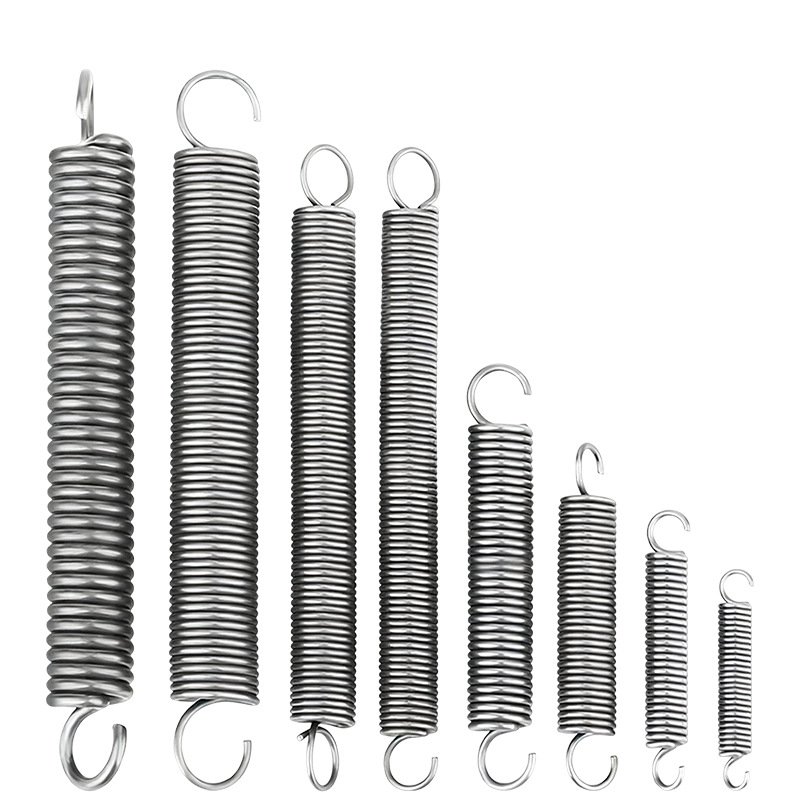
Eine zu schwache Rückstellfeder an einer Siegelbacke führt dazu, dass sich die Backe zwischen den Zyklen nicht schnell genug öffnet. Die Verweilzeit verlängert sich. Die Folie überhitzt sich.
Es entstehen Brandspuren an der Dichtung oder die Folie klebt an der Backe fest. Die Bediener senken die Dichtungstemperatur, um dies auszugleichen, was die Dichtung schwächt. Das eigentliche Problem war eine $3-Feder.
Zugfedern an Folienabwickelsystemen steuern, wie viel Widerstand die Rolle beim Abziehen der Folie spürt. Zu viel Spannung dehnt die Folie.
Ist die Spannung zu gering, läuft die Rolle frei und der Film wird schlaff. Beides beeinträchtigt die Passgenauigkeit und die Beutelabmessungen. Wenn die Spannung nachlässt und sich das Problem durch Nachjustieren nicht beheben lässt, überprüfen Sie die Federn.
Zugfedern, Druckfedern und Torsionsfedern kommen in Verpackungsmaschinen zum Einsatz. Sie sind kostengünstig und klein. Halten Sie die gängigen Größen auf Lager. Notieren Sie sich die technischen Daten (freie Länge, Drahtdurchmesser, Federkonstante) aus der Maschinenanleitung oder messen Sie die alte Feder nach, bevor sie völlig verschlissen ist. Eine Feder nach Augenmaß zu bestellen, funktioniert nicht.
Hitze führt schneller als alles andere zu einer Schwächung der Federn. Jede Feder in der Nähe einer Dichtungsstation verliert ihre Spannung früher als eine Feder auf der kalten Seite der Maschine. Ersetzen Sie die Federn auf der heißen Seite häufiger.
8. Sensoren und Lichtschranken
Sensoren teilen der Maschine mit, was gerade geschieht: Ist das Produkt vorhanden oder nicht? Befindet sich die Folie in der richtigen Position? Liegt die Temperatur im Sollwertbereich? Liegt der Druck im zulässigen Bereich? Ist die Schutzabdeckung geöffnet oder geschlossen? Ohne Sensoren ist die Maschine blind.
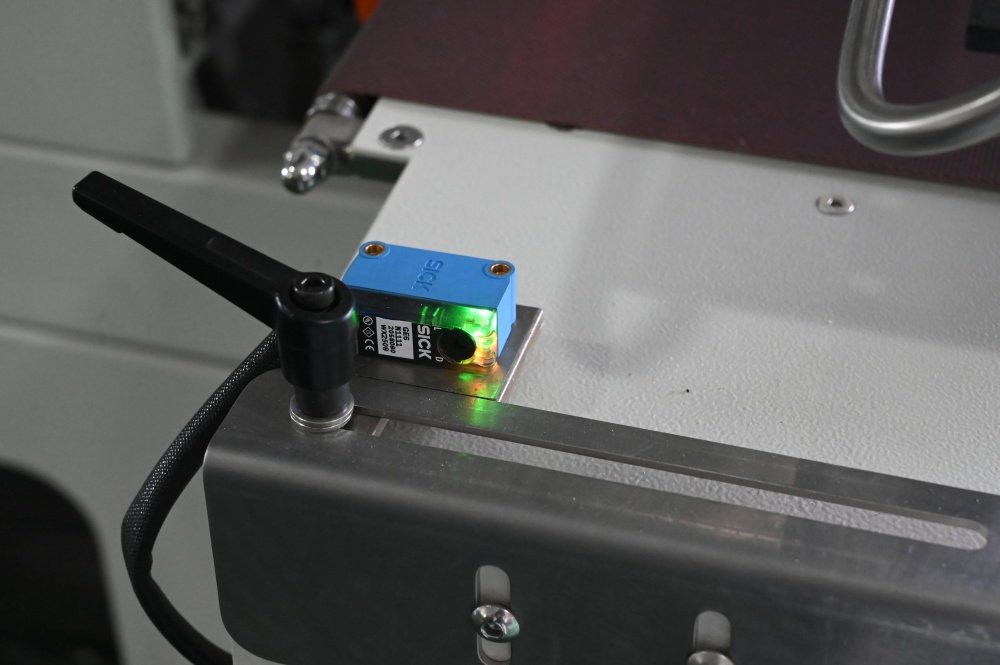
Fotozellen sind die am häufigsten verwendeten Sensoren an Verpackungsmaschinen. Sie erkennen Passermarken auf bedruckter Folie und teilen der SPS mit, wo geschnitten und versiegelt werden soll.
Wenn die Fotozelle verschmutzt ist, erkennt sie die Markierungen zu spät oder gar nicht. Bei jedem Beutel ist der Aufdruck dann verschoben. Wischen Sie die Linse mit einem Tuch ab. Das dauert zehn Sekunden. In neunzig Prozent der Fälle ist das Problem damit behoben.
Näherungssensoren erkennen Metall. Die Backe erreicht eine bestimmte Position, die Kurvenscheibe dreht sich über einen bestimmten Punkt hinaus, und ein Metallflag an einem Gestänge schwingt vorbei. Der Sensor erkennt dies und meldet es an die SPS.
Sie arbeiten berührungslos, was bedeutet, dass sie keinem mechanischen Verschleiß unterliegen. Allerdings können sie elektronisch ausfallen. Ein ausgefallener Näherungssensor versetzt die Maschine entweder in einen Fehlerzustand oder lässt sie ohne Positionsbestätigung weiterlaufen, was zu einem Zusammenstoß führen kann.
Kapazitive Sensoren erkennen nichtmetallische Objekte. Dazu gehören Füllstände in Behältern, Produkte auf Förderbändern und das Vorhandensein von Folie. Allerdings sind sie schwieriger zu handhaben als Näherungssensoren. Temperaturschwankungen, Luftfeuchtigkeit und Verschmutzungen auf der Sensoroberfläche verfälschen die Messwerte.
Endschalter sind mechanische Bauteile. Ein Hebel oder Stößel wird betätigt, sobald sich etwas in die richtige Position bewegt. Sie geben ein Klicken von sich. Sie verschleißen. Die Kontakte im Inneren oxidieren oder weisen durch Lichtbogenbildung Lochfraß auf. Ein Endschalter, der nur zeitweise funktioniert, ist schlimmer als ein defekter, da er zufällige Fehler verursacht, die sich nur schwer reproduzieren lassen.
Bei Verpackungsmaschinen lockern sich Kabel durch Vibrationen. Steckverbinder korrodieren durch die Reinigung. Bevor Sie einen neuen Sensor aus dem Regal holen, rütteln Sie kurz am Kabel und überprüfen Sie den Steckverbinder. In der Hälfte der Fälle ist der Sensor selbst in Ordnung und nur das Kabel ist defekt.
Ersetzen Sie die Sensoren durch genau das gleiche Modell. Verschiedene Marken weisen unterschiedliche Schaltabstände, Reaktionszeiten und Ausgangstypen (PNP vs. NPN) auf. Der Einbau eines “nahezu passenden” Ersatzteils kann zu Timing-Problemen führen, die sich als zufällige Fehler äußern.
9. Pneumatikkomponenten
Pneumatikzylinder, Magnetventile, Anschlüsse, Schläuche, Regler, FRL-Einheiten. In Verpackungsmaschinen übernimmt die Pneumatik den Großteil der Schub- und Zugbewegungen. Backen öffnen und schließen sich. Messer werden ausgelöst. Das Produkt wird umgeleitet. Klemmen greifen zu und lassen los.
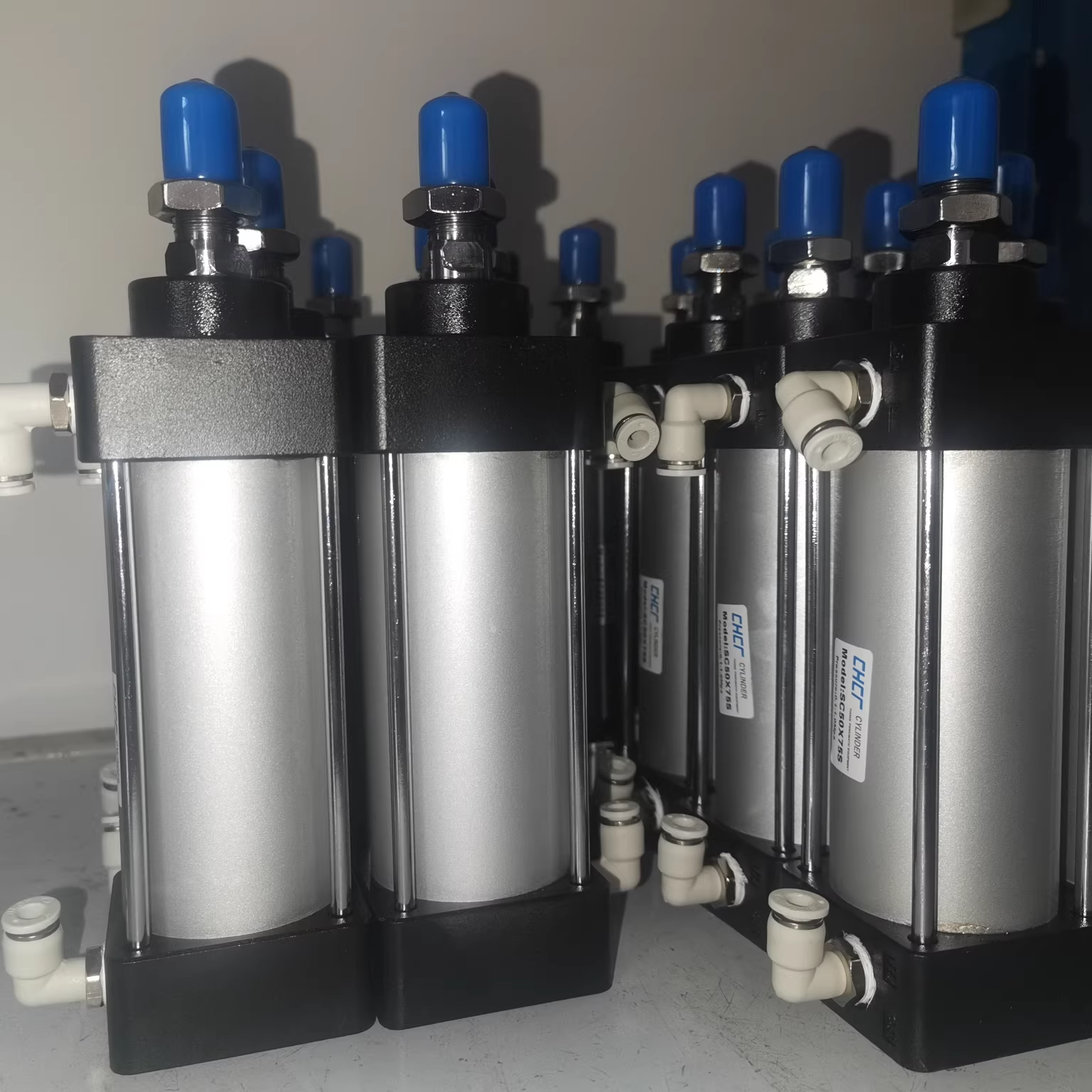
Zylinder verfügen über Dichtungen im Inneren. Die Kolbenstangendichtung verhindert, dass Luft an der Kolbenstange vorbeiströmt. Die Kolbendichtung verhindert, dass Luft im Inneren entweicht. Beide verschleißen durch den ständigen Zyklusbetrieb.
Abgenutzte Dichtungen führen zu einer ungenauen Funktion des Zylinders. Die Dichtbacke klemmt nicht jedes Mal mit derselben Kraft zu. Die Dichtungsfestigkeit variiert innerhalb einer Charge, und niemand weiß, woran das liegt, bis jemand den Zylinder auseinanderbaut.
Magnetventile leiten die Luft zum richtigen Zeitpunkt zum richtigen Zylinder. Die Spule brennt durch, und das Ventil fällt aus. Der Schieber klemmt aufgrund von Verschmutzungen, und das Ventil bleibt in einer Zwischenstellung hängen.
Ein klemmendes Ventil arretiert den Zylinder in einer Position oder lässt ihn abdriften. Die Maschine verhält sich seltsam, und niemand kommt auf die Idee, zuerst das Ventil zu überprüfen.
Schläuche bekommen durch Alterung, Hitze und Vibrationen Risse. Polyurethan ist bei den meisten Verpackungsaufgaben langlebiger als Nylon. Steckverbindungen lassen sich schnell montieren, allerdings nutzt sich die innere Spannhülse mit der Zeit ab.
Das Rohr platzt unter Druck, wenn die Spannzange keinen Halt mehr hat. Banjo-Verschraubungen und Klemmverschraubungen halten besser, wenn man den zusätzlichen Zeitaufwand bei der Montage in Kauf nehmen kann.
Regler legen den Luftdruck für jeden Kreislauf fest. Ein Regler, dessen Wert zu hoch abweicht, überlastet die Zylinder und lässt sie gegen die mechanischen Anschläge schlagen.
Ein zu niedriger Druck führt dazu, dass alle Vorgänge träge ablaufen. Überprüfen Sie die eingestellten Drücke bei Wartungsstopps mit einem kalibrierten Manometer – nicht nur mit dem Manometer am Regler selbst, da auch diese Abweichungen aufweisen können.
FRL-Einheiten reinigen und konditionieren die Luft, bevor sie in die Maschine gelangt. Der Filter fängt Wasser und Schmutz auf. Der Öler versprüht Ölnebel auf die Teile, die ihn benötigen. Ein verstopfter Filter führt zu einem Mangel an Öl in der Maschine. Ein leerer Öler bedeutet, dass Ventile und Zylinder trocken laufen. Überprüfen Sie wöchentlich den Füllstand der Behälter.
Befüllen Sie die Maschine mit Druck und hören Sie genau hin. Es läuft kein Produkt durch. Nur Luft. Ein zischendes Geräusch? Das ist ein Leck. Markieren Sie es, beheben Sie es, machen Sie weiter. Kleine Lecks sind heimtückisch, weil die Maschine weiterhin läuft. Nur langsamer. Und die Dichtungsqualität verschlechtert sich von Woche zu Woche ein wenig, bis endlich jemand nachsieht.
10. Motoren, Getriebe und Antriebskomponenten
Motoren sind das Herzstück aller Anlagen. Hauptantriebsmotoren, Förderbandmotoren, Lüftermotoren, Pumpenmotoren. Wechselstrom-Induktionsmotoren, Servomotoren, Schrittmotoren. Unterschiedliche Aufgaben erfordern unterschiedliche Motortypen.
Wechselstrom-Asynchronmotoren übernehmen den Großteil der schweren Arbeit. Sie sind kostengünstig, zuverlässig und leicht auszutauschen. Förderbänder, Ventilatoren, Hauptantriebe. Wenn man einen Frequenzumrichter daran anschließt, lässt sich die Drehzahl regeln, ohne dass man an der Mechanik etwas verändern muss.
In neueren Maschinen kommen Servomotoren zum Einsatz. Jede Station verfügt über einen eigenen Motor: Filmvorschub, Backenposition, Messerstiming. Die SPS steuert jeden Motor unabhängig über Servoantriebe.
Das ist nicht billig. Motor und Antrieb können Tausende kosten, wenn sie ausfallen. Schreiben Sie die Modellnummer, die Marke und die technischen Daten auf ein Etikett und kleben Sie es an die Tür des Schaltschranks. Wenn um 4 Uhr morgens ein Servomotor ausfällt, will niemand den Schaltschrank öffnen und mühsam auf ein Typenschild blicken.
Getriebe befinden sich zwischen dem Motor und dem angetriebenen Teil. Schnecken-, Stirnrad- und Planetengetriebe. In allen befindet sich Öl oder Fett, das durch Hitze und den Betrieb mit der Zeit zersetzt wird. Ein defektes Getriebe hört man, bevor man es sieht. Knirschen, Heulen, Klopfen. Im Inneren ist etwas kaputt, und wenn man das Problem aufschiebt, wird es nur noch schlimmer.
Kupplungen verbinden Motorwellen mit angetriebenen Wellen. Bei Klauenkupplungen befindet sich in der Mitte ein Gummikreuz, das Vibrationen dämpft und geringfügige Fluchtungsfehler ausgleicht. Das Gummikreuz nutzt sich ab, und die Metallklauen beginnen, gegeneinander zu schlagen.
Die Vibrationen nehmen zu. Die Lager auf beiden Seiten geben nach. Die Spinne kostet ein paar Dollar. Das einfach ignorieren? Das kommt viel teurer zu stehen.
Bei älteren mechanischen Maschinen sorgen Kettenantriebe und Kettenräder für den gleichmäßigen Lauf. Durch den Verschleiß der Stifte und Buchsen im Inneren der Kettenglieder werden die Ketten länger. Durch den Betrieb mit einer abgenutzten Kette nehmen die Zähne der Kettenräder eine hakenförmige Gestalt an.
Tauschen Sie beides gleichzeitig aus. Eine neue Kette an abgenutzten Kettenrädern verschleißt die Kette schnell. Neue Kettenräder mit einer gedehnten Kette verschleißen die Kettenräder.
11. Befestigungselemente
Schrauben, Bolzen, Muttern, Unterlegscheiben, Stifte, Sicherungsklammern. Sie halten die gesamte Maschine zusammen. Jede Verkleidung, jede Motorhalterung, jede Halterung und jede Schutzvorrichtung. Den ganzen Tag lang sind sie alle den Vibrationen ausgesetzt.
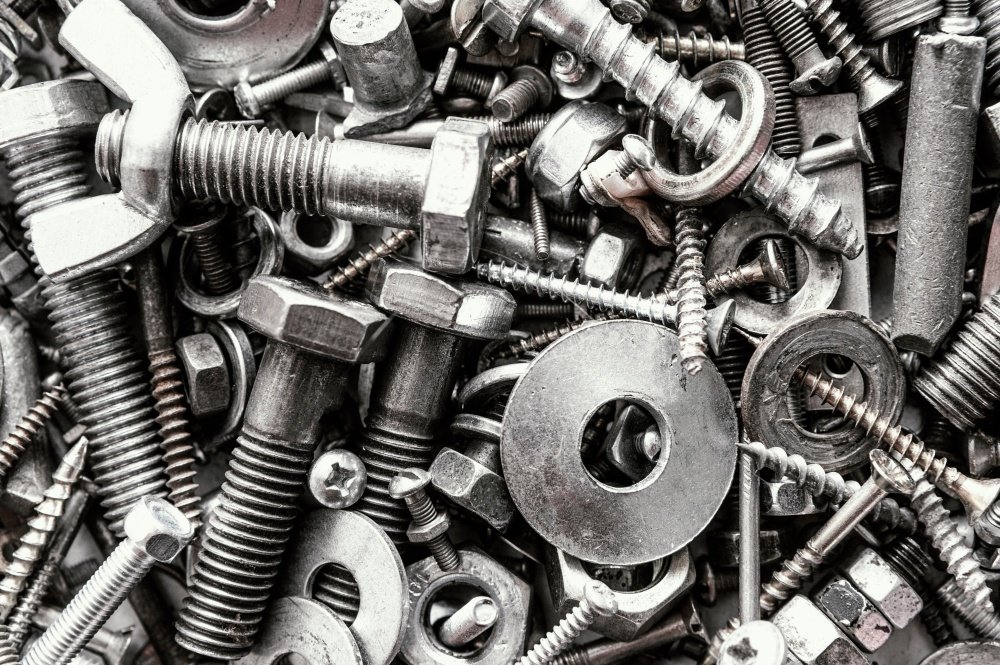
Teile lösen sich. Eine Schraube dreht sich eine Viertelumdrehung zurück. Bauteile verschieben sich. Der Takt gerät aus dem Gleichgewicht. Dichtungen verziehen sich. Das Förderband läuft schief. Die Mitarbeiter verschwenden Stunden damit, Phantomprobleme zu jagen, die man bei einem Rundgang mit einem Schraubenschlüssel in zwei Minuten entdeckt hätte.
Maschinen in der Lebensmittel- und Pharmaindustrie benötigen Befestigungselemente aus Edelstahl. Normaler Stahl rostet in Umgebungen, in denen die Maschinen mit Wasser gereinigt werden, bereits nach einer Woche. Die Güteklasse spielt jedoch eine Rolle. Billige Edelstahlschrauben verursachen Abrieb und klemmen in Gewindebohrungen aus Edelstahl fest. Tragen Sie auf diese Verbindungen ein Anti-Seize-Mittel auf oder rechnen Sie damit, abgebrochene Schrauben später ausbohren zu müssen.
Nyloc-Muttern und Schraubensicherungsmittel verhindern, dass sich Teile durch Vibrationen lösen. Verwenden Sie sie dort, wo es in der Anleitung angegeben ist. Wenn Sie darauf verzichten, sparen Sie zwar 30 Sekunden bei der Montage, müssen aber eine Stunde mit der Fehlersuche verbringen, wenn sich die Teile eine Woche später lösen.
Passstifte und Kegelstifte sorgen dafür, dass die zusammenpassenden Teile in der richtigen Position bleiben. Bricht einer davon unter einer Stoßbelastung ab, verschieben sich die beiden Teile. Alles geht schief, aber die Teile sehen immer noch so aus, als wären sie miteinander verbunden.
Das ist nicht auf den ersten Blick erkennbar. Man muss das Gerät auseinanderbauen, um den darin versteckten gebrochenen Stift zu finden.
12. Filter
Luftfilter, Ölfilter, Unterdruckfilter, Abgasfilter. Sie alle erfüllen im Grunde denselben Zweck: Sie verhindern, dass Partikel dorthin gelangen, wo sie nichts zu suchen haben.
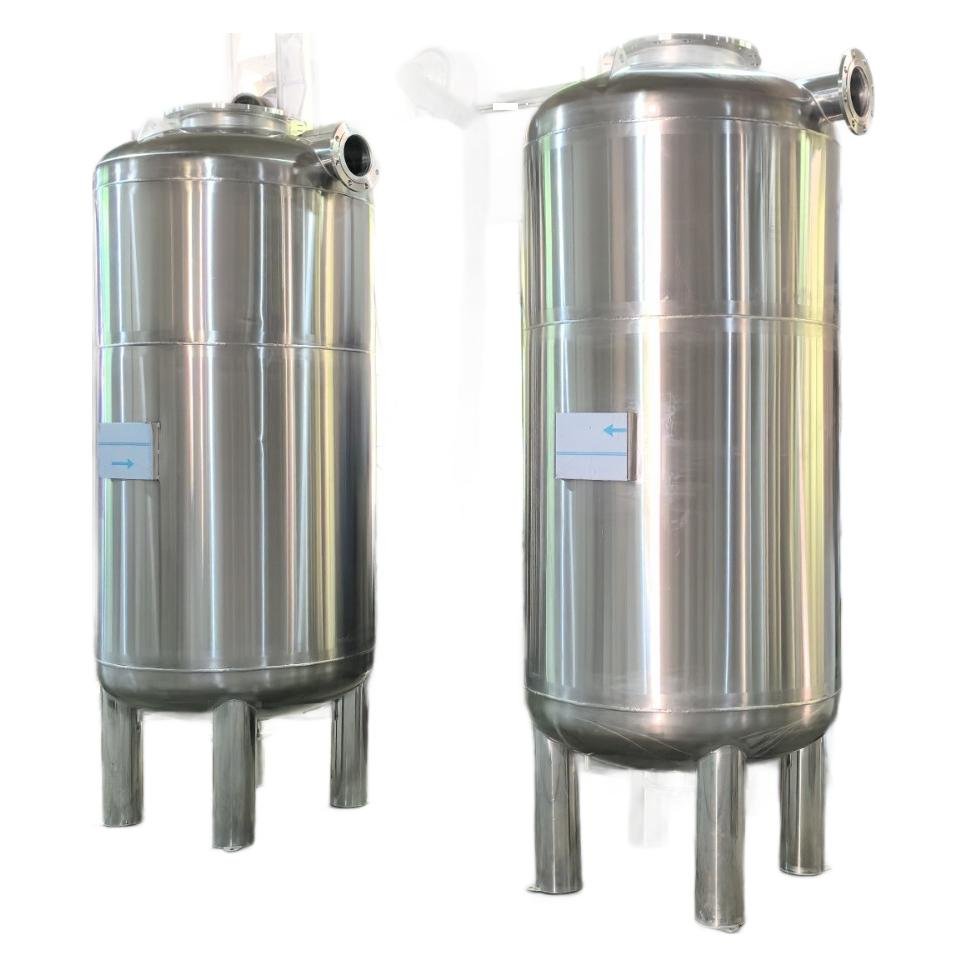
Ansaugluftfilter in Lüftungsanlagen reinigen die in die Anlage einströmende Luft. Vorfilter fangen die großen Partikel auf. HEPA-Filter fangen den Rest auf. Wenn sie verstopfen, sinkt der Luftdurchsatz. Der Trocknungsprozess verlangsamt sich. In der Pharmaindustrie ist ein defekter Ansaugfilter ein potenzielles GMP-Problem.
Einlassfilter für Vakuumpumpen verhindern, dass die Pumpe Produktstaub und Feuchtigkeit ansaugt. Ein verstopfter Filter führt zu einer schwachen Saugleistung. Die Maschine braucht ewig, um ein Vakuum aufzubauen, oder erreicht den Sollwert gar nicht. Die Verpackungen werden mit noch darin befindlicher Luft ausgegeben, wodurch die Haltbarkeit stark beeinträchtigt wird.
Abluftfilter fangen Beschichtungsstaub, Pulver und Feinstaub auf, bevor die Luft das Gebäude verlässt. Wenn sie verstopfen, baut sich ein Gegendruck auf und der Luftdurchsatz durch die Maschine sinkt. Dies macht sich zuerst bei Fließbetttrocknern und Beschichtungsanlagen bemerkbar, da deren Trocknungsprozess von diesem Luftdurchsatz abhängt.
Hydraulik- und Pneumatikfilter verhindern, dass Öl und Luft Verunreinigungen in die Ventile und Zylinder befördern. Verschmutztes Öl führt zu einem schnellen Verschleiß der Hydraulikkomponenten. Verschmutzte Luft greift Pneumatikteile an und verstopft Magnetventile. Überprüfen Sie bei jedem Wartungsstopp die Filteranzeigen oder Differenzdruckanzeigen.
Wechseln Sie die Filter regelmäßig aus. Warten Sie nicht, bis sie versagen. Ein Filter, der zwei Wochen lang verstopft war, bevor es jemand bemerkte, hat die Maschine die ganze Zeit über unterversorgt. Jede Charge, die in diesen zwei Wochen verarbeitet wurde, war beeinträchtigt – unabhängig davon, ob es jemand bemerkt hat oder nicht.
13. Klemmen und Halterungen
Spannvorrichtungen halten die Werkstücke fest, während die Maschine ihre Arbeit verrichtet: Versiegeln, Schneiden, Formen, Befüllen. Pneumatische Spannvorrichtungen, Kniehebel-Spannvorrichtungen, Nockenantrieb, servogesteuert. Die Wahl hängt von der Kraft, der Geschwindigkeit und der Häufigkeit der Umrüstung ab.
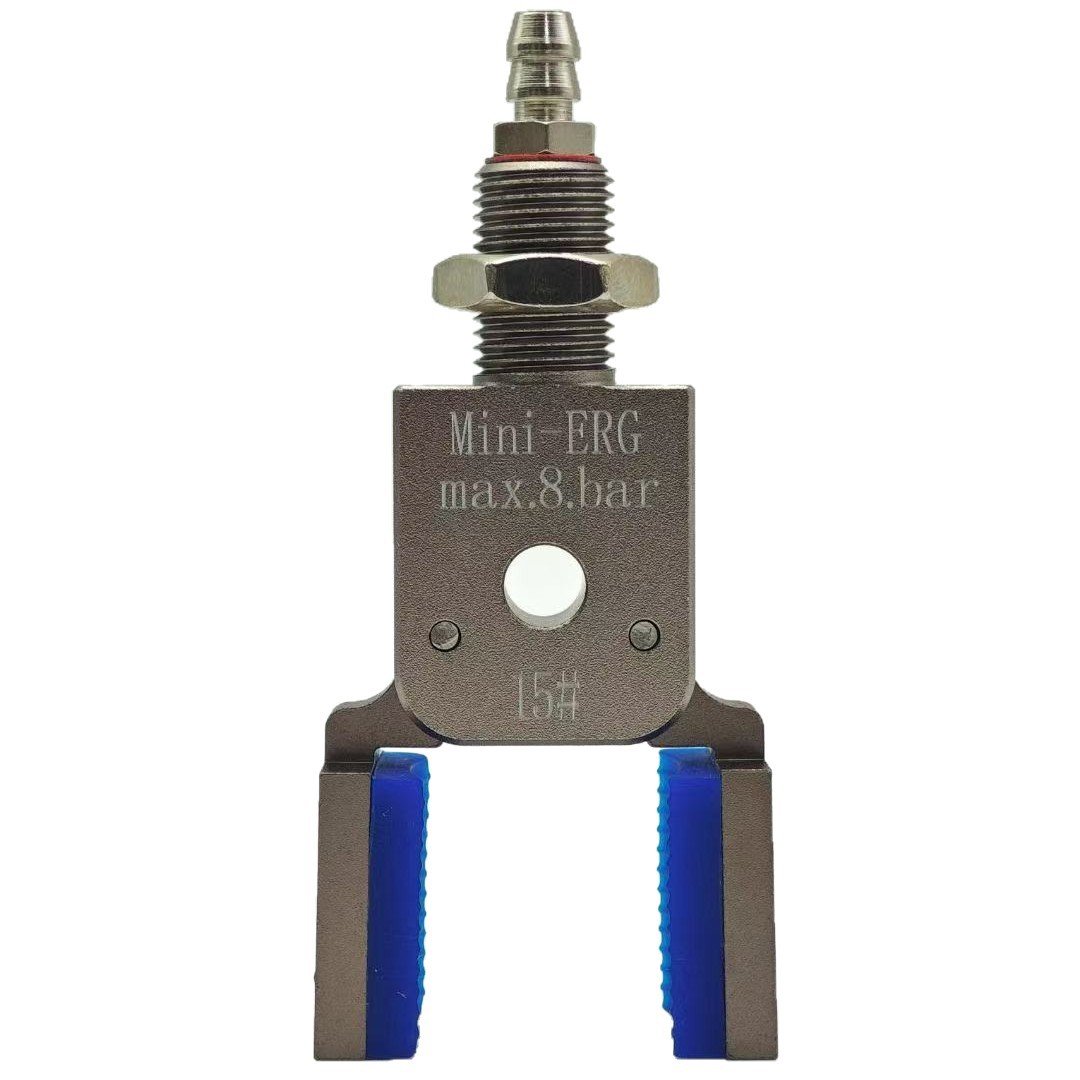
Pneumatische Spannvorrichtungen kommen in den meisten automatisierten Fertigungslinien zum Einsatz. Schnell, wiederholgenau, SPS-gesteuert. Die Dichtungen der Zylinder verschleißen genau wie bei jedem anderen Pneumatikzylinder.
Die Greifpolster an der Klemmfläche nutzen sich durch den ständigen Kontakt mit dem Produkt oder der Folie ab. Sobald das Polster glatt oder dünn wird, lässt die Greifkraft nach, und das, was die Klemme festhielt, verrutscht mitten im Arbeitszyklus.
Klemmschnallen werden manuell betätigt. Sie lassen sich schnell betätigen und bieten für ihre Größe eine gute Klemmkraft. Sie eignen sich für Umrüstvorrichtungen, Haltevorrichtungen und Werkzeugeinrichtungen. Die Drehpunkte nutzen sich ab, wodurch die Klemme an Festigkeit verliert. Das Werkstück sitzt nicht jedes Mal an derselben Stelle, was zu uneinheitlichen Ergebnissen führt.
Spannplatten und Werkzeughalter dienen zur Positionierung produktspezifischer Teile. Maschinen, die mehrere Artikelvarianten bearbeiten, wechseln bei jedem Umrüstvorgang die Spannvorrichtungen.
Führungsstifte werden ungenau. Schraubenlöcher werden ausgefranst. Platten verbiegen sich durch unsachgemäße Handhabung. Die Ausrichtung verschiebt sich nach einem Umrüstvorgang, und die Leute geben dem neuen Produkt die Schuld, obwohl der eigentliche Übeltäter das Werkzeug ist, das bereits 500 Umrüstvorgänge hinter sich hat.
14. Elektrische Komponenten
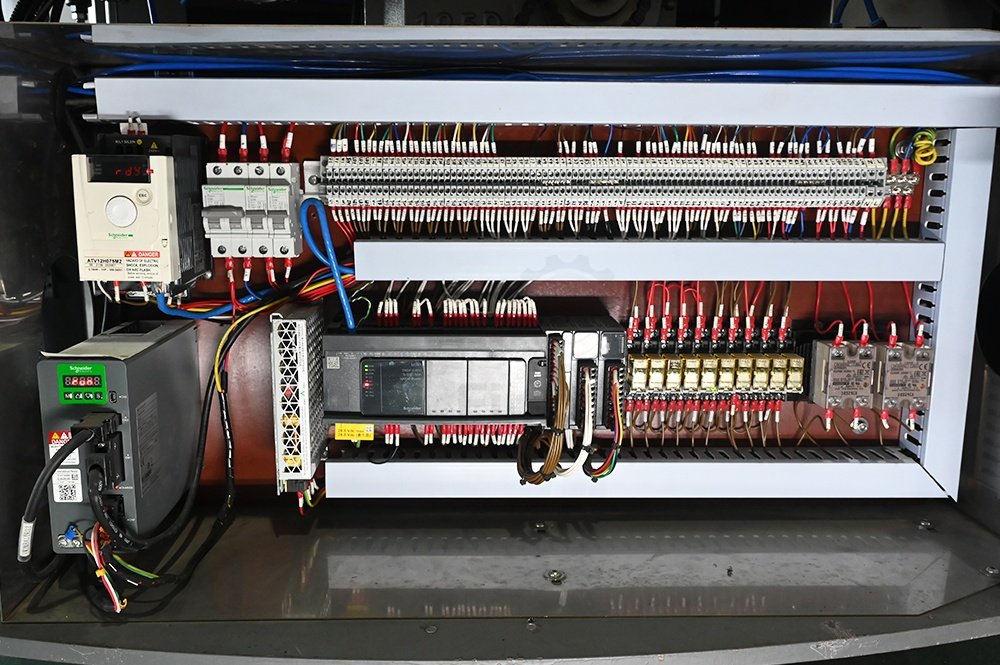
Relais, Schütze, Sicherungen, Leistungsschalter, Klemmenblöcke, Verkabelung, Steckverbinder. Der Schaltschrank ist voll von Bauteilen, die verschleißen oder ausfallen können.
Relais schalten Stromkreise. Mechanische Relais verfügen über Kontakte im Inneren, an denen bei jedem Schaltvorgang Lichtbögen entstehen und sich Vertiefungen bilden. Ein ratterndes Relais oder eines, das willkürlich ausfällt? Viel Glück beim Aufspüren. Solche Störungen treten nie auf, wenn ein Wartungstechniker danebensteht und zusieht.
Halbleiterrelais kommen ohne Kontakte aus und halten bei Anwendungen mit hohen Schaltzyklen länger. Wenn sie jedoch ausfallen, kommt es zu einem Kurzschluss statt zu einem Unterbruch. Die Stromversorgung bleibt dann eingeschaltet, obwohl sie ausgeschaltet sein sollte. Ein ganz anderes Problem.
Sicherungen und Schutzschalter schützen vor Überstrom. Eine durchgebrannte Sicherung ist ein Symptom, nicht die eigentliche Ursache. Wenn man eine Sicherung austauscht, ohne herauszufinden, warum sie durchgebrannt ist, wird sie wieder durchbrennen. Und wieder. Bis schließlich jemand den Kurzschluss oder den überlasteten Stromkreis aufspürt.
Anschlussklemmen korrodieren in feuchten Anlagen. Lose Klemmen führen zu einem erhöhten Widerstand an der Verbindungsstelle. Die Verbindung erhitzt sich. So stark, dass die Isolierung schmelzen oder ein Brand entstehen kann. Ziehen Sie die Klemmschrauben einmal jährlich im Rahmen der jährlichen Wartung nach. Eine Arbeitsstunde, die eine Katastrophe verhindert.
Kabelverschraubungen und Zugentlastungen an den Stellen, an denen Kabel in Gehäuse eintreten, bekommen Risse und lassen Feuchtigkeit eindringen. Korrodierte Leitungen im Inneren eines abgedichteten Schaltschranks sind immer eine Überraschung, weil niemand daran gedacht hat, die Verschraubungen zu überprüfen. Tragen Sie dies in die Checkliste für die vorbeugende Wartung ein.
Abschluss
Das ist die Liste der Hardware-Teile in Verpackungsmaschinen: Messer, Riemen, Lager, Dichtungen, Rollen, Sensoren, Pneumatikkomponenten, Motoren, Befestigungselemente, Filter, Klemmen und elektrische Bauteile. Jedes dieser Teile unterliegt einem Verschleiß oder einer Alterung, und jedes einzelne beeinträchtigt die Fähigkeit der Maschine, einwandfreie Verpackungen herzustellen, sobald dies geschieht.