German
 English
 Russian
 Turkish
 Spanish
 French
 Japanese

Halbautomatische Kapselfüllmaschinen are reliable, but they are not problem-free. Separation failures, fill weight drift, powder leakage, and capsule jams can happen at some point on any production floor.
Once you know the cause behind each problem, you can get rid of it in as little as five minutes and save the much-needed production time.
Below are the seven most common problems with semi-automatic capsule fillers and exactly how to fix them.
Seven Common Problems with Solutions
Let’s discuss the common problems and solutions for semi-automatic capsule filling machines to help you save a ton of bucks due to unplanned downtime.
Problem #1: Inconsistent Capsule Fill Weight
One of the most common problems with semi-automatic capsule filling machines is inconsistent fill weight. Capsules that contain too much or too little powder can fail quality checks, lead to product waste, and affect dosage accuracy.
A study shows that powder flow properties, dosing pin settings, and powder bed height significantly influence capsule fill weight.
Lösung
- Use powders with good flow characteristics or add suitable flow aids if appropriate for your formulation.
- Maintain a consistent powder level inside the hopper throughout production.
- Recalibrate the dosing system before starting each production batch.
- Adjust tamping pressure or fill depth according to the powder’s characteristics.
Problem #2: Capsules Fail to Separate Properly
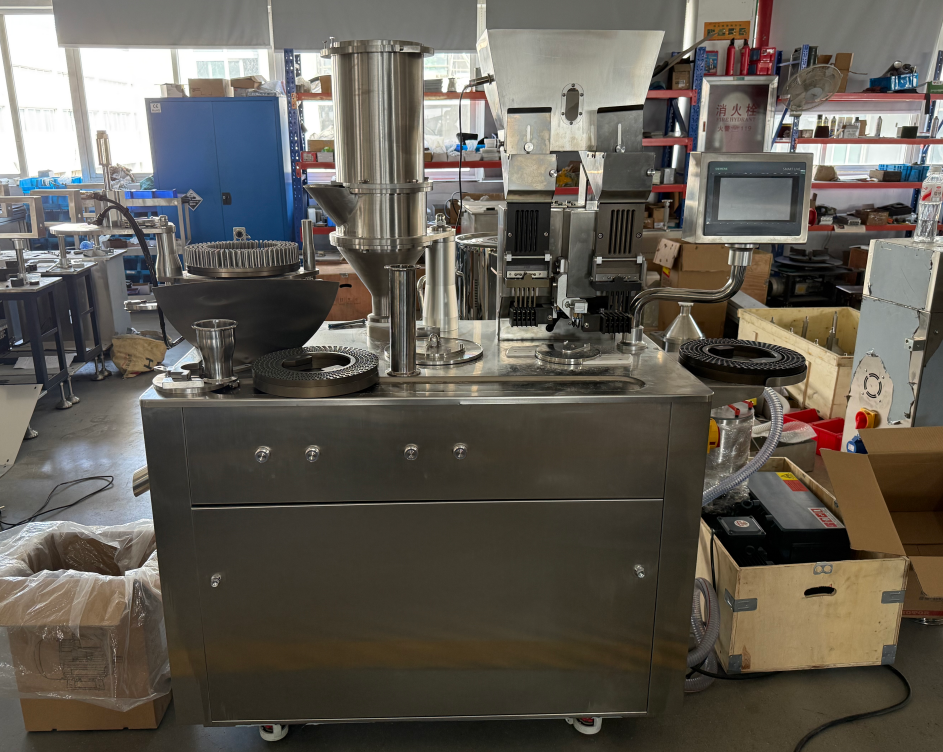
Alternativtext: Capsules failing to separate properly
If the capsule cap and body do not separate correctly, the remaining filling and locking stages cannot be completed as intended. In most cases, the issue is caused by improper machine setup rather than a mechanical failure.
Lösung
- Check that the loading and suspension plates are properly aligned before starting production.
- Inspect the vacuum system and adjust the pressure according to the manufacturer’s recommendations.
- StoreKapselhüllen in a clean, dry environment with controlled temperature and humidity.
- Replace damaged or deformed capsules before loading them into the machine.
Problem #3: Powder Leakage During Filling
Powder leaking from the filling area creates a messy workspace and reduces production efficiency. More importantly, it can lead to inaccurate fill weights and product loss, especially when working with expensive formulations.
Lösung
- Reduce the fill volume if the dosing chamber is overflowing.
- Clean the machine thoroughly to remove accumulated powder.
- Replace worn seals or damaged components that allowPulver to escape.
- Verify that the filling plate is correctly positioned before each production run.
Problem #4: Capsule Jamming in the Filling Plate
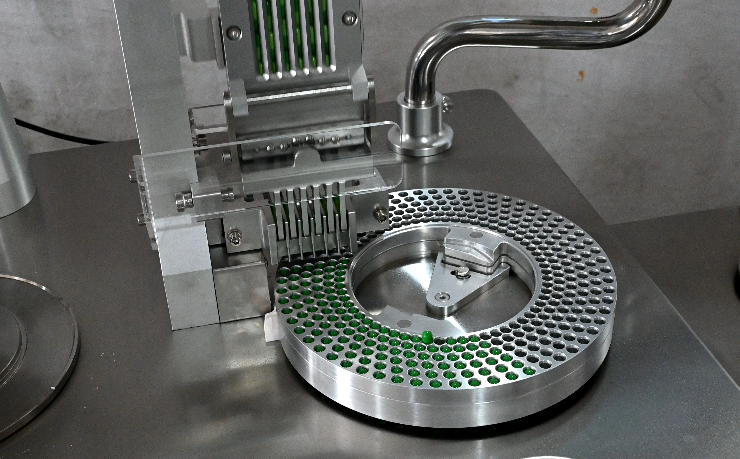
Kapseln that become stuck during operation can interrupt production and increase the risk of damaging both the capsules and the machine. Frequent jamming also slows production and requires operators to stop the machine repeatedly.
Lösung
- Clean the capsule plate thoroughly before each production batch.
- Remove damaged capsules from the supply.
- Check that the machine is set up for the correct capsule size.
- Inspect guide pins and moving components for wear.
Problem #5: Capsules Do Not Lock Properly
Capsules that fail to lock securely may open during packaging, transportation, or storage. This can result in product loss, Kontamination, and failed quality inspections.
Lösung
- Adjust the locking mechanism according to the capsule manufacturer’s specifications.
- Check that fill weights remain within the recommended range.
- Replace cracked or damaged capsule shells.
Problem #6: Powder Does Not Flow Smoothly
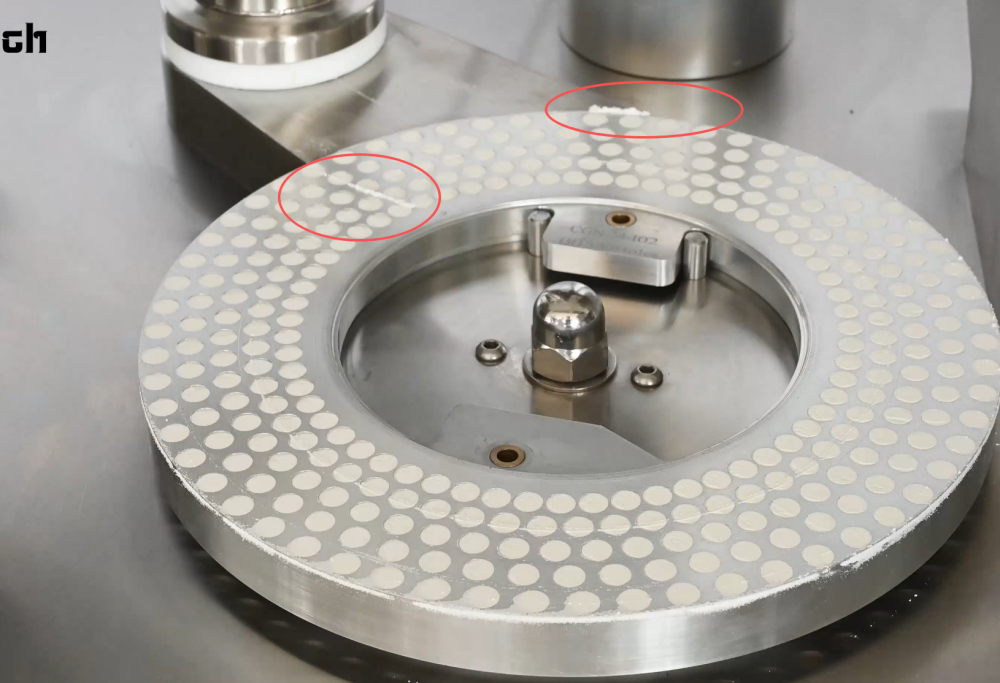
Powder flow directly affects the consistency of every filled capsule. If the powder bridges, clumps, or sticks inside the hopper, capsules may receive too much or too little product, leading to inconsistent quality.
Lösung
- Dry the formulation if excess moisture is present.
- Improve the formulation with suitable flow-enhancing excipients where appropriate.
- Stir or gently stir the powder to prevent bridging.
- Keep the hopper filled to a consistent level.
Problem #7: Capsule Shells Crack or Break
Cracked capsules reduce product quality and increase waste. In severe cases, broken capsule shells can also contaminate the machine and interrupt production.
Lösung
- Store capsule shells at recommended temperature and humidity conditions.
- Purchase capsules from reputable suppliers.
- Reduce excessive machine pressure where necessary.
Looking for a More Reliable Capsule Filling Machine?
Most problems with semi-automatic capsule filling machines can be prevented through proper setup, routine maintenance, and regular inspections. However, unexpected issues can still happen, even with proper maintenance. When they do, identifying the root cause quickly can help minimize downtime and keep production on track.
If you need additional assistance, Finetech’s online machine support service is available to help you troubleshoot technical issues.
And if you’re looking to reduce maintenance issues from the start, explore Finetech’s range of capsule filling machines. Our team can help you choose the right model based on your production requirements.
Referenzen:
Was ist eine halbautomatische Kapselfüllmaschine?
Standardarbeitsanweisung für die Kapselabfüllmaschine.
Standardarbeitsanweisung für die automatische Kapselabfüllmaschine.