German
  English
  Russian
  Turkish
  Spanish
  French
  Japanese
Hinter jedem lebensrettenden Medikament oder Impfstoff steht ein Verfahren, das darauf ausgelegt ist, dessen Wirksamkeit und Stabilität über einen längeren Zeitraum hinweg zu gewährleisten. Diese Verfahren sind in erster Linie auf moderne pharmazeutische Anlagen angewiesen, darunter Gefriertrockner.
Gefriertrockner entziehen dem Produkt Wasser durch einen als Sublimation bezeichneten Prozess. Dadurch entstehen Arzneimittel, die auch nach jahrelanger Lagerung noch sicher sind. Die Bedeutung pharmazeutischer Gefriertrockner liegt auf der Hand, da mehr als 50% der von der FDA zugelassenen pharmazeutischen Produkte gefriergetrocknet werden.
In diesem Leitfaden erfahren Sie, was pharmazeutische Gefriertrockner sind und warum sie für die Arzneimittelherstellung in großem Maßstab unverzichtbar sind.
Wie funktioniert ein Gefriertrockner in der Pharmazie? Schritt-für-Schritt-Anleitung

Die Gefriertrocknung, auch als Lyophilisierung bekannt, ist ein Verfahren, bei dem biologische Wirkstoffe in ein Trockenpulver umgewandelt werden, das später wieder aufgelöst werden kann. Es eignet sich besonders gut für hitzeempfindliche Arzneimittel, die bei hohen Temperaturen ihre Wirksamkeit verlieren.
Schauen wir uns einmal an, wie gefriergetrocknungsanlagen in der Pharmaindustrie funktionieren:
1. Vorbehandlung
Diese Phase umfasst eine Reihe von Schritten, die für optimale Ergebnisse erforderlich sind. Von der Bestimmung des Gefrierpunkts bis hin zur Verringerung der Konzentration von Lösungsmitteln mit hohem Dampfdruck werden die Produkte in dieser Phase für den Einsatz vorbereitet.
So benötigen beispielsweise die meisten Impfstoffe Kryoprotektiva, die während des Trocknungsprozesses als Stabilisatoren wirken. Ohne diesen Schritt könnten die Proteine und Enzyme im Impfstoff zerfallen, was zu einer verminderten Stabilität und Zuverlässigkeit führen würde.
2. Vorfrieren
Nach der Vorbereitung wird das Produkt in die Gefrierkammer gegeben. Dort wird es auf extrem niedrige Temperaturen zwischen -50 und -30 °C abgekühlt. Durch die extreme, schnelle Abkühlung verwandelt sich der Wassergehalt in feste Eiskristalle. Dabei ist es jedoch entscheidend, die Gefriergeschwindigkeit, die Zusammensetzung und die Konzentration nicht kristallisierender Stoffe zu kontrollieren.
Diese Faktoren wirken sich direkt auf die Kristallgröße aus, die eine entscheidende Rolle spielt. Größere Kristalle schaffen mehr Wege, über die Wasserdampf während des Trocknungsprozesses entweichen kann, wodurch der Prozess schneller und zuverlässiger abläuft.
3. Vorwärmung
Nachdem das Produkt nun gefroren ist, beginnt der Gefriertrockner mit der Primärtrocknung, auch als Sublimation bekannt. Die Kammer wird unter starkes Vakuum gesetzt, wodurch der Druck drastisch gesenkt wird, während gleichzeitig kontrollierte Wärme zugeführt wird. Trotz der zusätzlichen Wärme bleibt die Gesamttemperatur unter 0 °C, wodurch das Eis direkt in Wasserdampf übergeht, anstatt zu flüssigem Wasser zu schmelzen.
In diesem Schritt geht der größte Teil der Flüssigkeit verloren. Untersuchungen zeigen, dass die Ersttrocknung entzieht dem Wasser fast 95% seines Wassergehalts. Auch wenn es sich um einen langsamen und energieintensiven Schritt handelt, muss er sorgfältig überwacht werden, um die Wärme zu kontrollieren.
4. Nachtrocknung
Durch die Primärtrocknung wird das Wasser nicht vollständig entfernt. Es haften noch einige Wassermoleküle an der Struktur des Wirkstoffs. Daher findet eine Sekundärtrocknung, auch Desorption genannt, statt.
Die Temperatur wird vorsichtig auf 30 °C erhöht, und das Vakuum wird aufrechterhalten, um die verbleibende Feuchtigkeit zu entfernen. Zu diesem Zeitpunkt enthält das Produkt nur noch Spuren von Feuchtigkeit, die seine Stabilität nicht beeinträchtigen.
5. Nachbehandlung
Im letzten Schritt wird das Produkt in sterilen Fläschchen, Ampullen oder Blisterverpackungen. Die Verpackung erfolgt direkt in der Maschine selbst, um die Sterilität zu gewährleisten.
Zum Verschließen der Behälter werden spezielle Gummistopfen verwendet, die dafür sorgen, dass diese sicher verschlossen bleiben. Dieser Schritt ist entscheidend für die Gewährleistung der Produktsicherheit und die Rückverfolgbarkeit.
Wichtige Komponenten und Merkmale eines pharmazeutischen Gefriertrockners
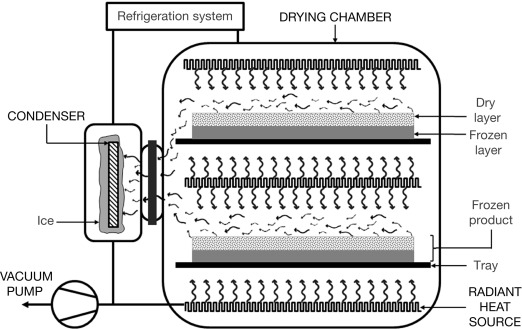
Ein Gefriertrockner besteht aus mehreren Komponenten, die zusammenwirken, um einen reibungslosen Ablauf jedes einzelnen Prozessschritts zu gewährleisten. Werfen wir einen Blick auf einige der wichtigsten Komponenten dieser Maschine:
1. Gefrierkammer
Der Gefriertrocknungsprozess eines jeden Produkts beginnt in der Gefrierkammer. Dort werden ideale Bedingungen geschaffen, unter denen Wasser zu Eis kristallisiert. Diese Eiskristalle sind für den eigentlichen Trocknungsschritt unerlässlich. Die Gefrierkammer ist aus Edelstahl gefertigt und erfüllt strenge Sterilitätsstandards, um eine Kontamination zu verhindern.
2. Vakuumpumpe
Durch die Verringerung des Drucks im Inneren der Kammer ermöglichen Vakuumpumpen, dass Eis die flüssige Phase überspringt und direkt in den gasförmigen Zustand übergeht. Vakuumpumpen in pharmazeutischer Qualität halten den Druck unterhalb des Tripelpunkts, um maximale Produktivität zu erzielen.
3. Regale
Im Inneren der Kammer werden die Produkte auf speziell entwickelte Regale mit integrierten Wärmequellen gelegt. Diese Regale sorgen während des Trocknungsprozesses für eine gleichmäßige Wärmeverteilung. Entscheidend ist dabei, das richtige Gleichgewicht zu wahren. Zu viel Wärme kann empfindliche Proteine oder Impfstoffe beschädigen, während zu wenig Wärme den Prozess verlangsamen kann.
4. Kühlsystem
Die Regale geben Wärme ab, während das Kühlsystem gleichzeitig das Gegenteil bewirkt. Seine Hauptaufgabe besteht darin, den Kondensator und die Kammer auf extrem niedrigen Temperaturen zu halten.
5. Nahfeldkondensator
Der Nahkondensator arbeitet mit dem Kühlsystem zusammen, um den beim Trocknungsprozess freigesetzten Wasserdampf aufzufangen. Dieser Wasserdampf wird zu Eis verfestigt, wodurch verhindert wird, dass er innerhalb der Kammer zirkuliert. Auf diese Weise fängt der Kondensator den Wasserdampf erfolgreich auf und hält ihn zurück, bevor er sich ausbreiten kann.
Die 5 wichtigsten Vorteile eines Gefriertrockners für die Pharmaindustrie
Gefriertrockner für pharmazeutische Zwecke heben sich von anderen ab pharmazeutische Ausrüstung da sie die Haltbarkeit von Produkten erheblich verlängern können. Die Lagerung von Medikamenten und Impfstoffen, wie man sie aus Apotheken und Kliniken kennt, ist nur dank dieser Maschine möglich. Hier sind die fünf wichtigsten Vorteile von Gefriertrocknern:
1. Qualitätssicherung
Zahlreiche pharmazeutische Produkte enthalten hitzeempfindliche Proteine, Enzyme und Antikörper. Herkömmliche Trocknungsverfahren, wie beispielsweise die Trocknung mit heißer Ofenluft, können diese empfindlichen Moleküle zerstören, was sich negativ auf die Qualität auswirkt.
Gefriertrockner lösen dieses Problem, indem sie bei niedrigen Temperaturen unter Vakuum arbeiten. Dabei wird Wasser entzogen, ohne dass das Produkt schädlicher Hitze ausgesetzt wird. Eine aktuelle Studie zeigt, dass Die Gefriertrocknung wird häufig eingesetzt zur Stabilisierung von Makromolekülen, darunter Proteine und Peptide.
2. Verlängerte Haltbarkeit
Durch die Gefriertrocknung wird die Haltbarkeit von Arzneimitteln deutlich verlängert. So bleiben beispielsweise Impfstoffe, die in flüssiger Form nur wenige Tage bis zu einem Monat haltbar wären, in gefriergetrockneter Form bei Raumtemperatur über Jahre hinweg stabil.
Eine längere Haltbarkeit trägt zur Abfallvermeidung bei und erleichtert zudem den Vertrieb. In Regionen mit begrenzten Kühlmöglichkeiten kann eine längere Haltbarkeit zum Erfolg von Impfkampagnen beitragen.
3. Hemmung des Bakterienwachstums
Mikroorganismen benötigen Feuchtigkeit, um zu überleben und sich zu vermehren. Durch die Entfernung des Wassergehalts schafft die Gefriertrocknung eine Umgebung, in der Bakterien und Pilze nicht gedeihen können.
Diese natürliche Konservierungsmethode erhöht die Sterilität und Sicherheit. In Kombination mit einer sterilen Verpackung gewährleistet dieses Verfahren, dass jede Ampulle während ihrer gesamten Haltbarkeitsdauer frei von Verunreinigungen bleibt.
4. Effiziente Lagerung
Gefriertrocknungsanlagen für die Pharmaindustrie machen Produkte leichter und kompakter. Sobald das Wasser entfernt ist, schrumpfen die Produkte und wiegen weniger. Dies senkt die Versandkosten und vereinfacht die Kühlkettenlogistik.
Laut der WHO, bis zu 50% Impfstoffe werden weltweit jedes Jahr aufgrund von Lager- und Transportproblemen verschwendet. Die Gefriertrocknung trägt dazu bei, diese Verluste zu verringern, indem sie die Verpackung und den Vertrieb vereinfacht.
5. Produktstabilität
Manche Substanzen sind flüchtig oder hitzeempfindlich, und bereits geringfügige Temperaturschwankungen können ihre Wirksamkeit beeinträchtigen. Dazu gehören Antibiotika, Seren, Zellen, Gewebe, Impfstoffe und proteinreiche biotechnologische Produkte.
Durch die Gefriertrocknung bleibt die Wirksamkeit der Produkte auch unter nicht optimalen Lagerbedingungen erhalten. Diese Stabilität ist von entscheidender Bedeutung für lebensrettende Medikamente, die in abgelegene Gebiete transportiert werden müssen, in denen nicht immer eine zuverlässige Kühlung gewährleistet ist.
6 Faktoren, die beim Kauf eines Gefriertrockners für die Pharmaindustrie zu berücksichtigen sind
Bei der Auswahl eines pharmazeutischen Gefriertrockners müssen Sie die Produktanforderungen, die gesetzlichen Vorgaben und die langfristigen Betriebskosten gegeneinander abwägen. Die richtige Anlage gewährleistet zuverlässige Zyklen, schützt die Produktqualität und lässt sich nahtlos in Ihre Anlage integrieren.
1. Steuerungstechnik und Automatisierung
Die Konsistenz der Gefriertrocknungszyklen ist von entscheidender Bedeutung. Achten Sie auf Gefriertrockner mit rezeptgesteuerter Regelung, enger Kopplung zwischen Regal und Dampf sowie Echtzeit-Datenerfassung. Die Integration in Ihre Laborinformations- und Fertigungsausführungssysteme (LIMS/MES) verbessert die Rückverfolgbarkeit und Datenintegrität. Eine moderne Steuerungsplattform hilft Ihnen dabei, validierte Zyklen präzise zu wiederholen.
2. Produkteigenschaften und Anwendung
Ihre Entscheidung sollte davon abhängen, wie sich Ihre jeweiligen Formulierungen beim Einfrieren und anschließenden Trocknen verhalten. Biologika, Proteine, Impfstoffe, kleine Moleküle oder Suspensionen stellen jeweils unterschiedliche Anforderungen an die Wärme- und Stoffübertragung. Wenn Sie verschiedene Formulierungen verarbeiten möchten, muss das System Flexibilität hinsichtlich der Einfriergeschwindigkeiten, der Programmierung der Lagertemperatur und der Nachtrocknung für unterschiedliche Zielwerte der Restfeuchte bieten.
3. Zyklusentwicklung und PAT-Tools
Die Entwicklung robuster Gefriertrocknungszyklen ist ebenso sehr eine Kunst wie eine Wissenschaft. Eine gute Anlage sollte Ihnen die Möglichkeit bieten, zu experimentieren, zu überwachen und zu verfeinern. Funktionen wie Druckanstiegstests, manometrische Temperaturmessungen oder In-situ-Sonden helfen Ihnen dabei, die Primär- und Sekundärtrocknungsphasen zu optimieren. Diese Werkzeuge der Prozessanalysetechnik (PAT) verkürzen die Entwicklungszeiten und verbessern die Robustheit.
4. Energieeffizienz und Versorgungsunternehmen
Die Gefriertrocknung ist energieintensiv. Sie müssen wissen, wie viel Leistung, Kühlkapazität und Vakuumpumpenleistung das System benötigt. Eine effizientere Wärmeübertragung, eine intelligente Steuerung der Vakuumpumpenstufen und Strategien zur Kondensatorabtauung senken die Energiekosten im Langzeitbetrieb.
5. Wartung, Wartungsfreundlichkeit und Support
Während der gesamten Lebensdauer der Maschine sind Zugänglichkeit und Wartungsfreundlichkeit von entscheidender Bedeutung. Teile wie Vakuumpumpen, Kühleinheiten, Ventile, Dichtungen und Sensoren sollten leicht zugänglich und einfach auszutauschen sein. Achten Sie außerdem darauf, dass der Anbieter Ersatzteile, technischen Support und Wartungsverträge bereitstellt. Die Minimierung von Ausfallzeiten und eine einfache Wartung sind für einen unterbrechungsfreien Produktionsbetrieb von entscheidender Bedeutung.
6. Gesamtbetriebskosten
Vergleichen Sie nicht nur die Anschaffungskosten. Berücksichtigen Sie in Ihrem Modell auch die Kosten für Installation, Validierung, Energie, Reinigung, Wartung, Ausfallzeiten und Verschleißteile. Die kosteneffizienteste Maschine ist möglicherweise nicht diejenige mit den niedrigsten Anschaffungskosten. Ein gut konstruierter Gefriertrockner, der zuverlässig läuft und nur geringe Ausfallzeiten aufweist, kann den besten ROI erzielen.
FAQs
1. Was ist der Unterschied zwischen einem pharmazeutischen Gefriertrockner und einem Gefriertrockner für den Hausgebrauch?
Der wesentliche Unterschied liegt in ihrer Verwendung und Kapazität. Gefriertrockner für den Hausgebrauch werden hauptsächlich zur Konservierung von Lebensmitteln eingesetzt und haben in der Regel ein Fassungsvermögen von 3,8 bis 15,1 Litern. Im Gegensatz dazu sind pharmazeutische Gefriertrockner für die sterile Arzneimittelherstellung ausgelegt und verfügen über ein wesentlich größeres Fassungsvermögen.
2. Nach welchem Prinzip funktioniert ein pharmazeutischer Gefriertrockner?
Pharmazeutische Gefriertrockner basieren auf dem Prinzip der Sublimation. Bei diesem Verfahren wird das im Produkt enthaltene Eis unter Vakuum und bei niedrigem Druck direkt in Dampf umgewandelt, ohne die flüssige Phase zu durchlaufen. Diese Trocknungsmethode verhindert eine Schädigung empfindlicher Verbindungen wie Proteine, Enzyme und Impfstoffe.
3. Welche Faktoren sollten bei der Auswahl eines pharmazeutischen Gefriertrockners berücksichtigt werden?
Zu den wichtigsten Faktoren gehören:
- Anforderungen an die Losgröße.
- Art der Arzneimittelformulierung (flüssig, fest, biologisch).
- Automatisierungsgrad.
- Einhaltung der GMP-/FDA-Vorschriften.
- Energieeffizienz und Betriebskosten.
Investieren Sie in einen soliden Gefriertrockner für die Pharmaindustrie
Dank pharmazeutischer Gefriertrockner können Impfstoffe und andere empfindliche Arzneimittel sicher über Kontinente hinweg transportiert werden und behalten dennoch ihre Wirksamkeit. Von der Stabilisierung hochentwickelter Biologika bis hin zur Unterstützung groß angelegter Impfprogramme haben Gefriertrockner die pharmazeutische Industrie grundlegend verändert.
Für Hersteller hat die Wahl des richtigen Gefriertrockners direkte Auswirkungen auf ihre Produktion. Genau hier kommt Finetech Hier kommen wir ins Spiel. Mit modernsten pharmazeutischen Maschinen und Verpackungsanlagen liefern wir Produkte von höchster Qualität. Ganz gleich, ob Sie Ihre Produktion ausweiten, Ihre Anlagen modernisieren oder fortschrittliche Technologien erkunden möchten – Finetech bietet maßgeschneiderte Lösungen für Ihre Produktionsanforderungen.
Copyright-Hinweis:
Es ist nicht gestattet, Inhalte dieser Website zu vervielfältigen, zu verändern, zu veröffentlichen, darzustellen, zu übermitteln oder in irgendeiner Weise zu verwerten oder solche Inhalte zum Aufbau von Datenbanken jeglicher Art zu verwenden, es sei denn, es liegt eine ausdrückliche schriftliche Genehmigung der Finetech Group vor. Für eine Genehmigung zur Nutzung des Inhalts wenden Sie sich bitte an: info@pharmamachinecn.com
Haftungsausschluss:
Die in diesem Artikel enthaltenen Informationen dienen lediglich der allgemeinen Information. Das Unternehmen übernimmt keine Garantie für die Richtigkeit, Relevanz, Aktualität oder Vollständigkeit der Informationen, und das Unternehmen übernimmt keine Verantwortung für Fehler oder Auslassungen im Inhalt dieses Artikels.