French
  English
  Russian
  Turkish
  Spanish
  German
  Japanese
Sur un machine de remplissage de capsules semi-automatique, il faut changer certaines pièces si vous souhaitez passer d'une taille de capsule à une autre. Cela signifie qu'il faut retirer un ensemble spécifique de composants et en installer un autre, de taille différente, avant que la machine puisse fonctionner avec la nouvelle taille de capsule.
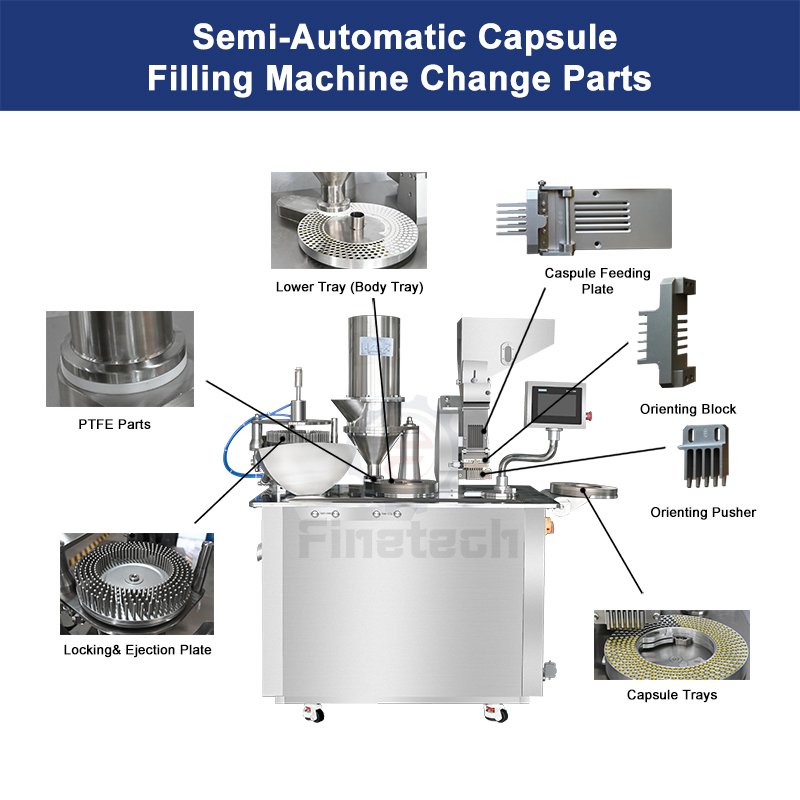
C'est pourquoi il est important de disposer des pièces de changement adaptées avant la conversion. Voici les pièces de changement dont vous avez besoin pour une machine semi-automatique, ainsi que la fonction de chacune d'entre elles.
Pièces d'usure courantes d'une machine semi-automatique de remplissage de gélules
Une poignée de composants est à l'origine de la plupart des travaux d'usure et de remplacement sur un remplisseuse de gélules semi-automatique. Voici un bref aperçu de ce que fait chacune d'entre elles avant de les passer en revue une par une.
| Partie | Fonction |
| Assiette d'alimentation Capsule | Alimente la machine en gélules vides provenant de la trémie en vue de leur traitement |
| Bloc d'orientation | Le positionnement précis des gélules, associé à un revêtement anti-adhésif, réduit au minimum les risques de blocage des gélules. |
| Poussoir d'orientation | Place les gélules correctement orientées en position, le bouchon vers le haut et le corps vers le bas |
| Plateau supérieur (plateau à bouchons) | Maintient les bouchons des gélules en place pendant le remplissage des gélules |
| Plateau inférieur (plateau du corps) | Maintient les coques de capsules vides en position verticale et en place pendant le remplissage |
| Tiges de réglage | Réglez la profondeur de remplissage en contrôlant jusqu’où le lit de poudre s’étend à l’intérieur du corps de chaque capsule |
| Plaque de verrouillage et d'éjection | Il réassemble le corps rempli avec son capuchon, le verrouille et éjecte la capsule finie |
| Pièces en PTFE | Excellentes propriétés antiadhésives, résistance à la chaleur et à la corrosion |
Abordons brièvement chacun de ces points.
1. Assiette d'alimentation à capsules
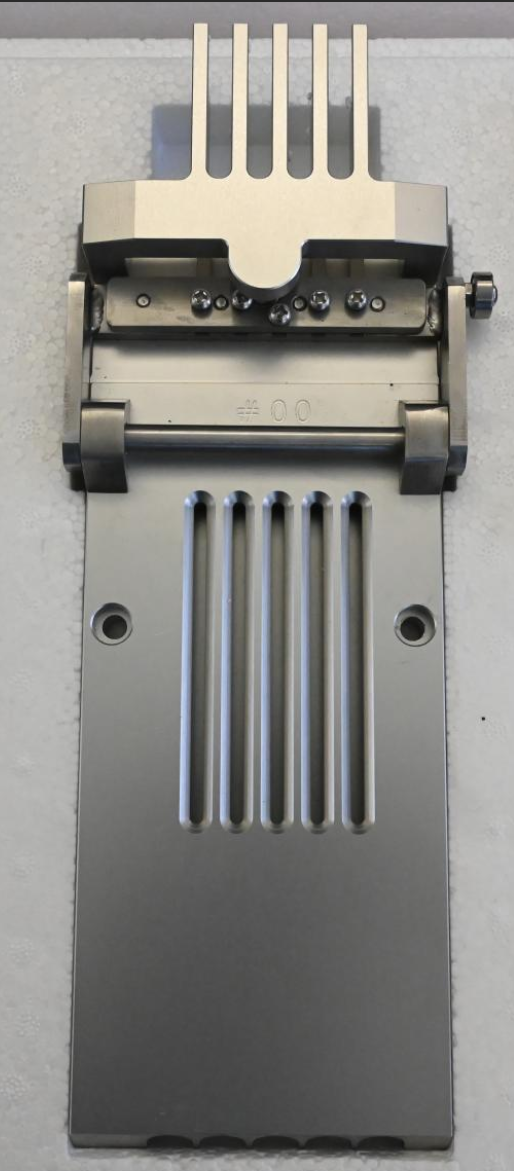
C'est au niveau de l'anneau de chargement des capsules que commence le processus de changement. Gélules vides sont versés dans une trémie située au-dessus de la machine, qui les achemine vers le cycle de traitement en un flux contrôlé et régulier.
Ses dimensions sont adaptées au format exact des capsules qui passent dans la machine ; par conséquent, tout changement de taille implique que cette plaque doive également être remplacée.
2. Bloc d'orientation
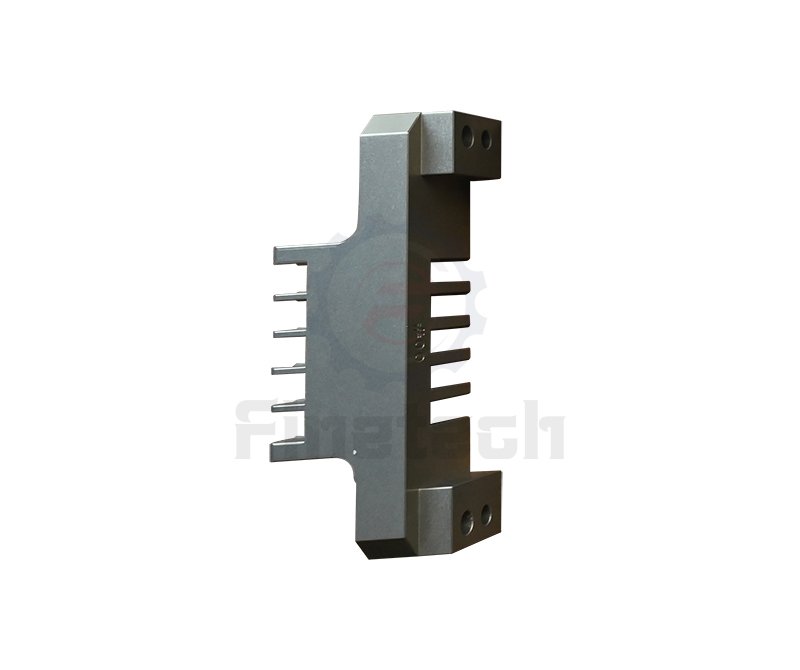
Le Bloc d'orientation est un composant usiné avec précision au sein de la mécanisme de semis/orientation et d'alimentation des capsules d'une machine semi-automatique de remplissage de gélules. Il s'agit de la pièce qui corrige physiquement l'orientation des gélules vides acheminées de manière aléatoire, afin que chacune d'entre elles pénètre dans l'anneau de remplissage le corps vers le bas, la casquette vers le haut.
3. Poussoir d'orientation
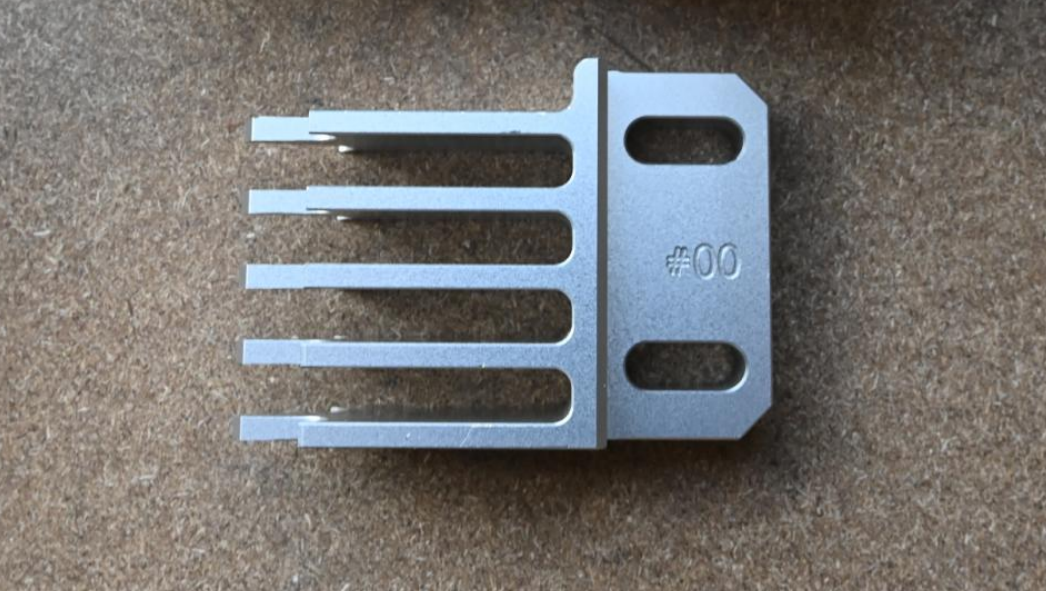
Une fois que le dispositif d'orientation a tourné chaque capsule dans le bon sens, le poussoir d'orientation prend le relais et la met en place. Il aligne le bouchon vers le haut et le corps vers le bas, afin que les capsules soient prêtes pour l'étape suivante.
Cette pièce fonctionne en tandem avec le mécanisme d'orientation. Les deux sont généralement contrôlées et remplacées ensemble chaque fois que taille de la capsule ou des modifications de format.
4. Plateau supérieur (plateau à bouchons)
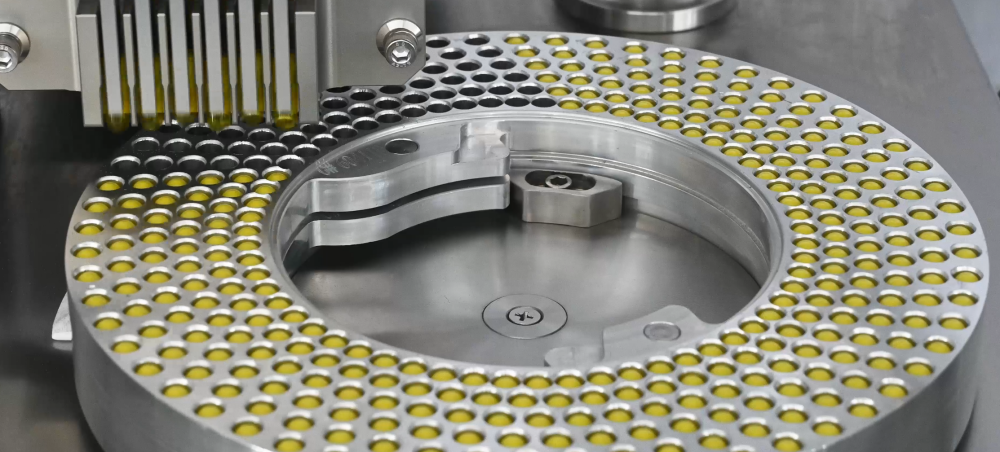
Une fois que l'anneau de chargement a séparé une capsule en deux parties (le corps et le capuchon), le capuchon doit être posé quelque part pendant que le corps correspondant est acheminé vers la station de remplissage. C'est précisément le rôle du plateau supérieur, ou plateau à capuchons. Il maintient chaque capuchon bien en place, dans une position fixe qui lui est propre.
Ce plateau à capsules fait partie des pièces qui doivent être remplacées par un ensemble complet chaque fois que la gamme de produits change de format de capsule.
5. Plateau inférieur (plateau de la carrosserie)
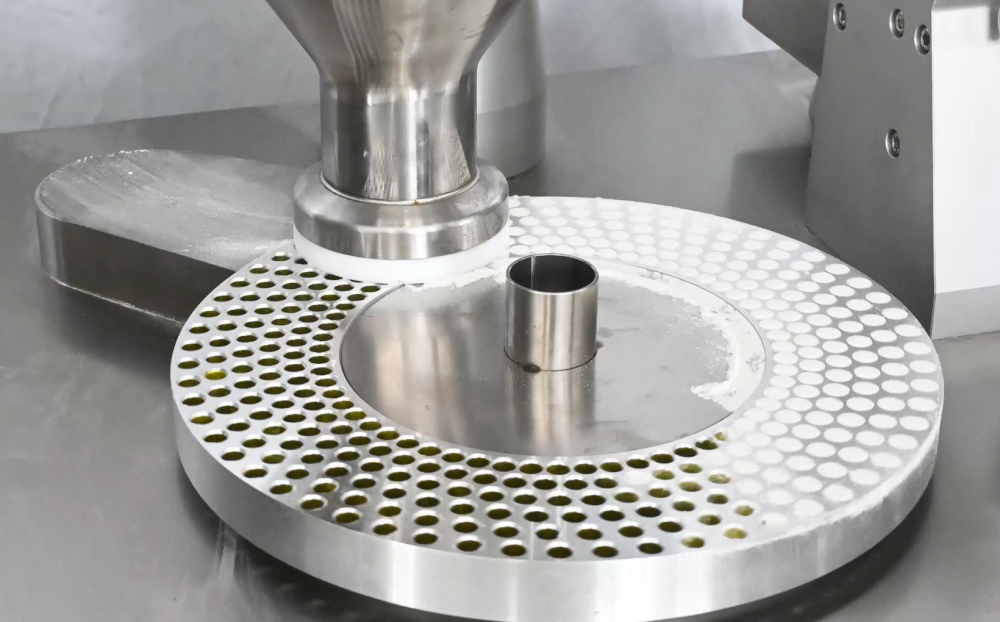
Tandis que le bouchon attend là-haut, le récipient vide corps de la capsule est placé à la verticale dans le bac inférieur, ou bac à corps, situé directement en dessous. Le bac à corps assure la stabilité de chaque corps pendant que la poudre y est dosée.
Tout comme le plateau à capuchons, le plateau à corps est adapté au diamètre exact du corps de la capsule utilisée. Il est remplacé en même temps que le plateau à capuchons chaque fois que la taille de la capsule change, car les deux sont conçus pour fonctionner ensemble comme un ensemble assorti.
6. Tiges de réglage
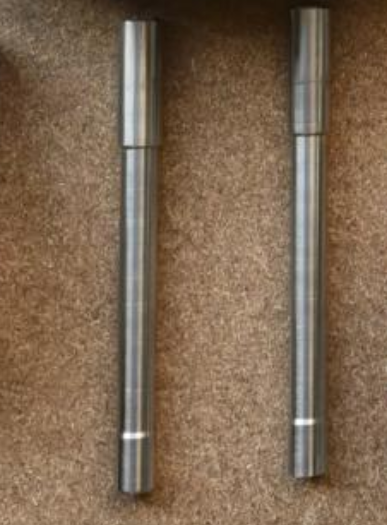
Les tiges de réglage permettent de contrôler la profondeur à laquelle le lit de poudre se trouve à l'intérieur du corps de chaque gélule pendant le remplissage, ce qui détermine directement la quantité de poudre qui se retrouve dans la gélule. Le réglage ou le remplacement de ces tiges constitue l'un des principaux moyens d'étalonner le poids de remplissage pour une taille de gélule ou une dose spécifique.
Comme elles fonctionnent selon les tolérances précises d’un format de capsule spécifique, un changement de taille implique généralement de réajuster ou de remplacer les tiges pour qu’elles s’adaptent.
7. Plaque de goupille de verrouillage, plaque d'éjection
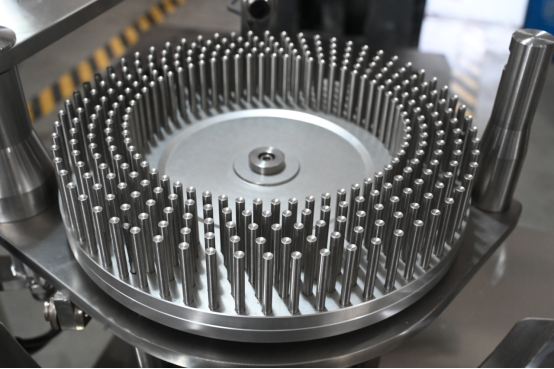
La plaque de verrouillage et d'éjection marque la dernière étape du cycle, en effectuant trois opérations successives à un rythme soutenu.
Tout d'abord, il pousse le corps désormais rempli vers le haut jusqu'à ce qu'il rencontre le capuchon qui l'attend, puis exerce une force suffisante pour verrouiller les deux moitiés, et enfin éjecte la capsule finie hors de la machine.
Comme elle exerce une force physique sur la capsule lors du verrouillage, cette plaque doit être dimensionnée et calibrée correctement. Une force trop importante sur une petite capsule peut la fissurer ou l'endommager, tandis qu'une force insuffisante sur une capsule plus grande ne permettra pas de la verrouiller correctement.
8. Pièces en PTFE
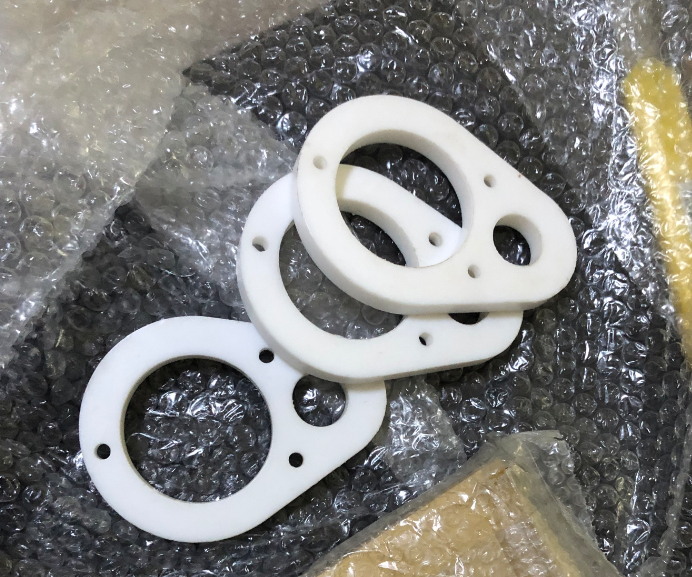
Les pièces en PTFE désignent les douilles de guidage, les manchons coulissants et les composants de contact fabriqués en PTFE (téflon) plutôt qu’en métal. Elles sont utilisées partout où la machine nécessite un faible coefficient de frottement sans introduire de particules d’usure dans le processus.
Une douille en PTFE conçue pour une capsule de plus grande taille ne permettra pas de positionner ni de guider correctement une capsule plus petite. C'est pourquoi un changement de taille sur la ligne nécessite un ensemble de pièces en PTFE adaptées, en plus des autres composants nécessaires à la conversion.
À quelle fréquence faut-il remplacer ou réapprovisionner les pièces de rechange ?
Les pièces de rechange ne s'usent pas selon un calendrier précis. Elles sont remplacées chaque fois que la taille de la capsule change ; la vraie question n'est donc pas de savoir à quelle fréquence, mais combien de jeux il faut avoir en réserve.
Si vous utilisez une seule taille de capsule, un seul jeu suffit. En revanche, si vous utilisez plusieurs tailles de capsules, vous devez disposer d'un jeu dédié et prêt à l'emploi pour chaque taille traitée ; sinon, tout changement de taille se traduira par un temps d'attente pour obtenir les pièces nécessaires.
Ne soyez plus jamais à court de pièces détachées
Les temps d'arrêt des machines sont généralement dus à l'attente d'une pièce qui aurait déjà dû se trouver en stock. N'importe quelle pièce de rechange peut paralyser une chaîne de production pendant des heures si elle n'est pas déjà disponible.
C'est pourquoi chaque machine de remplissage de capsules semi-automatique Les machines Finetech sont livrées avec les pièces de rechange nécessaires dès le départ. Vous disposez dès le premier jour des pièces dont votre machine a besoin, ce qui évite que tout changement de série prévu ne se transforme en arrêt imprévu.
Contactez notre équipe pour découvrir ce qui est fourni avec votre machine !
Références :
Pièces de rechange pour machines de remplissage de gélules.
Pièces de rechange pour machines de remplissage de gélules.
Pièces pour machines de remplissage de gélules et Leurs noms.