Spanish
  English
  Russian
  Turkish
  French
  German
  Japanese
Not every small manufacturer is ready to invest in a capsule filling machine. And honestly, at low volumes, you should not have to.
A capsule filling service lets you outsource the entire filling process to a professional facility. It delivers your product filled, tested, and packaged to GMP standards without the capital cost of running your own equipment.
However, not all capsule filling providers operate at the same standard, and the wrong choice can lead to quality issues, compliance risks, and higher long-term costs. That’s why it’s important to understand what actually happens inside these services before you commit.
In this guide, we’ll break down how capsule filling services work, the different types available, and what you should expect in terms of cost and capability.
What Is a Capsule Filling Service?
A capsule filling service is a contract-based arrangement where a third-party facility fills, seals, and packages your capsules on your behalf. You only supply the formulation, while they handle the production. The finished products come back to you ready for labeling, distribution, and further packaging.
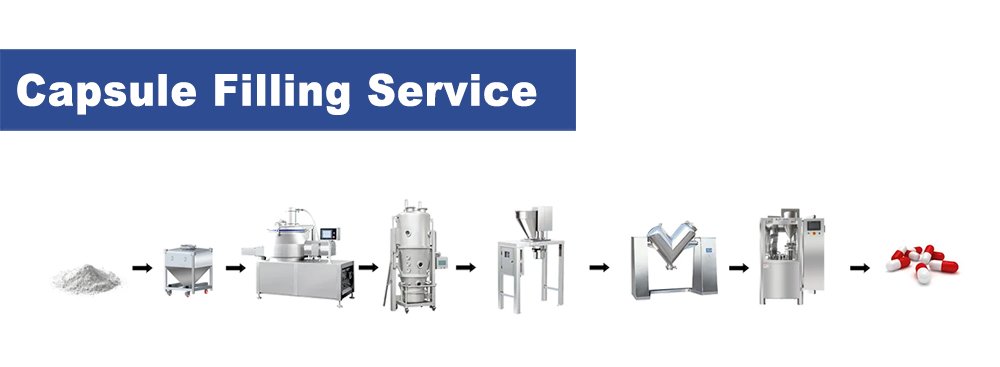
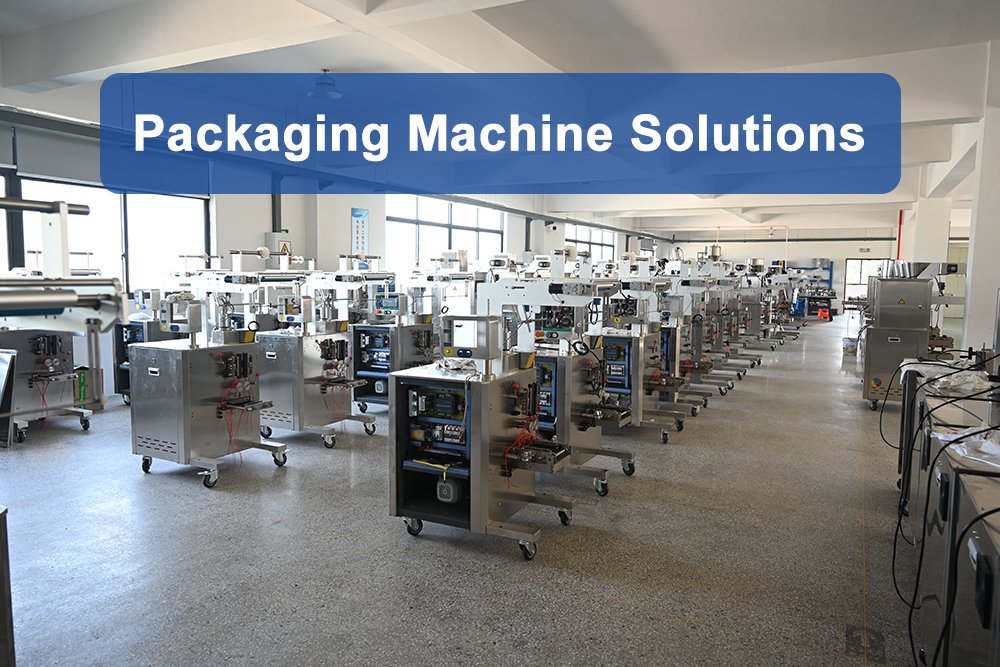
Small manufacturers, supplement startups, nutraceutical brands, and early-stage pharmaceutical companies are the most common users. It’s because low-capacity capsule filling machines lead the market with a 55% share.
Buying your own machine makes financial sense only when your volume is consistent enough to justify the capital investment.
Types of Capsule Filling Services
Every capsule filling service doesn’t offer the same thing. That’s why you need to understand the different types to identify exactly what your business needs before approaching a provider. These types include:
1. Contract Capsule Filling
Contract capsule filling is the most straightforward arrangement. You provide a fully developed formulation, and the provider fills it into capsules on your behalf using their equipment. This way, you retain full ownership of the formulation and the finished product.
It is the most common entry point for small manufacturers who have already developed their formula and simply need a compliant facility.
2. Private Label Capsule Filling
Private label services take a different approach. The provider has pre-developed formulations that you select, brand, and sell under your own label. There is minimal development work on your end, which makes it the fastest route to market.
The only trade-off is that your product is not unique. Other brands can and often do sell the same formulation. For businesses prioritizing speed to market over product differentiation, private label is a practical starting point.
3. Custom Formulation and Filling
Some providers offer an end-to-end service that covers both formulation development and capsule filling. You bring the concept, they develop the formula, validate it, and fill it.
This is particularly useful for brands that do not have in-house formulation expertise and want a single provider to manage the entire process. It ranges from development through to the finished product.
4. Toll Manufacturing
Toll manufacturing is a variation of contract filling. It is where you supply both the formulation and the raw materials, and the provider charges a fee purely for the filling and processing service.
This gives you maximum control over ingredient sourcing while still outsourcing the production process. It suits manufacturers who have established supplier relationships and want to maintain oversight of input quality.
Capsule Types Supported by Filling Services
Before engaging a capsule filling service, you need to know which capsule type suits your product. The format affects everything from shelf life to bioavailability to your target market and compliance requirements.
Most reputable capsule filling services support all of the following:
1. Hard Gelatin Capsules

Cápsulas de gelatina dura are the most widely used format in pharmaceutical and nutraceutical manufacturing. They are made from animal-derived gelatin, available in a range of sizes, and compatible with powders, granules, pellets, and mini-tablets.
They are cost-effective, easy to fill, and well-supported by virtually every capsule filling service on the market. For manufacturers prioritizing cost and broad compatibility, hard gelatin remains the default starting point.
2. Vegetarian and Vegan Capsules

Made from hydroxypropyl methylcellulose (HPMC) or pullulan, vegetarian and vegan capsules are the fastest-growing format in the market.
If your target audience is health-conscious, vegan, or follows religious dietary requirements, this format is no longer optional. Just make sure your provider has equipment validated specifically for HPMC capsules, as they behave differently from gelatin during filling.
3. Softgel Capsules
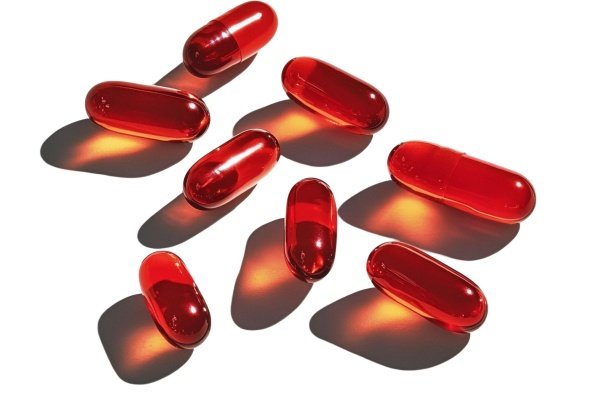
A one-piece sealed capsule used for liquid or semi-solid fills like fish oils, vitamin D, or herbal extracts. These softgel capsules offer strong bioavailability and an airtight seal that protects sensitive ingredients.
Just remember that not every filling service offers softgel capability, as it requires specialist equipment. If your product needs this format, confirm availability before shortlisting any provider.
Capsule Sizes and Their Applications
The different capsule sizes and their applications include:
| Tamaño | Fill Volume | Common Use |
| 000 | 1.37 ml | High-dose supplements, bulky powders |
| 00 | 0.91 ml | Standard supplements and herbs |
| 0 | 0.68 ml | Most common pharmaceutical use |
| 1 | 0.50 ml | Mid-dose formulations |
| 2 | 0.37 ml | Lower dose formulations |
| 3 | 0.30 ml | Paediatric or low-dose applications |
| 4 | 0.21 ml | Very low dose, small fill weight |
Capsule Filling Service Cooperation Steps
Here’s how a capsule filling service works in simple terms:
- Initial Consultation: You provide the provider with your formulation details, target capsule type and size, required batch size, and any regulatory requirements. The provider reviews this information and confirms if your formulation is compatible.
- Formulation Testing: Before full production begins, the provider tests the formulation within required weight tolerances to ensure it behaves consistently through the filling process. This step catches problems early before they affect a full batch.
- Material Sourcing: You either supply the raw materials yourself or the provider sources them on your behalf, depending on the service arrangement. Materials are weighed, checked for quality, and prepared according to your formulation specification.
- Llenado de cápsulas: The prepared formulation is loaded into the filling machine. Capsules are then separated, filled to the target weight, and sealed. Fill weight is monitored throughout the run.
- Quality Control and Testing: Finished capsules go through a series of quality checks, including weight verification, visual inspection, and leak detection. Any capsules falling outside the specification are rejected.
- Packaging and Labeling: Approved capsules are packaged into bottles, blisters, or bulk containers. Some providers also offer labelling and secondary packaging as part of the service, while others simply hand over bulk-filled capsules for you to package in-house.
How Much Does a Capsule Filling Service Cost?
Capsule filling service pricing depends on several factors, such as batch size, capsule type, and packaging.
A realistic breakdown of what you can expect is explained in the table below:
| Cost Factor | Typical Range |
| Filling cost per capsule | $0.05 – $0.20 |
| Minimum order quantity | 5,000 – 50,000 capsules |
| Set up and tooling fee | $300 – $1,500 per batch |
| Quality testing per batch | $300 – $2,000 |
| Labeling printing per unit | $0.03 – $0.15 |
| Packaging per unit (bottles) | $0.20 – $1.00 |
Outsourcing vs Buying Your Own Machine
This is the question most small manufacturers eventually ask. A semi-automatic capsule filling machine starts at around $3,000 to $5,000, while a fully automatic machine runs from $15,000 to over $100,000.
On top of that, factor in maintenance, staff, cubiertas de cápsulas, raw materials, and quality systems. Raw materials and formulation typically account for 35 to 55% of the total capsule production cost, which applies to both outsource and in-house production.
However, the honest answer is that outsourcing makes more sense until your volume is consistent enough to justify the full cost of ownership. It’s also the reason why almost 70% of supplement brands don’t really have their own facility.
Preguntas frecuentes
1. Can a capsule filling service help if I only have a formula idea and no finished product?
Yes. Many providers offer formulation support, ingredient sourcing, encapsulation, testing, labeling, and packaging. However, not all companies provide full-service manufacturing, so verify exactly what is included before signing a contract.
2. Why do capsule filling prices vary so much between manufacturers?
Pricing is influenced by capsule size, ingredient complexity, powder flow characteristics, batch size, testing requirements, packaging type, and regulatory compliance. A simple vitamin blend costs far less to encapsulate than a formula containing multiple botanical extracts or probiotics.
3. Can capsule filling services handle small pilot batches before full production?
Many manufacturers offer pilot runs or small-scale validation batches. These help identify formulation, flowability, and stability issues before committing to a large production order.
Ready to Fill Capsules the Right Way?
For small manufacturers, a capsule filling service is one of the smartest ways to get a professional product to market. It is the practical starting point for most brands entering the capsule space.
However, if you feel you are ready to own your facility, Finetech is the place to contact.
We offer individual capsule-filling machines for manufacturers looking to bring production in-house. You can also opt for our complete turnkey solutions if you are looking to build an entire production line from the ground up.
Contacte con nuestros especialistas to figure out your next step!
Aviso de derechos de autor:
Queda prohibido reproducir, modificar, publicar, mostrar, transmitir o explotar de cualquier modo cualquier contenido de este sitio web, así como utilizar dicho contenido para construir cualquier tipo de base de datos sin la autorización previa, expresa y por escrito de Finetech Group. Para obtener permiso para utilizar el contenido, póngase en contacto con info@pharmamachinecn.com
Descargo de responsabilidad:
La información contenida en este artículo tiene únicamente fines informativos generales. La empresa no garantiza la exactitud, pertinencia, actualidad ni exhaustividad de dicha información, y no asume responsabilidad alguna por los errores u omisiones que pueda contener este artículo.