French
  English
  Russian
  Turkish
  Spanish
  German
  Japanese
Machines d'enrobage de comprimés mettre une fine couche de matière autour des comprimés finis. Pelliculage, dragéification, enrobage entérique. La machine s'en charge. Mais connaître le nom des pièces de la machine d'enrobage de comprimés pour chaque composant est utile lorsqu'un élément doit être remplacé ou lorsque vous dépannez un défaut d'enrobage que vous n'arrivez pas à comprendre.
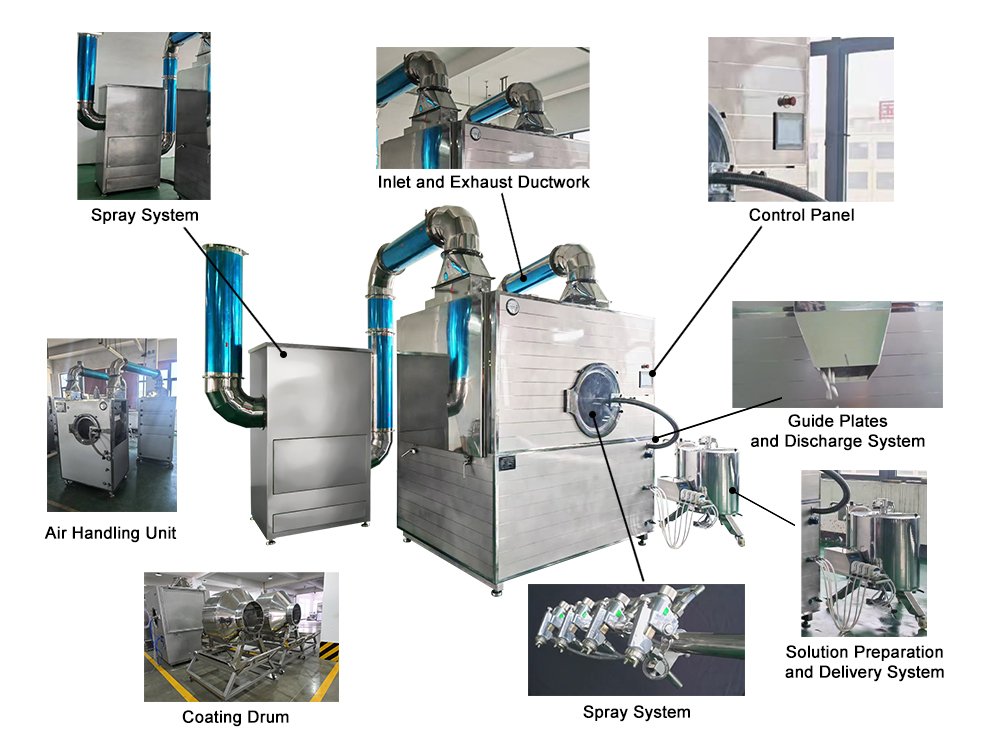
La plupart des enrobeuses modernes sont des systèmes à bacs perforés. Certaines exploitations plus anciennes utilisent encore des bacs standard. Quoi qu'il en soit, les pièces principales sont similaires. Vous trouverez ci-dessous toutes les pièces principales de la machine et leur fonction.
1. Tambour d'enrobage (Pan)
Le cœur de la machine. Un grand tambour métallique posé à l'horizontale et tournant sur son axe. Les tablettes sont placées à l'intérieur, tournent en rond et sont aspergées d'une solution d'enrobage tandis que l'air chaud sèche le tout.
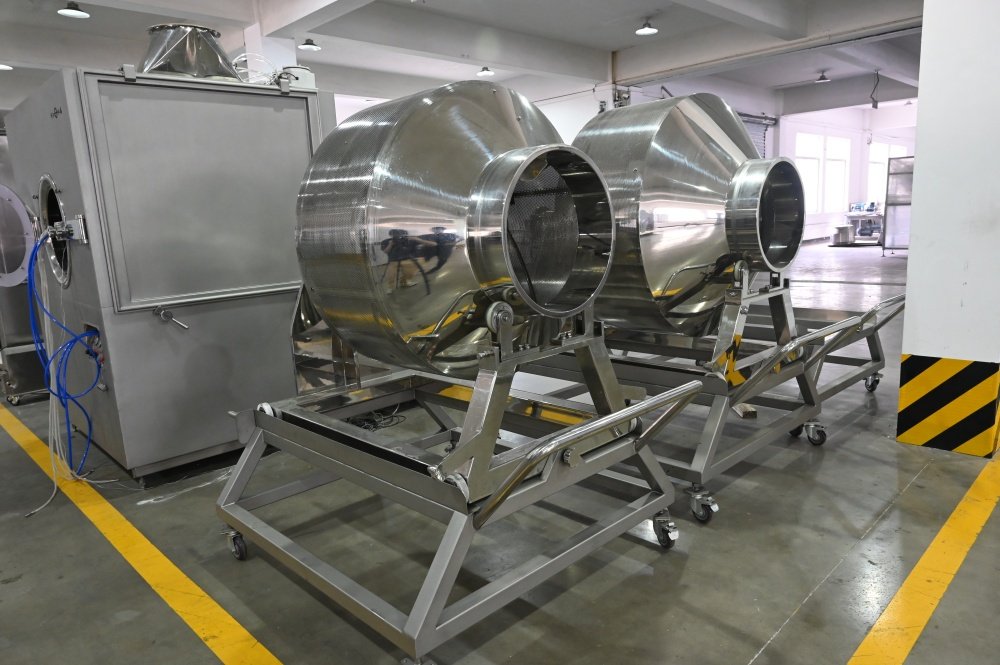
Les tambours perforés ont des trous percés à travers la coque. L'air de séchage passe directement à travers le lit de comprimés, ce qui explique pourquoi ces machines enrobent plus rapidement et plus uniformément que les plateaux pleins. Les bacs pleins dépendent de l'air soufflé sur le dessus du lit, ce qui est lent et moins uniforme.
Des chicanes soudées ou boulonnées à l'intérieur du tambour assurent le mélange des comprimés. Sans chicanes, les comprimés glissent en masse et ceux qui se trouvent au milieu ne voient jamais le spray. Les chicanes les soulèvent et les font basculer pour que chaque comprimé soit exposé.
Les roulements du tambour, le moteur d'entraînement et une boîte de vitesses font tourner l'ensemble. Les roulements s'usent. Les boîtes de vitesses deviennent bruyantes. Les surcharges du moteur se produisent si le tambour est trop chargé en comprimés. Tous ces éléments doivent être vérifiés lors des entretiens périodiques.
Certains tambours sont équipés d'un variateur de vitesse qui permet aux opérateurs de ralentir pour les comprimés délicats ou d'accélérer pour les comprimés plus résistants. En cas de défaillance du variateur, le tambour s'arrête ou tourne à une vitesse fixe. Ni l'un ni l'autre n'est idéal en milieu de lot.
La taille du tambour détermine la capacité du lot. Un tambour plus grand, plus de comprimés par lot. Mais si vous utilisez un grand tambour avec un faible niveau de remplissage, les comprimés ne forment pas un lit adéquat et l'uniformité de l'enrobage diminue. Adaptez le tambour à la taille du lot ou vous serez constamment confronté à des problèmes de qualité.
2. Système de pulvérisation
Les pistolets de pulvérisation sont placés sur un bras à l'intérieur du tambour et pulvérisent la solution de revêtement sur les tablettes en mouvement. La distance entre le pistolet et le lit est très importante. Trop près, on obtient un surmouillage. Trop loin, les gouttelettes sèchent avant d'atteindre les pastilles.
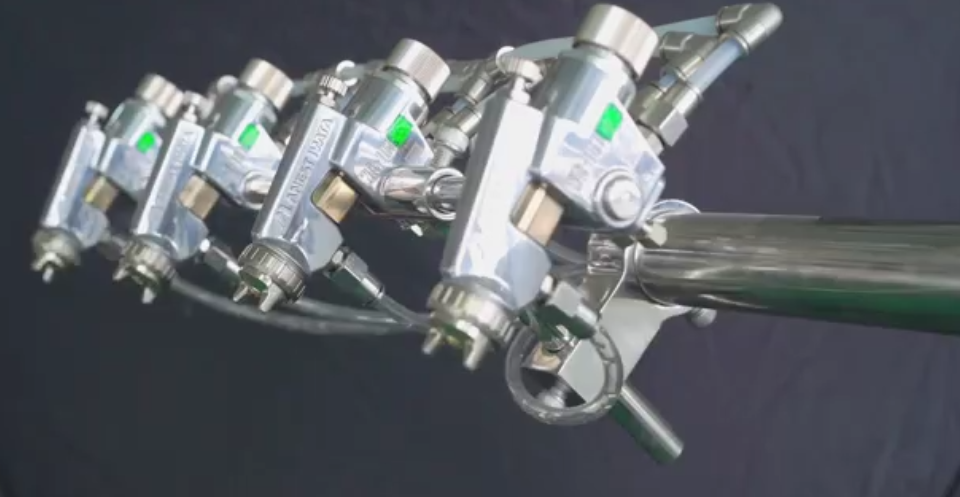
Dans tous les cas, le revêtement est mauvais. Les logos se remplissent, les bords deviennent rugueux et vous devez retravailler ou rejeter des comprimés.
Chaque pistolet est équipé d'une buse produit, d'un chapeau d'air et d'un pointeau qui s'ouvre et se ferme pour contrôler le débit. Les buses de produit s'usent à cause des suspensions abrasives. Les bouchons d'air s'obstruent avec le revêtement séché. Les aiguilles collent. Ces trois éléments sont des consommables.
La pression de l'air d'atomisation contrôle la taille des gouttelettes. Une pression plus élevée donne des gouttelettes plus fines. Une pression plus faible donne des gouttelettes plus grosses. Une pression inadaptée à la formulation entraîne des défauts tels que la peau d'orange, le picage ou la formation de ponts à la surface du comprimé.
Le bras de pulvérisation positionne tous les pistolets à égale distance du lit de comprimés. Sur les meilleures machines, le bras s'ajuste automatiquement pour maintenir la bonne distance lorsque le niveau du lit change au cours du lot. Les machines moins coûteuses nécessitent un réglage manuel, ce qui constitue une erreur de plus pour l'opérateur.
L'air d'orientation élargit ou rétrécit le jet de pulvérisation. Le chevauchement des modèles entre pistolets adjacents signifie que certains comprimés sont pulvérisés deux fois et que d'autres sont oubliés. Le réglage correct de l'air de pulvérisation prend du temps, mais le fait de ne pas le faire se répercute sur le produit fini.
Des tuyaux allant du réservoir de solution à chaque pistolet transportent le liquide de revêtement. Des pompes péristaltiques poussent la solution. Le tube de la pompe s'étire et s'use sous l'effet de la pression. Lorsqu'il s'amincit, le débit diminue et le poids du revêtement est faible.
3. Préparation de la solution et système d'administration
La solution de revêtement est mélangée dans un réservoir à double enveloppe avant d'être acheminée vers les pistolets. Le réservoir est équipé d'un agitateur (à hélice ou à palettes) fonctionnant à faible vitesse pour maintenir les solides en suspension sans créer de mousse.
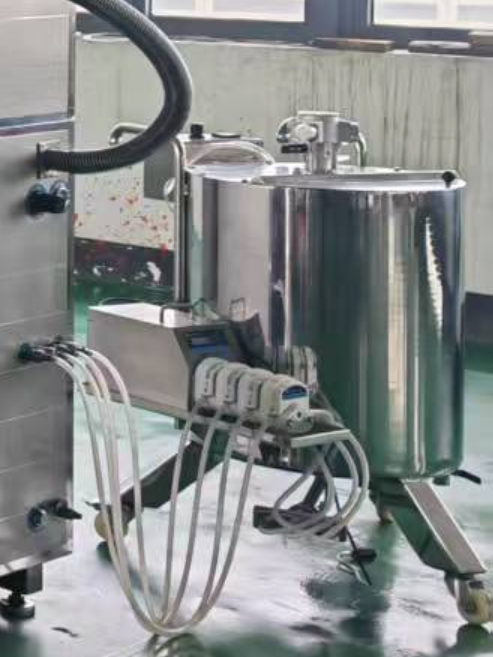
Les cuves à double enveloppe peuvent être chauffées ou refroidies en fonction de la formulation. Certaines solutions de revêtement ont besoin d'être réchauffées pour conserver la bonne viscosité. D'autres moussent s'ils sont trop chauds. Le contrôle de la température de l'enveloppe est plus important que ce que la plupart des gens pensent.
Un filtre en ligne entre le réservoir et les pompes retient les grumeaux ou les particules non dissoutes qui obstrueraient les buses de pulvérisation. L'absence de filtre ne permet pas de gagner du temps et coûte un pistolet bloqué au milieu du lot.
Des balances ou des cellules de charge placées sous le réservoir permettent de déterminer la quantité de solution utilisée. Vous obtenez ainsi des données en temps réel sur le poids de la couche. Des capteurs de charge qui dérivent donnent des chiffres erronés et le lot se retrouve sur- ou sous-couché.
La viscosité de la solution de revêtement change si la température du réservoir dérive ou si la vitesse de l'agitateur est désactivée. Une solution épaisse bouche les buses. Une solution fine coule et donne une couverture inégale. Vérifiez la viscosité avant de commencer à pulvériser, et non après l'apparition du premier défaut.
4. Unité de traitement de l'air (AHU)
L'air chaud, propre et sec est ce qui sèche le revêtement sur les comprimés après la pulvérisation. La CTA fournit cet air. Elle l'extrait de la pièce, le filtre, le chauffe et, parfois, le déshumidifie avant de le pousser dans le tambour.
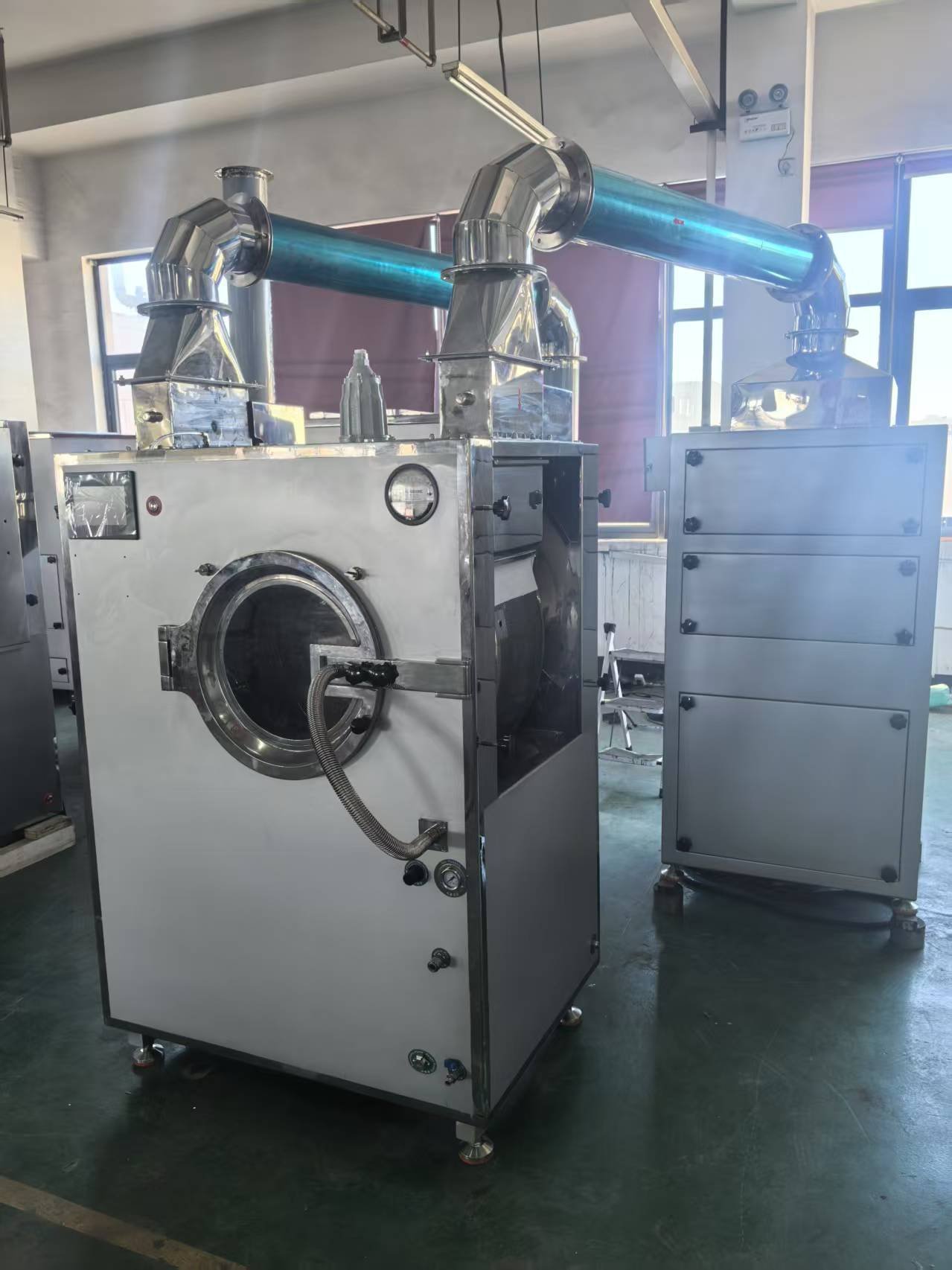
Les pré-filtres et les filtres HEPA purifient l'air. Les pré-filtres retiennent les grosses particules. Les filtres HEPA capturent le reste. Les filtres obstrués étouffent le flux d'air et les lots prennent plus de temps. Dans l'industrie pharmaceutique, l'air d'admission contaminé est une violation des BPF à laquelle personne ne veut être confronté.
Les serpentins à vapeur ou les chauffages électriques permettent d'augmenter la température de l'air. Les serpentins à vapeur sont standard sur les machines de production. Les appareils électriques sont utilisés dans les laboratoires. Un serpentin à vapeur qui fuit ajoute de l'humidité à l'air qui est censé être sec. Les performances de séchage chutent et personne ne comprend pourquoi jusqu'à ce que le service de maintenance démonte le serpentin.
La section déshumidificateur est ajoutée pour les climats humides ou les revêtements sensibles à l'humidité. Sans ce déshumidificateur, les lots d'été tournent au ralenti car l'air d'entrée contient déjà de l'humidité. Les registres contrôlent le volume d'air. Un registre bloqué signifie qu'il y a trop ou pas assez d'air qui passe, ce qui entraîne des problèmes différents dans les deux cas.
5. Conduits d'entrée et d'évacuation
Les gaines acheminent l'air de la CTA vers le tambour et évacuent l'air humide de l'autre côté. Acier inoxydable, joints étanches, isolation si nécessaire.
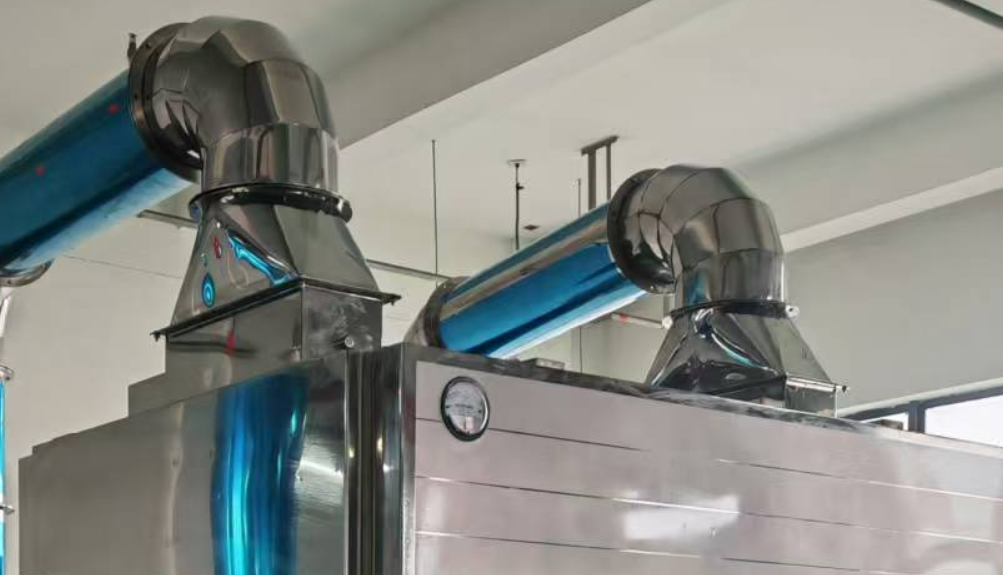
Le conduit d'entrée alimente le plenum situé derrière le tambour perforé. Des panneaux de distribution d'air ou des déflecteurs à l'intérieur du plénum répartissent l'air sur toute la largeur du tambour, de sorte qu'une extrémité ne soit pas plus séchée que l'autre.
Le conduit d'évacuation extrait l'air chargé d'humidité du tambour et le fait passer à travers un filtre avant qu'il ne quitte le bâtiment. Les filtres d'évacuation retiennent toutes les fines particules de revêtement qui ont été ramassées par le flux d'air. L'encrassement des filtres d'évacuation restreint le flux d'air et ralentit le séchage.
Des joints non étanches dans l'un ou l'autre des conduits causent des problèmes. Une fuite à l'entrée fait entrer l'air sale de l'usine dans le système. La fuite au niveau de l'échappement laisse passer la poussière du revêtement dans la salle de production. Les raccords de gaine utilisent des colliers et des joints qui s'assèchent et se fissurent sous l'effet de la chaleur. Vérifiez-les lors des changements.
L'isolation du conduit d'entrée permet de limiter les pertes de chaleur. Une isolation endommagée signifie que l'air arrive au tambour plus froid que le point de consigne et que le chauffage doit travailler plus fort. Il y a également un risque de brûlure pour toute personne passant devant le conduit lors de l'entretien.
Les conduits flexibles situés à l'interface de la machine absorbent les vibrations du tambour moteur. Ces joints flexibles se fissurent sous l'effet des cycles thermiques et des mouvements. Lorsqu'ils se fendent, il y a des fuites d'air au niveau de la machine, qui sont difficiles à voir mais faciles à sentir si vous tenez votre main près du joint.
6. Ventilateurs d'extraction et d'admission
Deux ventilateurs assurent la circulation de l'air. Le ventilateur d'entrée pousse l'air à travers la CTA et dans le tambour. Le ventilateur d'extraction l'expulse.
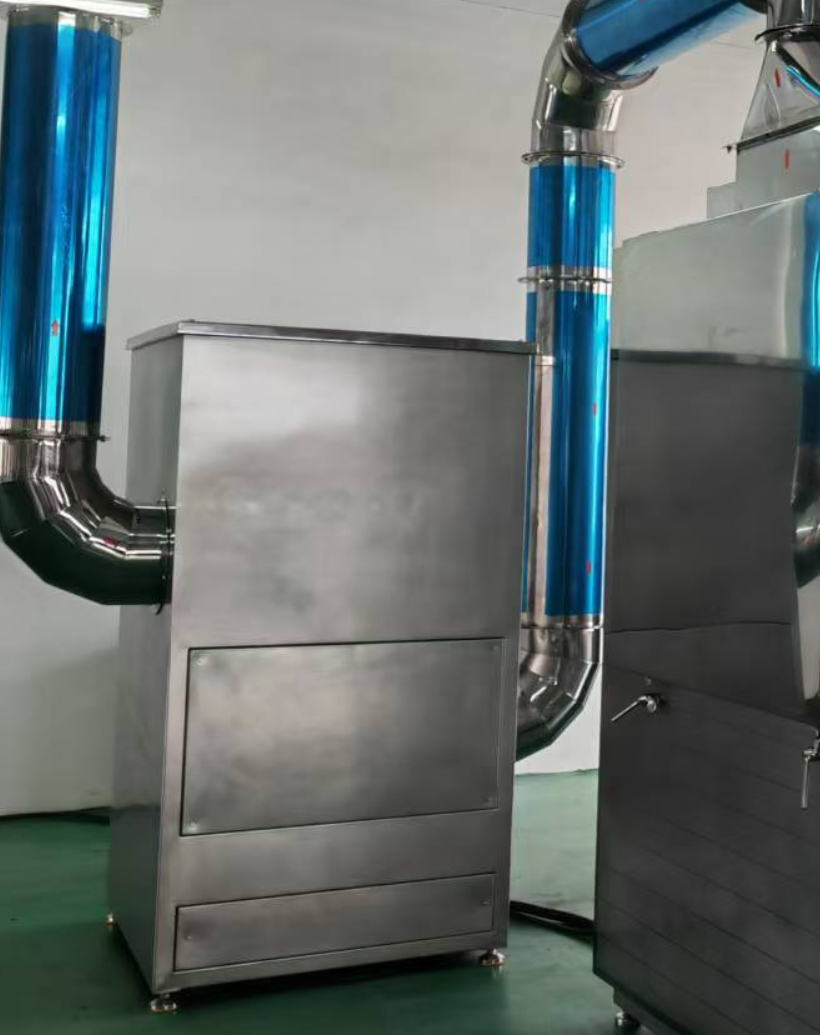
L'équilibre entre les deux détermine la pression à l'intérieur du tambour. Une pression légèrement négative empêche la poussière de s'échapper. Une pression négative trop importante fait s'effondrer le lit de comprimés contre la paroi du tambour. Il est important de parvenir à un bon équilibre, qui se modifie au fur et à mesure que les filtres se chargent au cours du lot.
Les variateurs de fréquence des deux moteurs permettent aux opérateurs de régler le volume d'air. Les roulements des soufflantes s'usent. Les moteurs surchauffent si les filtres se bouchent et que la contre-pression augmente. Les pales du ventilateur absorbent les résidus de revêtement et perturbent l'équilibre.
7. Panneau de commande, automate et IHM
L'automate programmable gère l'ensemble du processus. Vitesse du tambour, température de l'air d'entrée, température d'échappement, débit de pulvérisation, pression d'atomisation, pression du bac. Tout est automatisé et enregistré.
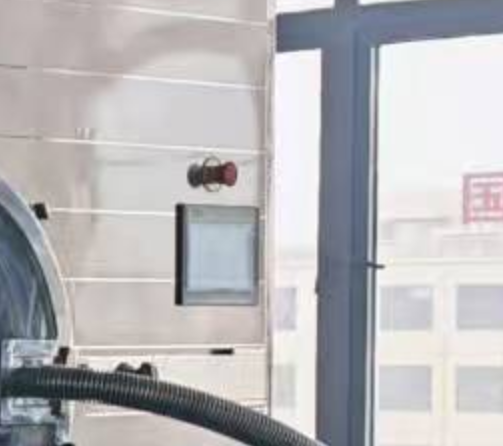
C'est sur l'écran tactile de l'IHM que les opérateurs établissent les recettes, contrôlent les lots et effectuent les réglages. Les écrans sont malmenés par les gants enduits, les sprays de nettoyage et l'utilisation quotidienne. Les machines plus anciennes sont équipées de claviers à membrane qui s'usent. Les machines plus récentes utilisent des écrans tactiles industriels derrière une vitre.
Les capteurs transmettent les données à l'automate. RTD dans les conduits d'admission et d'échappement. Capteurs de pression dans le tambour et à travers les filtres. Un mauvais capteur signifie de mauvaises données. L'automate prend de mauvaises décisions basées sur des chiffres erronés et le lot en pâtit.
Le stockage des recettes vous permet d'enregistrer et de rappeler les paramètres de chaque produit. Lorsque quelqu'un écrase accidentellement une recette, chaque lot de ce produit fonctionne mal jusqu'à ce que quelqu'un s'en aperçoive. Verrouillez vos recettes.
Dans l'industrie pharmaceutique, tout le système est validé. IQ, OQ, PQ. Conformité à la norme 21 CFR Part 11 pour les enregistrements électroniques. Calendriers d'étalonnage pour chaque capteur. Pistes d'audit infalsifiables.
Les paramètres d'alarme de l'automate programmable (PLC) détectent les écarts de processus en temps réel. Température d'entrée trop élevée, température d'échappement trop basse, pression du tambour en dehors de la plage.
Réglez les alarmes de manière trop lâche et les problèmes passent au travers. Si elles sont trop strictes, la machine s'arrête toutes les cinq minutes. Dans ce cas, les opérateurs commencent à ignorer les alarmes. Pour trouver la bonne fenêtre, il faut de l'expérience avec chaque produit.
8. Plaques de guidage et système de décharge
Les plaques de guidage se trouvent à l'intérieur de l'ouverture du tambour et dirigent le flux de comprimés pendant le chargement et le déchargement. Elles empêchent les comprimés de tomber par l'avant lorsque le tambour tourne.

Les goulottes de déchargement ou les convoyeurs transportent les comprimés enrobés hors du tambour et dans des bacs ou des équipements en aval. Les goulottes s'usent au contact des comprimés et s'encrassent de résidus d'enrobage.
Le chargement peut être manuel ou automatisé. Le transfert sous vide ou l'alimentation par gravité à partir de la presse à comprimés sont courants sur les lignes automatisées. La rupture des comprimés lors du chargement est généralement due à une hauteur de chute trop importante ou à une vitesse d'alimentation trop rapide.
Du côté de la décharge, les actionneurs de porte s'ouvrent et se ferment sur commande de l'automate. Les joints de porte s'usent et les portes non étanches perturbent la pression du tambour pendant le lot. Remplacez les joints avant qu'ils ne soient suffisamment endommagés pour affecter la qualité du revêtement.
9. Système de nettoyage (CIP/WIP)
Les systèmes de lavage en place ou de nettoyage en place pulvérisent l'eau et la solution de nettoyage à l'intérieur du tambour, sur le bras de pulvérisation et à travers le réseau de canalisations sans démontage.
Les boules de pulvérisation ou les nettoyeurs orbitaux à l'intérieur du tambour touchent toutes les surfaces. La solution de nettoyage s'écoule par le bas. Lorsque les billes de pulvérisation se bouchent ou perdent de la pression, la couverture de nettoyage diminue et des résidus subsistent. L'échec de la vérification du nettoyage signifie que le lot ne peut pas démarrer.
Les vannes de vidange situées au fond du tambour doivent être correctement fermées pendant l'enduction et s'ouvrir complètement pendant le nettoyage. Une vanne qui ne s'ouvre pas complètement laisse de l'eau stagnante et des résidus dans le tambour.
Certaines machines ont des cycles CIP automatisés programmés dans l'automate programmable avec des séquences de vannes, des durées de rinçage et des étapes de vidange enregistrées. Le nettoyage manuel est encore courant sur les machines plus anciennes ou plus petites. Quoi qu'il en soit, le bras de pulvérisation recueille le revêtement séché dans des endroits difficiles à atteindre. Accordez-lui une attention particulière.
Conclusion
Il s'agit de la liste des pièces de la machine d'enrobage de comprimés, depuis le tambour jusqu'au système d'air, aux pistolets de pulvérisation et aux commandes. Les enrobeuses à plateau perforé ont beaucoup de choses à faire. Chaque pièce joue un rôle dans l'aspect, les performances et la tenue en rayon du comprimé fini.
Les buses de pulvérisation, les tubes de pompe, les filtres et les joints de porte s'usent le plus rapidement. Gardez-les en stock.
Lorsque des défauts de revêtement apparaissent et ne peuvent être expliqués par la recette, il convient d'examiner le matériel. Buse usée, clapet coincé, filtre bouché. La réponse est généralement mécanique.
Consignez vos numéros de pièces dans un endroit accessible. Les machines d'enrobage comportent des dizaines de pièces consommables provenant de plusieurs fournisseurs. Le fait d'avoir cette liste à portée de main permet d'éviter des heures de cafouillage lorsque quelque chose tombe en panne un lundi à 6 heures du matin.