Spanish
  English
  Russian
  Turkish
  French
  German
  Japanese
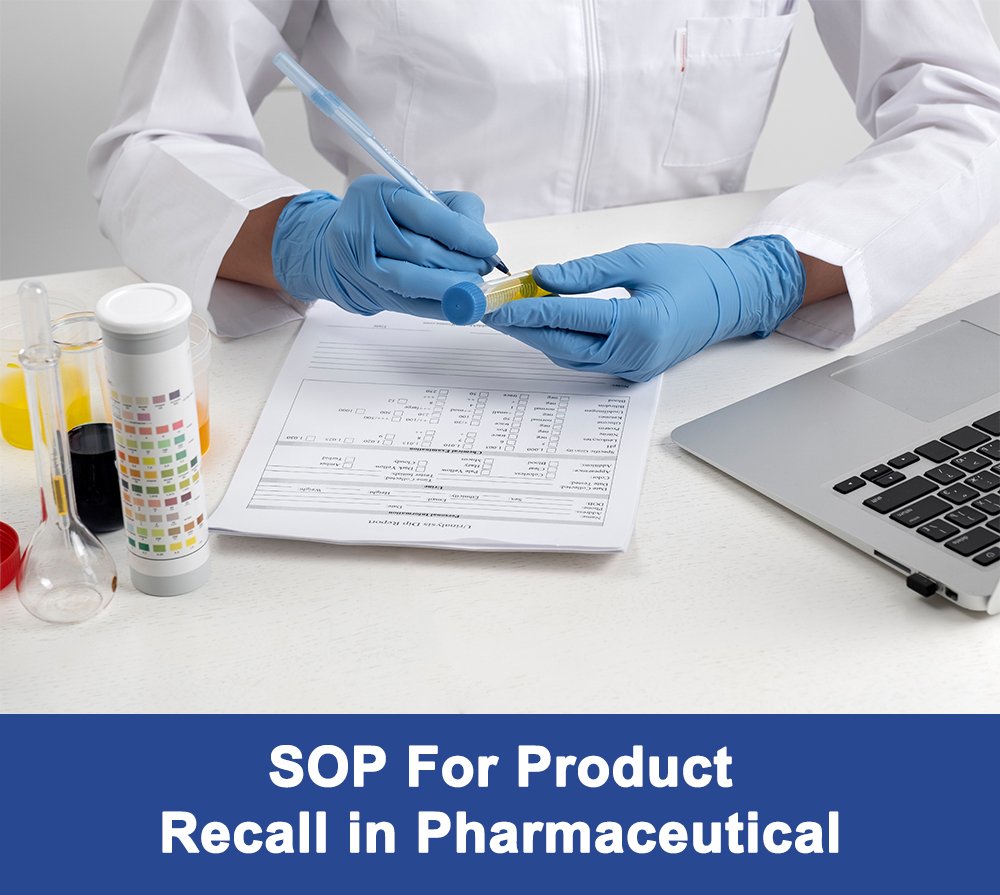
Standard operating procedure of Product Recall in the Pharmaceutical Industry.
1.0 OBJETIVO:
To establish a controlled procedure for the prompt and effective recall of any pharmaceutical product that has been distributed but is later found to be defective, unsafe, or out of specification.
2.0 ALCANCE:
This Procedure applies to all finished pharmaceutical products that have left the manufacturing site, including products in the distribution chain, at wholesalers, at pharmacies, and with end users.
3.0 RESPONSABILIDAD:
Recall Coordinator, QA Manager & Regulatory Affairs Officer
4.0 RESPONSABILIDAD:
Managing Director & Qualified Person (QP).
5.0 PROCEDIMIENTO:
5.1 A recall may be triggered by a customer complaint, a failed stability result, an adverse drug reaction report, a regulatory finding, or a defect found in the retained sample.
5.2 Anyone who receives information that suggests a possible product defect must report it to the QA Manager within one working hour.
5.3 The QA Manager opens a recall assessment file on receipt of the report. The file captures the product name, batch number, reported defect, source of information, and date of report.
5.4 The QA Manager notifies the Recall Committee within four hours of opening the assessment file. No public statement or distributor notice is issued before the committee meets.
5.4.1 The QA Manager also appoints a Recall Coordinator at this stage. The Recall Coordinator is the day to day point person for the recall. The Coordinator tracks returns, liaises with customers, and coordinates between departments for the duration of the recall.
5.5 Recall Classification:
5.5.1 Each recall is classified based on the level of health risk posed by the defective product. The classification drives the speed and depth of the recall action.
5.5.2 The three recall classes are defined as follows:
5.5.2.1 Class I: Products where use of the batch can cause serious adverse health consequences or death. Examples include wrong active ingredient, incorrect label on a high risk drug, or presence of a toxic impurity.
5.5.2.2 Class II: Products where use may cause temporary or medically reversible adverse health consequences. Examples include sub potent products, out of specification dissolution, or minor label errors on a lower risk drug.
5.5.2.3 Class III: Products that are unlikely to cause any adverse health consequences but do not meet full quality specifications. Examples include cosmetic defects, printing errors that do not affect drug identity, or minor packaging faults.
5.5.3 The classification is assigned by the Recall Committee after review of the product risk, the stability data, and any known adverse event reports.
5.5.4 A borderline case between two classes is always assigned to the higher risk class. Patient safety outweighs commercial impact in any recall decision.
5.6 Recall Committee:
5.6.1 The Recall Committee is a standing body that meets within four hours of being notified by the QA Manager. The committee has decision making authority over all recall actions.
5.6.2 The committee membership is as follows:
5.6.2.1 Managing Director or nominated deputy as chair.
5.6.2.2 QA Manager as secretary and record keeper.
5.6.2.3 Regulatory Affairs Officer for external communication.
5.6.2.4 Production Head for batch history and manufacturing review.
5.6.2.5 Quality Control Head for analytical data review.
5.6.2.6 Commercial Head for distribution chain and customer contact.
5.6.2.7 Legal Advisor for liability and contract review.
5.6.3 The committee chair can co-opt other members as needed. A medical advisor is added for any Class I recall.
5.6.4 Committee decisions are reached by consensus where possible. If consensus is not reached, the chair makes the final call after hearing each member’s position.
5.6.5 Every committee decision is recorded in the Recall Decision Log. Each entry shows the decision, the members present, any dissenting view, and the date and time.
5.6.6 The first committee meeting decides the recall class, the recall scope (one batch or multiple batches), and the recall depth (wholesale, retail, or end user level).
5.6.7 The committee meets at least once per week during an active recall. An emergency meeting can be called at any time by the chair or any two members.
5.7 Regulatory Notification:
5.7.1 A confirmed recall must be reported to the relevant regulatory authority. The notification window depends on the recall class.
5.7.2 The notification timelines are as follows:
5.7.2.1 Class I recall: notify the authority within 24 hours of the decision.
5.7.2.2 Class II recall: notify within 72 hours.
5.7.2.3 Class III recall: notify within seven working days.
5.7.3 The Regulatory Affairs Officer prepares the Regulatory Recall Notification Letter using the approved template. The letter includes the product details, batch numbers, defect description, health risk, and the planned recall scope.
5.7.4 The Qualified Person signs the notification letter before it is sent. A signed copy is filed in the Recall Master File.
5.7.5 Any request for additional information from the authority is answered within 24 hours. All correspondence is logged and filed.
5.8 Customer and Distributor Notification:
5.8.1 The commercial team maintains an up to date Distribution List for every batch shipped. This list is the starting point for any recall communication.
5.8.2 Prepare a Recall Notice using the approved template. The notice states the product name, batch number, expiry date, defect type, the action required from the recipient, and the recall coordinator’s contact details.
5.8.3 Send the Recall Notice by the fastest practical method. Email and fax are used for trade customers. Registered post is used as a backup and for official record.
5.8.4 Telephone each customer after the written notice is sent. Verbal contact confirms that the recall message has been received and understood.
5.8.5 For retail level recalls, work with the trade press to publish a public notice. The notice must appear in the trade journal within the timeline set by the regulatory authority.
5.8.6 For a Class I recall involving end users, arrange media communication through a single approved spokesperson. Do not allow informal statements from any other staff member.
5.9 Product Retrieval and Quarantine:
5.9.1 Set up a dedicated Recall Quarantine Area at the warehouse. The area is clearly marked with a red RECALL label and kept under lock and key.
5.9.2 Returned product arrives at the quarantine area with a completed Return Form from the sender. The form shows the sender details, batch number, quantity returned, return date, and the condition of the product on return.
5.9.3 Reconcile the returned quantity against the distributed quantity using the Distribution List. Calculate the recovery rate as a percentage of the total distributed quantity.
5.9.4 Do not mix recalled product with any good stock at any point. The quarantine area is physically separate and has its own inventory system. Access is limited to named QA and warehouse staff.
5.9.5 Store returned product under the same conditions as the original storage specification. A recalled vaccine still needs to stay in cold chain until final disposition. A recalled oral solid still needs protection from moisture and light.
5.9.6 QA decides the disposition of the returned product within 30 days of quarantine. Options are rework (in limited cases with regulatory approval), further testing, or destruction.
5.9.7 Destruction of recalled product is witnessed by QA and, where required, by a regulatory inspector. A Destruction Certificate is issued for every destruction event and shows the method, the quantity, the date, and the signatures of witnesses.
5.9.8 Use an approved destruction method for each product type. Incineration is the standard method for solid dosage forms. Controlled chemical treatment is used for certain liquids before disposal.
5.10 Recall Effectiveness Check:
5.10.1 An effectiveness check measures how well the recall has reached its target audience. The check is started within 14 days of the first Recall Notice.
5.10.2 Select a random sample of 10% of the customers on the Distribution List. Contact each one to confirm receipt of the Recall Notice and the action taken.
5.10.3 The minimum acceptable effectiveness rate is 95% for a Class I recall, 90% for Class II, and 80% for Class III.
5.10.4 If the effectiveness rate falls below the limit, expand the recall effort. Options include a second notice, direct visits to key customers, or wider public communication.
5.10.5 Record all effectiveness check results in the Recall Effectiveness Report. The report is submitted to the Recall Committee and to the regulatory authority on request.
5.11 Root Cause and Corrective Action:
5.11.1 A recall investigation runs in parallel with the recall action. The investigation identifies the root cause of the defect and the corrective action to prevent recurrence.
5.11.2 The investigation team is led by the QA Manager and includes technical experts from the affected functional areas.
5.11.3 Use a structured root cause tool such as a fishbone diagram or a five why analysis. The tool of choice is documented along with the findings as part of the recall file.
5.11.4 Corrective actions must address the immediate defect and any similar risk in related products or batches. File the actions in the CAPA system for tracking under the site GMP framework.
5.11.5 Verify the effectiveness of each corrective action after 90 days. A failed verification triggers a new investigation cycle.
5.12 Mock Recall Drills:
5.12.1 The plant conducts a mock recall drill at least once per year. The drill tests the recall system without involving actual customers.
5.12.2 The drill selects a batch at random from the last 12 months of production. The team traces the batch through the Distribution List to end customers.
5.12.3 The drill target is to locate at least 95% of the selected batch through distribution records within 24 hours. A drill that fails this target requires improvements to the Distribution List or the recall process.
5.12.4 Record drill results in the Mock Recall Report. File gaps and improvement actions in the CAPA system.
5.13 Recall Closure:
5.13.1 A recall is closed only after all returned product has been accounted for and the corrective actions are verified.
5.13.2 Prepare a Final Recall Report that summarizes the event, the recovery rate, the effectiveness rate, the root cause, and the corrective actions taken.
5.13.3 The report is signed by the QA Manager, the Qualified Person, and the Managing Director.
5.13.4 Submit the Final Recall Report to the regulatory authority. The authority issues a formal closure letter when satisfied with the report.
5.13.5 Retain all recall records for a minimum of five years or the product shelf life plus one year, whichever is longer.
5.14 REGISTROS:
5.14.1 Recall Decision Log.
5.14.2 Regulatory Recall Notification Letter.
5.14.3 Recall Master File.
5.14.4 Distribution List.
5.14.5 Recall Notice.
5.14.6 Return Form.
5.14.7 Destruction Certificate.
5.14.8 Recall Effectiveness Report.
5.14.9 Mock Recall Report.
5.14.10 Final Recall Report.
6.0 ABREVIATURAS:
6.1 Procedimiento operativo estándar: Procedimiento operativo estándar.
6.2 Control de calidad: Seguro de calidad.
6.3 QP: Persona cualificada.
6.4 CAPA: Medidas correctivas y medidas preventivas.
6.5 GMP: Buenas prácticas de fabricación.